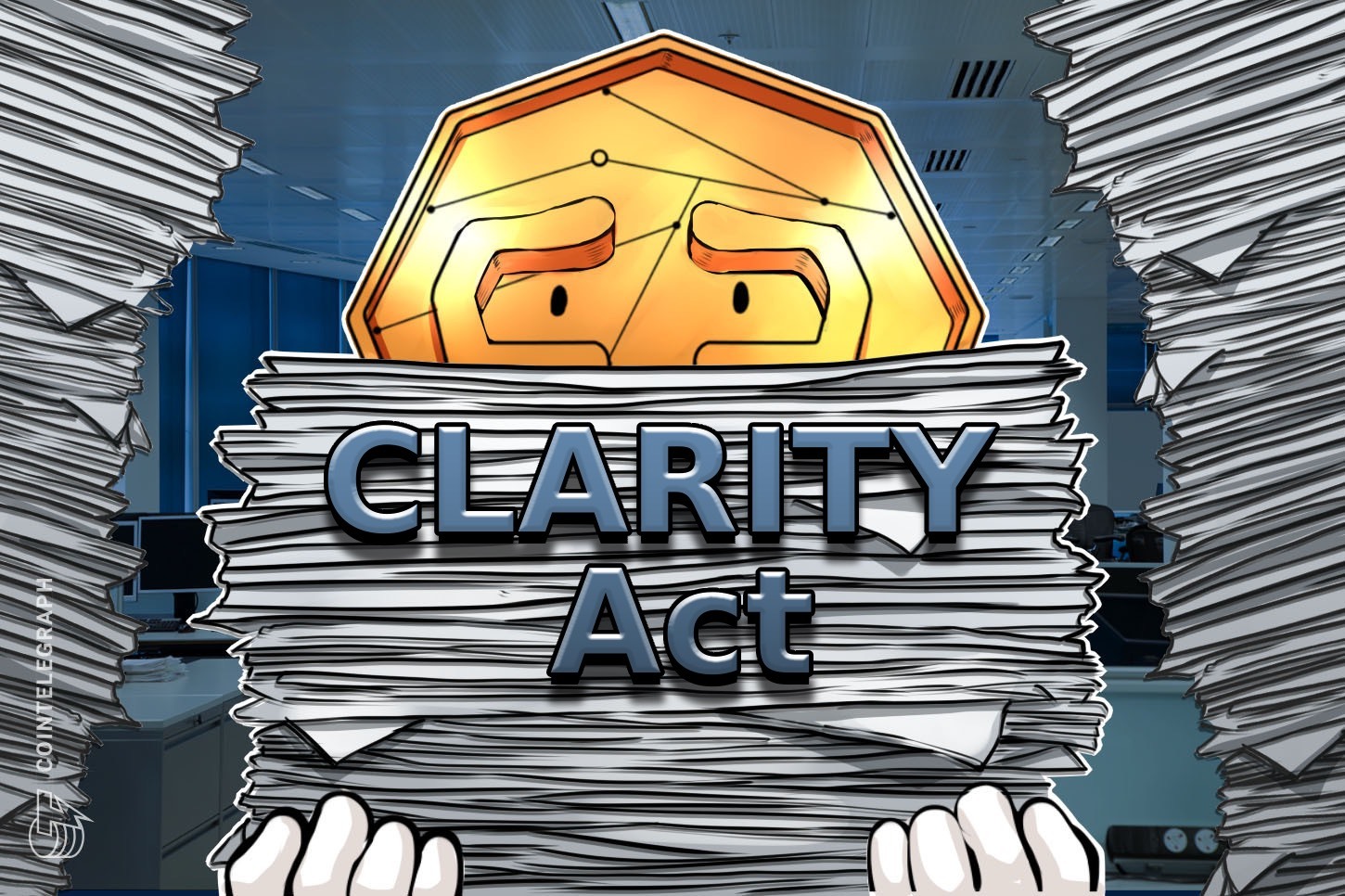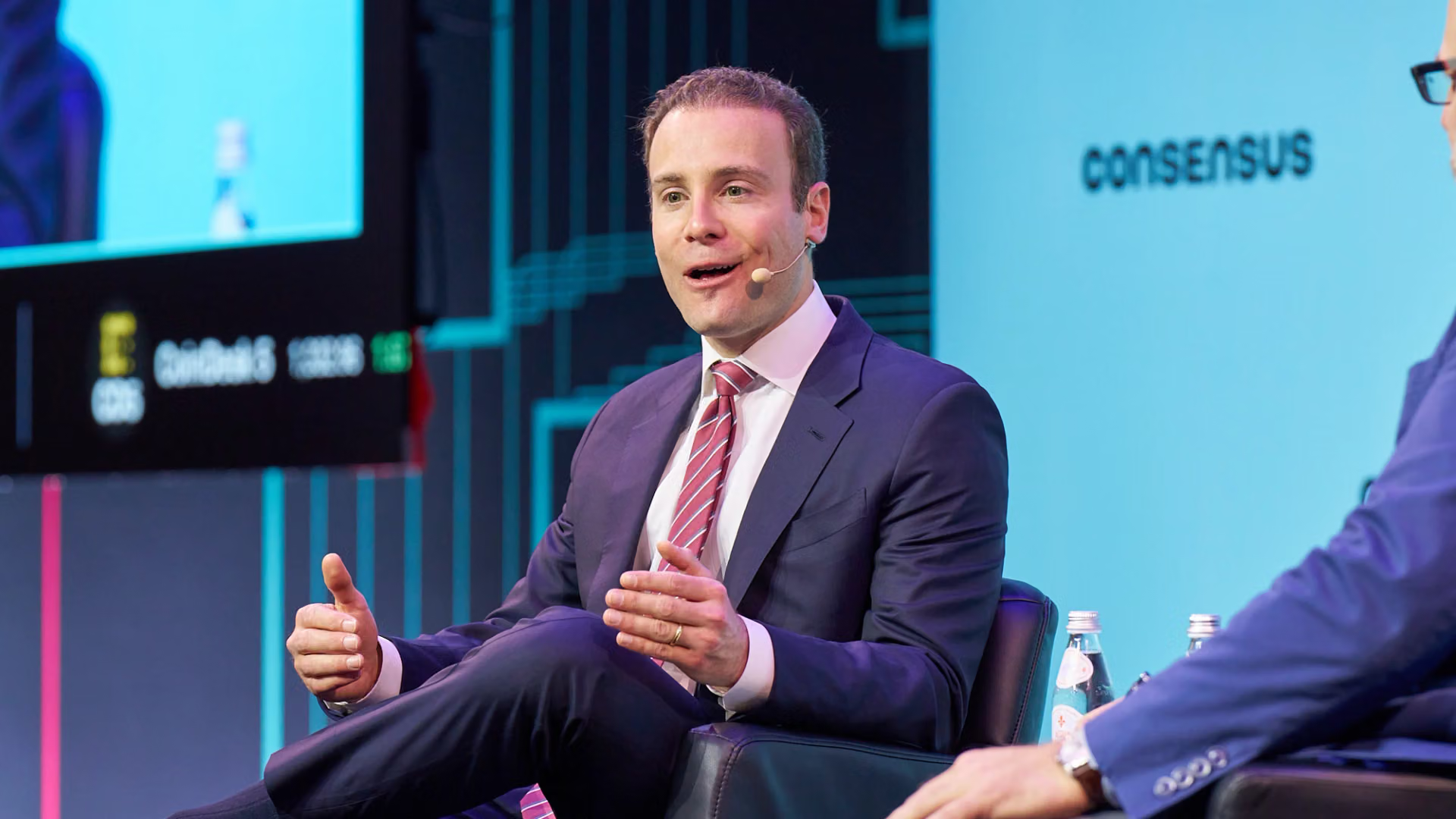
42 min ago3 min readCFTC Chair Michael Selig (CoinDesk)SummaryMike Selig, the chairman of the Commodity Futures Trading Commission, launched his inaugural meeting of the Innovation Advisory Committee that crypto firms can count on his agency to engage in market-structure rulemaking if Congress fails to pass the crypto Clarity Act.Selig told executives that he'd already directed his staff to work on multiple efforts to put crypto policies in place, and he said he has more rule proposals coming for prediction markets.The head of the U.S. agency that regulates derivatives, including a wide swath of crypto assets, said that if Congress can't deliver a Digital Asset Market Clarity Act to set out laws for crypto markets, his agency is already working on alternative regulations.Commodity Futures Trading Commission Chairman Mike Selig said Thursday that a U.S. Senate failure would spur his agency to start trying to create a "crypto asset market" regulatory label for firms much like the CFTC's existing category of designated contract markets (DCMs). He told those attending the inaugural meeting of the Innovation Advisory Committee that he's directed his staff to focus on that project."If Clarity continues to stall because of Democrat obstruction, the CFTC will utilize its existing authorities to begin establishing a regime for crypto asset markets," said Selig, wading into the politics to an extent that's unusual for sitting regulators. "We will heed President [Donald] Trump's call to codify a future-proof digital asset market structure that cannot be undone by the crypto haters.""To achieve this, I've directed the CFTC staff to begin exploring rules to codify a CFTC market structure for crypto assets using the agency's existing authorities," Selig said, promising the agency will be in a position to move swiftly. And he said he's also steered staff toward work with developers to build regulations to "offer their protocols in a legal and compliant manner in the United States, future-proofing developer protections once and for all."The CFTC's sister agency, the Securities and Exchange Commission, just this week proposed its first major crypto rule, known as Regulation Crypto Assets, to allow crypto startups and fundraising with fewer regulatory hurdles. And the two agencies had previously jointly issued a policy stance defining the different kinds of digital assets and what regulatory buckets they should fall into, though it wasn't set as a formal rule.But SEC Chair Paul Atkins was quick to point out at an event with President Donald Trump on Wednesday that "the most important priority is for Congress to send the Clarity Act to your desk for your signature," and he's routinely argued that the new law would be the way to assure permanence for crypto policy.The CFTC chief agreed on Thursday, saying, "Passing Clarity is the surest way that we can prevent another Gary Gensler from running a rogue campaign of lawfare against the individuals and companies in this room today."The meeting repeatedly raised the specter of former Securities and Exchange Commission Chairman Gary Gensler, who the industry paints as the villain that led years of U.S. legal and regulatory resistance to crypto."Ripple had the unfortunate reality of being at the center of the bullseye of the SEC's lawfare in the previous administration," Ripple Labs CEO Brad Garlinghouse said at the meeting. "It suffices to say, my headline for today is: What a difference leadership makes."Garlinghouse said the past approach forced his company to hire and grow outside the U.S."I think we all can agree that the technologies represented at the tables here can make moving money faster, more efficient, and more accessible," he said. "But we have to have clarity to unlock that potential responsibly.The advancement of the Clarity Act still depends on action in the U.S. Senate. The odds for success have diminished with every passing week, and the Senate will have a final three-week window to give the bill its final shot at winning the 60 votes it needs. Lawmakers from both parties — but mostly Democrats — have so far argued that their concerns with the current draft of the legislation haven't been answered; one of the biggest outstanding issues is whether the White House will agree to a revised ethics provision presented by a bipartisan pair of Senators, Ruben Gallego and Thom Tillis.Also on Thursday, the CFTC committee discussed issues around artificial intelligence and prediction markets.Selig has attracted a big spotlight in recent months for leading a legal charge against state governments over prediction markets oversight, in which he's seeking to "defend our exclusive jurisdiction in court" in numerous lawsuits. His agency has also already started its work regulating the sector, proposing rules to govern the space.It has further plans to soon issue more proposals, Selig said, "to modernize the corporate rules and listing rules governing DCMs that list event contracts and institute consumer protection requirements."12345678910Anvil: The Missing Collateral LayerAnvil: The Missing Collateral LayerAnvil is a shared on-chain collateral layer built on a programmable letter of credit: reserve assets as a guarantee -no loan, no interest, keep custody & yield.Jul 29, 2026Anvil is a shared on-chain collateral layer built on a programmable letter of credit: reserve assets as a guarantee -no loan, no interest, keep custody & yield.Why it matters:Anvil is a shared on-chain collateral layer built on a programmable letter of credit: reserve assets as a guarantee -no loan, no interest, keep custody & yield.View Full Report
U.S. CFTC chief puts staff on notice to create crypto regulations if Clarity Act fails
Commodity Futures Trading Commission Chairman Mike Selig told the inaugural gathering of the Innovation Advisory Committee that his agency won't sit idle.
TL;DRAI
CFTC Chair Selig directs staff to create independent crypto market regulations using existing authorities if Clarity Act stalls. The move signals U.S. crypto policy will advance regardless, reducing long-term uncertainty for compliant firms in the sector.
887 words~4 min read