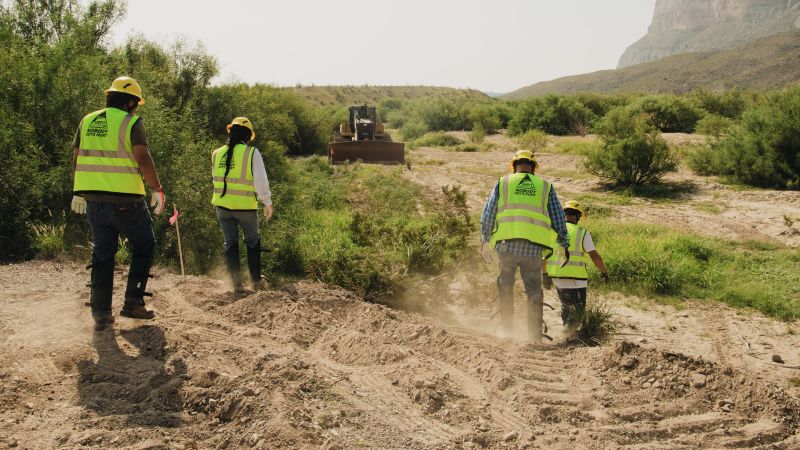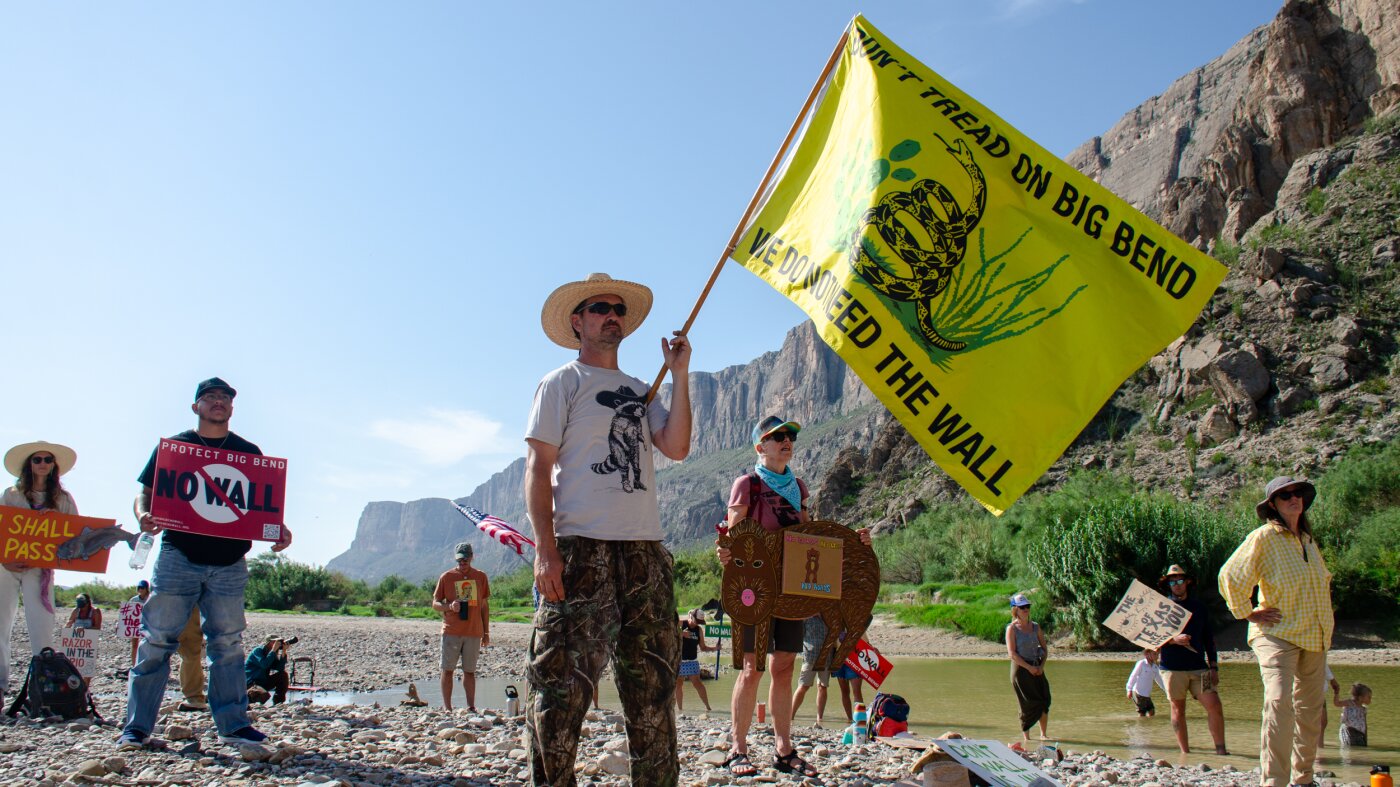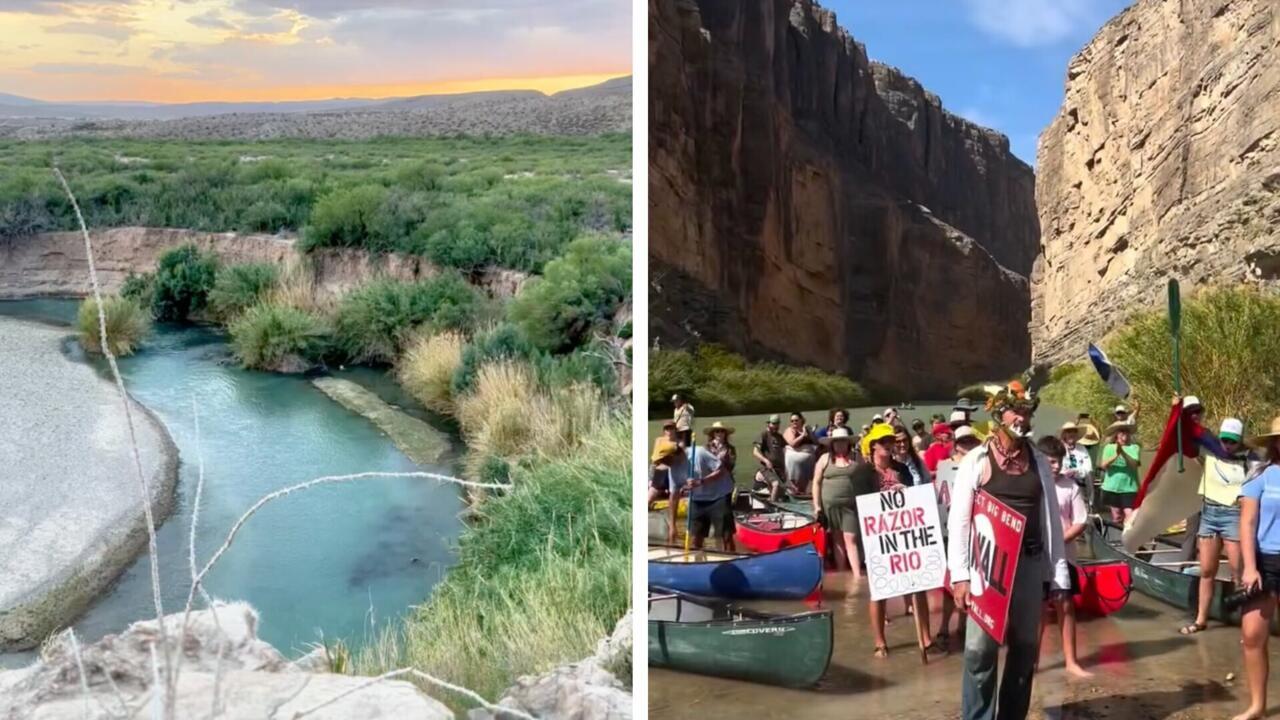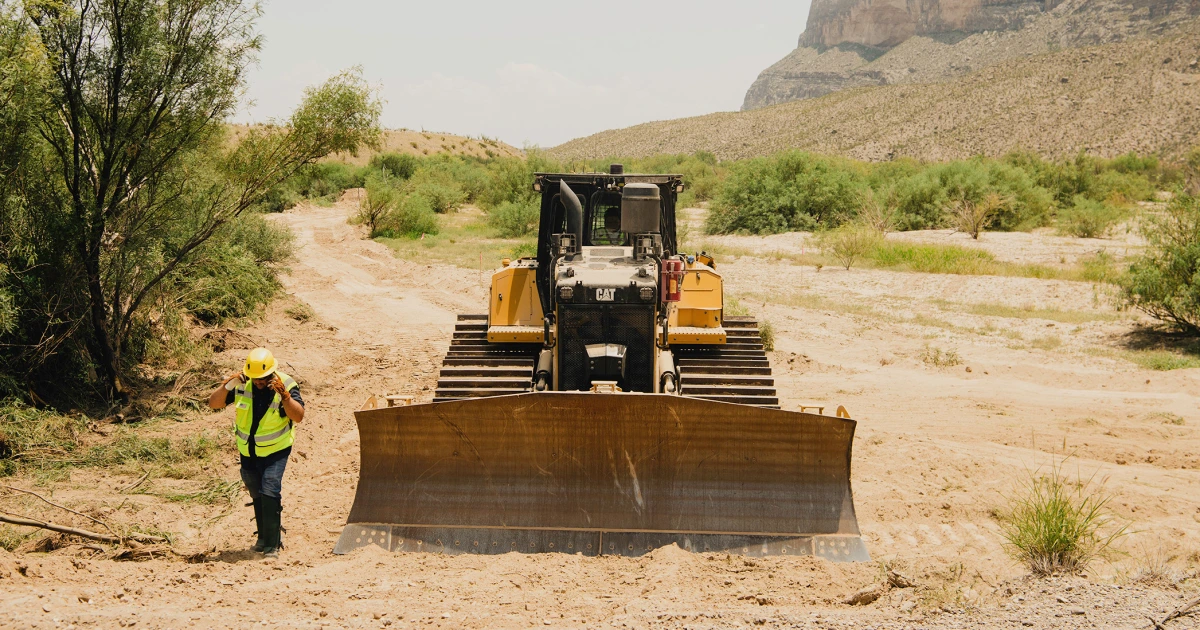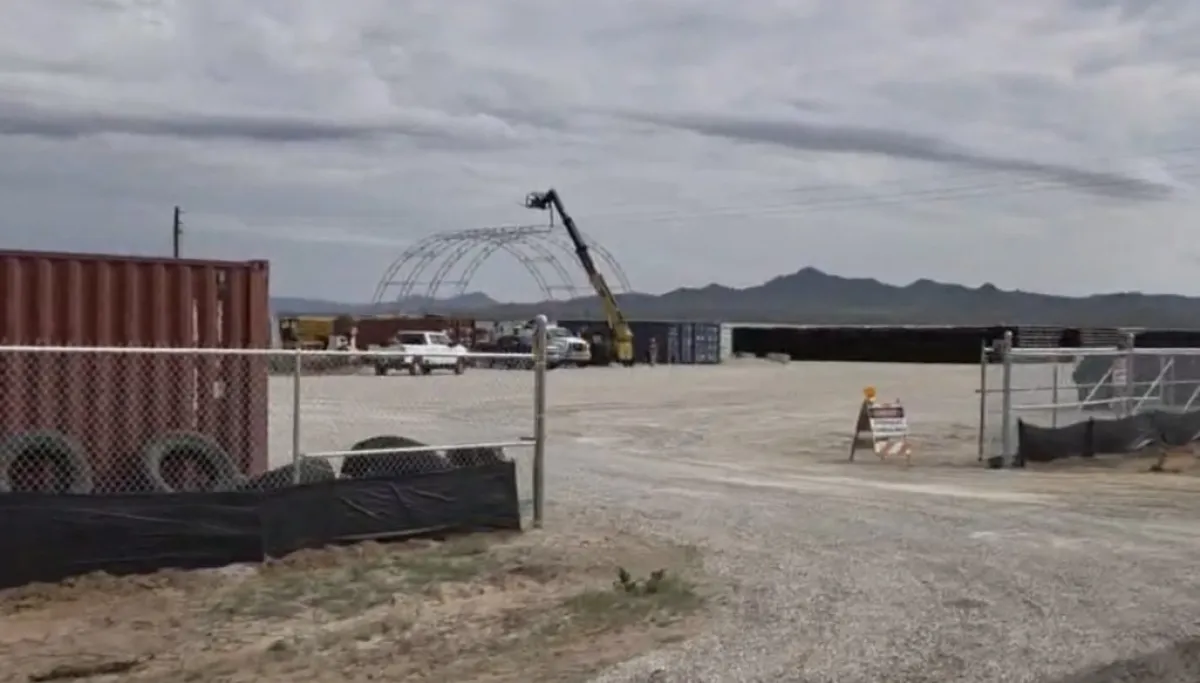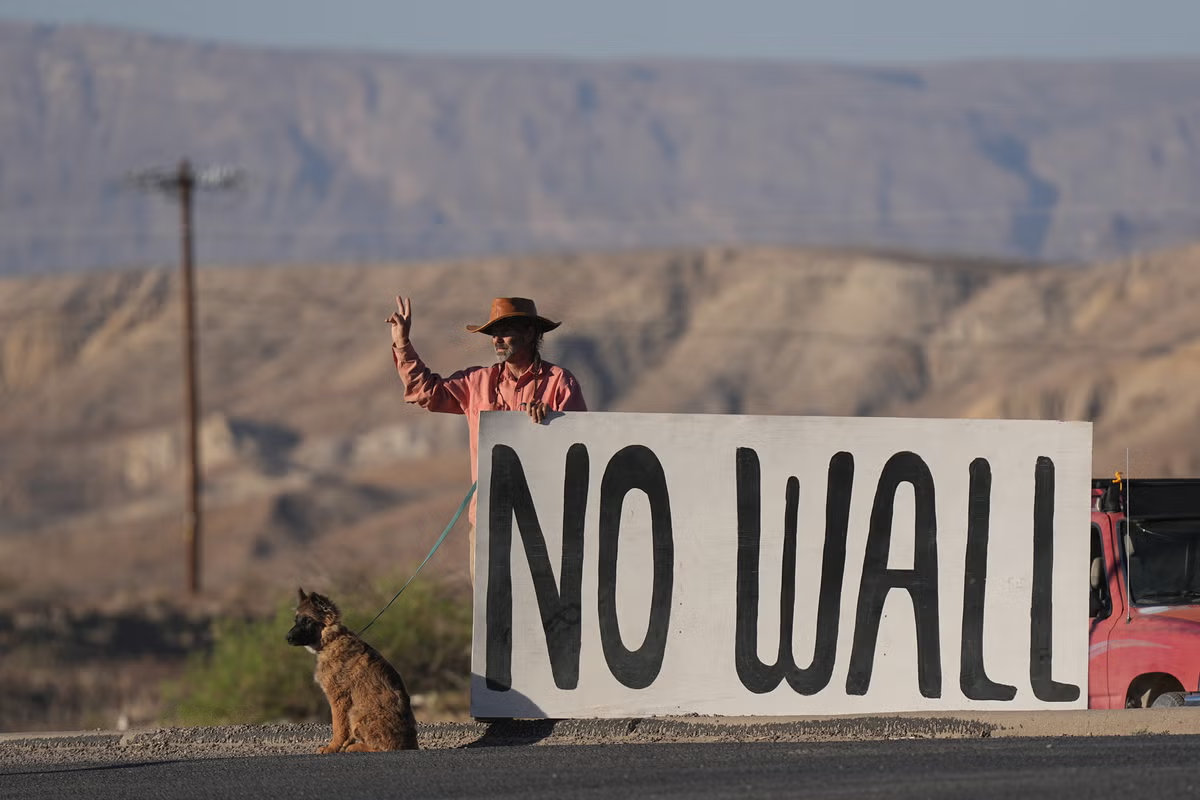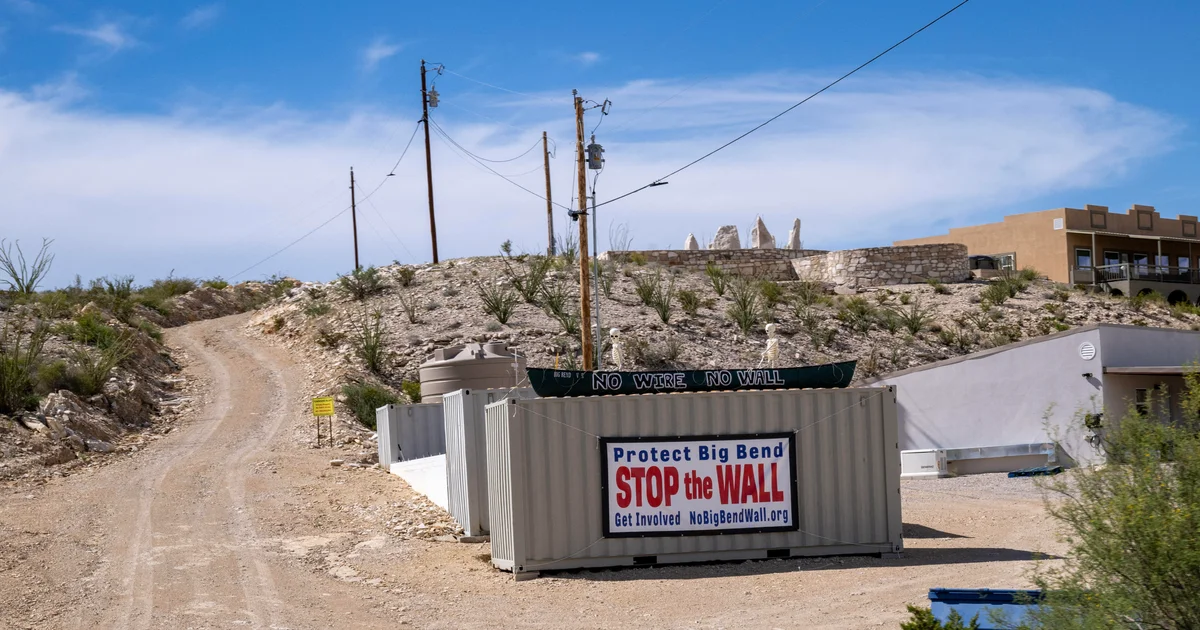
Alpine, Texas — Months after Congress approved billions for infrastructure across one of the least-trafficked stretches of the southern border, bulldozers arrived at Big Bend National Park, West Texas's wild crown jewel. What followed was an unlikely revolt against President Trump's decade-old promise to build a wall. Cattle ranchers, environmentalists, sheriffs, Republican senators and country singers united around a distinctly Texas argument: Secure the border, but don't tread on us.Images of bulldozers scraping through the 801,163-acre expanse of Big Bend National Park — a preserve larger than the state of Rhode Island — erupted across social media, turning a construction project in one of America's most remote landscapes into a political flashpoint. The pictures left residents and visitors in disarray. They showed heavy machinery driving through scenery defined by an absence of infrastructure, a place boasting thousand-foot cliffs, empty desert and communities so isolated that some residents drive over an hour for groceries or to see a doctor.More than half a million people visit Big Bend every year. The park hugs 118 winding miles of the Rio Grande, nearly a quarter of the international boundary patrolled by Customs and Border Protection in the much larger Big Bend Sector. The sector itself marks 517 miles along the river — from far West Texas east toward the Del Rio region — and its immense area of responsibility stretches across 77 Texas counties.
What's happening at Big Bend? The fight to protect one of America's last wild places
Months after Congress approved billions for infrastructure across one of the least-trafficked stretches of the southern border, bulldozers arrived at Big Bend National Park, West Texas's wild crown jewel.
2,015 words~9 min read