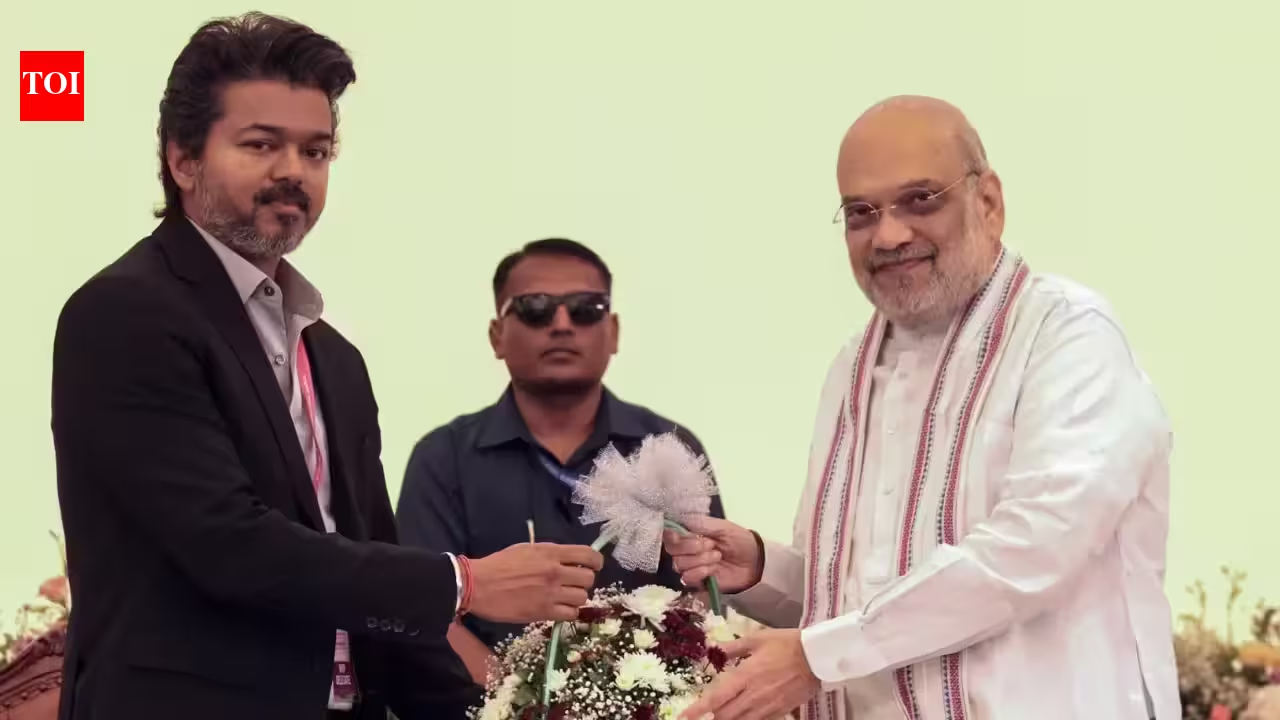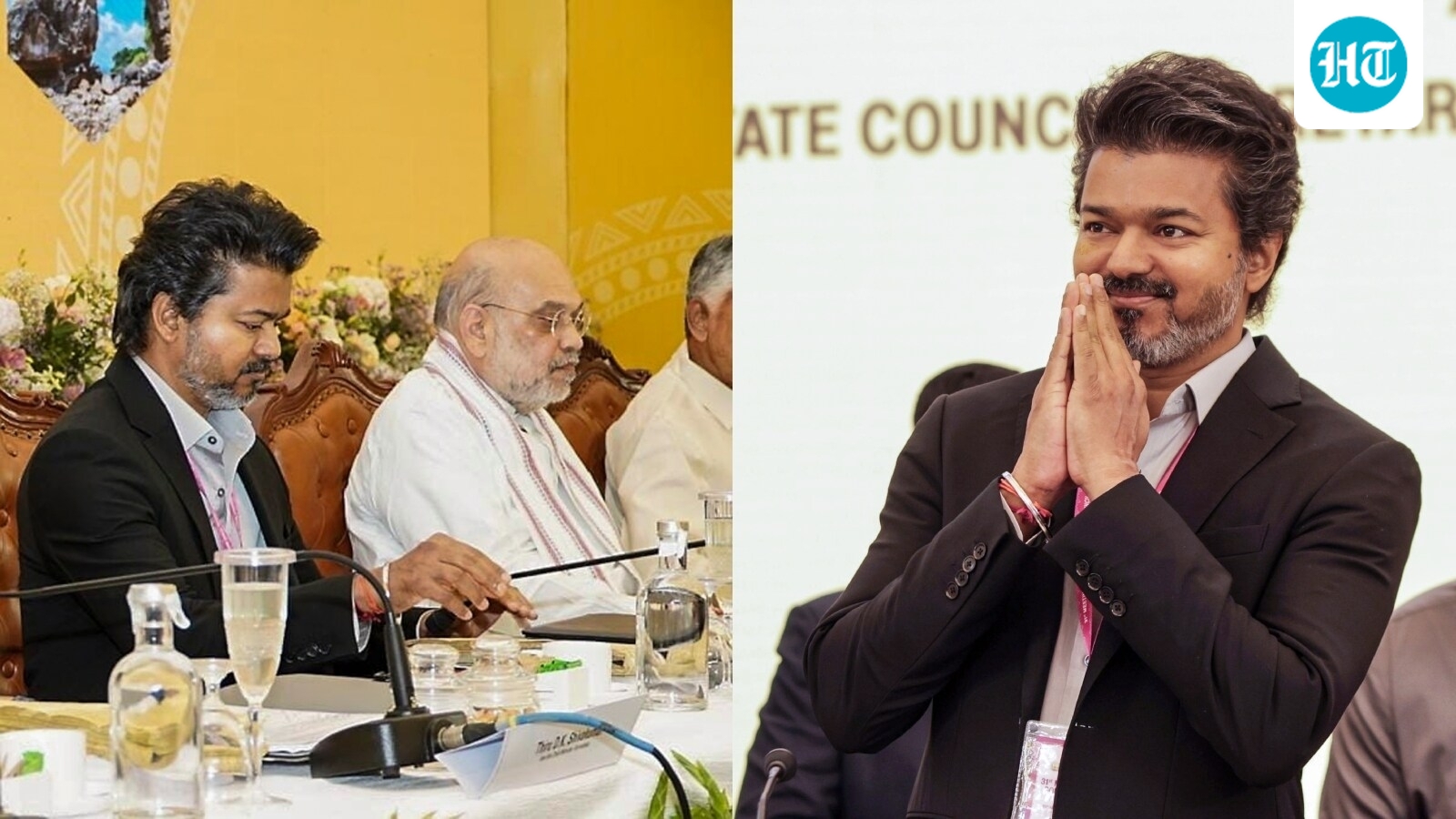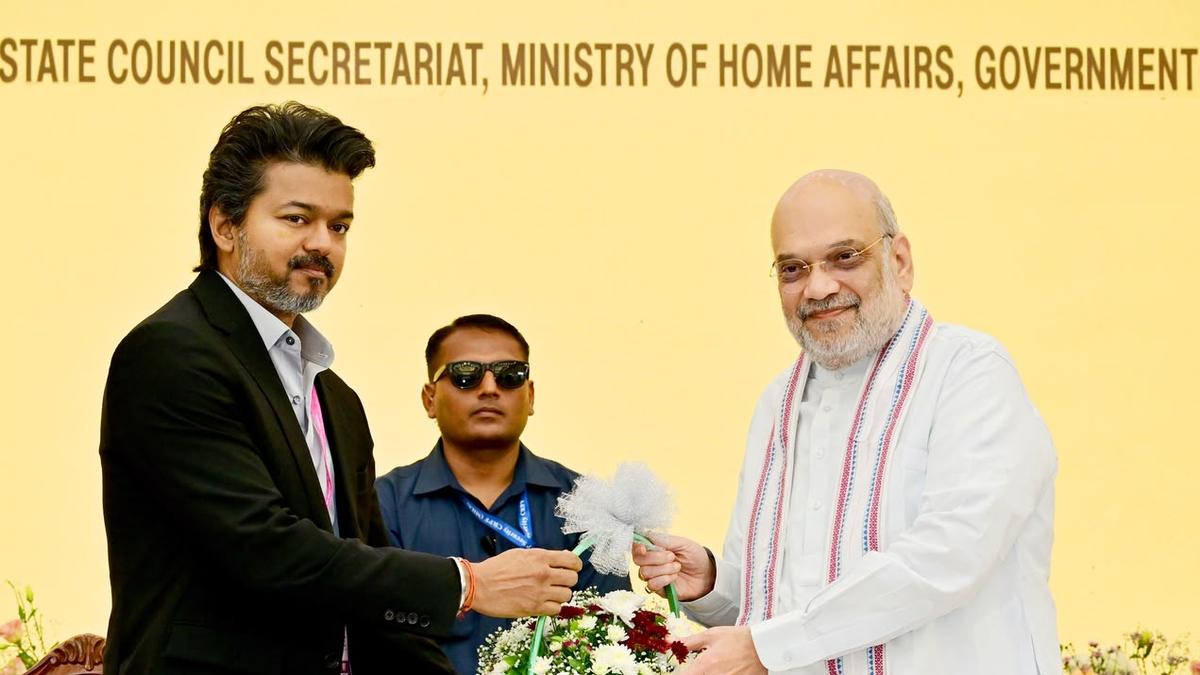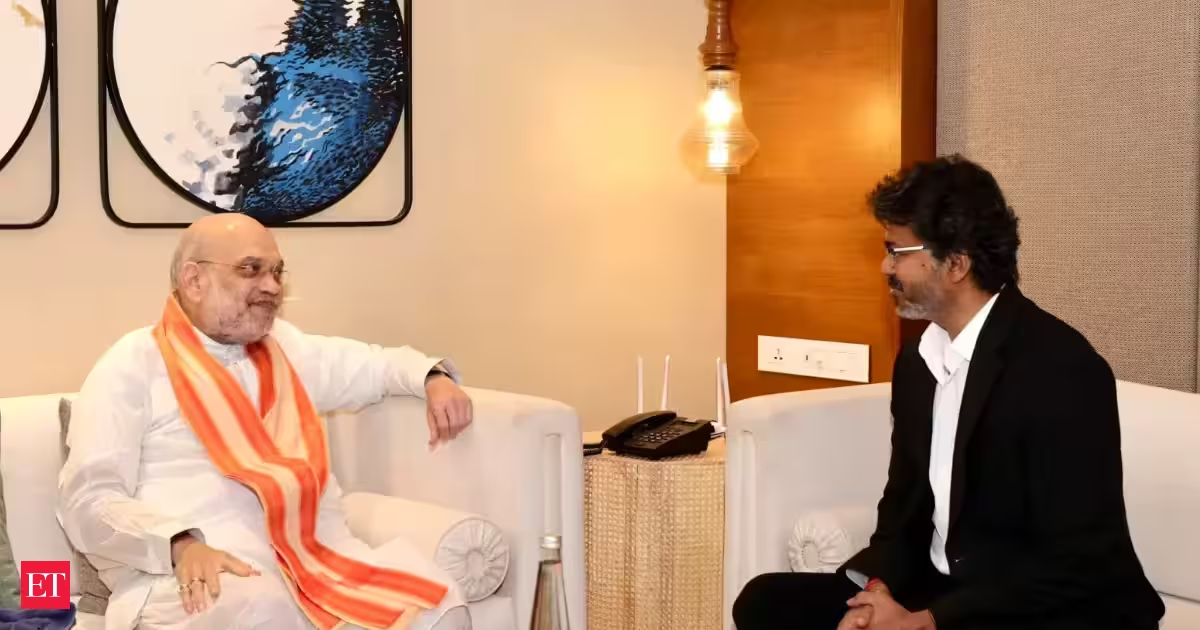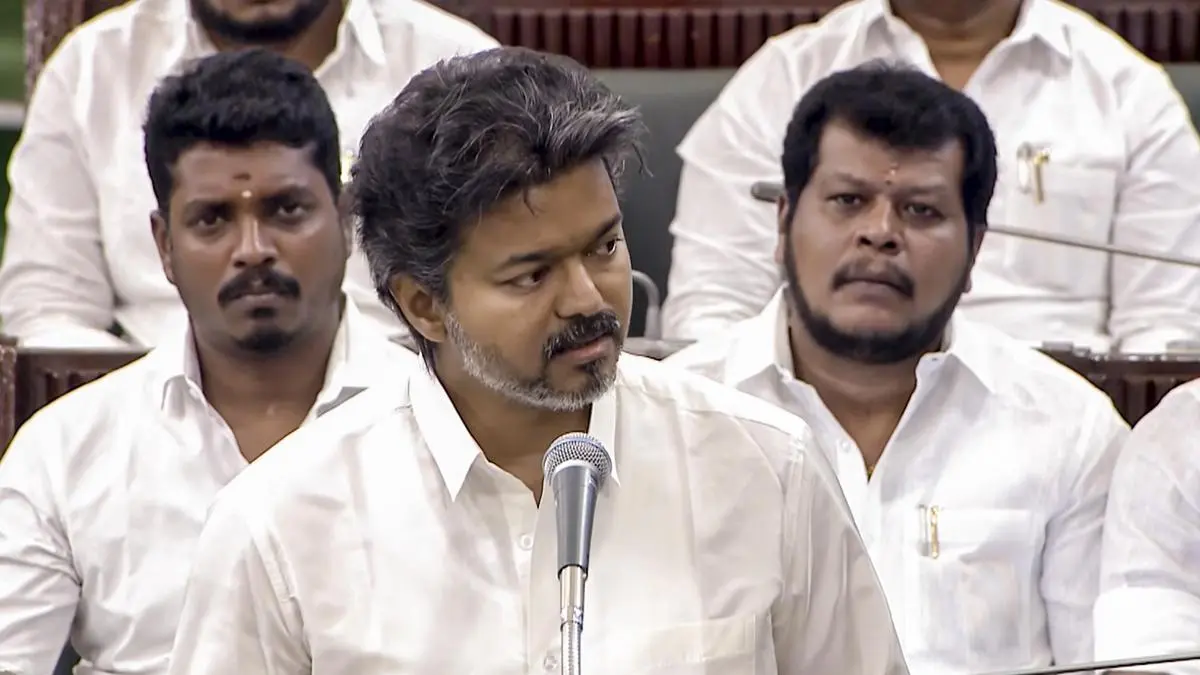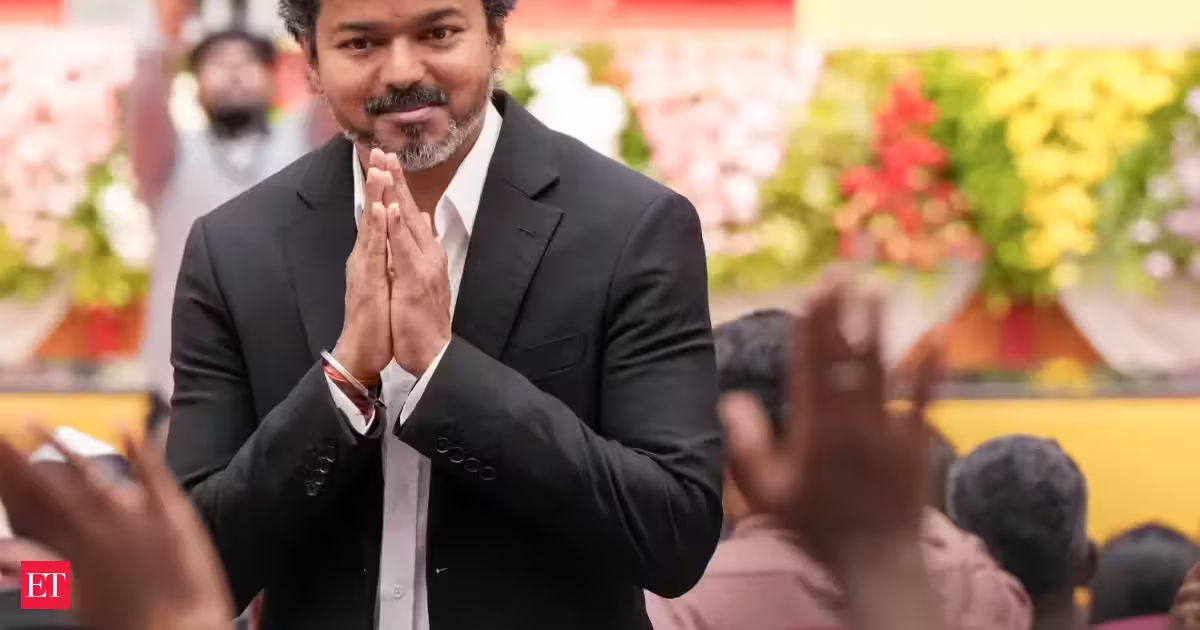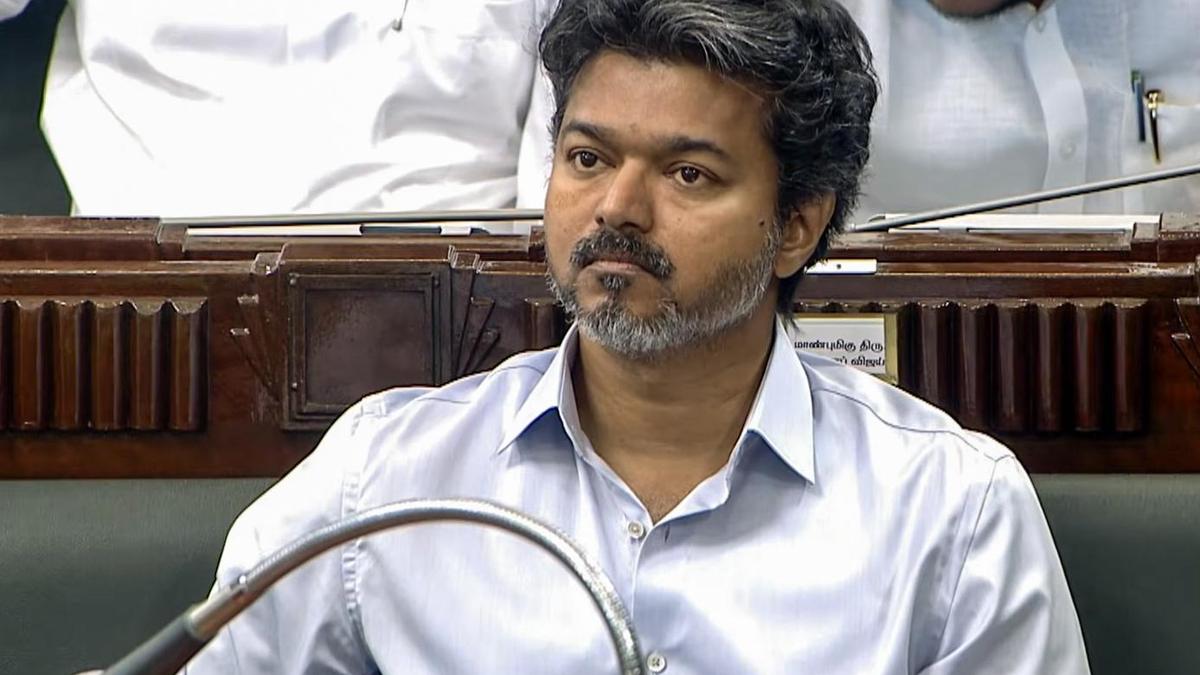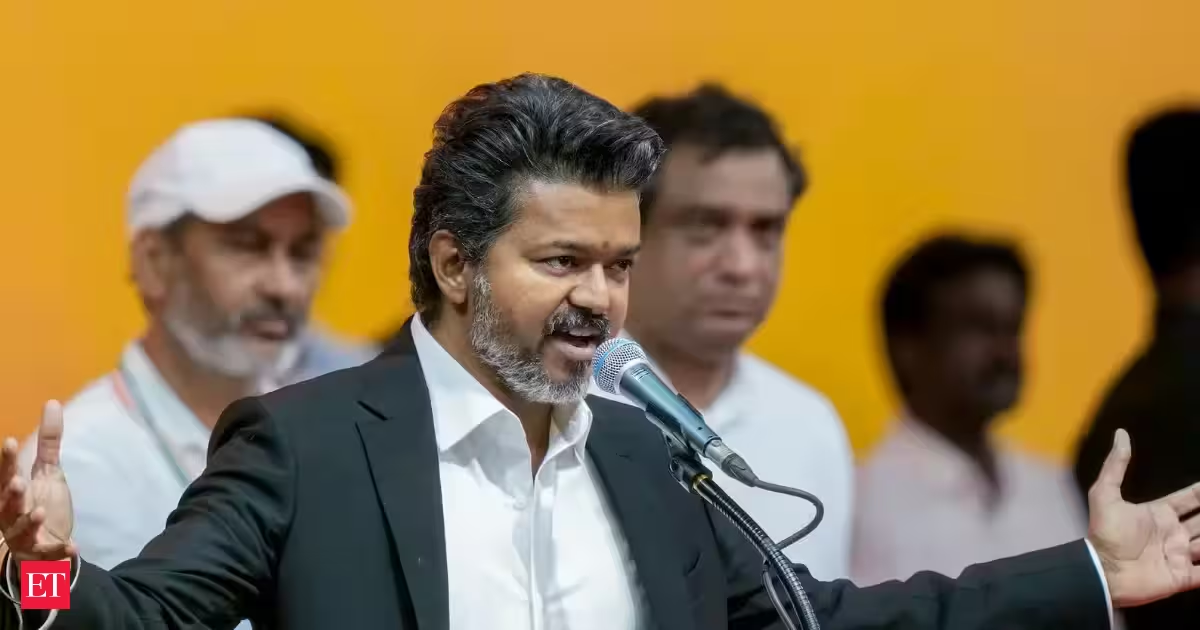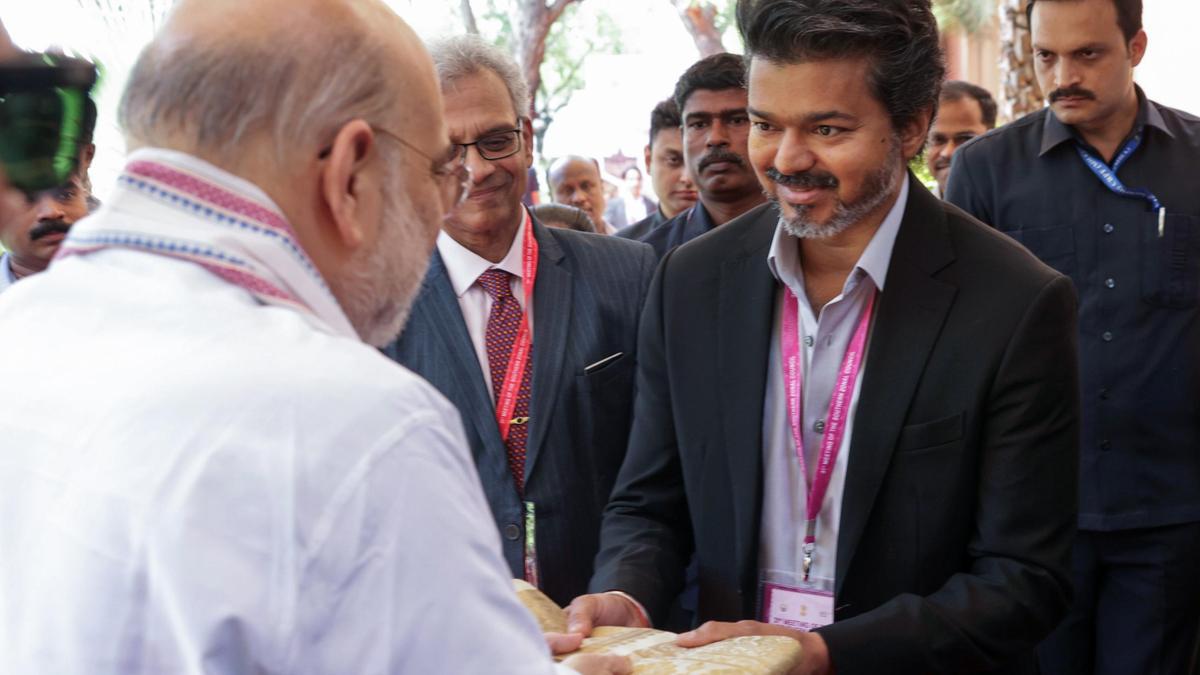
Union Home Minister Amit Shah being felicitated by Tamil Nadu Chief Minister S Joseph Vijay at the 31st Southern Regional Council Meeting at Mahabalipuram, in Chengalpattu on Thursday. (@CMOTamilnadu X/ANI Photo)
| Photo Credit:
Tamil Nadu Chief Minister C Joseph Vijay on Thursday urged the Union Government to provide “a clear legislative assurance that no State will suffer a reduction in its percentage of representation in Parliament on account of its success in population stabilisation.”This is different communication from the resolution language last week that said that total seats must be frozen at 543, but the Tamilaga Vetri Kazhagam (TVK) party later clarified that there is no change in the Tamil Nadu government’s stance on the issue.Tamil Nadu Chief Minister urged the Union Government to provide a clear legislative assurance that no State will suffer a reduction in its percentage of representation in Parliament on account of its success in population stabilisation. Such an approach would uphold the principles of equity, preserve the federal balance envisioned by our Constitution, and reinforce the confidence of all States in our democratic institutions.“As the freeze on the allocation of Lok Sabha seats based on the 1971 Census approaches its end and the Delimitation Bill, 2026 is considered, there is a genuine and shared concern across the Southern States that delimitation based predominantly on populations may diminish our collective voice in Parliament,” he said at the 31st meeting of the Southern Zonal Council held in Mahabalipuram on Thursday.Fiscal federalismAs India prepares for the next Finance Commission, the fiscal devolution framework must recognise both need and performance. States that have invested in development, fiscal discipline, and demographic transition should not be placed at a disadvantage, he said.The Southern States seek not preferential treatment, but a fair and equitable treatment, one that respects fiscal autonomy, rewards performance alongside equity, and enables high-performing States to continue investing in the infrastructure, innovation, and human capital that drive India’s growth, he said.Presently, after the introduction of Goods and Services Tax, States currently find themselves with virtually no flexible revenue levers outside of petroleum and alcohol. There is already a provision in Article 279A(4)(e) of the Constitution that allows GST council to recommend the tax rates including floor rates with bands of Goods and Services Tax, he said.Vijay urged the Government of India to strengthen the regulatory framework governing the online sale of prescription medicines, ensure stricter enforcement against their unauthorised sale, and review the existing legal framework to effectively address emerging substance abuse among youth.He also proposed that the Council champion common economic and logistics clusters across the Southern States, comprising integrated manufacturing zones, shared multimodal logistics parks, and seamless freight and industrial corridors that link our production centres to our ports and to global markets. These will lower the cost of doing business, sharpen our export competitiveness, make the South a far more attractive destination for foreign investment, and spread industry and opportunity into our smaller towns, driving genuinely balanced regional growth, said Vijay.Inter-state MetroAn immediate example lies before us. The proposed extension of the Bengaluru Metro, from Bommasandra in Karnataka to Hosur in Tamil Nadu, would create one of South India’s first interstate metro links, connecting Bengaluru’s Electronic City corridor with the fast-growing industrial hub of Hosur and knitting together the workforce and economies of our two States, he said.“I welcome this project as a model of what cooperative infrastructure across State borders can achieve, and I urge that it be carried forward expeditiously with the support of the Union and both State Governments. Let it be the first of many such connections across the South,” he said.Vijay also urged the Council to place the maritime economy at the heart of the regional agenda. An integrated approach, encompassing ports, coastal shipping, fisheries, marine industries, maritime services, and coastal tourism can unlock the full potential of the Blue Economy. All State Governments must work together to reclaim flexibility in tax rate determination, he said.Interstate water resourcesOn the Cauvery, the timely implementation of the Supreme Court’s judgment and the decisions of the Cauvery Water Management Authority remains essential. On the Mullai Periyar, the safety must continue to be guided by judicial decisions for increasing the water level to 152 feet, he said.“The essence of cooperative federalism. Tamil Nadu firmly believes that strong States make for a stronger India. In that spirit, I reaffirm our commitment to working with the Union Government and our sister States towards a Developed India,” he said.Published on August 20, 2026