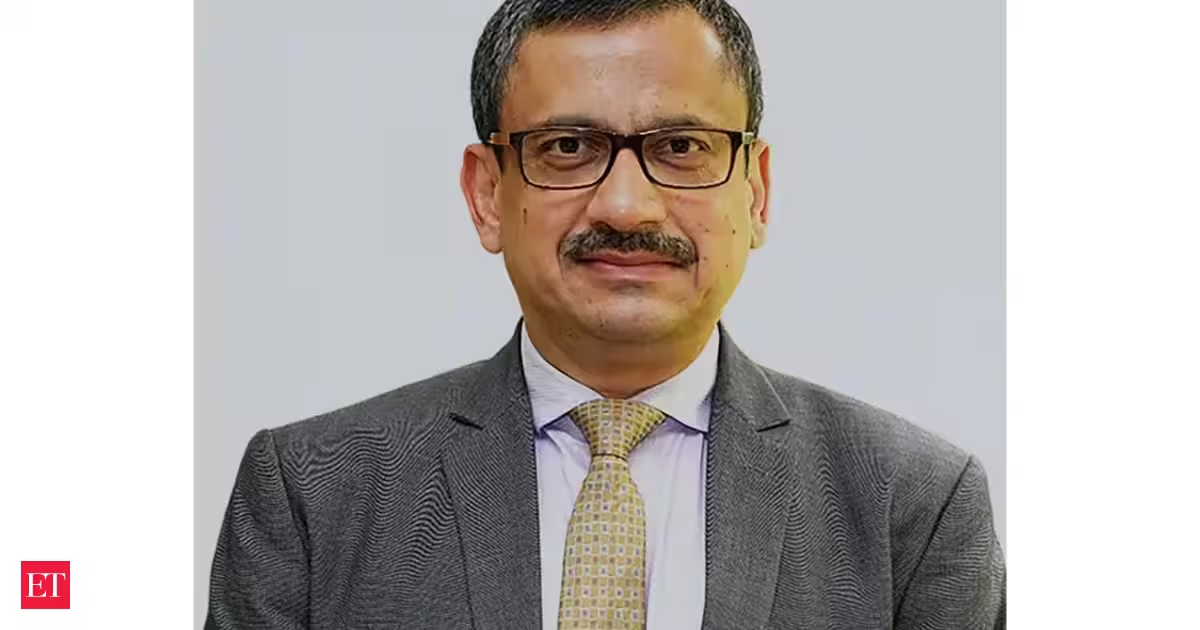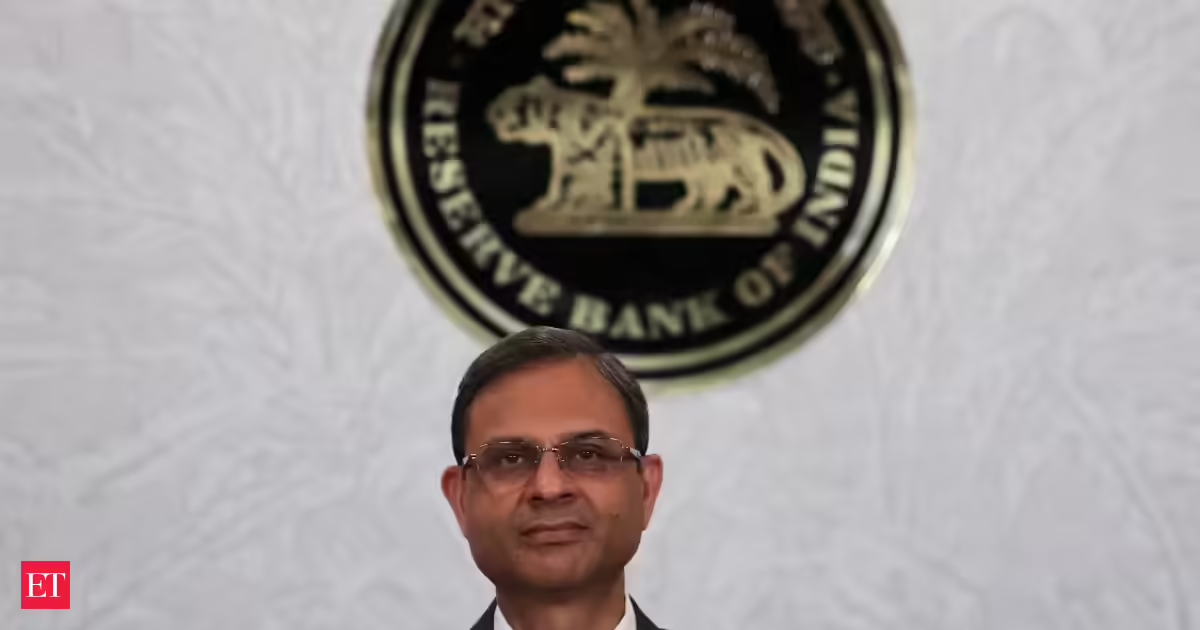
Rohit Jain, Deputy Governor, RBI
India’s foreign exchange market will be ready for the next decade when it is deep enough to absorb global shocks, flexible enough to support new forms of trade and investment and disciplined enough to preserve orderly conditions, said Rohit Jain, Deputy Governor, RBI. Further, the market has to be fair enough to serve the smallest user with the same humility as the largest corporate client. “We have made considerable progress in the first three but have some distance to travel in respect of the fourth. I am sure, collectively, we will reach our goal,” Jain said in his Keynote Address on the Annual Day of the Foreign Exchange Dealers’ Association of India (FEDAI) on August 14. The Deputy Governor emphasised that the next phase of reform will not be judged by the number of permissions removed, products introduced or platforms launched, but by the quality, speed, transparency and accessibility of the foreign exchange services that the citizens receive. SRVA Framework Jain said local currencies will play an ever increasing role in cross-border trade and payments.“The Special Rupee Vostro Account (SRVA) framework for invoicing, payment and settlement of international trade in rupees has been implemented keeping in view the evolving dynamics of our international trade,“ he said. He underscored that SRVA’s success will depend on commercial viability, emphasis on trade settlement in local currencies, offering market-determined rates, and strengthening confidence in the settlement ecosystem. “Opening a SRVA account is the easy part. The harder task is identifying corridors with genuine two-way flows, building reliable correspondent relationships, quoting competitive conversion and hedging solutions, explaining the mechanics to first-time users, and finding avenues for the productive deployment of rupee balances - all resting on robust internal processes, AML/CFT controls, operational resilience and, above all, a willingness to facilitate these transactions. I would encourage you not to see it only as a way of reducing reliance on international currencies.,” he said. Jain emphasised that the settlement of cross-border transactions in local currencies results in lower transaction costs, fewer currency mismatches, better settlement efficiency, and the ability to trade where correspondent banking is costly or constrained. “Policy can create the option. It is the Authorised Dealers who will determine whether this happens. I am confident that our banks can, and will rise to the occasion,” he said. Challenges Today Jain noted that participation in the forex market remains skewed. Public Sector Banks, which hold deep relationships with MSMEs and smaller corporates outside the metros, underparticipate in forex derivatives relative to their balance sheet size. At the same time, the client segment is dominated by large corporates while the smaller clients who stand to gain most from currency risk hedging remain on the sidelines. The Deputy Governor said expanding the market-maker base, raising Public Sector Bank participation, and encouraging electronic platforms are necessary priorities to be pursued. Jain observed that in late March and early April this year, a build-up of unhealthy arbitrage positions linking the onshore deliverable and offshore NDF (non-deliverable forward) markets prompted calibrated measures on net open positions, non-deliverable derivative offerings to customers and related-party transactions. Inconsistency Risk“Some of these measures have since been reversed. As the market integrates further with global liquidity, the lesson is not to fear integration but to further strengthen risk management, governance and oversight arrangements,” he said. The Deputy Governor observed that a strictly principles-based regime carries its own risk of inconsistency. “Detailed rules create rigidity; principles can create interpretational divergence. The answer is not a return to prescription, but stronger institutional judgement, clearer published customer standards, and shared interpretive experience through FEDAI,” he said. Jain urged FEDAI to take the lead in bringing principles-based regulation to life by setting common standards among its members. Published on August 20, 2026