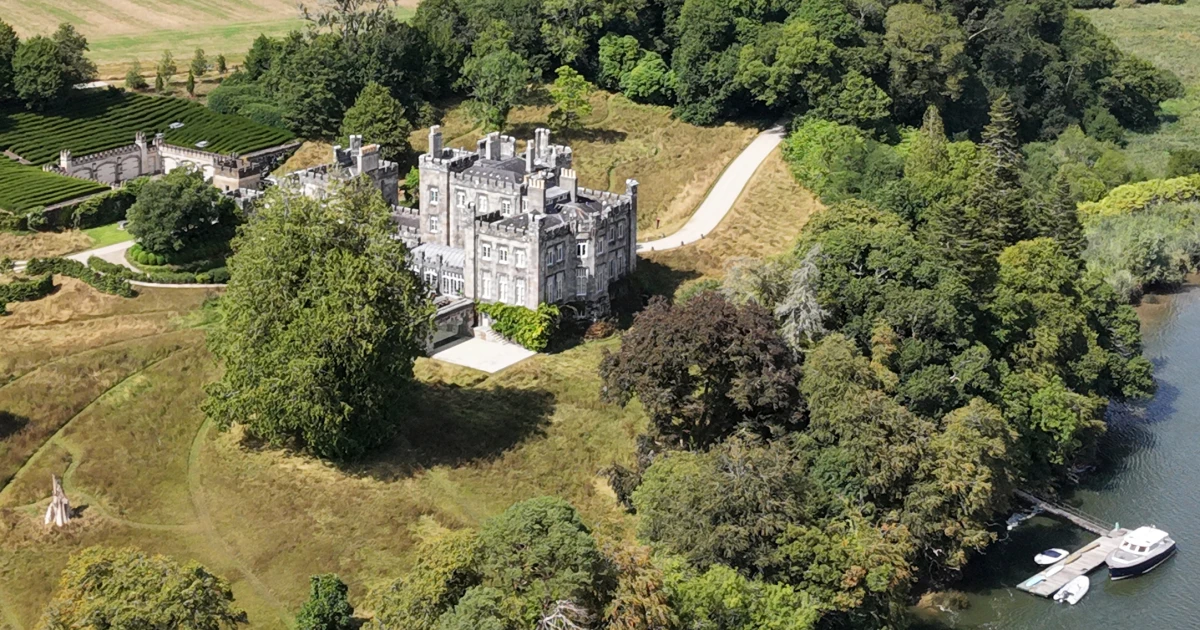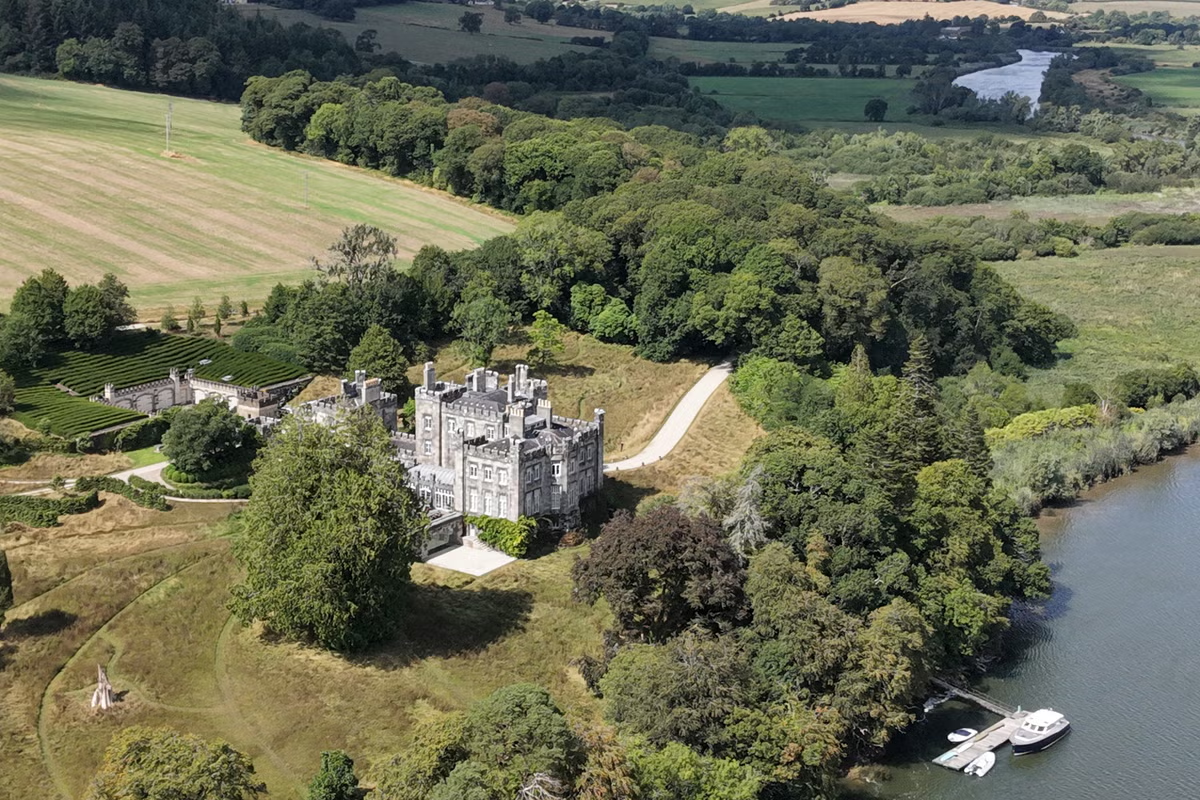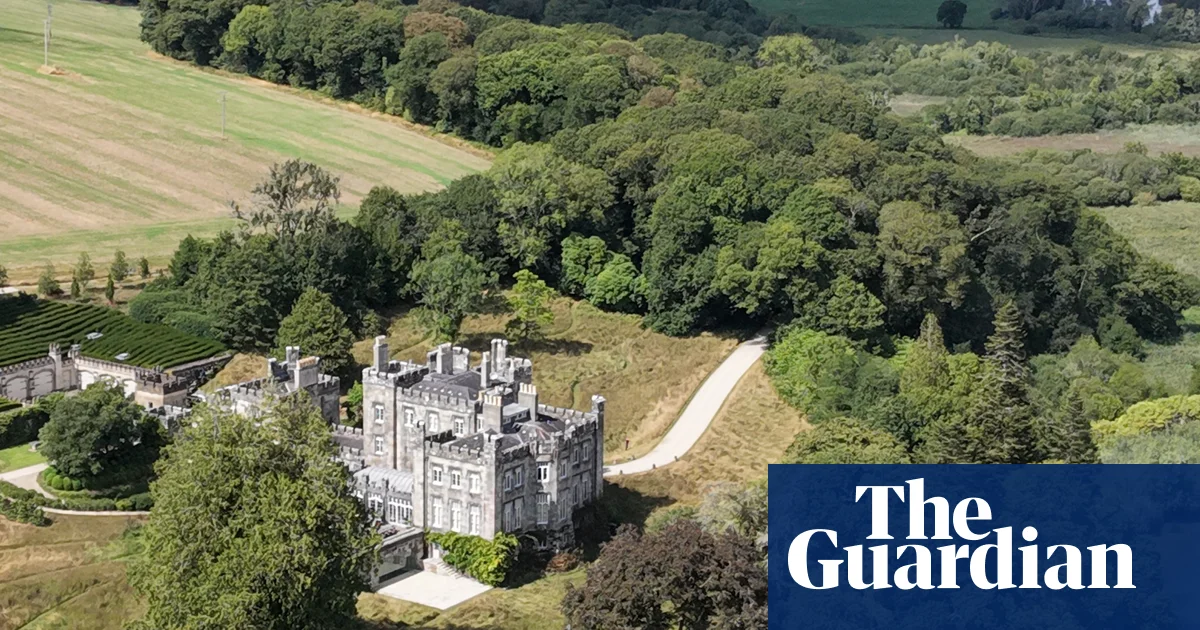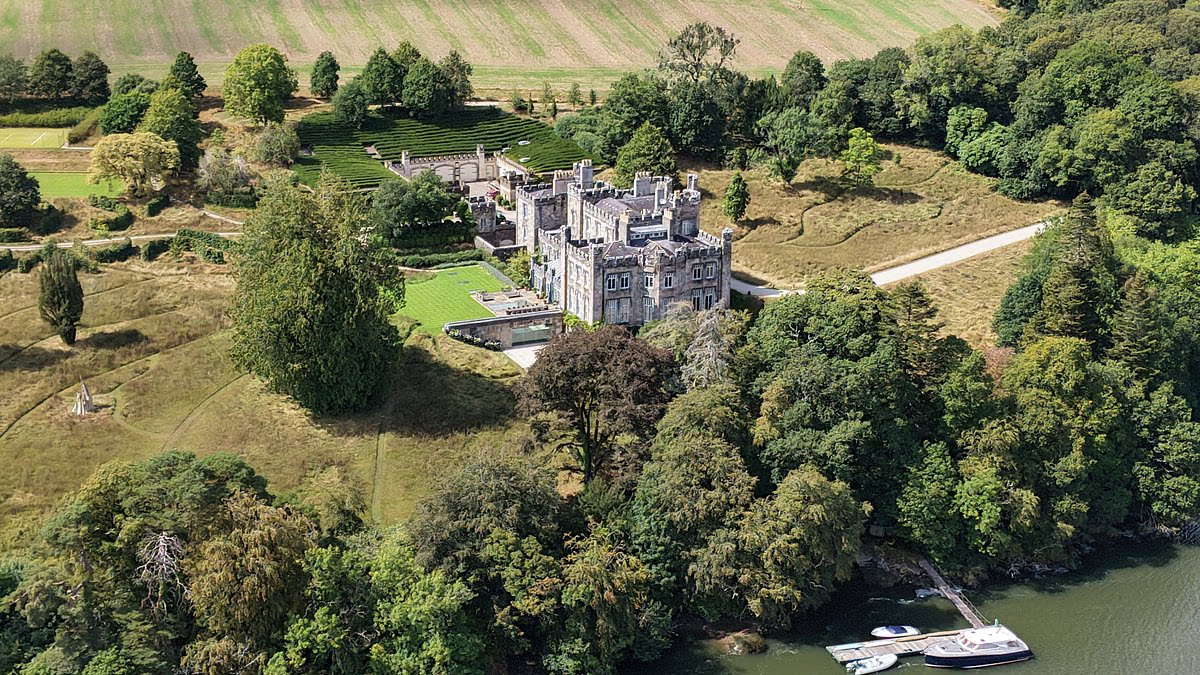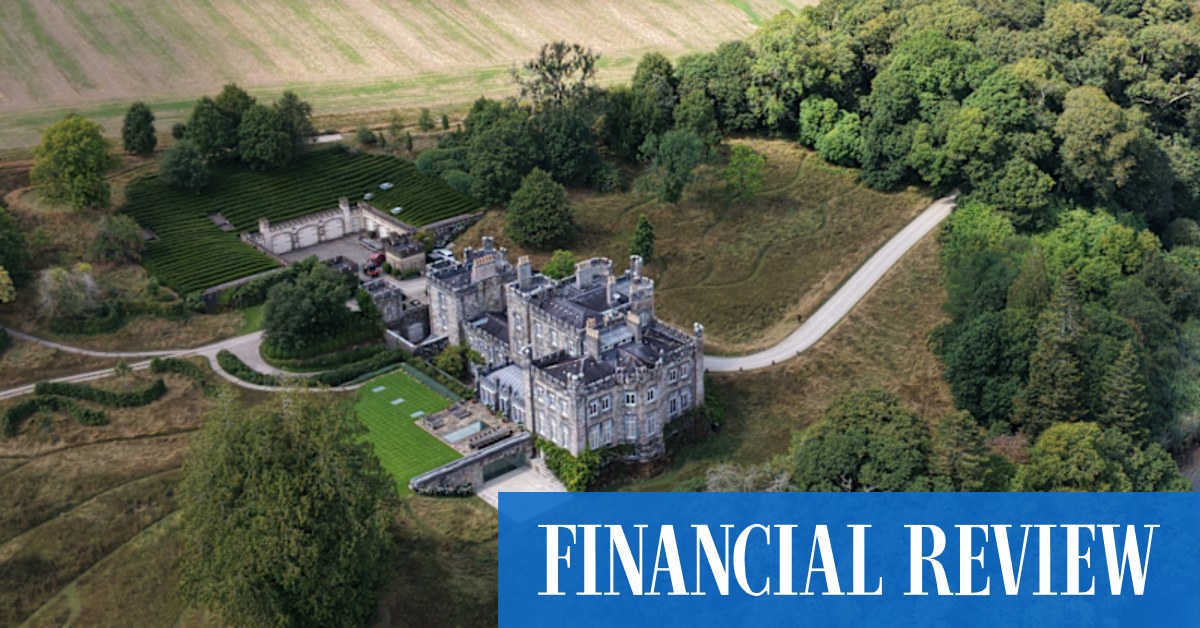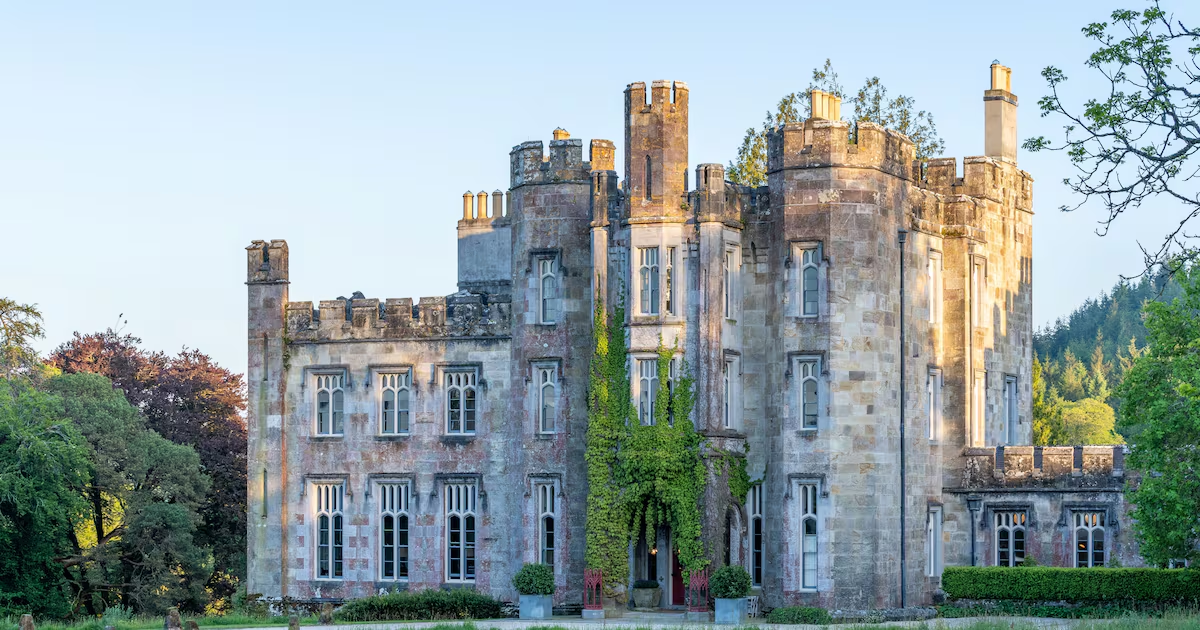
The new owners of Strancally Castle will likely have been attracted to the Co Waterford Gothic property by the chance of a game of croquet on its lawns, a dip in its swimming pool, or a “Silicon Valley walk-and-talk” in its extensive grounds. Omitted from the list of features, presumably, is its “gruesome” past.The detached three-bay, three-storey-over-basement was built in the Gothic style around 1830, for John Keily (or Kiely), a former Tory MP. It was designed by renowned brothers James and George Richard Pain, who also planned Dromoland Castle in Co Clare, Cork County Gaol and Blackrock Castle in Cork. According to The Houses of Ireland, written by Brian De Breffny and Rosemary Ffolliott, Strancally Castle was built on the site of a much earlier Desmond castle. The book describes the property as “strong and forbidding”, but notes its “fine features” inside, including “a delicate stair in light oak, skilfully cantilevered”, and “a handsome black Kilkenny marble mantelpiece in the form of a crenellated castle” in the dining room.The castle is “very large” and the book notes that the owner, Keily, was “delighted that it necessitated four and a half minutes fast walking to reach his dining room from the basement kitchen”. That might also delight new owner Mark Zuckerberg, who is known for “Silicon Valley walk-and-talks” in lieu of traditional sitdown meetings.He might be less thrilled, however, with its “gruesome history”. This likely dates from its days as a Desmond castle. In Homes and Haunts of the Most Eminent British Poets, the author, William Howitt, describes the use of a “murderous device” at the castle, carved into a rock over the river: “The unwary, when decoyed within the castle, were tied hand and foot, and hung down the murder-hole – the rapid river hurried by, and soon carried away their gasping shrieks, and the dead told no tales.”In about 1855, an Anglo-Irish family, the Whitelocke-Lloyds, acquired the castle and its 5,000 acres for approximately £10,000 after the Keilys ran into financial difficulties. William Whitelocke-Lloyd went to Oxford University with Oscar Wilde, but dropped out after failing his exams and joined the British army, where he fought in the Anglo-Zulu war of 1879.The castle and its lands were subsequently acquired by the Irish Land Commission in the mid-20th century, selling off much of the land in smaller chunks.It again came to the market in 1992, seeking offers in the range of £800,000 to £1 million. One of its features, as noted in the property pages of The Irish Times, was “oil-fired central heating virtually throughout”.The most recent owners undertook a renovation of the castle, which probably helped catch the eye of the Meta CEO.Michael Alen-Buckley, a cofounder of London-headquartered private investment firm RAB Capital, and his wife Giancarla – a daughter of the late Charles Forte and sister of Rocco Forte of the Rocco Forte Hotels group – acquired Strancally Castle 25 years ago.A report in The Irish Times from 2001 suggests that the British hedge fund manager paid over £2 million (€2.54m) for the property, including 55 acres of land.At the time, the property comprised 11 main bedrooms, five of which were en suite, with four further bedroom suites in the tower. It also offered “a number” of large reception rooms, including an inner hall, dining room, drawing room and library. It subsequently underwent several renovations, with planning documents indicating that an indoor swimming pool had been added. The castle will also offer Zuckerberg, his wife Priscilla Chan and their three children the chance to play a cultural role in area; Alen-Buckley is president of the Blackwater Valley Opera Festival, and Strancally Castle has been used as a venue for the festival.
Mark Zuckerberg’s Irish castle is immortalised in verse as the site of gruesome deeds
‘Gasping shrieks’ of victims could be heard from the fortress that once stood on the land of Strancally Castle, Co Waterford
614 words~3 min read