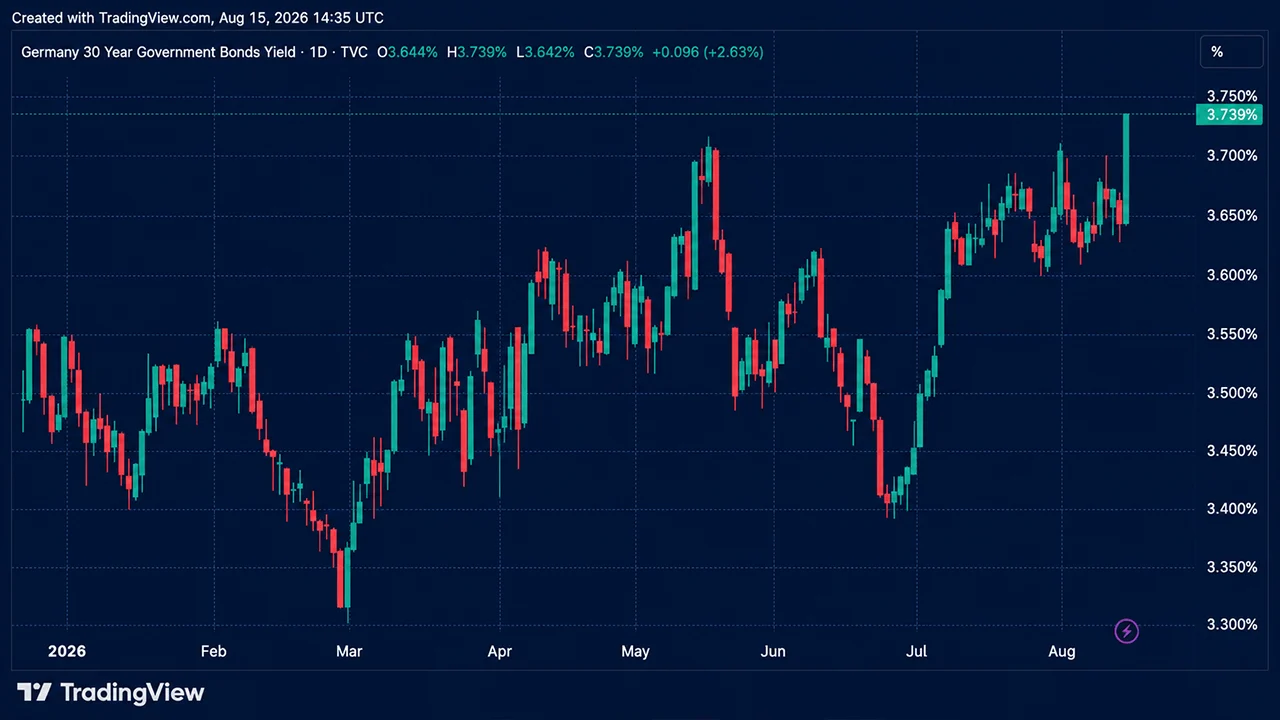
A sell-off in Europe’s bond markets may sound distant from day-to-day household finances, but it could affect the cost of mortgages and other loans, as well as how much governments can spend on public services.
Mortgage rates have started rising in Germany and Italy, two of Europe's four biggest economies.
However, mortgage rates in Italy do not necessarily follow government bond yields directly — they tend to track euro interest-rate swaps more closely, though the two often move in tandem since both reflect the wider interest-rate outlook.
Overall, higher government borrowing costs are likely to translate into higher borrowing costs for the private sector, as sovereign yields are typically used as a reference rate.
According to Robert Timper, BCA’s chief fixed income strategist, the monetary policy outlook remains the main driver of government and private-sector borrowing costs.