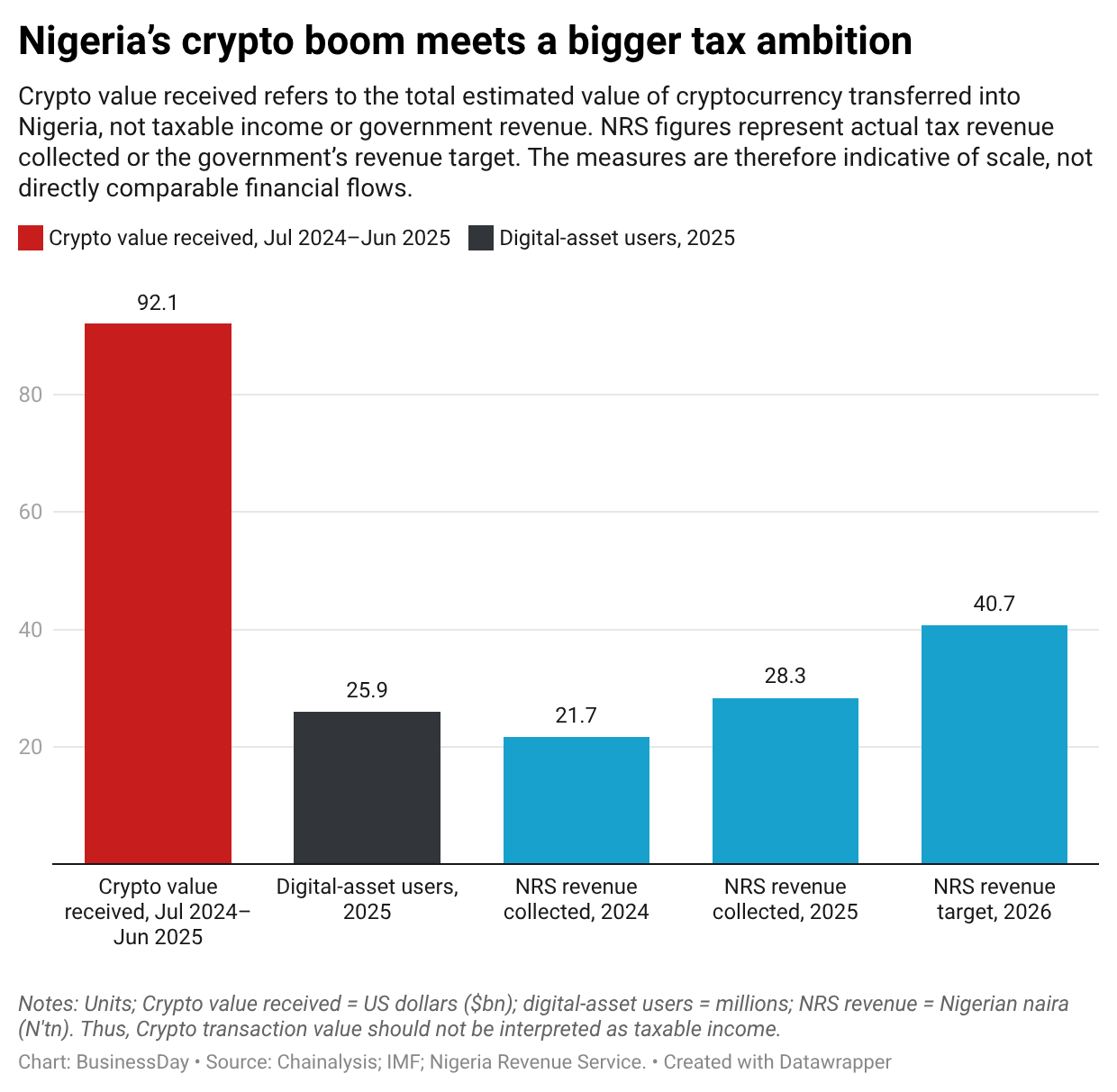
Nigeria’s tightening of crypto taxation could give the government access to a growing pool of taxable economic activity, but the size of the eventual revenue gain will depend on one difficult question: can the Nigeria Revenue Service connect digital transactions to the people and businesses earning income from them?
The opportunity is becoming harder to ignore. Nigeria received about $92.1bn in cryptocurrency value between July 2024 and June 2025, according to Chainalysis. But that figure should not be mistaken for taxable income. Much of the value represents transfers, trading turnover and movements between wallets rather than profits on which tax is necessarily due.
The fiscal significance lies elsewhere. If the NRS can identify the income generated within that activity, it could broaden the tax base without relying solely on higher tax rates.
“A Tax ID does not automatically prove that the individual presenting it is the rightful owner of that identity,” said Oyindamola Aboaba, Forensic and Financial Crimes Expert, highlighting the gap between identifying a taxpayer and tracing the ultimate beneficiary of a transaction. That distinction is central to Nigeria’s new virtual-asset regime.