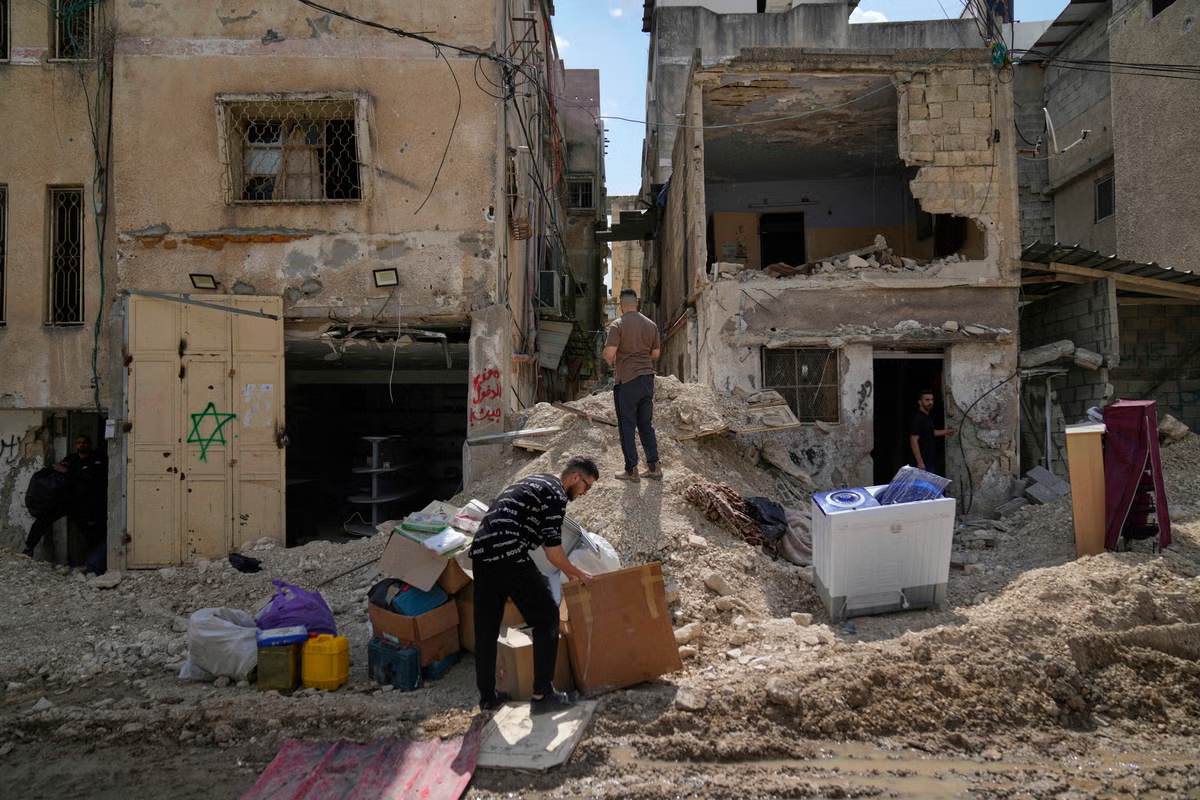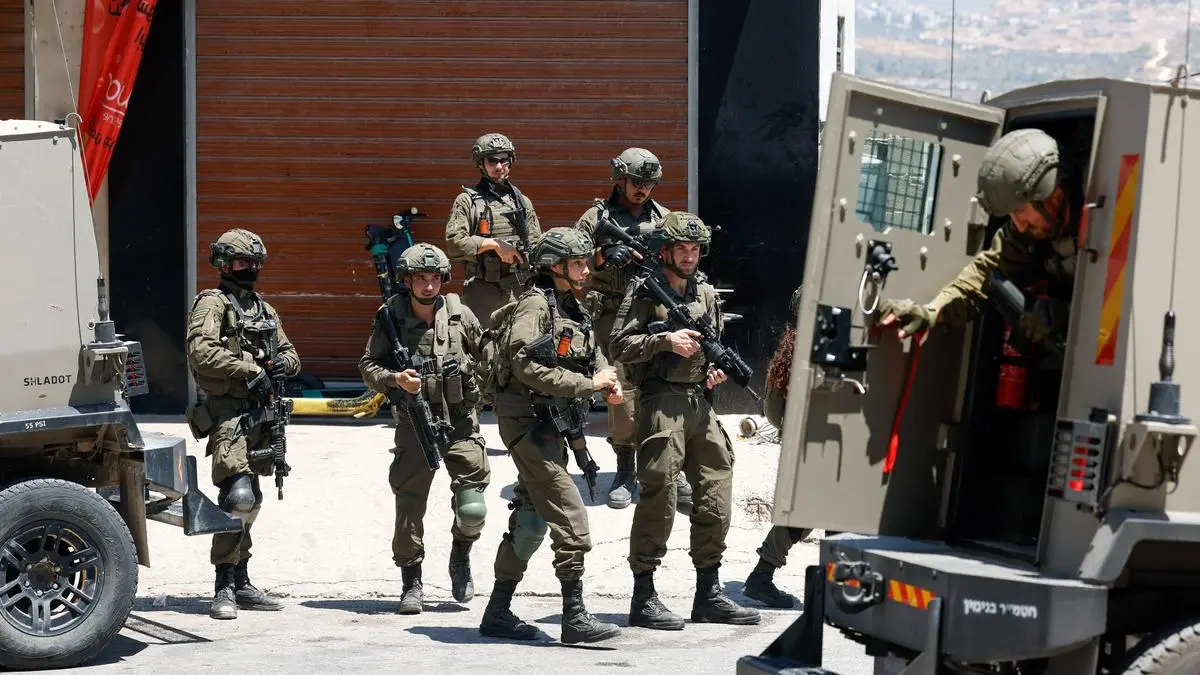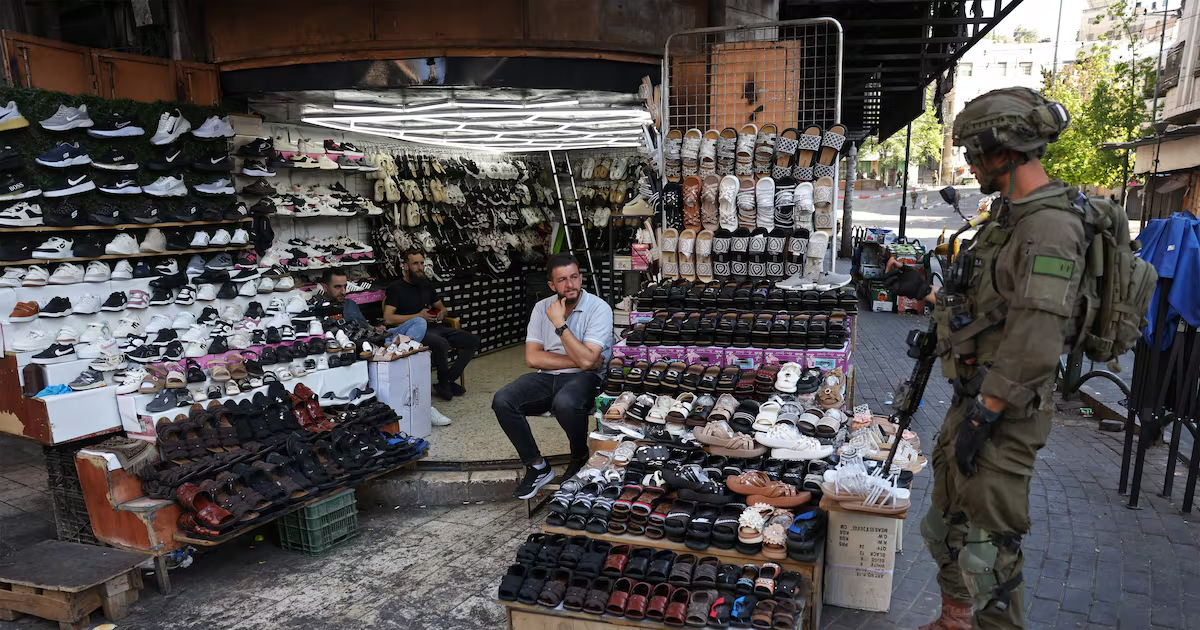
BySHOSHANA BAKERAUGUST 20, 2026 16:26Israeli pressure and restrictions on labor, government funds, banking, trade, and movement in the West Bank have pushed the territory into an economic crisis, according to a report from The New York Times on Tuesday.In the aftermath of the October 7 massacre in 2023, Israel imposed a permit ban that prevented over 100,000 Palestinian laborers from entering the West Bank, citing increased security concerns.As a result of the ban, the Palestinian Authority, which administers certain areas of the West Bank, has had to cut back on salaries and public services due to a significant drop in revenue.Since the start of the Gaza war, unemployment in the West Bank has risen to 28 percent, more than double the rate before the conflict, according to the Palestinian Central Bureau of Statistics.Then, in May 2025, Israel began confiscating hundreds of millions of dollars each month in import taxes that it collects on behalf of the PA.PALESTINIAN AUTHORITY President Mahmoud Abbas of Fatah (L) and Hamas politburo member Khalil al-Hayya. (credit: Nasser Nasser/Pool/Yamam al Shaar/Reuters)This revenue stream accounts for about two-thirds of the West Bank government's 2026 budget, projected at around $6 billion, according to Palestinian officials to the NYT.Local salaries have been slashedThe recent budget cuts have forced the PA to reduce the salaries of 140,000 civil servants and security personnel. They have also shortened the school week to three days and accumulated billions of dollars in debt.Arafat Halabi, a traffic police officer in Nablus, spoke with the NYT and said his monthly salary of about $1,500 has been halved by the cuts. “All I can do is the bare minimum,” he said.Halabi, 36, said he eats meat only on Fridays to save money, relies on public transportation to commute to work instead of driving, and hasn't been able to buy new clothes for his children.His debts are increasing because he can only afford a small payment toward his monthly loan and to cover his electricity bill.Healthcare cutsThe budget cuts have also severely impacted healthcare, according to the NYT. Pharmacies often run out of medications because government funding for purchases has been reduced, many clinics now open only a few days each week, and hospitals operate with fewer doctors and nurses.The NYT spoke with Ibtisam Hammad, a resident of the West Bank who was diagnosed with breast cancer three months ago, about the ongoing strain on healthcare in the area. After attending a hospital appointment in Ramallah, she went to a pharmacy to collect her medications. Unfortunately, only three out of her six prescriptions were available.“I’m lucky,” Ms. Hammad said, “Last time, they only had one.”In response to heightened security concerns, following the October 7 massacre and the rise in violence across the West Bank, Israel has also implemented additional roadblocks throughout the region. Palestinian sources to the NYT reported that these measures are significantly restricting the movement of goods in the area.IDF spokesperson Doron Spielman denied the claims regarding the restrictions on goods. He accused the PA of trying to divert attention from its support for terrorism and its failure to implement necessary reforms by blaming Israel.Another ongoing source of tension related to Israeli security concerns in the West Bank is the PA's practice known as ‘Pay for Slay,’ which notoriously involves providing financial stipends to the families of Palestinians who commit acts of terrorism.Although the PA claims it has taken measures to address Israeli concerns by issuing a decree to end this practice, recent April reports, based on investigations by the US State Department, indicate the payments are ongoing.Banks on the brink The NYT also noted that restrictions on Palestinian banks have significantly affected the West Bank economy. Israel imposes limits on the amount of shekels that Palestinian banks can transfer to Israeli banks, which restricts Palestinian merchants from purchasing goods from Israel and other countries.The current Netanyahu government allows quarterly transfers of about $1.5 billion from Palestinian to Israeli banks, which is far less than what previous administrations permitted. As a result, approximately $5.7 billion is currently sitting unused in bank vaults in the West Bank, according to officials from the Palestinian government and banking sector.“They’re preventing us from meeting the demand in our markets,” said Bashar Yasin, general manager of the Association of Banks in Palestine, a trade group, told the NYT.Palestinian banking executives are also concerned that their institutions might be cut off from Israeli banks. Israel Discount Bank and Bank Hapoalim, the only Israeli banks working with Palestinians, fear that these ties could lead to lawsuits over money laundering or terrorist financing and have threatened to end these partnerships.Yahya Shunnar, the governor of the Palestinian Monetary Authority, cautioned diplomats in July that the Palestinian economy was approaching a “full crisis” due to Israel’s economic restrictions, according to a recording of his remarks obtained by the NYT.“There remains a narrow window to act, but it’s closing,” Shunnar said. “And it’s closing quickly.”Follow us on Google
Israeli restrictions push West Bank economy toward crisis | The Jerusalem Post
Unemployment, reduced public salaries and strained healthcare are worsening the West Bank’s economic crisis amid Israeli restrictions, The New York Times reported.
821 words~4 min read