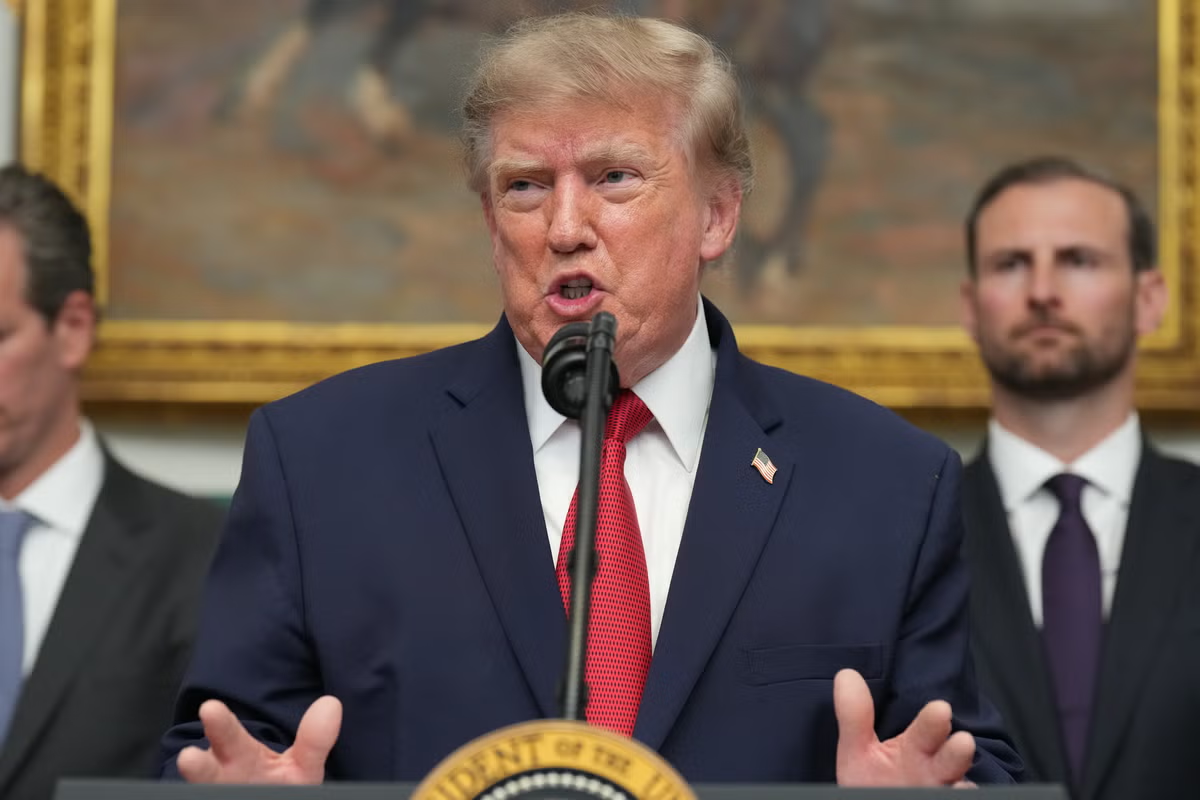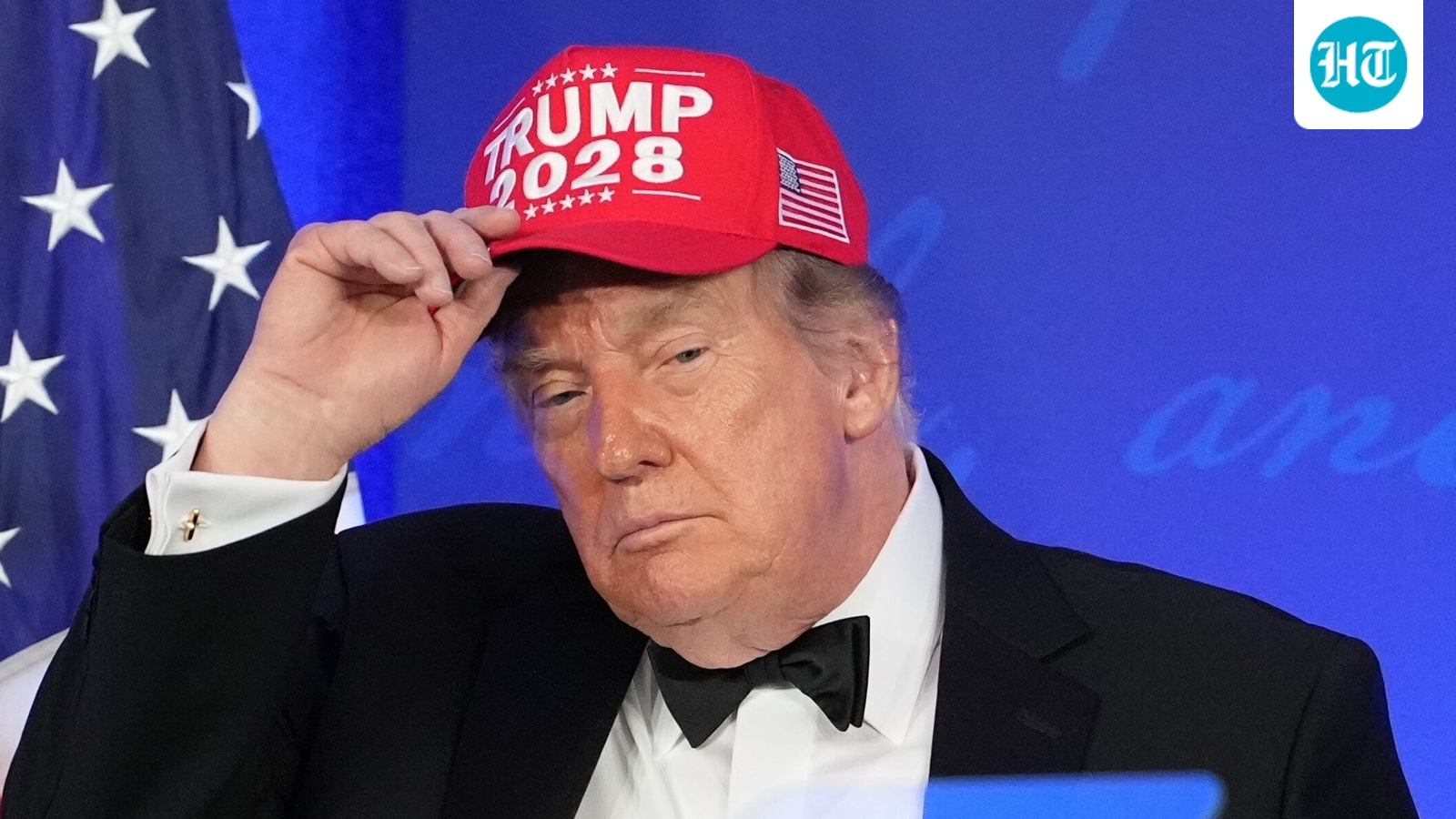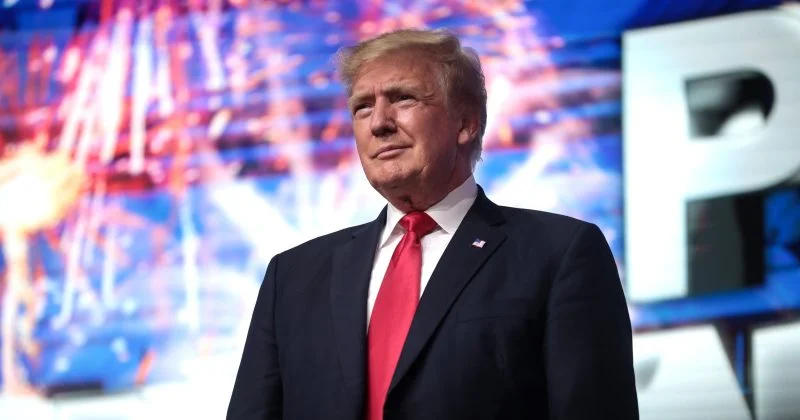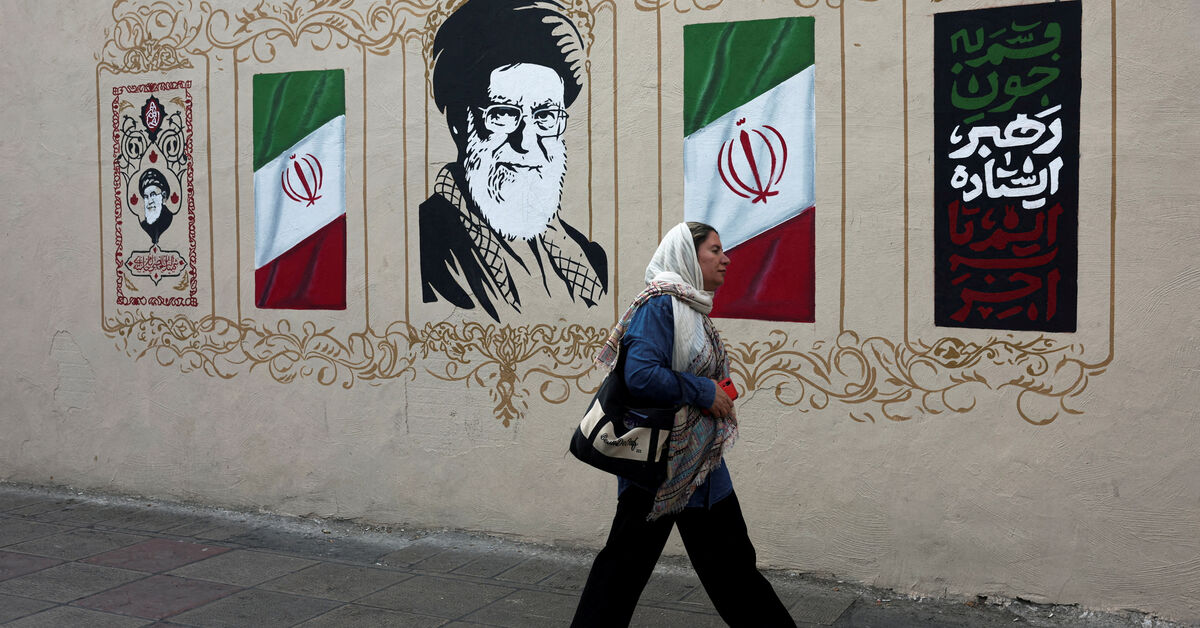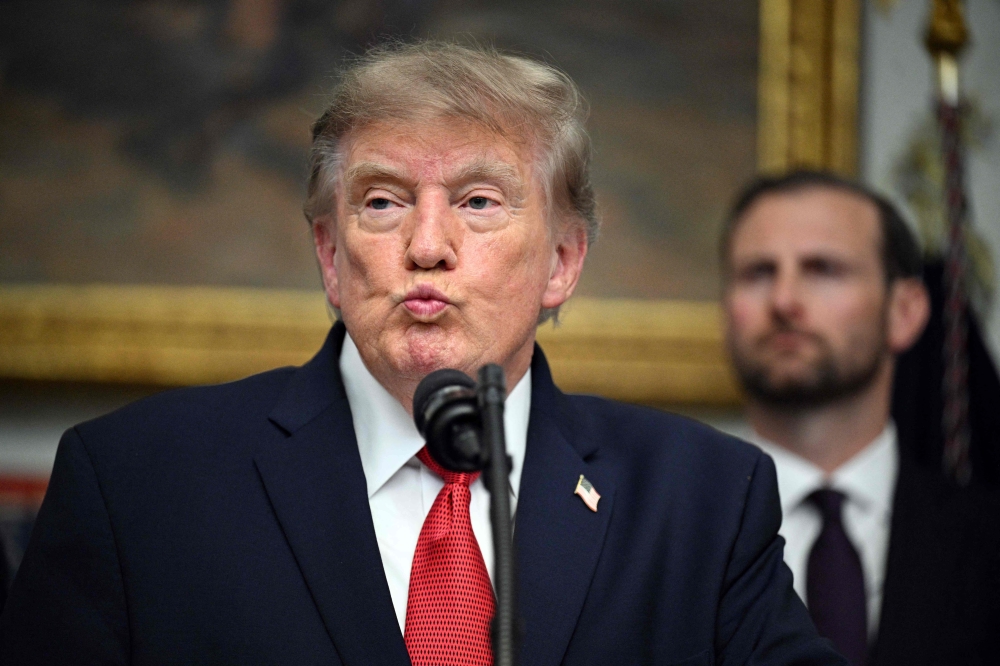
US President Donald Trump’s latest threat about “economic consequences” for countries dealing with Iran appears to be aimed at countries in Asia and the Middle East, although details remain sparse at this point. Mr Trump warned on Wednesday that any country that allows financial institutions, businesses or government entities to provide any type of support to Iran will itself face “tremendous economic consequences”.“Oil smuggling, swap lines, cash transfers, exchange houses, ship registries, front companies – it all needs to stop now,” he wrote on Truth Social. “You know who you are.”He also said the US would carry out the “most crushing economic operation” ever taken against a country, targeting Iran with economic warfare and isolation.His remarks came as a peace deal between the US and Iran, including the reopening of the Strait of Hormuz, remains elusive. Play00:31Trump says Strait of Hormuz will be 'territory' of US“With direct negotiations in limbo, the Trump administration seems to be moving from conventional to “secondary” sanctions, ie, threatening the imposition of sanctions or tariffs against third-party nations,” said Aathira Prasad, director of macroeconomics at Nasser Saidi and Associates. But she stressed that there are no details available on what the exact measures would be. “The aim seems to be forcing global players such as China, India and Middle East nations to choose between trade links with Iran and access to the US market, hence increasing pressure on Iran’s export revenues, including non-oil.”Iran’s main trading partners between January and October last year were China, with trade of $14.5 billion, Iraq ($10.5 billion), the UAE ($7.5 billion) and Turkey ($7.3 billion), according to Trade Data Monitor.For the whole of last year, China reported $9.96 billion in total bilateral trade with Iran, although that amount does not include roughly $31.2 billion in unreported Iranian crude oil exports to China, according to the US-China Economic and Security Review Commission. Iran’s trade data for this year, following the start of the war on February 28, is not publicly available. On Thursday, the country’s central bank chief said Iran is currently exporting no oil. Abdolnaser Hemmati said Tehran faced severe restrictions on oil exports as Washington steps up economic pressure while efforts to resolve the war remain deadlocked.“There is no doubt that we have restrictions on oil exports,” Mr Hemmati said on state television. He said he had spoken to counterparts overseas and was told revenue from oil sales had “fallen to zero”. He added: “The same thing has happened to us and it is a reality that we are not exporting oil.”Strait of Hormuz crossings fall 64% since Iran-US agrement. The NationalShow caption: Strait of Hormuz crossings fall 64% since Iran-US agrement. …Meanwhile, the UAE on Tuesday said it was halting “all trade, commercial exchange and financial transactions with Iran” due to the threat Tehran poses to the region. The decision follows a spate of attacks on UAE-owned tankers and Tehran's rejection of talks with the US. Shortly before the statement, Iran fired two missiles at the UAE. One landed in Emirati territorial waters, while the second landed outside its territory.“The United Arab Emirates remains firmly committed to safeguarding the integrity of the international financial system, in line with international law and the highest global standards,” said Afra Al Hameli, director of strategic communications at the Ministry of Foreign Affairs. The announcement represents a shift in the economic relationship between the two neighbours, which have maintained commercial ties despite long-standing political tensions in the region.While the UAE announced the suspension of all trade activities with Iran before Mr Trump’s post, for other Gulf nations, “it is more likely that discussions will lead to a mix of diplomatic exemptions and stricter enforcement on specific goods”, said Ms Prasad.“Banks and businesses will need to strictly enforce anti-money laundering (AML/CFT) frameworks to satisfy international compliance and avoid secondary US sanctions.”Credible threat?The latest threat is not the first from the Trump administration, which has been seeking to use economic measures to isolate and pressure Iran. In early February, before the war began, Mr Trump had signed an executive order imposing sanctions on Iran’s key trading partners, without specifying a rate. Mr Trump had first announced the tariff threat in January at a rate of 25 per cent. However, there is no clarity on whether it was implemented at all. “The [Trump] administration has never shied away from deploying sanctions/tariffs unilaterally,” said Ms Prasad. “But, as seen before, any such move will face significant implementation hurdles, legal challenges and risks to US inflation. What we have seen is that these threats often serve as temporary leverage/bargaining positions than permanent barriers.” She cited country-specific exemptions and grace periods with major trade partners, including China and other major allies after the Liberation Day tariffs.China has responded to the latest US threat, saying sanctions and pressure would not work and called for a diplomatic resolution, Bloomberg reported. Iran also hit back at the US. “Doubling down on failed policies will only bring further defeat – and enmity of Iranians,” Iranian Foreign Minister Abbas Araghchi said on X. “US economic terrorism threatens global economy and sovereignty worldwide.”
Trump's threat of economic consequences: who will it affect and is it credible? | The National
Move is aimed at pushing China, India and Middle East nations to choose between Tehran and US access
849 words~4 min read