Open Source software plays a central role in global innovation, research, and economic growth. That statement is familiar to anyone working in technology, but the scale of its impact is still startling. A 2024 Harvard-backed study estimates that the demand-side value of the Open Source ecosystem is approximately $8.8 trillion, and that companies would need to spend 3.5 times more on software if Open Source did not exist.
Those numbers underscore a simple truth: Open Source is not a niche concern or a developer-only issue. It is economic infrastructure. And like any critical infrastructure, it depends not only on technical excellence, but on policy environments that understand how it works.
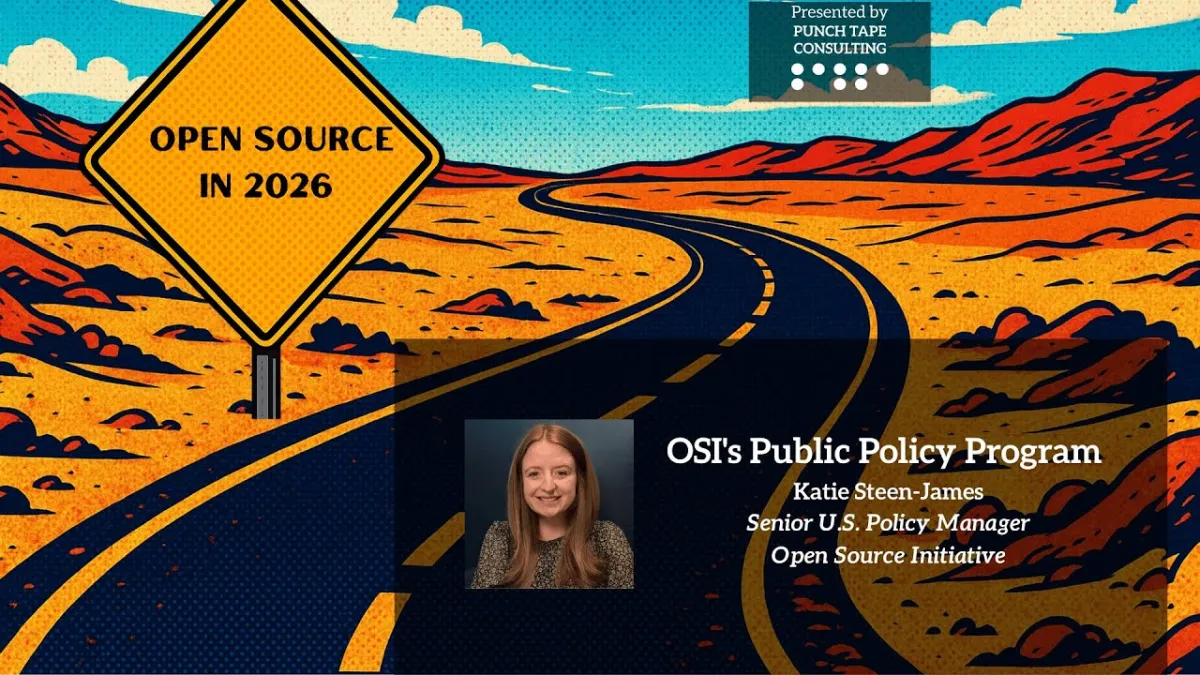
This reality sits at the center of the Open Source Initiative’s (OSI) expanding work in public policy, a move that reflects how deeply Open Source is now entangled with global regulation, security, and emerging technologies like AI.
From License Stewardship to Policy Engagement
For decades, OSI has been best known as the steward of the Open Source Definition and the organization responsible for approving Open Source licenses. That work continues today, supported by an active license review committee that evaluates submissions against the definition to ensure software remains genuinely open.