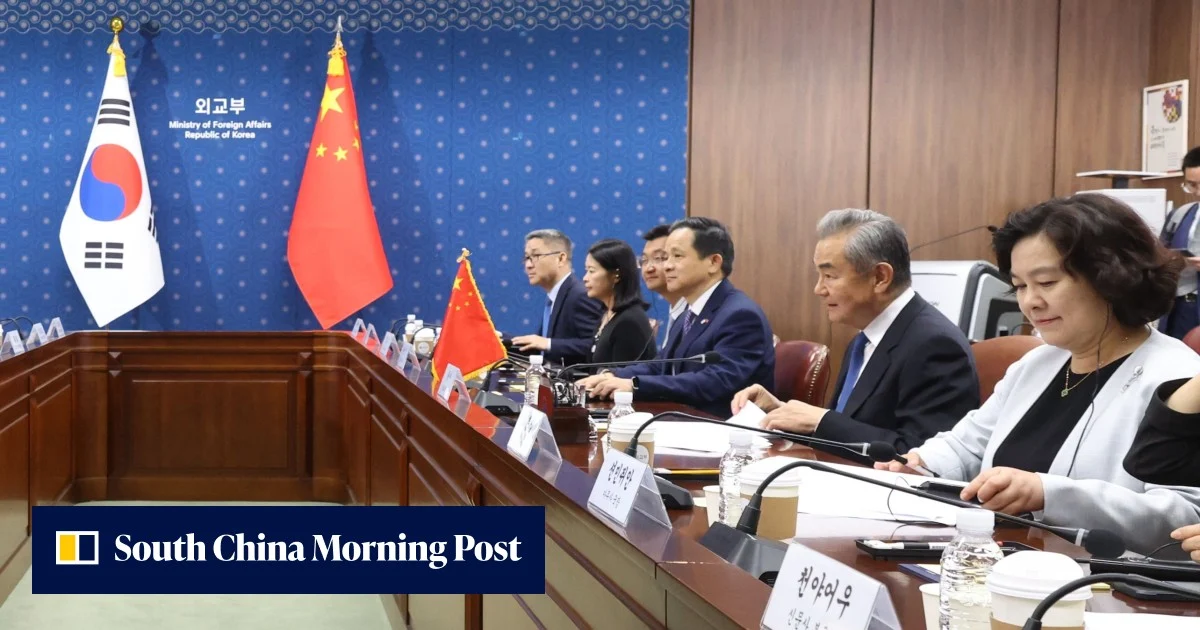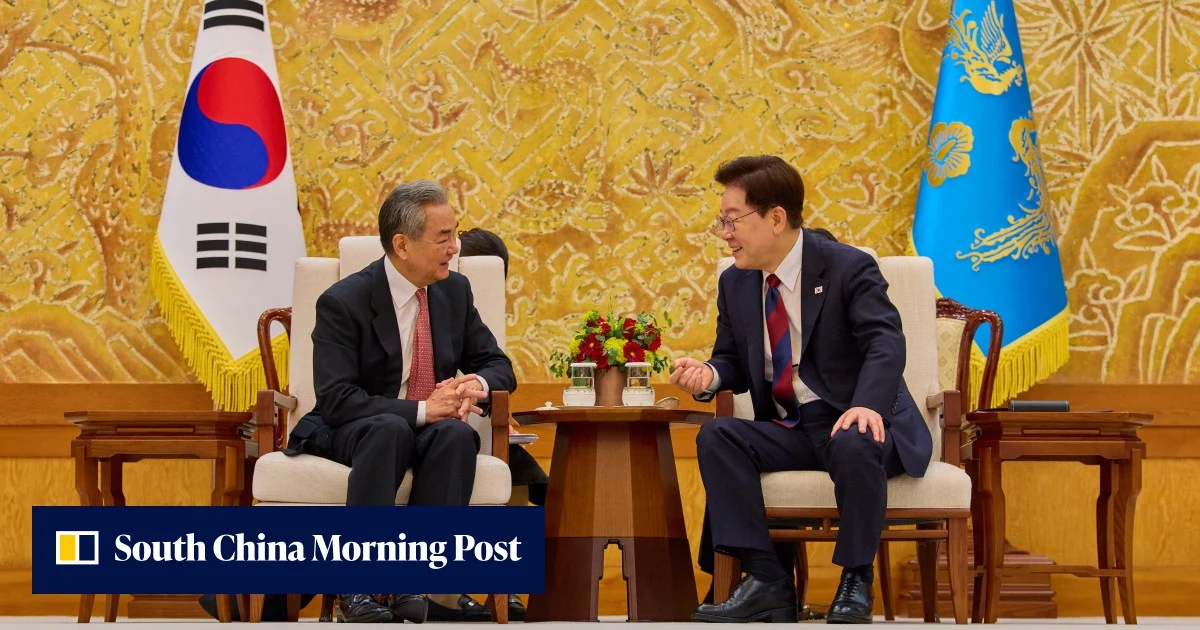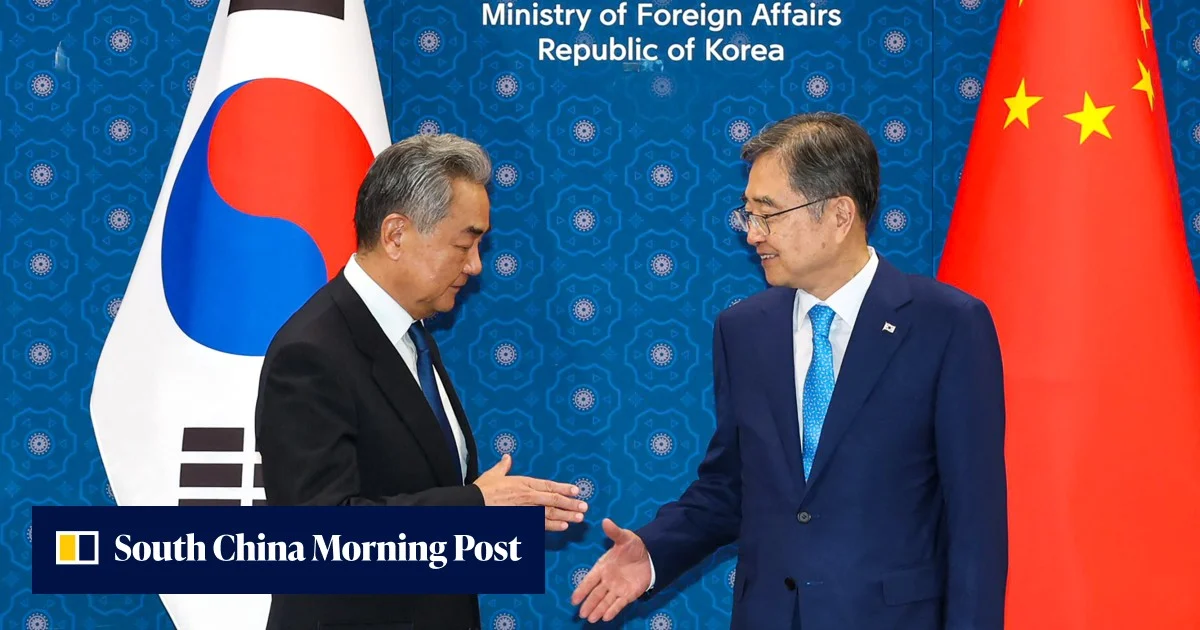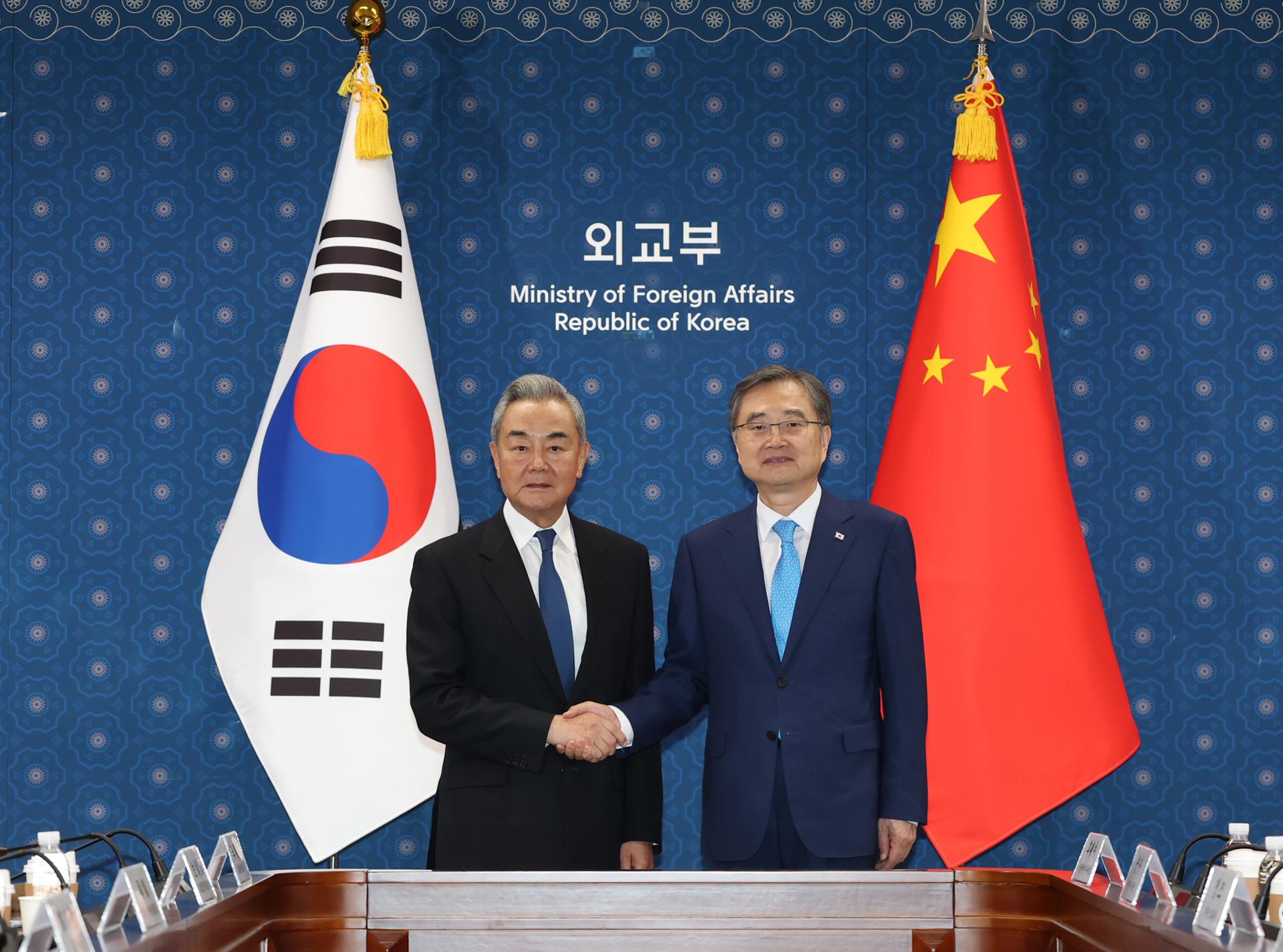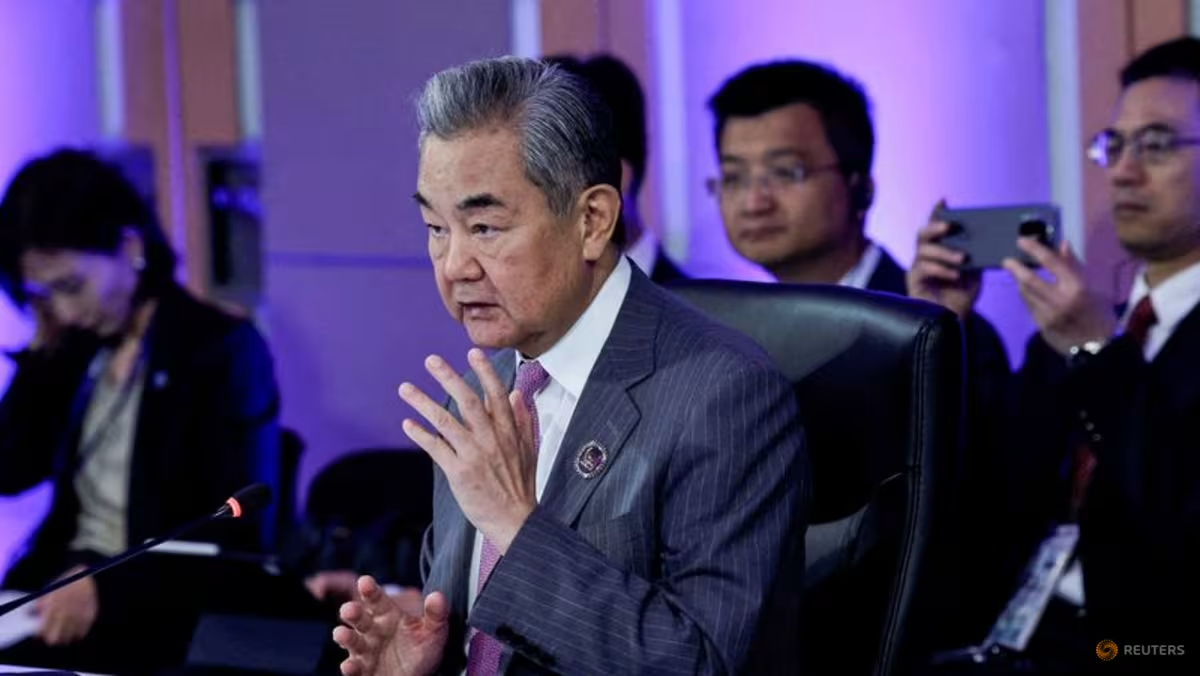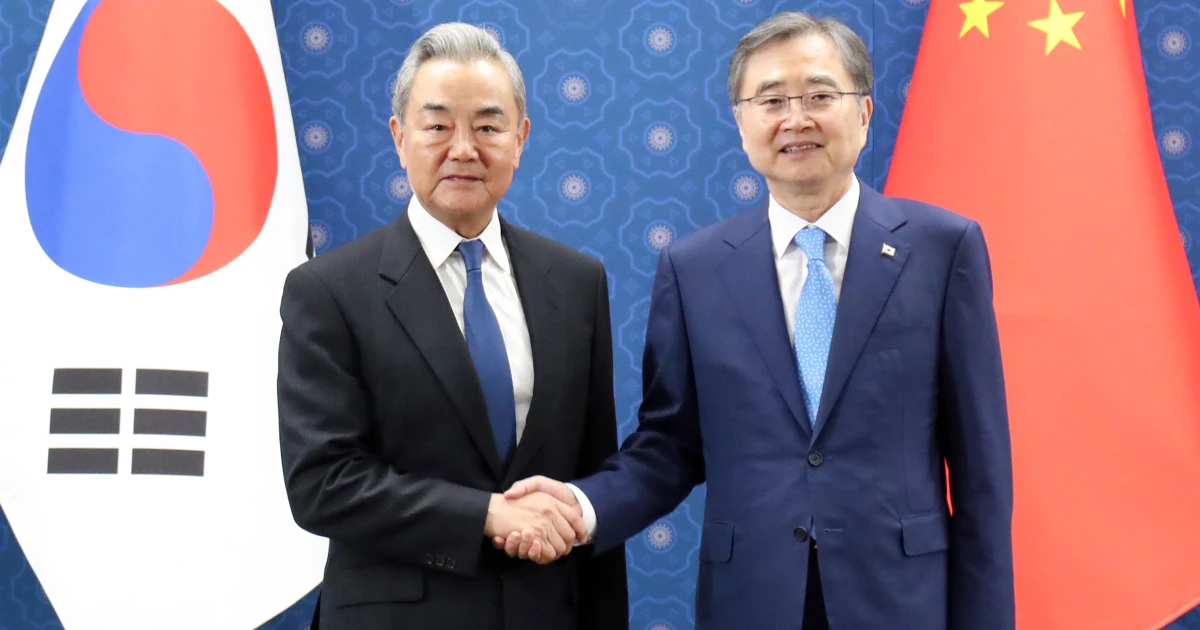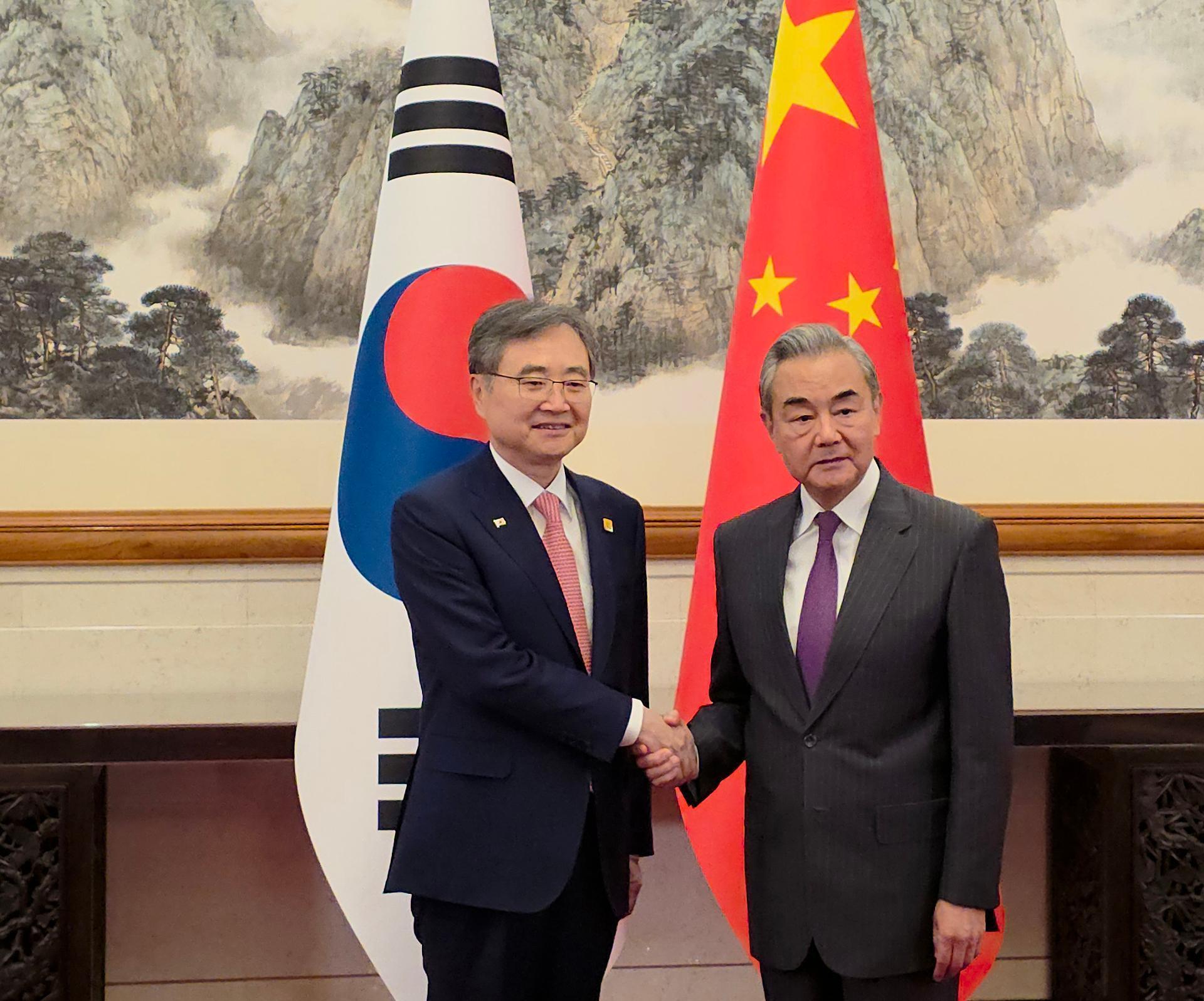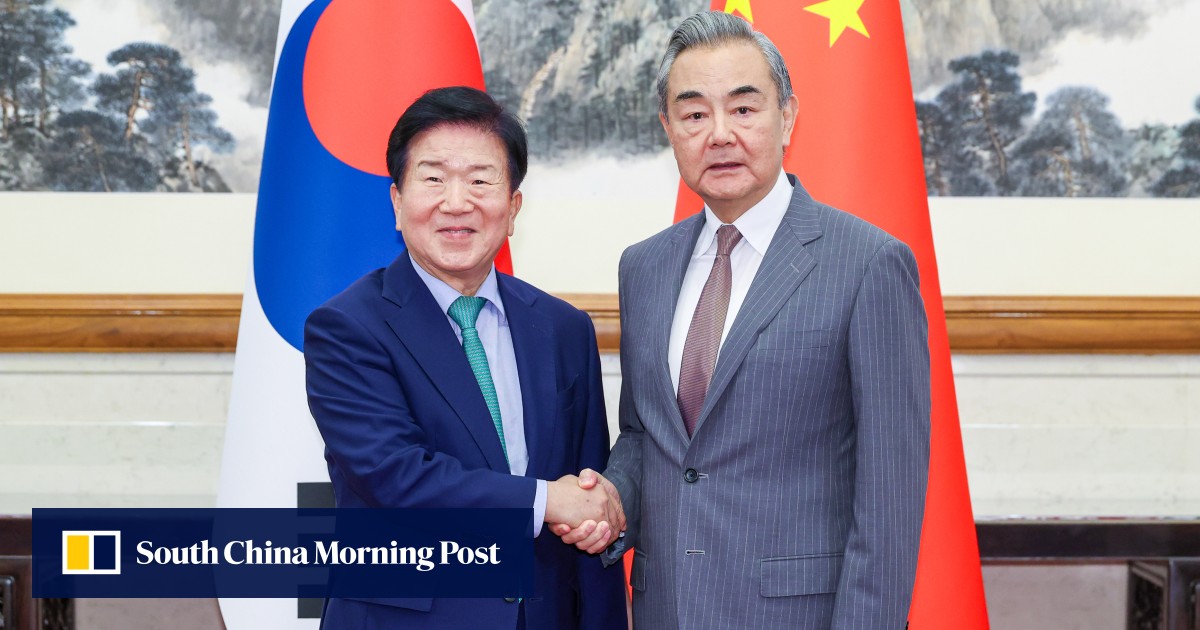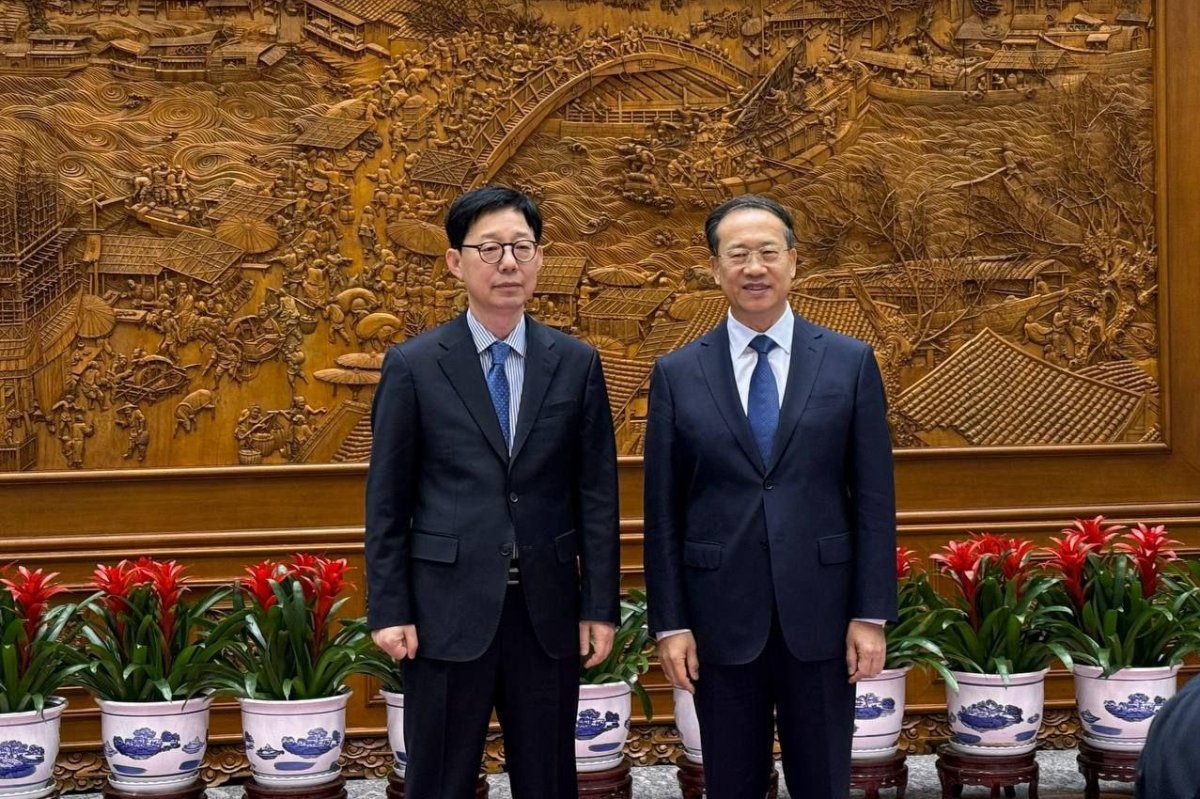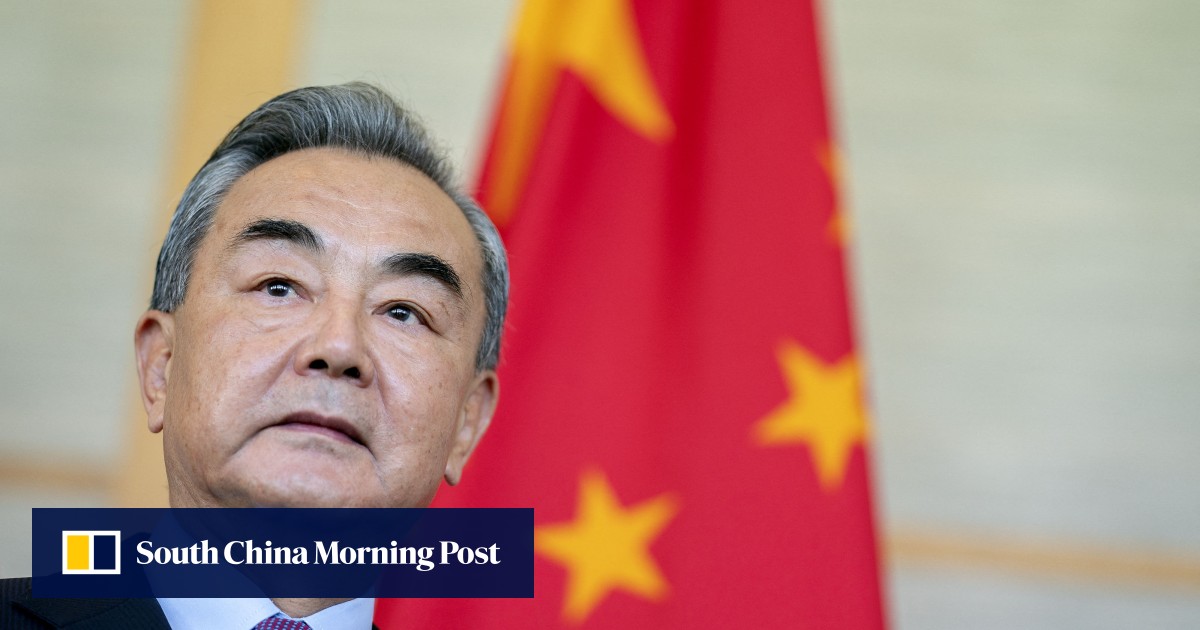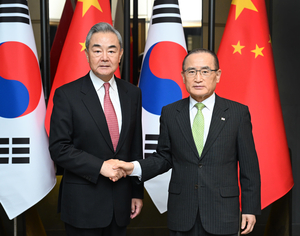
Dialogue channel between South Korea’s national security office and China’s foreign affairs office restored after nearly five years Korea's National Security Adviser Wi Sung-lac (right) shakes hands with China's Foreign Minister Wang Yi ahead of their strategic dialogue in Seoul on Thursday. (Cheong Wa Dae) Senior officials from South Korea and China agreed Thursday to maintain "close communication" on developments on the Korean Peninsula and seek broader common ground on regional and global issues, according to Cheong Wa Dae.National Security Adviser Wi Sung-lac and Chinese Foreign Minister Wang Yi reached the agreement during talks and a luncheon in Seoul.Cheong Wa Dae said Wi and Wang “exchanged a wide range of views on matters of mutual interest, including the future direction of Korea-China relations, the situation on the Korean Peninsula, and regional and international issues.”The two sides exchanged views on the latest situation on the Korean Peninsula, with Wi outlining President Lee Jae Myung's vision for peaceful coexistence as unveiled in his Liberation Day address on Aug. 15.Lee called on "the parties concerned" to begin discussions to “bring this long-standing war to an end” and replace the 1953 armistice with a peace regime, referring to the two Koreas, the United States and China.Wi outlined the Lee administration's efforts to resume dialogue with North Korea and its “phased and pragmatic approach to denuclearization beginning with a halt,” while asking China to play a “constructive role” in advancing Seoul's North Korea policy, according to Cheong Wa Dae.Wang said China's policy toward the Korean Peninsula has maintained "continuity and stability" and that Beijing would continue to play a "constructive role" in promoting peace and stability on the peninsula, Cheong Wa Dae added.“The two sides agreed to continue close communication on developments surrounding the Korean Peninsula,” Cheong Wa Dae said.The pledge was followed just hours later by renewed tensions. Hours after Wang wrapped up his visit, South Korea's military said it detected around a dozen short-range ballistic missiles launched from the Pyongyang area toward the East Sea at around 5 p.m. Thursday.During their meeting, Wi and Wang also exchanged views on rapidly changing regional and international affairs.“In particular, they shared the view that, at a time when countries in the region are more closely interconnected politically and economically than ever before, each country needs to respect the positions of others, cooperate and make efforts to broaden common ground,” Cheong Wa Dae said.The meeting marked the restoration of a dialogue channel between South Korea's presidential national security office and the Chinese Communist Party Central Committee's Foreign Affairs Commission Office, of which Wang is the director, nearly five years after the channel was suspended in December 2021.Wi and Wang welcomed the resumption of dialogue between the two countries' senior foreign policy and national security officials and agreed to “operate the dialogue channel on a regular basis,” according to Cheong Wa Dae.The two also reviewed the development of bilateral ties over the 34 years since South Korea and China established diplomatic relations and reaffirmed their governments' commitment to developing a “stable relationship” that produces “tangible benefits” for the people of both countries.At the end of the meeting, Wang invited Wi to visit China. Wi accepted the invitation, and the two sides agreed to continue consultations on arranging the trip at a mutually convenient time, Cheong Wa Dae added.According to China's Foreign Ministry, Wang also laid out China's principled position on regional and Korean Peninsula issues during his meeting with Wi.Wang said the “fundamental way to resolve tensions on the Korean Peninsula is to eliminate the root cause of the problem and get the United States to abandon its hostile policy toward North Korea,” according to the ministry.Wang further “expressed hope that all parties would take more actions conducive to restarting dialogue and restoring mutual trust.”He also said “China would welcome the Korean Peninsula moving toward peaceful coexistence between South and North Korea, and ultimately toward a transition from the armistice regime to a peace regime and lasting peace and stability on the peninsula,” according to the ministry.The Chinese readout also underscored Beijing's message on Seoul's broader foreign policy posture, particularly its relations with major powers.Wang called for closer communication and greater mutual trust between the two countries, while urging them to “avoid unnecessary suspicion about each other's intentions” and expand strategic cooperation across political, economic, trade and security fields.More pointedly, Wang said, “China hopes South Korea will achieve genuine strategic autonomy, refrain from bloc confrontation and from choosing sides, and develop relations with major powers such as China and the United States in parallel without conflict,” according to the ministry.
Seoul, Beijing agree to ‘close communication’ on Peninsula affairs: Cheong Wa Dae
Senior officials from South Korea and China agreed Thursday to maintain "close communication" on developments on the Korean Peninsula and seek broader common gr
763 words~3 min read