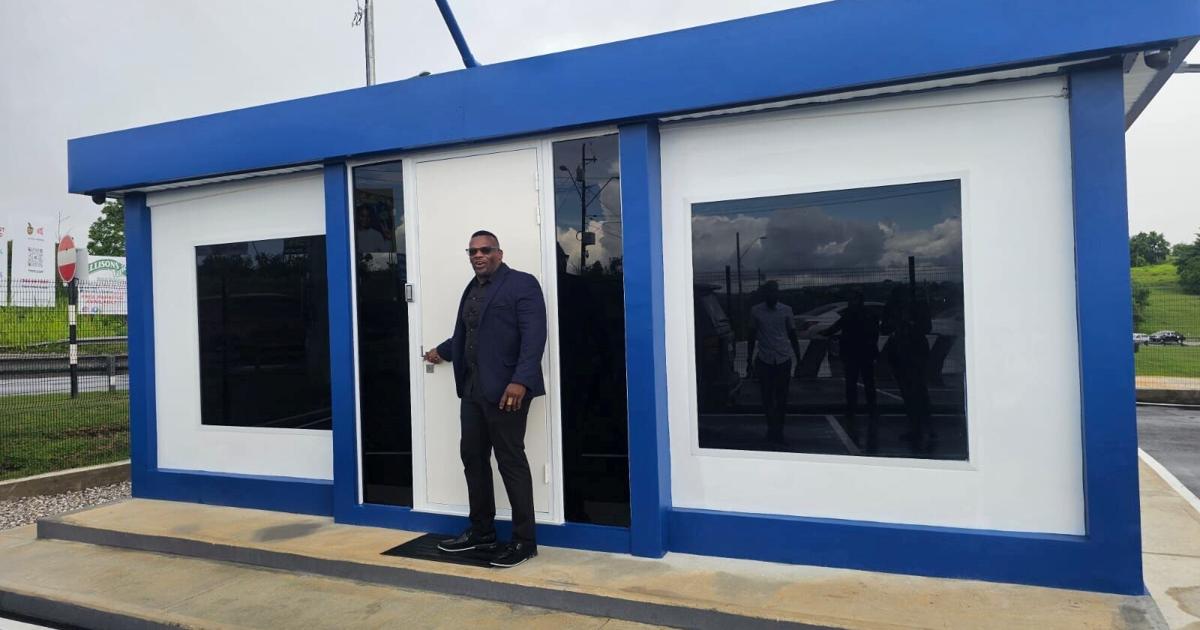
Minister of Homeland Security Roger Alexander says some of the Government’s new joint army-police posts will become permanent fixtures across Trinidad and Tobago, and form part of a long-term crime-fighting strategy beyond the current state of emergency (SoE).Alexander made the disclosure yesterday as, upon request, he gave the Express an exclusive tour of the bullet-proof post located at the Tarouba flyover in San Fernando.The fully air-conditioned unit is equipped with CCTV cameras mounted on top and comprises a front desk area, mini-kitchen, washroom with a toilet and shower, and two interview rooms which can be modified for other uses.
One of the air-conditioned rooms of the bullet-proof police post located at the Tarouba Flyover in San Fernando. The Express was given a tour of the post by Homeland Security Minister Roger Alexander yesterday. Photo: ANNA RAMDASS
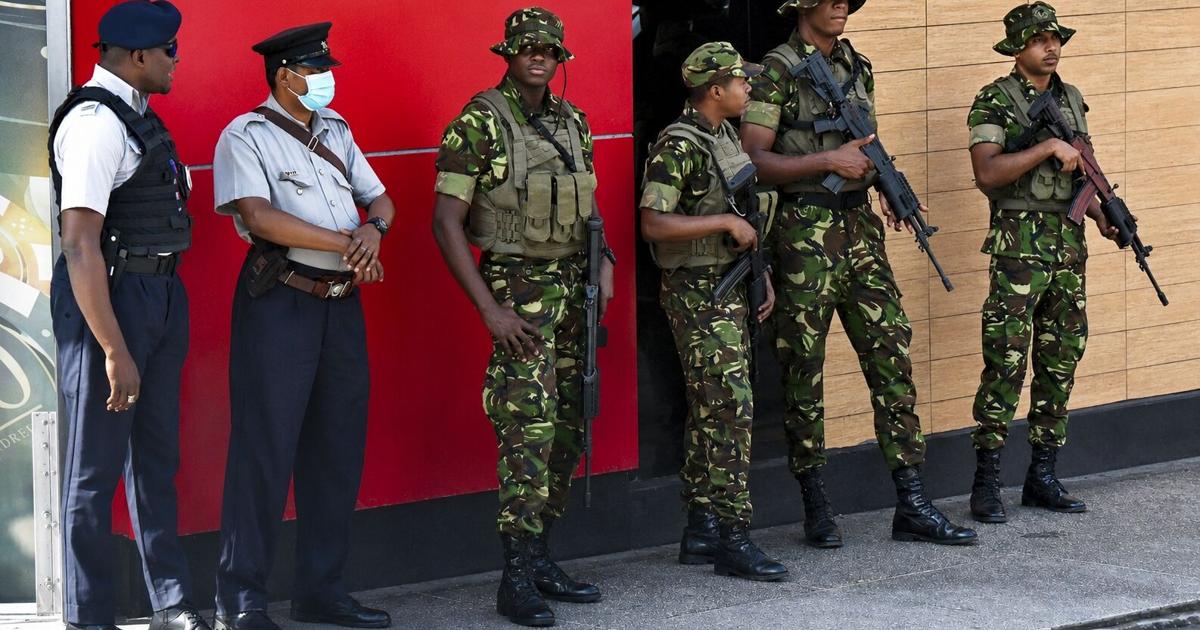
Pointing to the CCTV system, Alexander said officers stationed at the unit will be able to view footage in real time from the surrounding area and other locations.He said the units were designed not only to provide a strategic policing presence, but also to ensure officers were comfortable while on duty.Alexander emphasised that the initiative was not an overnight plan, but the result of detailed planning about how law enforcement could respond more effectively to crime.“We thought about the response. We thought about how best this could serve Trinidad and Tobago in the crime-fighting effort,” he said.The initiative was first announced by Prime Minister Kamla Persad-Bissessar on August 3, when she disclosed that 30 joint army-police posts would be established in communities across Trinidad and Tobago over a four-month period.In a Facebook post, Persad-Bissessar said the initiative was aimed at responding to long-standing requests from communities for an increased security presence and helping citizens reclaim public spaces.Alexander said the units were not intended solely to respond to criminal activity, but would also serve as points of engagement between law enforcement and communities.He pointed to the level of “foot traffic” at the post at Eddie Hart Grounds in Tacarigua, saying such facilities could provide greater safety for people using public spaces while allowing them direct contact with police officers.“We want the public to have trust in the police, we want police officers to go in the communities, talk to the persons in the church, the schools, the businesspeople... neighbourhood... We want that kind of communication,” he said.Asked about the extent of the CCTV coverage, Alexander said he could not disclose the information for security reasons. “I can only tell you this much. We can see enough to respond, defend and protect.”Govt working on vehicles assigned to posts He said staffing levels at the units will be determined by the Commissioner of Police and the Chief of Defence Staff.Additionally, Alexander said the Government was working to have a patrol vehicle assigned to the units to improve officers’ ability to respond rapidly to incidents.He dismissed criticism of the initiative and expressed confidence that the posts will be successful.“We are thinking advanced policing. And again, some persons will have issues with it. They don’t understand. They don’t read. They don’t look at the nations that are successful in some of the operations because of what they are implementing,” he said.With the SoE scheduled to come to an end on September 17, 2026, Alexander said the units will help strengthen law enforcement’s ability to respond to criminality.“The strategy used, as I said before, is one that is tactical, responsive, and communicative,” he said.Alexander also sought to address questions surrounding the cost of the units and the contractors involved, saying there was “nothing to hide” and the information will be made available to the public.“We are looking forward to this initiative. I know that it will be successful,” he said.During the tour, Alexander walked a few metres from the unit to the Tarouba flyover, which overlooks traffic along the Sir Solomon Hochoy Highway.He pointed to the strategic positioning of the post, saying officers could monitor traffic travelling both northbound and southbound, and respond quickly to developing situations.“It’s in a strategic position that could be used for operational speed and support to other police officers. Take, for instance, if there is a high-speed chase. Officers can emerge from here and become part of that chase or do an interception at short notice,” he said.Alexander said the National Operations Centre will also play a strategic role in ensuring the initiative is supported by an intelligence-led response.He said the rollout of the remaining units will be determined by Prime Minister Persad-Bissessar, who chairs the National Security Council.The posts are to be manned jointly by officers of the Trinidad and Tobago Police Service and members of the Trinidad and Tobago Defence Force, with the Government saying the initiative is intended to increase the visibility of the protective services, improve response capabilities and help communities reclaim public spaces.