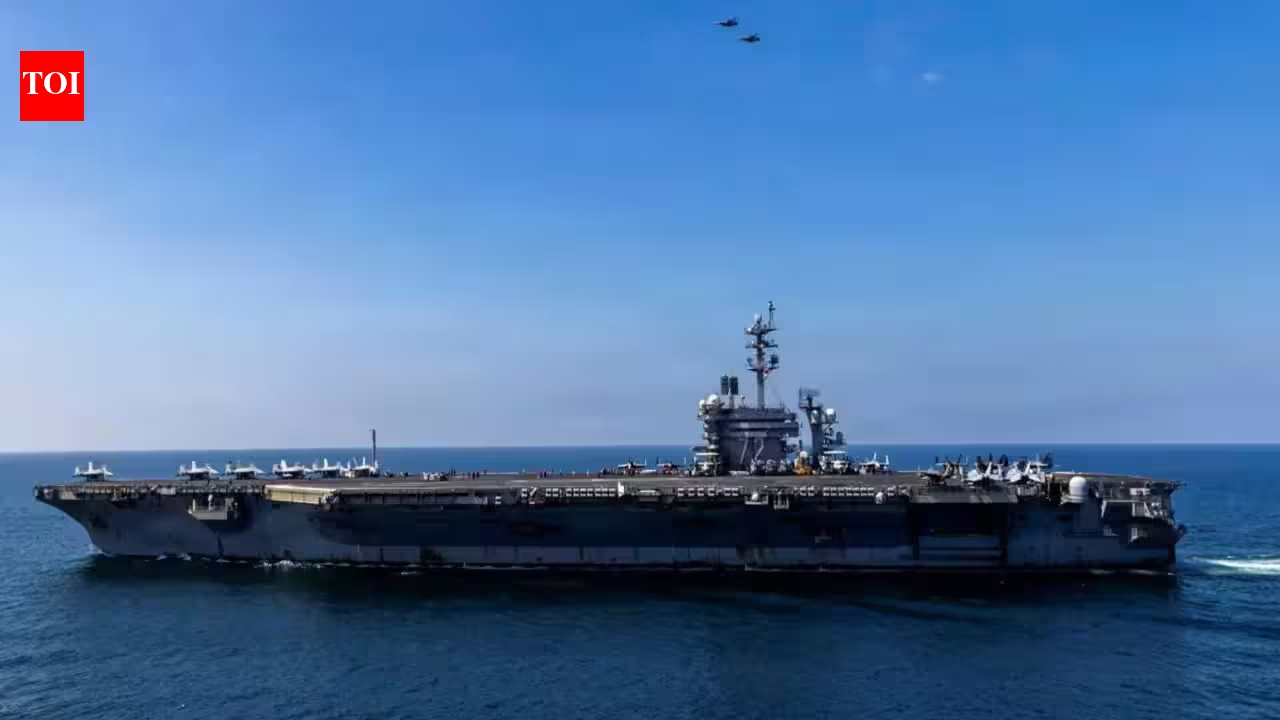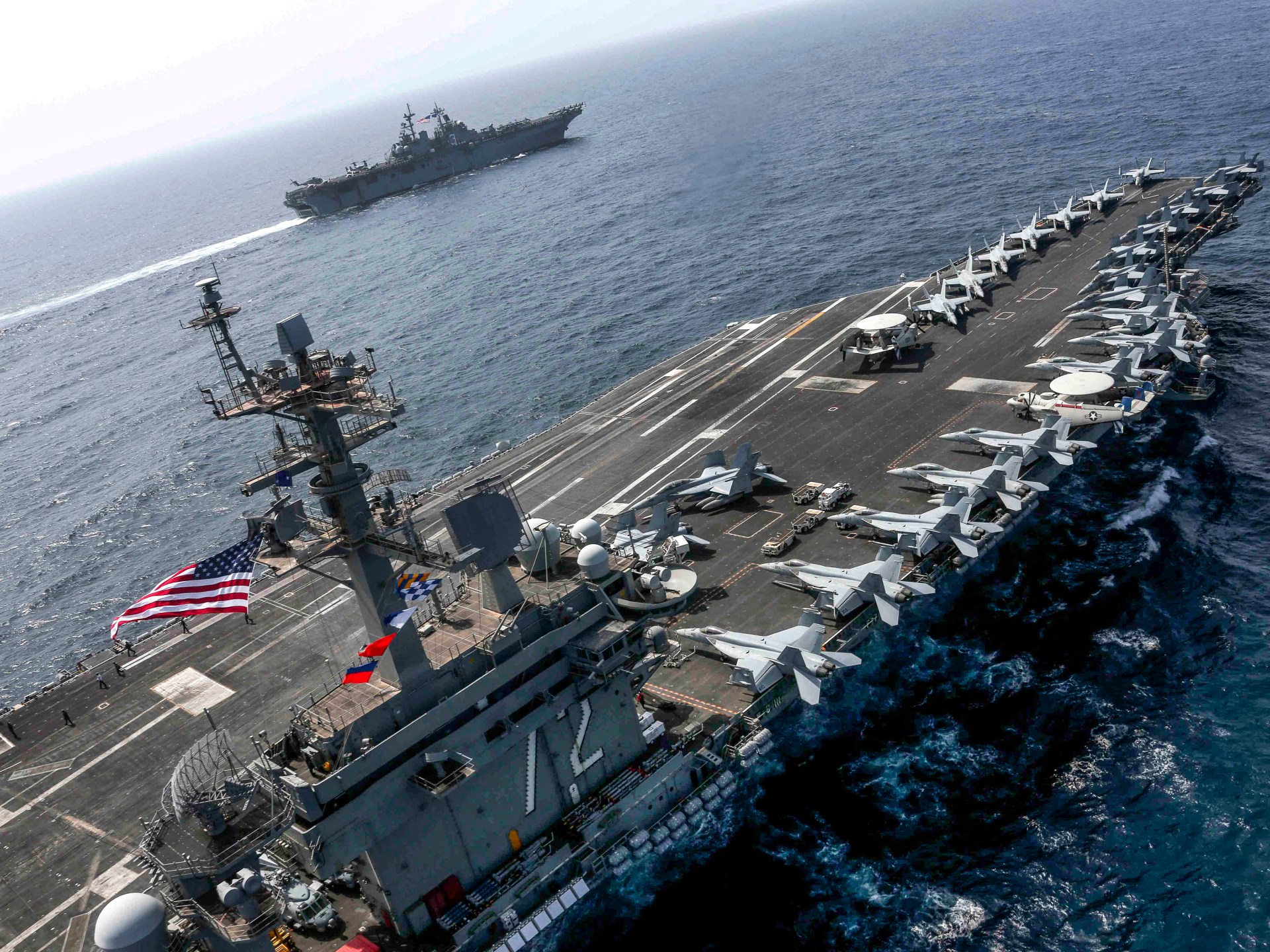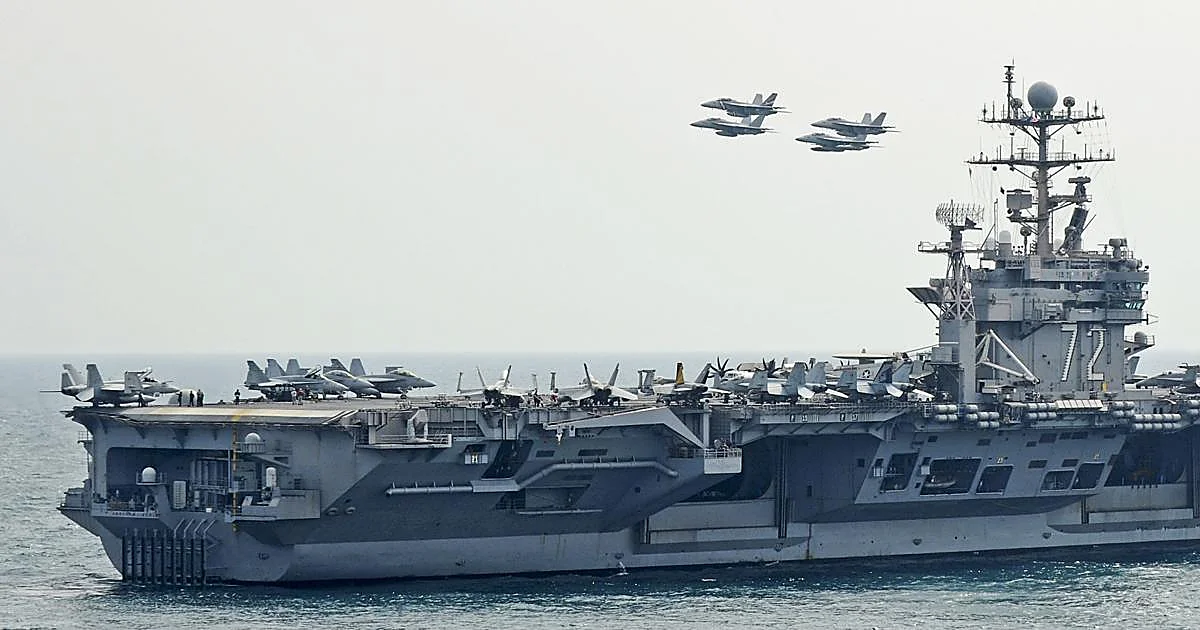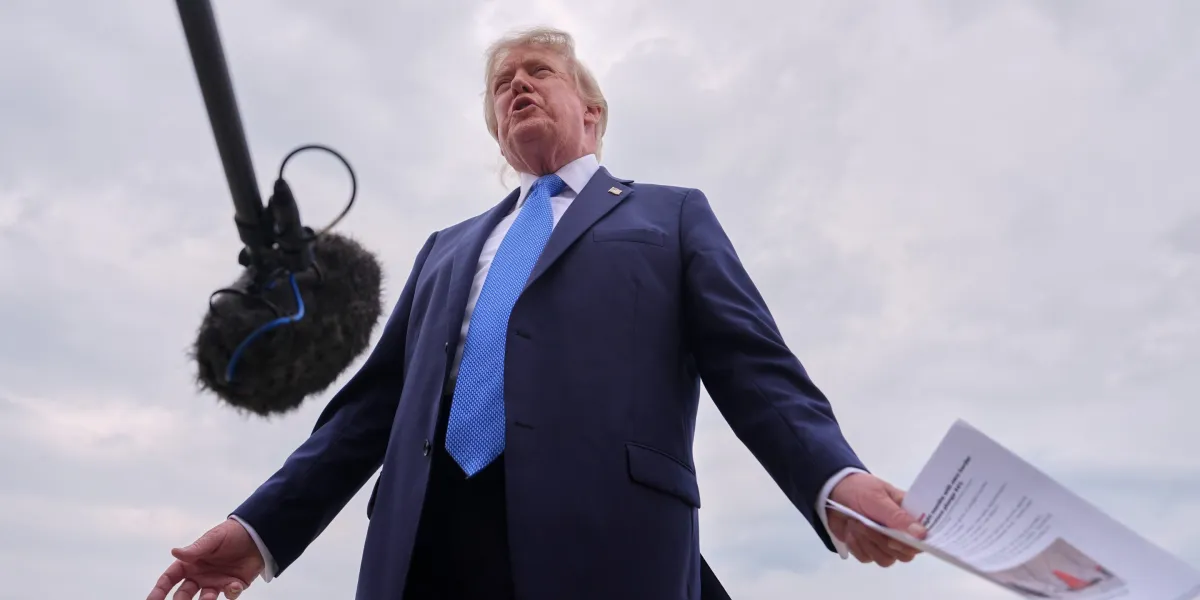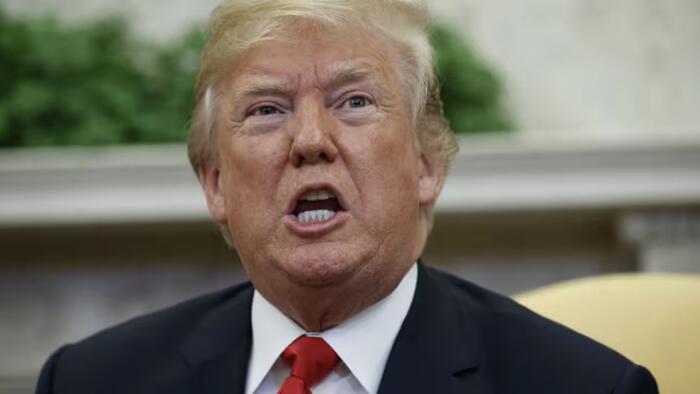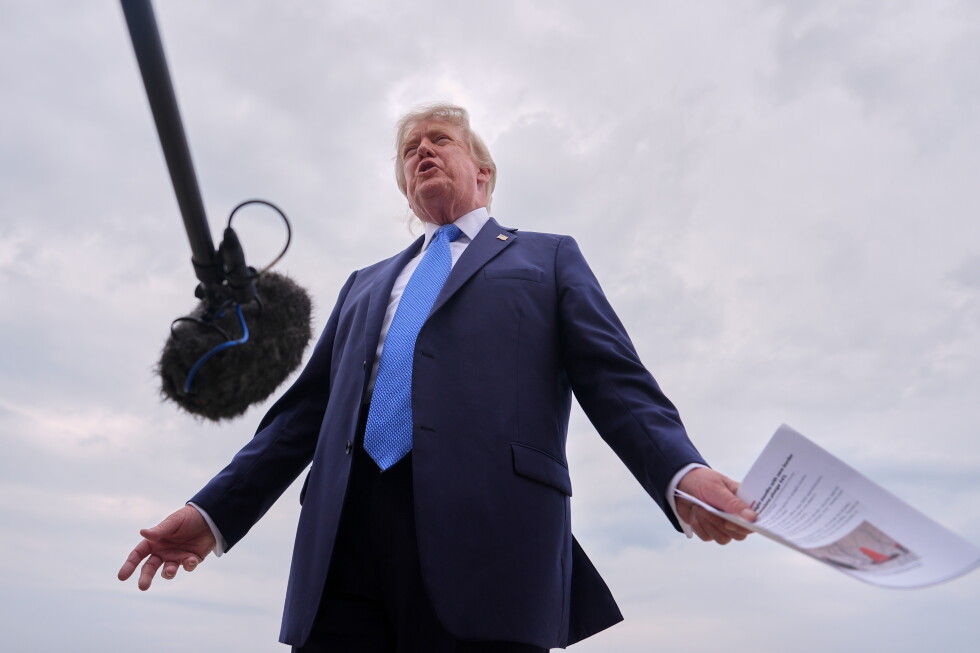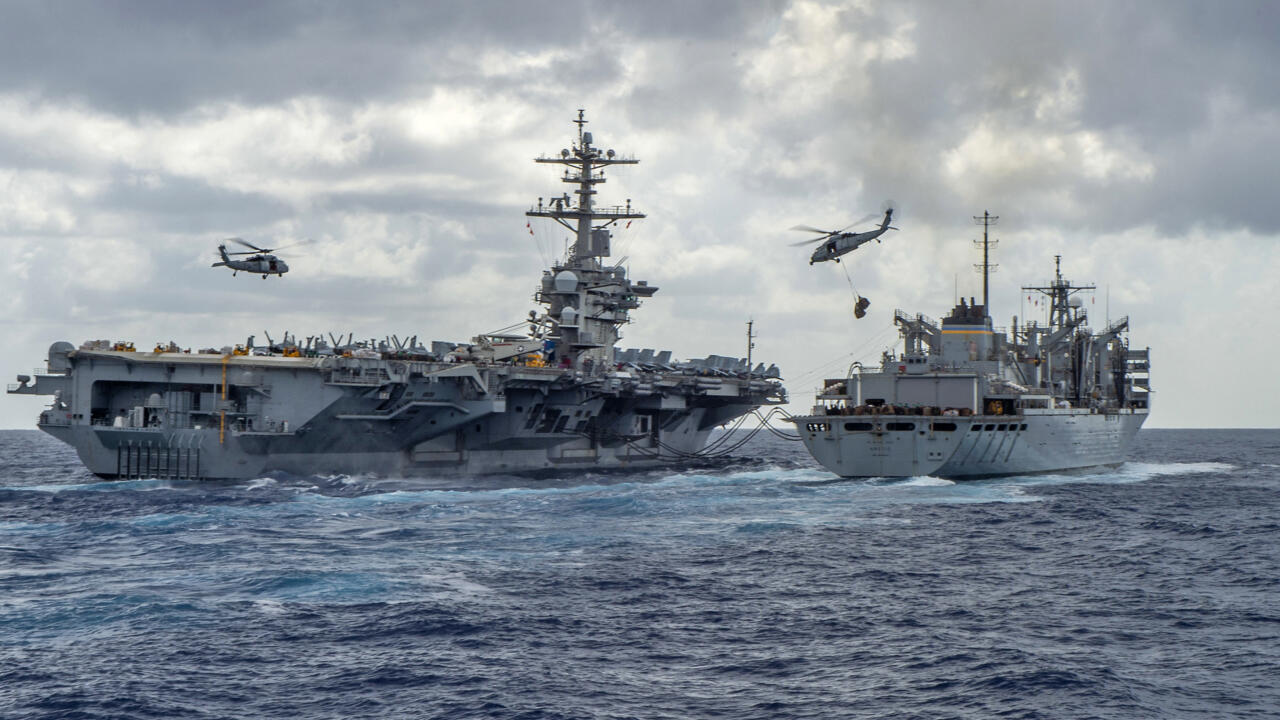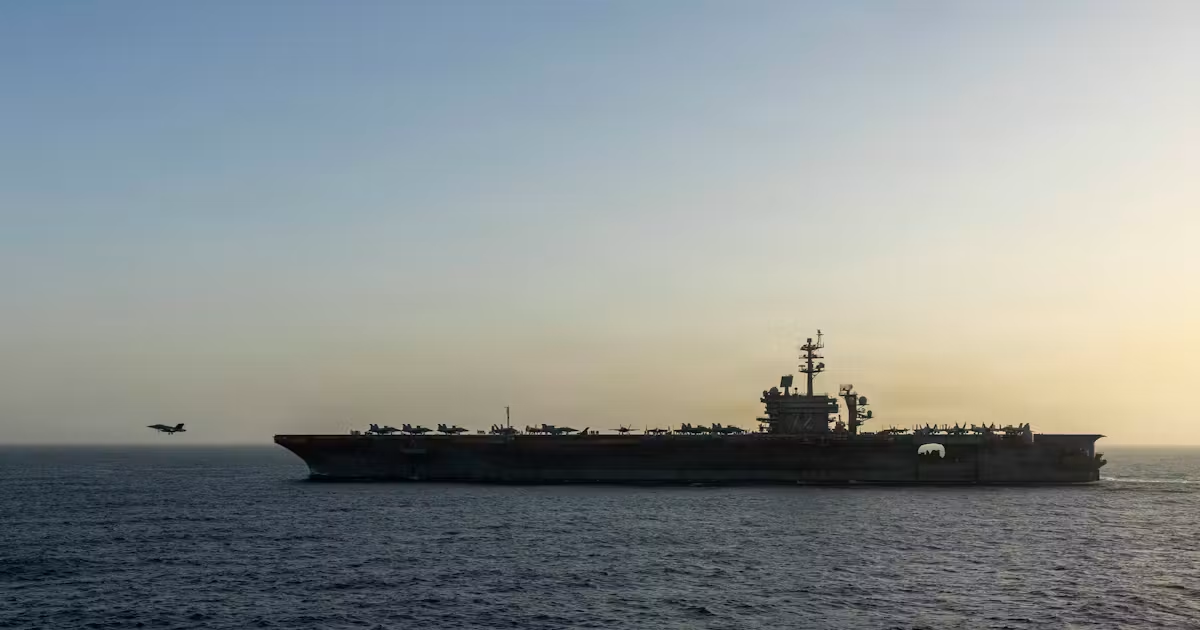
Spare a thought for the sailors of the U.S.S. Abraham Lincoln. As the United States’ campaign against Iran drags on, their deployment aboard the aircraft carrier has already lasted months longer than planned, and has spawned myriad news reports about deteriorating conditions—including dwindling supplies of food and potable water—and fraying morale. Last week, citing relatives of service members, the Military Times reported that at least two people on the Lincoln had attempted to jump overboard. After touring the vessel over the weekend, Admiral Brad Cooper, the head of Central Command, acknowledged “uniquely challenging and tough” circumstances, but he also described “many elements” of the grim situation as “old news” that had already been addressed; President Donald Trump branded the whole discussion as “fake news.” Defense Secretary Pete Hegseth said that conditions had been “completely misrepresented” and told reporters that the United States could maintain its ongoing naval blockade of Iranian ports “indefinitely.”Spare a thought, too, for the Iranian people, who have been on the receiving end of 1.5 million pounds of ordnance dropped, in some ten thousand sorties, by the forces aboard the Lincoln since late February, when Trump started a war, alongside Israel, to topple the Islamic Republic. Six months later, it’s hard to view the outcome of the conflict as anything other than a profound strategic defeat for the United States. The year had begun with mass anti-government protests in cities across Iran, spurred by the theocratic regime’s mismanagement of the economy, which has also been saddled for years with crippling U.S. sanctions. The protests were brutally quashed by authorities. Then came the bombardments by U.S. and Israeli forces, which assassinated Iran’s octogenarian Supreme Leader, Ayatollah Ali Khamenei, and a number of his cadre; degraded its Air Force and Navy; and struck schools, universities, and health facilities, while killing more than three thousand civilians in the first weeks of the campaign. The surviving regime, in turn, hunkered down and used its asymmetric capabilities to close the crucial Strait of Hormuz, weaponizing the country’s geography in ways it hadn’t done before, in order to exact its own toll on the global economy and heap pressure on Washington.Now none of the initial aims touted by Trump—including the shuttering of Iran’s nuclear program and the dismantling of its ballistic-missile capabilities—have been realized; instead, the U.S. finds itself trying to figure out how to deprive Iran of a tool—the strait—that is in play only because of Trump’s intervention. Despite recently reported initiatives by Trump and his allies, oil and other critical supplies are still not moving freely through the waterway, and gas prices remain high. Iran still strikes at tankers, and expects some form of control over the strait to endure even after a diplomatic settlement. Iran has also continued its crackdown on the opposition; according to the United Nations, executions of political prisoners and dissidents are surging. Trump told Iran’s citizens early on that “help is on its way,” but all that has come for them has been destruction, deeper economic pain, and the renewed repression of a regime that knows, better than anything else, how to preserve itself.Iran’s leadership is defiant. On Tuesday, Mohammad Bagher Ghalibaf, the country’s parliamentary speaker, said that the strait would remain closed until Iranian assets frozen abroad were released, sanctions on Iranian oil were dropped, and U.S. and Israeli military operations fully ceased. A new round of hard-line appointments to top security posts by the new Supreme Leader, Ayatollah Mojtaba Khamenei—who has been in hiding since his father, the former leader, was killed—may be a sign that the regime is prepared to wait out whatever Trump can muster. “Iran has come out of the war far stronger, not only in terms of regime stability, but more broadly, in terms of the self-confidence that it has,” Vali Nasr, a professor of Middle East studies and international affairs at Johns Hopkins, told me. “So the glass for Iran is definitely half full, and, even if we don’t use definitive adjectives like ‘winning’ and ‘losing,’ it’s very clear that it’s half empty for the Americans.”Trump came into the war on a high. The relative ease of his operation to remove Nicolás Maduro, the Venezuelan President, from office likely convinced him of the overwhelming primacy of American power. The conflicts that unfurled in the wake of the war in Gaza had also exposed Iran’s many vulnerabilities: Iranian proxies were toppled in Syria and humbled in Lebanon, and Israeli intelligence has repeatedly conducted successful assassination and sabotage missions within Iran. But Trump was overconfident and now finds himself unable to end a war that none of Iran’s neighbors wanted him to start.American power has also been perceptibly diminished. The U.S. has burned through inventories of precision-guided and air-defense munitions, and seen its array of military bases in the region come under significant Iranian fire—which has also inflicted damage to civilian and energy infrastructure across the region. Some countries, such as the United Arab Emirates, have no love for Tehran, but recognize that Trump’s current belligerence may not be doing them any favors. A new tripartite defense alliance between Saudi Arabia, Turkey, and Pakistan—though publicly welcomed by Trump—is emblematic of a region thinking beyond the United States, and hedging against the uncertainty posed by both a resilient Iran and an aggressive Israel. “The larger shift is that Gulf capitals are no longer comfortable simply aligning behind maximum pressure. They increasingly want autonomy from both Washington and Tehran,” Alex Vatanka, the director of the Iran program at the Middle East Institute, a Washington think tank, told me. According to Nasr, “Everybody now sees America as less than it was before.” He views Trump’s travails as part of a “precipitous collapse of American power and American prestige” and says that “once this war is over, the U.S. is going to find the rest of the world much more difficult to herd around any coherent policy.”The war is already deeply unpopular in the United States and has become a weight on Republican electoral prospects in the upcoming midterms. “Trump has trapped himself into an unwinnable war for America,” Ellie Geranmayeh, a senior policy fellow at the European Council on Foreign Relations, told me. “He seems shackled now by the sunk-cost fallacy that, because America has expended heavy resources, ammunition, and reputation in this war, it cannot pull back before a decisive win.” But Tehran seems to believe it can both outfox and outlast Trump. “Iran is now confident that it can absorb U.S. bombings, which seriously weakens any military threats the U.S. may issue in the future,” Gregory Brew, an expert on Iran and energy at the Eurasia Group, a political-risk consultancy, told me. “In addition, the U.S. now looks broadly deterred from attempting more aggressive action against Iran, cowed by the risk of sweeping Iranian retaliation.”This week, a sixty-day deadline for the United States and Iran to resolve larger differences—set in June as part of an earlier memorandum of understanding—elapsed with little fanfare. It was a mark of the fragility (and, frankly, the unseriousness) of the diplomatic round between the two sides. On Tuesday, Trump fumed in the Oval Office, demanding Iran raise “the white flag of surrender,” while threatening Oman—a key diplomatic intermediary—with military strikes because of its parallel negotiations with Iran over the handling of the Strait of Hormuz. He also lashed out at South Korea, justifying an astonishing decision to draw down military exercises with the country over Seoul’s apparent unhelpfulness in supporting Trump’s war in the Middle East. And then, in perhaps the most glaring illustration of his frustration, the President posted a bizarre map on Truth Social labelling the Strait of Hormuz as “U.S. territory.”But Trump cannot “Gulf of America” his way out of this disaster. It is a blow that some analysts have already likened to the calamities of the Vietnam and Iraq Wars, and Iran’s leadership seems happy to continue this game of brinkmanship. “Stop waiting for the clown crew to pull a rabbit out of their hat and clean up the mess you made,” Ghalibaf said on social media, in response to new threats of maximum pressure from Trump’s Cabinet officials.Ordinary Iranians, many of whom are desperate for a change in their domestic politics and for a rapprochement with the West, have to wait. Gissou Nia, an Iranian American human-rights lawyer, lamented the absence of any “greater political strategy” from Trump that would have supported Iran’s opposition and embattled civil society—of “anything that would incentivize defections or really be able to crack this regime, which is what all of those protesters were looking for and what they risked their lives for,” she told me. Instead, Nia said, “it became clear that the only strategy from this Administration was to bomb the country.” And that strategy has failed. ♦
After Six Months of War, Trump Is Still Losing to Iran
Trump cannot “Gulf of America” his way out of the disaster that is war with Iran.
1,463 words~7 min read