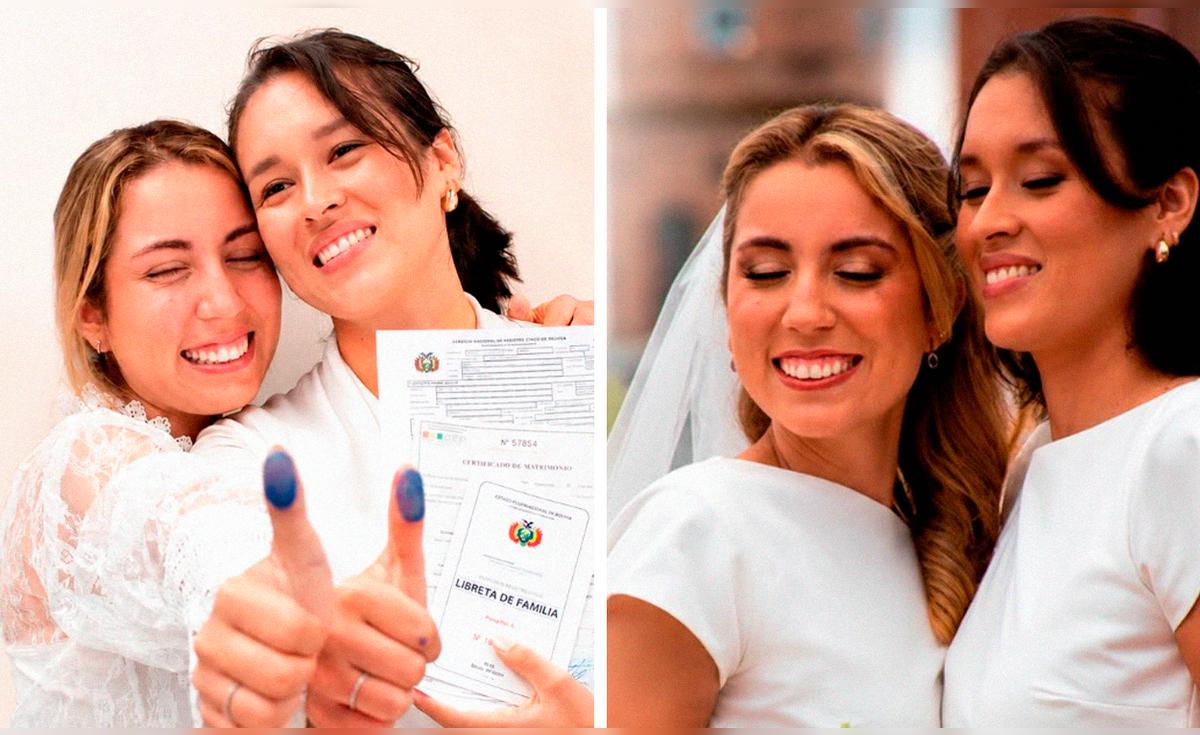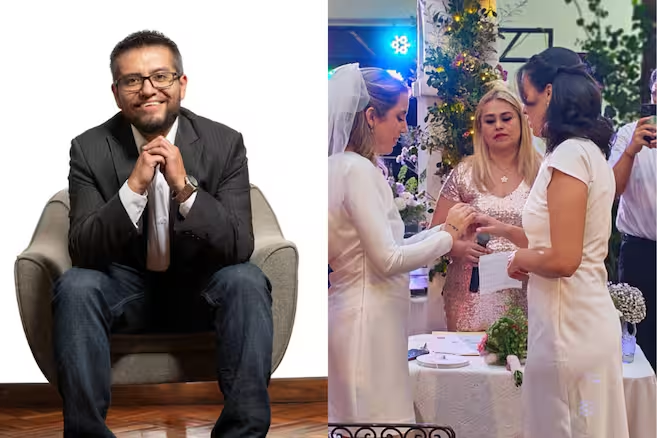
SANTA CRUZ, Bolivia (AP) — Like many newlyweds, Fabiana Justiniano and Scarlett Rocha grow misty-eyed when they reminisce about their wedding day: racing from the civil registry to get their hair and makeup done, dancing in their white dresses late into the night with more than a hundred friends and relatives.“We didn’t expect it to be so beautiful,” Justiniano, 29, said last Saturday from the couple’s home in Bolivia’s eastern city of Santa Cruz, which they share with three dogs and four cats. “It was really, really great.” Their Aug. 7 wedding was more than a personal milestone, it was a political one, too. It was Bolivia’s first same-sex civil marriage — the culmination of a grueling legal struggle in a religiously and socially conservative nation whose constitution defines marriage as the union of a man and a woman. Although the court decision allowing their civil marriage applies only to them, experts said their victory could set a precedent for other Bolivian couples.
“When I saw the marriage certificate on the table, I felt this weight being lifted,” said Rocha, also 29. “This sense of peace came, where I was able to let down my guard and really enjoy what it means to be married.”While Bolivia isn’t alone in its stance across predominantly Roman Catholic South America, the continent’s most populous countries, including Brazil, Colombia and Argentina, have allowed same-sex couples to marry for years. Central America and the Caribbean remain more conservative on LGBTQ+ rights, with fewer legal protections for same-sex couples.