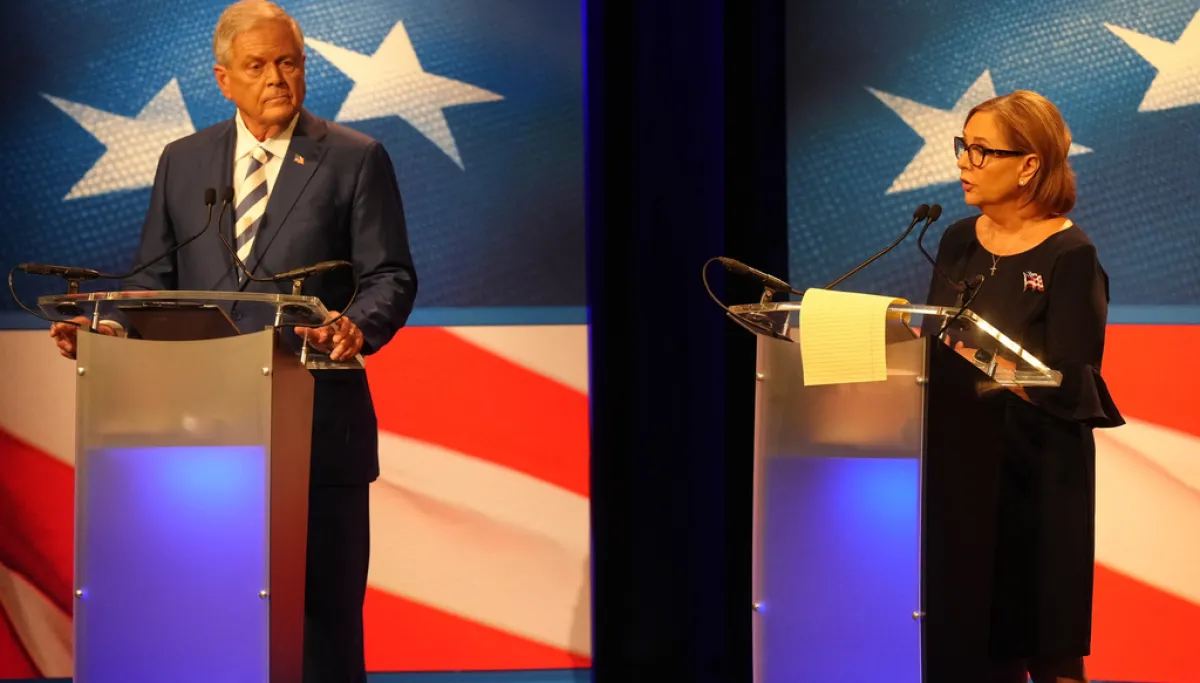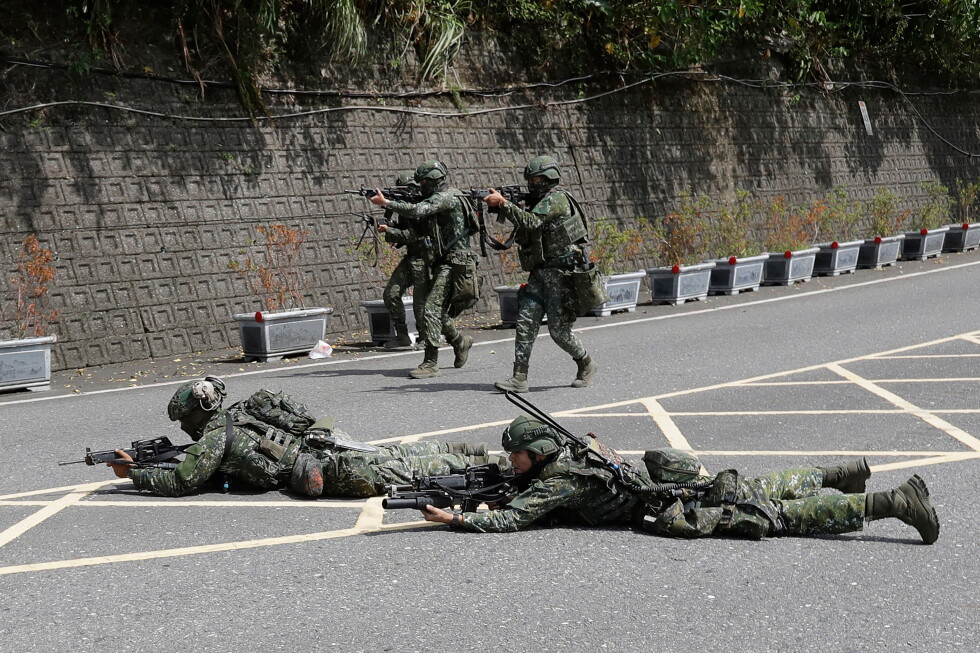
When U.S. Sen. Darline Graham struggled to answer in a debate whether the U.S. has a national security interest in Taiwan and the South China Sea, she drew criticism for saying national security was “not my thing.”Taiwan and the South China Sea have long been major issues in U.S. foreign policy, and tensions involving China have kept both in the news in recent months. Beijing claims Taiwan as its own territory and asserts sovereignty over virtually the entire South China Sea, bringing it into confrontation with U.S. allies and partners in the region.What happens in Taiwan and the South China Sea could have an impact not only on the region but around the world, given their importance to global trade. The South China Sea, a large body of water bordered by several nations, including China, the Philippines and Vietnam, is one of the world’s key maritime trade routes. Taiwan produces the majority of the world’s advanced semiconductors.“The two are very much connected,” said Hunter S. Marston, director of the Southeast Asia Program at the Lowy Institute in Australia. “If China were to blockade or seek to forcibly retake Taiwan from the mainland, the South China Sea could quickly see spillover effects.”Here’s a look at why Taiwan and the South China Sea are important and how the two are connected strategically:
Why Taiwan and the South China Sea matter to the US and the world
U.S. Sen. Darline Graham faced criticism for saying national security was “not my thing” during a debate about Taiwan and the South China Sea.
1,026 words~5 min read