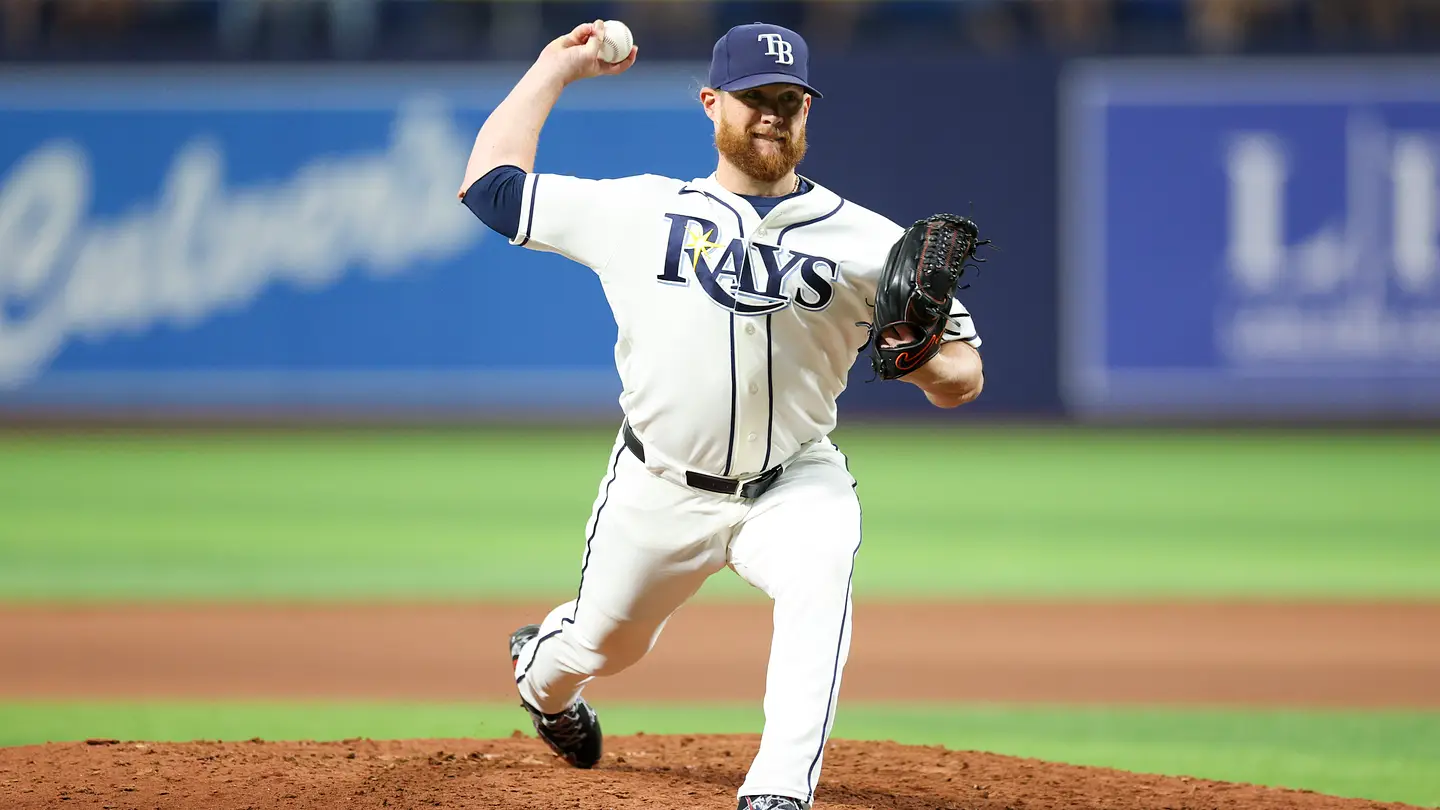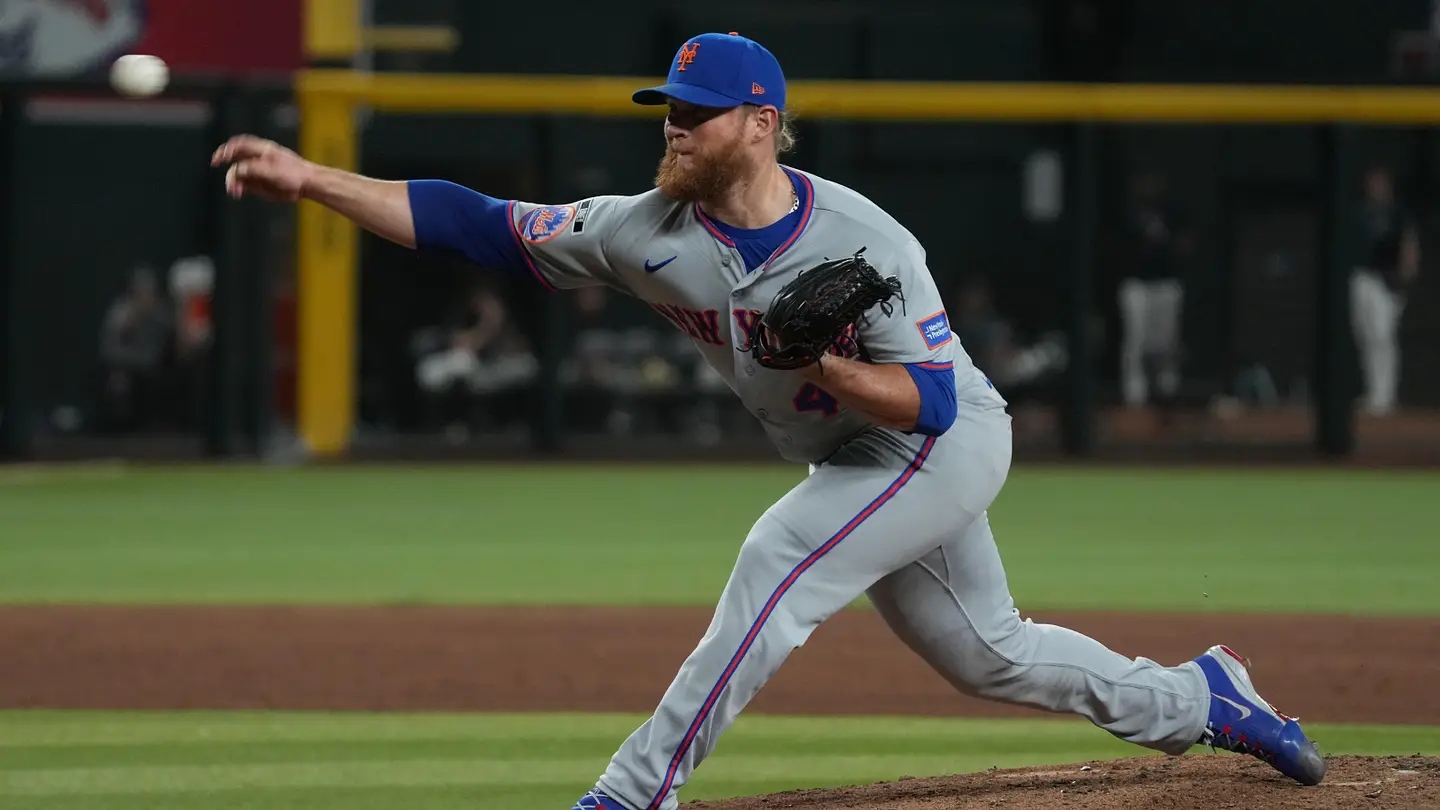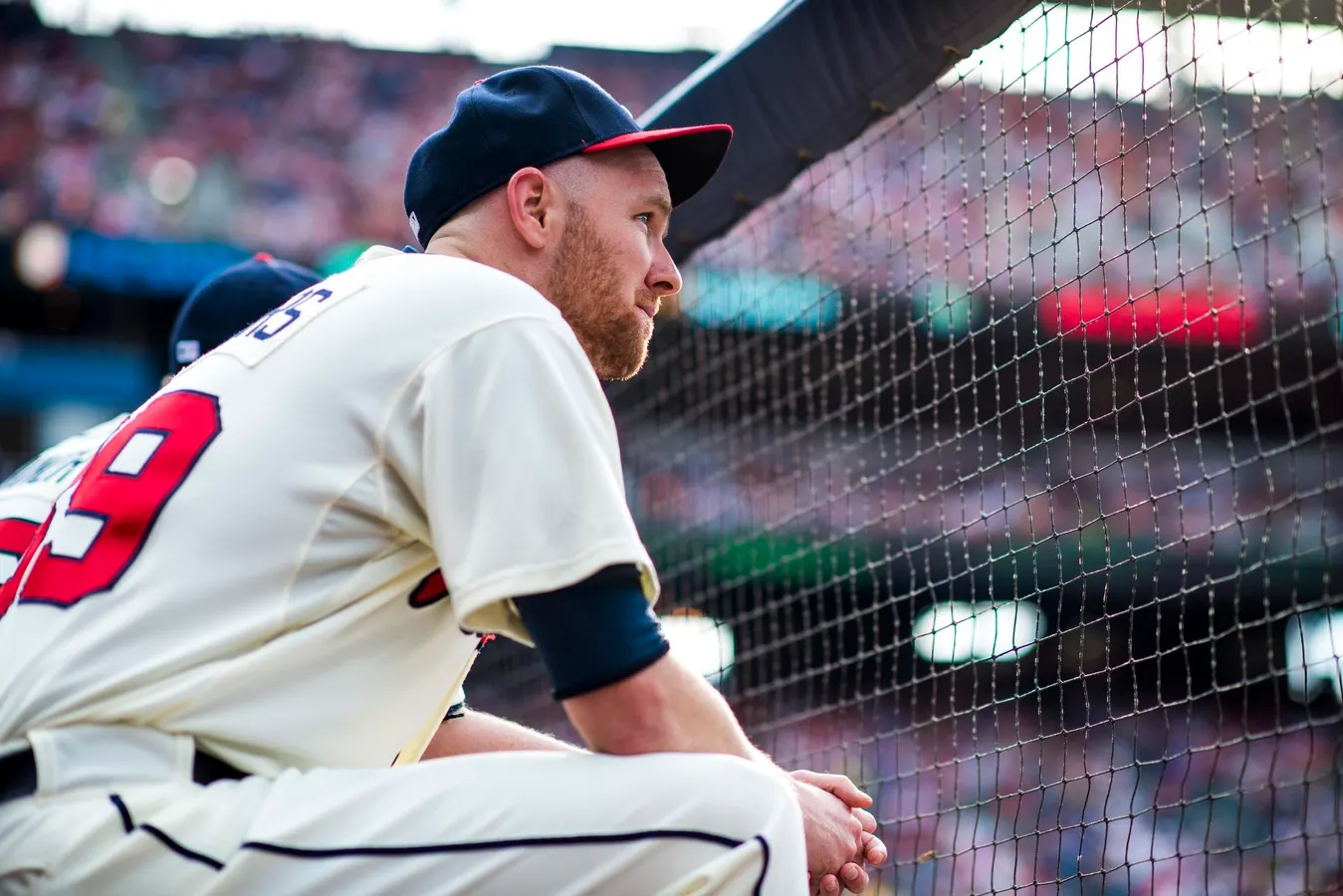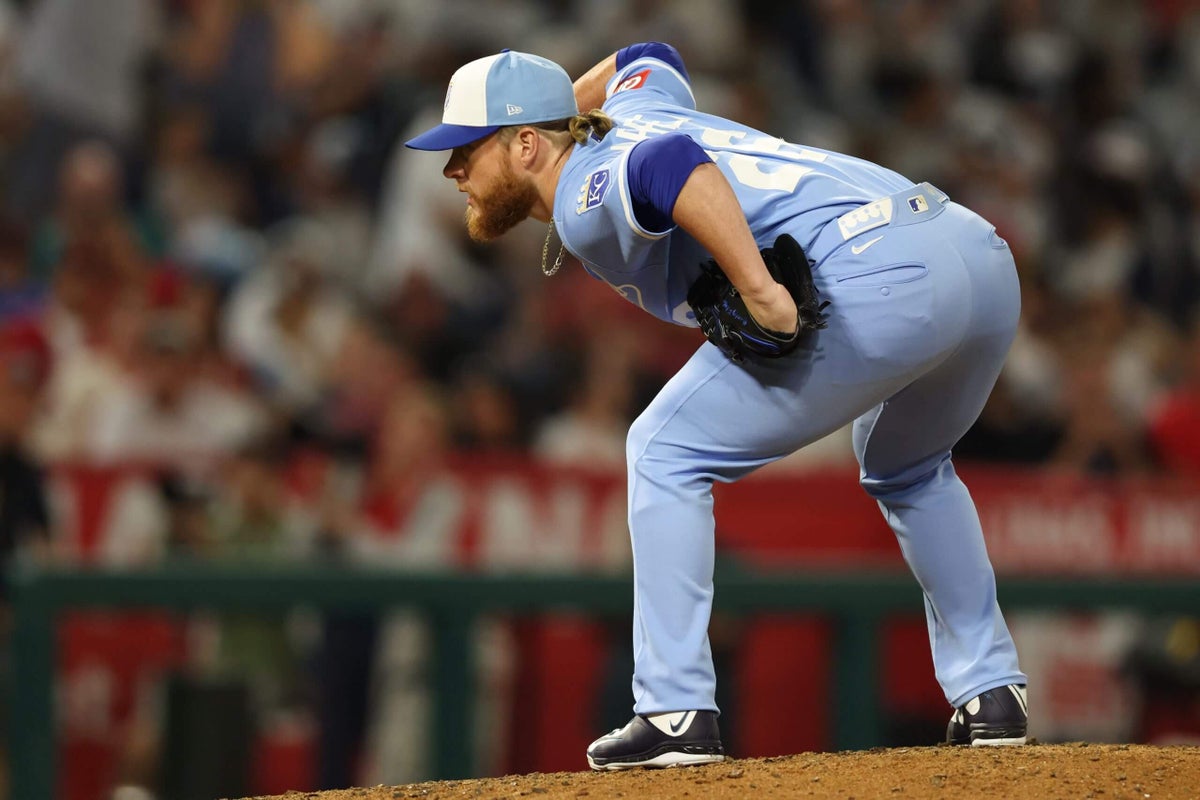
LOS ANGELES — Craig Kimbrel was days removed from throwing a bullpen in his barn to stay ready. Weeks removed from being released for the second time this season. And years removed from being the elite closer whose 440 saves rank fifth in baseball history.That’s when he got another lifeline, with another team. And 48 hours later, Kimbrel was standing outside the visitors’ dugout at Dodger Stadium, having signed with the Kansas City Royals. He was asked if, at 38 years old with diminished abilities and a litany of teams that have let him go, he’s ever contemplated retirement.“Yes and no,” Kimbrel said.Yes, because, of course he had. You don’t bounce among 11 different teams in five calendar years, battling injuries and aches without thinking about hanging them up. And no, because, well, he still believes in himself. And there’s always been at least one team that’s believed in him too.“I keep being reassured by going back and looking at what I was able to do,” Kimbrel said. “Analytically, how my stuff’s playing. How I can use it. It all still grades pretty good. It gives me confidence that I can still get outs.”“I still love playing this game. I still feel like I’m a professional. I feel like I can still work. I can still get guys out, and hopefully get some guys out in some big spots.”The Royals are not a good team. They’re in last place in a bad division, with playoff odds that FanGraphs puts at under 0.1 percent. Their bullpen is in tatters, with 10 pitchers on the injured list. Kimbrel is a big name, fulfilling a small role. He’s a roster filler to get a lost season to its finish line.Craig Kimbrel, shown here in his first big season of 2011, ranks fifth in MLB history with 440 saves. (Rob Carr / Getty Images)Since the start of 2021, Kimbrel has worn 14 uniforms, including three elongated stints in Triple A. He pitched for both Chicago teams, signed with both Texas teams and re-emerged for a game with his beloved Atlanta Braves, for whom he burst upon the scene over his first five seasons.In those five years since 2021, Kimbrel has been traded twice, named an All-Star twice and outrighted or designated for assignment six times. Most importantly, his performance has declined significantly. In the last three years, Kimbrel has a 4.66 ERA and a negative-0.6 WAR.His fastball velocity, which peaked at an average of 98.3 mph in 2017, has diminished to 93.5 mph. He’s added a sweeper and changeup to offset the decline of his once untouchable heater.That sweeper and changeup, however, don’t grade out very well. In Kimbrel’s peak season, he generated whiffs on 42.7 percent of the swings against him. That’s dropped to just 25.1 percent.Kimbrel’s late-career journey has been long and almost confounding — not befitting a superstar of his quality. These days, he’s more relatable to a journeyman reliever, who collects minor league free-agent contracts and MLB minimums, never knowing when the next game might be his last.“Sometimes the game decides for you. Sometimes guys accomplish everything they’ve wanted to accomplish, and it’s time for them,” said Jonny Venters, a friend and former teammate of Kimbrel’s from the vaunted Braves bullpen in the early 2010s.“I don’t know if Craig’s chasing certain numbers to ensure the Hall of Fame. But we were always of the older-school mentality. I’m assuming he’s playing because he can. He feels like he can play at the highest level. And why not do that?”Kimbrel, for years, was the game’s most dominant closer. His death-stare look and arm-claw mound demeanor incited a certain fear that was backed up by results. He led the National League in saves for four straight years and was an All-Star in seven of his first eight full seasons.Eleven years after recording his final save with Atlanta, he was back with the Braves last season, toiling away in Triple A for two months before being called up for one road game. He recorded three outs, allowed a hit and a walk, and was unceremoniously DFA’d. A perfect encapsulation of where his career was, and what it had become.“I was disappointed in the way that got handled,” said Venters, who made a similar comeback with the Braves after nearly a decade away. “I just wish (Kimbrel) would have gotten a few more opportunities with them. At least let him come home to Atlanta. As an outsider looking in, I didn’t love it.”That experience didn’t crush Kimbrel’s spirits. Five days later, he signed with the Texas Rangers and pitched 24 games for the Round Rock Express, their Triple-A affiliate.Kimbrel’s career now poses an interesting question. Why is it so hard to let go? And if a team is willing to pay for your services, is that even a fair question to ask?“Anybody in the professional ranks with his resume, their identity is very heavily tied to being an athlete. … It can be incredibly difficult to let go,” said sports psychologist Dr. Megan Neyer, who works with athletes on transitioning beyond their playing careers. She has never treated or spoken with Kimbrel.“It can be incredibly difficult to let go. The more central your athletic identity is to who you perceive yourself to be, it is predictive of how much more likely it is that you’re going to have difficulty transitioning out of the role as an athlete.”It was, ironically, the person who helped Kimbrel start his career who gave him a chance to help it continue. Brian Bridges, the Royals’ current scouting director, was the scout who signed Kimbrel when Atlanta drafted him in the third round in 2008.The Royals had faced Kimbrel earlier this season when he was with the Tampa Bay Rays, and generally liked what they saw. Desperate for innings, and trusting in his professionalism and track record, both sides saw sense in the fit. Even if he’s Craig Kimbrel in name only.“Once you walk away, you’re done,” said Royals president of baseball operations J.J. Picollo. “So you’ve got to be really careful, and very decisive.“And if your heart’s not telling you that you’re done, then you should keep playing. I don’t want to speak for Craig, but that seems to be where he’s at, which we respect.”Part of Kimbrel’s desire to continue could be rooted in building his Hall of Fame case. He wants to show he can still save games. “I’m still pitching to prove that I can do that,” he said.While he’ll have a shot at induction regardless, his case is borderline. “That’s been talked about since very early on in my career,” Kimbrel said, alluding to a peak of powers that was as dominant as any ninth-inning reliever the game’s ever seen.Given the evolution of the closer’s role, his save total might never be surpassed. Kimbrel trails only Mariano Rivera (652), Trevor Hoffman (601), Kenley Jansen (492) and Lee Smith (478) on the all-time list.Save chances, nowadays, are harder to come by. And on Saturday, Kimbrel entered a situation that’s become somewhat foreign to him: a high-leverage opportunity. His teams are 12-23 this season when he pitches, but that’s not really because he’s been bad. It’s because he often comes in when his team is already down.In this 0-0 game, in the seventh inning at Angel Stadium, the Royals’ pen was gassed. Kansas City had just lost three close games against the Dodgers and needed five relievers to beat the Angels the night prior.Kimbrel was the next best man up. The first batter he faced hit a deep fly ball to the back of the warning track. The second ripped a 104.4 mph screamer into the gap, requiring a miracle catch by the center fielder. The next batter lined a single.Kimbrel wiped his brow on the hot summer night. Scoreless innings are rarer for Kimbrel, and look a lot different than they used to. But outs are outs, and as long as he keeps getting them, he has no plans to stop pitching.Asked what he thought it would be like to choose retirement, Kimbrel said: “A lot more relaxing probably.” An easy out of an answer that didn’t really address its real-life difficulty.His wife and two children have been on this ride with him. He complimented the people skills his kids have developed on their nomadic journey. His teammates have been there for him, and as Kimbrel joked, he’s made a lot of new friends on all his various clubs.Pressed on the pain of stepping aside, Kimbrel opened up a little more.“I mean, I think so,” he said. “I think (it is) any time anyone steps away from something they’ve done for so long. You hear a lot of guys talk about it. I don’t think they miss the grind of the game. I don’t think they miss what their body feels like sometimes.“But they do miss the times with the guys. The trips, the comebacks, the excitement.”Kimbrel spent a career proving he knows how to close. He is still learning how to finish.“We’ll see,” Kimbrel said. “Like, I said, I’m not there yet.”
Craig Kimbrel has spent a career proving he can close. But when will he finish?
Asked what he thought it would be like to choose retirement, Kimbrel said: “A lot more relaxing probably.”
1,516 words~7 min read