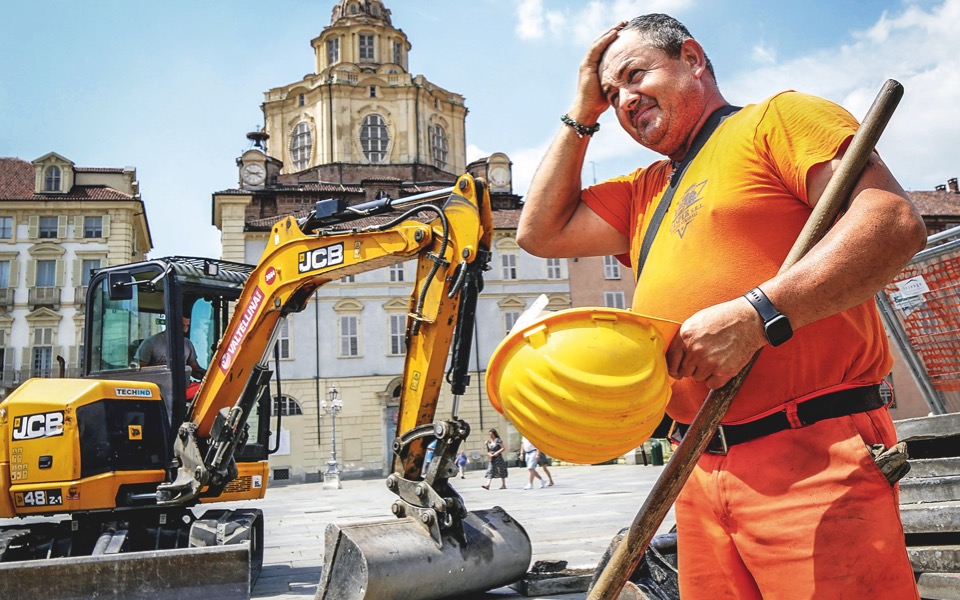
Around 130 million Europeans are exposed to heat stress at work every year. Heat exposure is estimated to cause around 277,000 injuries and 230 deaths annually. [EPA]
When temperatures exceed certain levels, some European workers can stay at home without losing their pay; others can move their shift to cooler periods within the day and many millions keep working without specific, institutionalized protections, other than their government’s ad hoc decisions to suspend certain activities, as in the case of Greece.
The so-called “heat wave leave” is starting to be used in some countries: a paid “climate leave” is enforced in Spain, and Italy activates an income support mechanism when work has to stop. But the debate is still ongoing: Who shoulders the financial burden when heat makes work hazardous or impossible? The employee, the employer or the state?
According to a study by the European Trade Union Institute (ETUI), around 130 million Europeans are exposed to heat stress at work every year. Exposure to heat is estimated to cause around 277,000 injuries and 230 deaths annually.
Another study, by the European Agency for Safety and Health at Work (EU-OSHA), has shown that one in five workers in the EU had been exposed to extreme heat over the past 12 months. The numbers grew to 35% among farmers, fishermen and forestry employees. One in four workers in the construction and energy sectors were affected. And, because of the climate crisis, numbers will keep increasing.