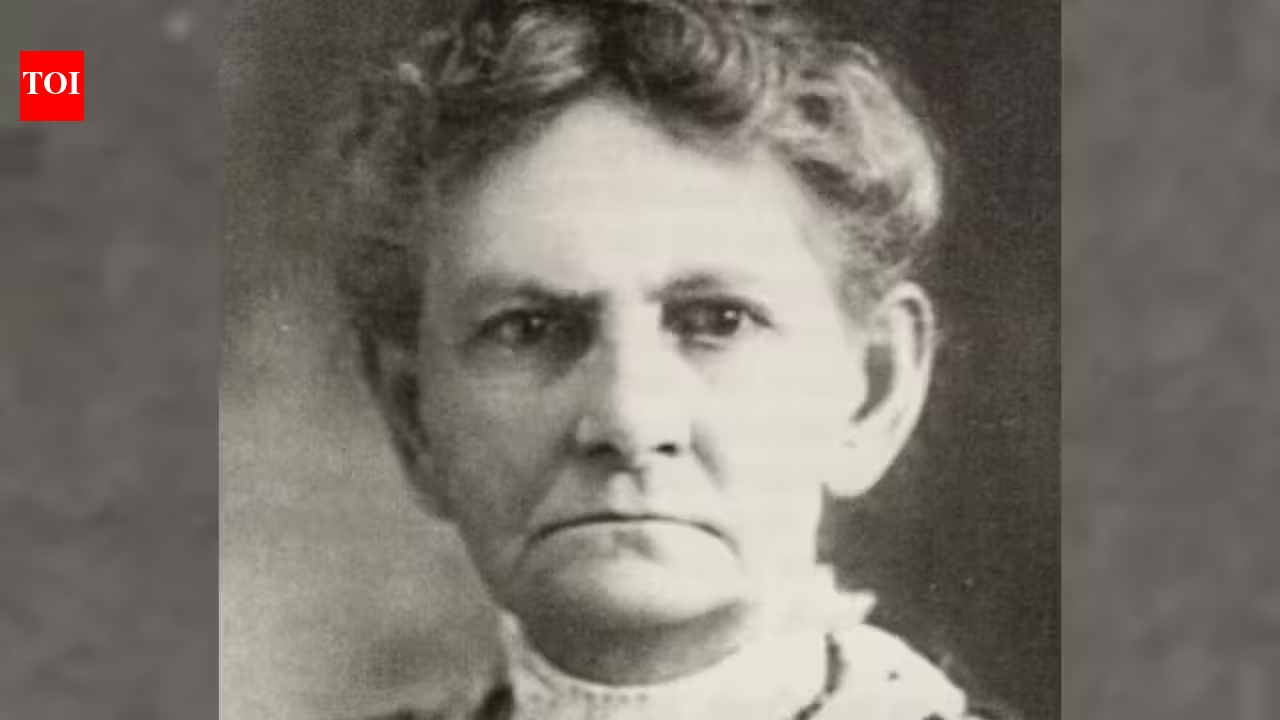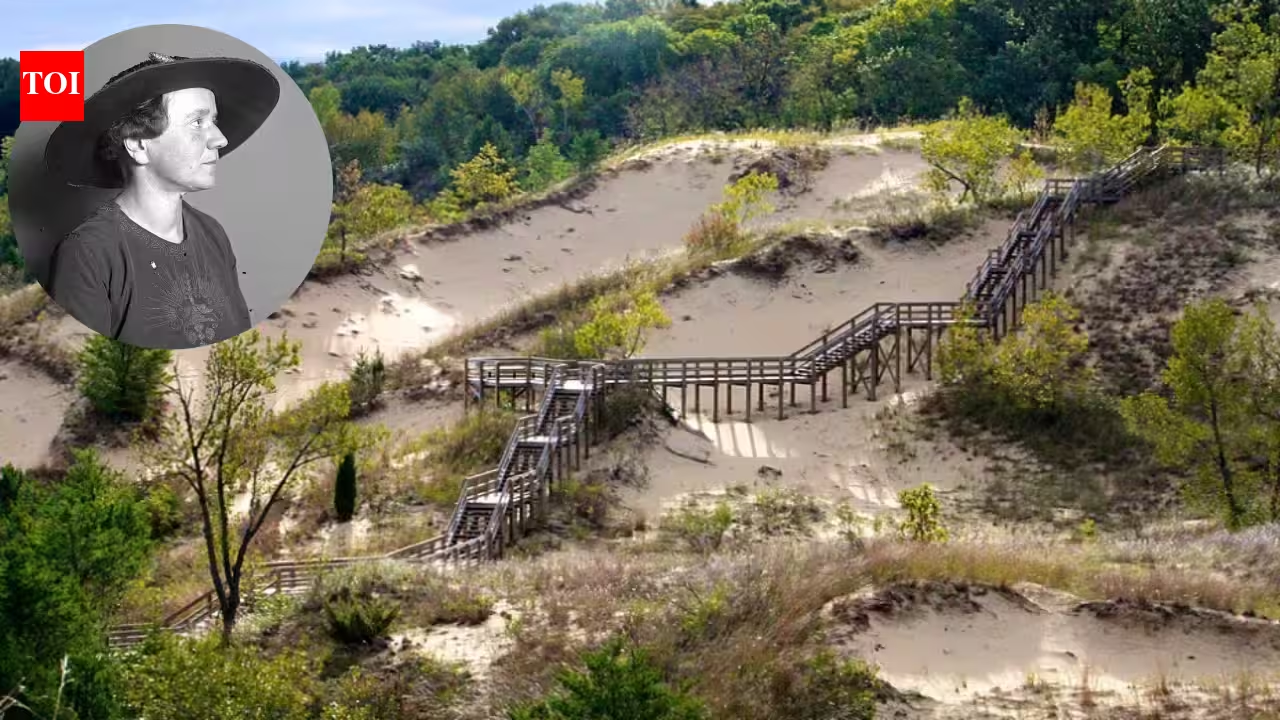
Alice Gray’s portrait alongside Dunes Succession Trail at West Beach in the Indiana Dunes National Park. Credits - Wikimedia Commons In October 1915, Alice Mabel Gray left Chicago and took a train to the Indiana Dunes, looking for a simpler life away from the city. She was 34 and had graduated from the University of Chicago before working as a secretary and later as an editor. The dunes offered a stark contrast: long stretches of sand, marshes, Lake Michigan and very few people. Gray first stayed in a small teepee belonging to friends before finding an abandoned shack near the beach. She called it Driftwood, furnished it with things that had washed ashore, and began living largely on what she could find or buy from nearby fishermen and farmers. The National Park Service says she spent nearly nine years living in makeshift shelters among the dunes and became known as “Diana of the Dunes.”Newspapers soon turned her into a local curiosity. In 1916, reporters began calling her “Diana of the Dunes,” comparing her to the Roman goddess associated with wild places. Their stories focused heavily on the woman living alone beside Lake Michigan, but Gray's own writings presented a quieter picture. She wrote about the peace she found in the dunes and how different that life felt from the one she had left behind. The publicity was largely something that happened around her rather than something she had deliberately sought.A life in the dunes drew attention to a landscape at risk Gray quickly realised that the dunes were not as stable as they looked. Industrial development was expanding along the southern shore of Lake Michigan, and sand was already being removed for construction and manufacturing. Gray was alarmed by the contrast between the natural landscape she valued and the growing pressure around it. In 1916, after returning briefly to Chicago, she questioned why so much money was being spent on development while comparatively little was being done to protect the dunes. Her writings made clear that she saw their value as more than scenery. In April 1917, Gray spoke at the Art Institute of Chicago on behalf of the Prairie Club, an organisation that was already campaigning to preserve parts of the dunes. Her appearance helped draw wider attention to the preservation campaign, while later accounts of the movement credit her as an early voice for protecting the landscape.By about 1919, Gray had moved farther west along the lakeshore with her companion Paul Wilson. They eventually settled in another rough shelter called Wren's Nest, built from mismatched boards and driftwood near what is now West Beach. She continued writing and spending much of her time outdoors. The surroundings were changing, however. Roads and homes were beginning to reach parts of the dunes, and the isolated landscape Gray had known was becoming easier for people to access.Mount Baldy at Indiana Dunes National Park. Credits - Wikipedia CommonsThe woman who became “Diana of the Dunes”Gray died on February 9, 1925, bringing her years in the dunes to an end. By then, she had spent nearly a decade living along the Lake Michigan shore. The broader campaign to protect the dunes continued after her death. The Prairie Club's early preservation work became part of a much longer campaign to protect the dunes. Congress established Indiana Dunes National Lakeshore in 1966, and the site was later redesignated as Indiana Dunes National Park in 2019. Gray did not live to see those achievements, but her role in the landscape became part of the region's conservation history.Gray's connection to the dunes later became part of the area's conservation history. She is remembered both for her unconventional life along the lakeshore and for drawing public attention to the landscape she wanted to protect. She went to the dunes looking for quiet and found a landscape that was already under pressure from development. She lived in rough shacks, made furniture from driftwood and spent years learning the character of the shoreline. Then she used her growing public profile to speak for a place she believed was worth saving. She died long before the Indiana Dunes became a national park, but the landscape she chose in 1915 remains protected today.
In 1915, Alice Gray left Chicago for the Indiana Dunes; she spent nearly a decade living in makeshift shelters and advocating for their preservation
In October 1915, Alice Mabel Gray left Chicago and took a train to the Indiana Dunes, looking for a simpler life away from the city. She was 34 and had graduated from the University of Chicago before working as a secretary and later as an editor.
701 words~3 min read