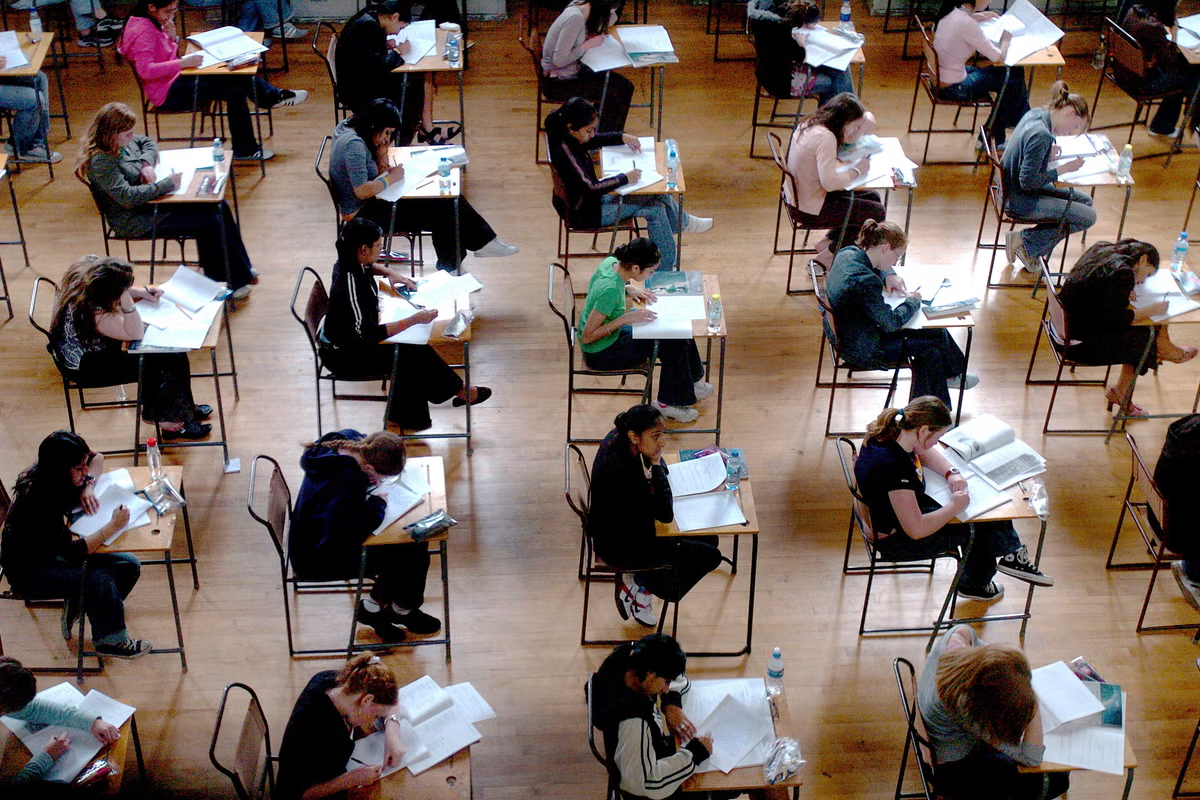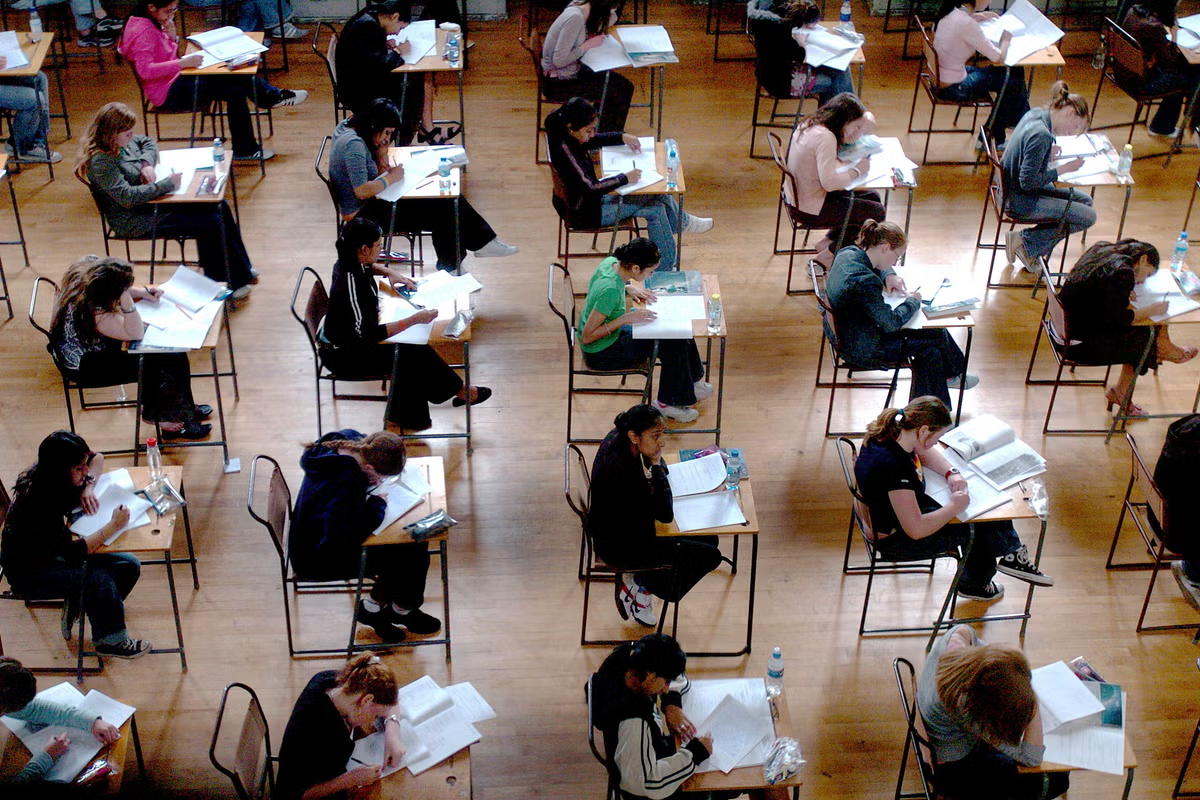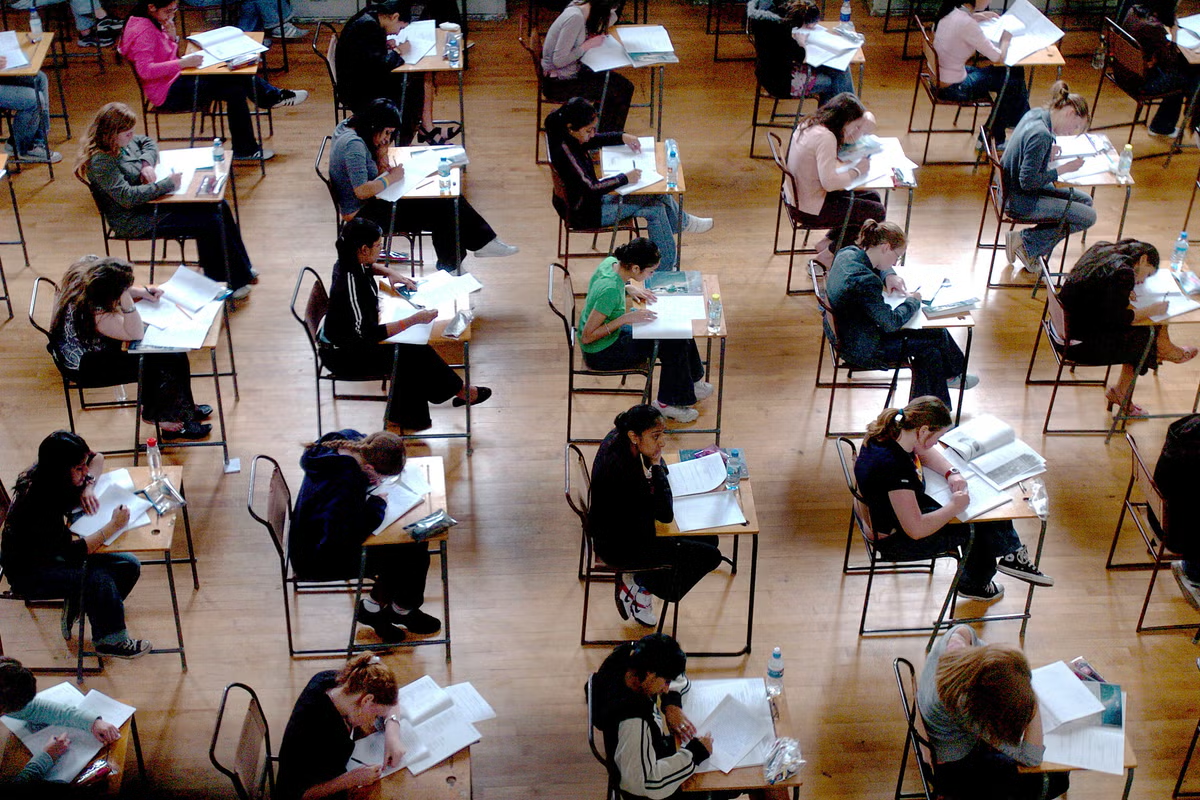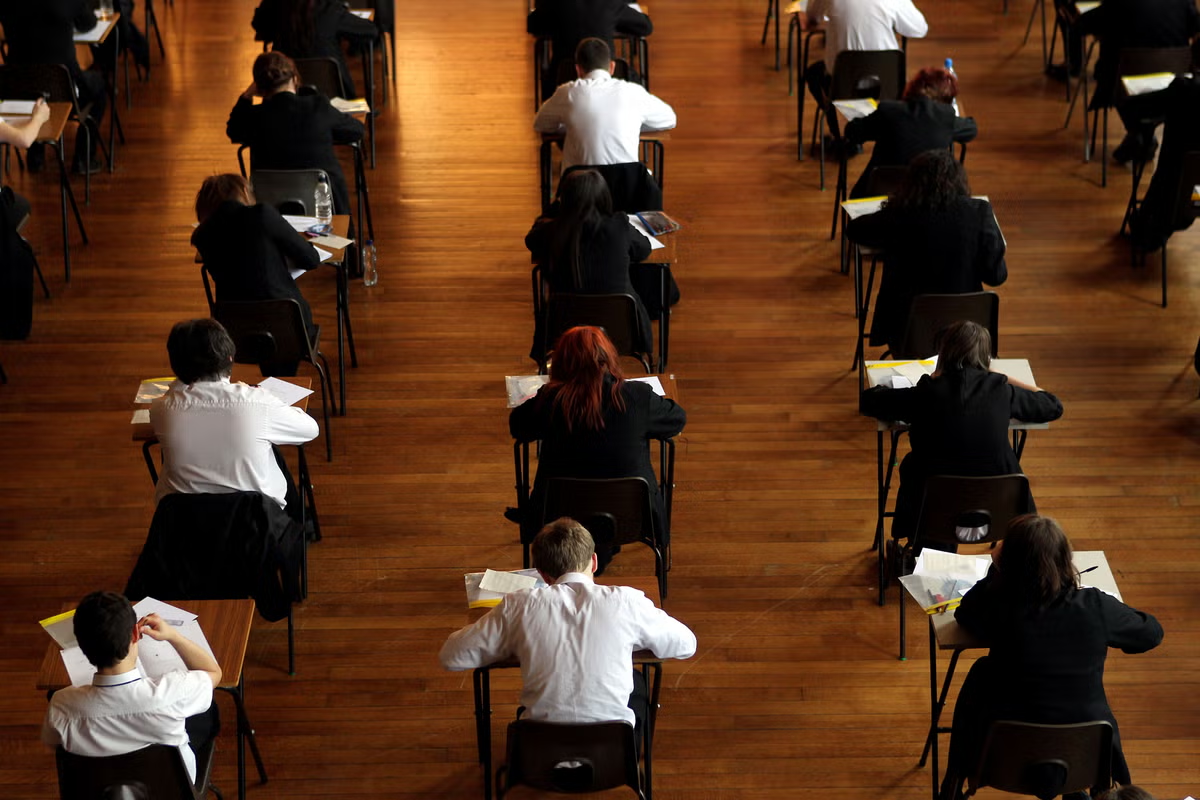
Pupils are jubilant after GCSE grades rose for a second year in a row, with top marks given to one in five entries – but pass rates for English and maths have dropped again to their lowest in a decade.Boys are closing in on the lead that girls have had since 1989, with the gap reducing again this year to its narrowest point since 2000.As hundreds of thousands of pupils picked up their GCSE results this morning, 22 per cent were awarded a 7 or A, up from 21.9 per cent last year.It means GCSE grading still remains higher than pre-pandemic levels, as in 2019 the proportion was just 20.8 per cent.While every UK nation apart from Scotland takes GCSEs, England now uses the grades 9 to 1, while Wales and Northern Ireland still use A* to G.Grade 7 is roughly equivalent to A and grade 4 is broadly equivalent to C.In 2024, 21.8 per cent of entries were 7/A, while in 2023 it was 22 per cent.In England, the proportion graded 9 – considered to be a high A*, was 5 per cent, down from 5.1 last year and equal to 5 per cent in 2024. Iris Hamilton-Potter hugs her mother after receiving her GCSE results at Llanishen High School, Cardiff A student smiles with her results at Llanishen High School in Cardiff Students open their GCSE results at Llanishen High School in Wales Students open their GCSE results at Llanishen High School, Cardiff Students receive their GCSE results at Llanishen High School in Cardiff Florence Davies (L) looks at her results at Llanishen High School in Cardiff Iris Hamilton-Potter (L) and friend Poppy Plant pose for a photograph after receiving their GCSE results at Llanishen High School in CardiffPoppy Plant (second to left) receives her GCSE results at Llanishen High School, CardiffKEY STATISTICS The proportion of entries receiving the top grades has risen for the second year in a row and remains higher than before the Covid-19 pandemic.A total of 22.0% of entries were awarded grade 7/A or above, up slightly from 21.9% in 2025 and higher than the 20.8% in 2019.Some 67.3% of entries received a grade 4/C or above. This is down from 67.4% last year and is the same as 2019. It is the first time the figure for 4/C has returned to pre-pandemic levels.The overall rate for grades 1/G or above is 97.9%, unchanged from 2025 and below 98.3% in 2019. This is the lowest figure for entries receiving at least a grade 1/G for two decades, since 97.8% in 2005.The longstanding lead enjoyed by girls over boys for the top grades has narrowed again. The proportion of total female entries awarded grade 7/A or above was 24.4%, 4.8 percentage points higher than the total for male entries (19.6%). This is the narrowest lead enjoyed by girls since at least the year 2000. Last year, girls led boys by 5.1 percentage points (24.5% girls, 19.4% boys).The gap at grade 4/C has also narrowed. Some 70.2% of all female entries were awarded 4/C or higher, compared with 64.4% for boys, a lead of 5.8 points. This is the narrowest lead for girls at 4/C since at least 2000. Last year the figures were 70.5% for girls and 64.3% for boys, a lead of 6.2 points.Across the regions of England, London saw the highest proportion of entries awarded grades of 7 or higher at 28.6%, up from 28.4% in 2025, while north-east England had the lowest at 17.7%, down from 17.8% last year.The gap between these two regions now stands at 10.9 percentage points, up from 10.6 points in 2025 and the largest since at least 2010.Some 31.7% of entries in Northern Ireland received 7/A or higher, above the equivalent figure for England (21.8%) and Wales (19.6%).For entries awarded 4/C or higher, Northern Ireland again had the highest figure, at 83.6%, above England (67.0%) and Wales (62.3%).The subject with the most entries this year was the science double award, as has been the case since its introduction in 2018, with a total of 1,007,628 entries, up 2% on 2025. Because this is a double award, each entry for the subject is awarded two grades.Maths remains the subject with the second largest number of entries, with 912,410 this year, up 2% on last year.English language ranks third, with 882,030 entries, a rise of 2%.Among subjects with more than 100,000 entries, business studies had the largest percentage increase in entries this year, up 8% from 137,924 in 2025 to 148,747 in 2026.Among subjects with fewer than 100,000 entries, statistics jumped by 11%, from 34,879 entries in 2025 to 38,770 this year.Overall, there were 6,199,256 GCSE entries, up by 0.6% on last year's figure of 6,160,034. And across all nations, 67.3 per cent of pupils achieved grade 4/C, down from 67.4 per cent in 2025.Grade 4/C is considered a 'standard pass' and is a basic requirement for many employers and universities.By subject, 60 per cent passed in English language, down from 60.2 per cent last year – and 57.3 passed maths, down from 58.3 per cent last year. These pass rates are the lowest in a decade.This is the second year pass rates have dropped in these subjects – likely caused by older pupils resitting them having previously failed to pass.In England, pupils who do not secure at least a grade 4 in English and/or maths GCSE are required to retake the subjects during post-16 education.However, the Government is introducing a 'basic skills' alternative qualification for over-16s who fail, which in future people who score very low will be able to take instead.This morning, the education secretary Lucy Powell pledged to crack down on the 'pernicious' system of GCSE resits which sees youngsters fail repeatedly.She told The Times she wanted to end the resit 'treadmill of failure' which sees about 200,000 teenagers in England fail in both subjects repeatedly and never achieve the pass mark.And she said more of those who receive a 2 or below are expected to be steered towards new stepping-stone qualifications called 'Level 1s'.And boys are doing better than last year – while girls are doing worse.Some 19.6 per cent of boys got 7/A, compared with 24.4 per cent of girls – a gap of 4.8 percentage points.Last year, 19.4 per cent of boys got 7/A, compared with 24.5 per cent of girls – a 5.1 percentage point gap.Ms Powell, said: 'Good luck to everyone receiving your results today, and huge thanks to the teachers and families who have helped to get you here.'Whatever that piece of paper says, you should be proud of the hard work and commitment you've put in, and excited about what comes next.'We will ensure every child has access to high-quality options whether that's academic, vocational, technical, creative or a mix.'Everyone should have the chance to follow the path that's right for them and build a successful career.'Grade inflation was rife during the New Labour years, when officials repeatedly insisted that pupils genuinely were getting cleverer every year.The proportion of top grades rose every single year between 2002 and 2011.However, after the Tories won the election in 2010 they instructed Ofqual to make sure the proportion getting these top grades remained roughly the same each year.This is adjusted slightly for the ability of each cohort, which is measured by sample tests earlier in the year.Roughly one in five have got A/7 grades over the last 15 years, but the pandemic frustrated the regulator's efforts because exam cancellations meant teachers decided grades – leading to massive inflation.
A fifth of GCSE entries get top marks but pass rates fall in English
As hundreds of thousands of pupils picked up their GCSE results this morning, 22 per cent were awarded a 7 or A, up from 21.9 per cent last year.
1,805 words~8 min read