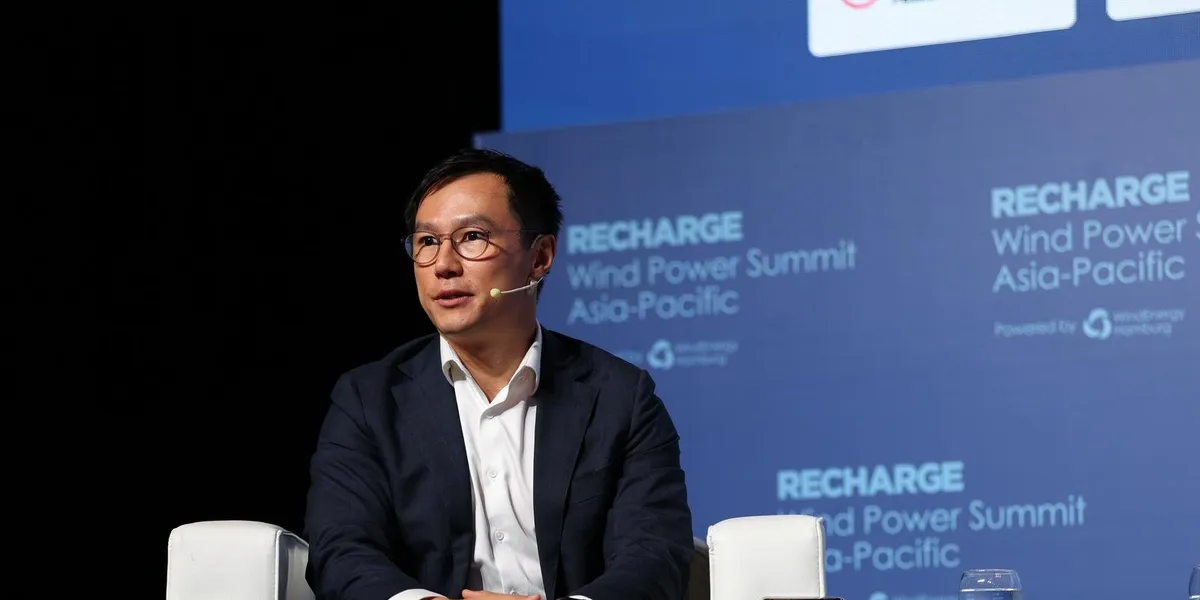
A potential lull in Taiwan's offshore wind development from 2031 to 2033 could disrupt investment and erode the marine engineering capacity built up over the past decade, an industry executive said today.The government must move quickly on its next round of offshore wind projects to ensure continuity for developers, suppliers and marine engineering companies, CSBC-DEME Wind Engineering Co Ltd (CDWE, 台船環海風電工程公司) chairman Robert Tseng (曾國正) told an energy transition forum in Taipei.It appears that there could be a "gap in 2031, 2032 and 2033, and we should not allow it to last that long," Tseng said.
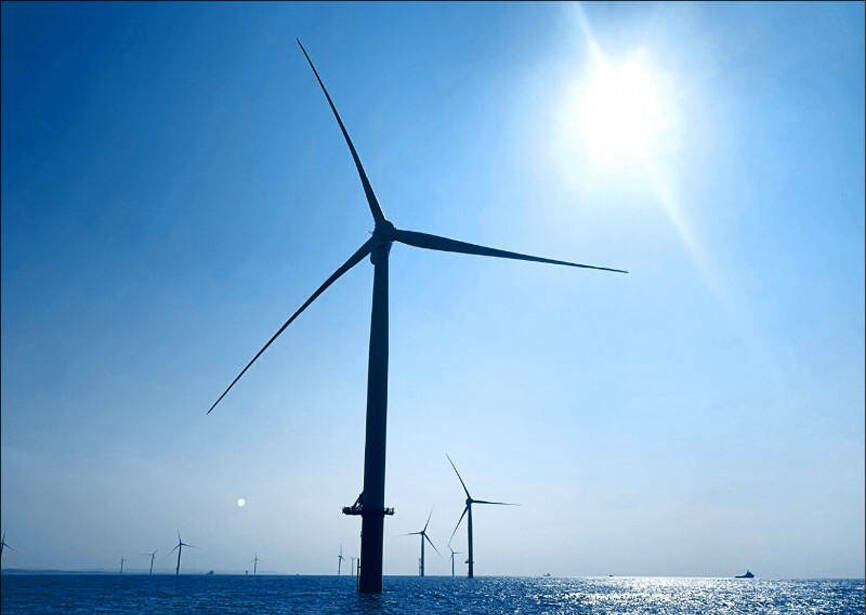
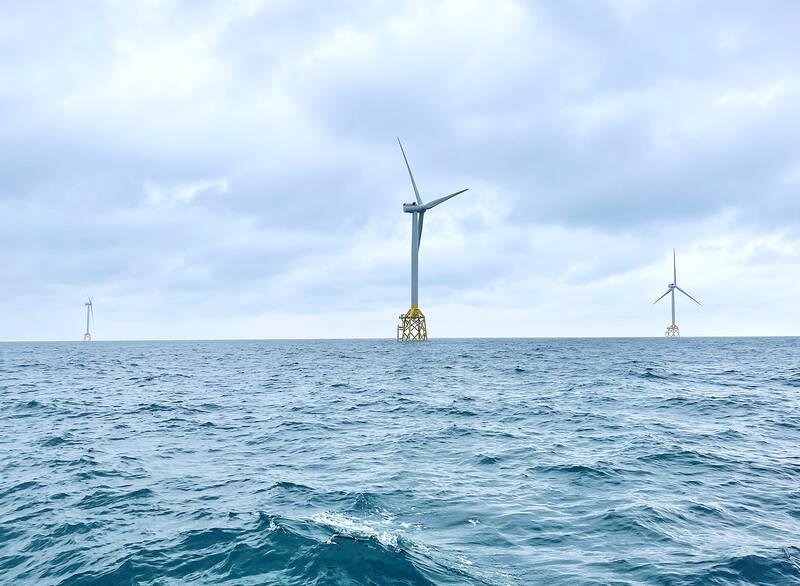
Wind turbines are pictured off the coast of Taichung in an undated photograph.
"The government should launch the next round quickly so that developers, suppliers and engineering companies can keep moving forward," he said.Taiwan's marine engineering industry comprises dozens of companies that have invested in purchasing, building and modifying offshore wind construction and support vessels rather than serving only as agents for foreign technology, Tseng said.
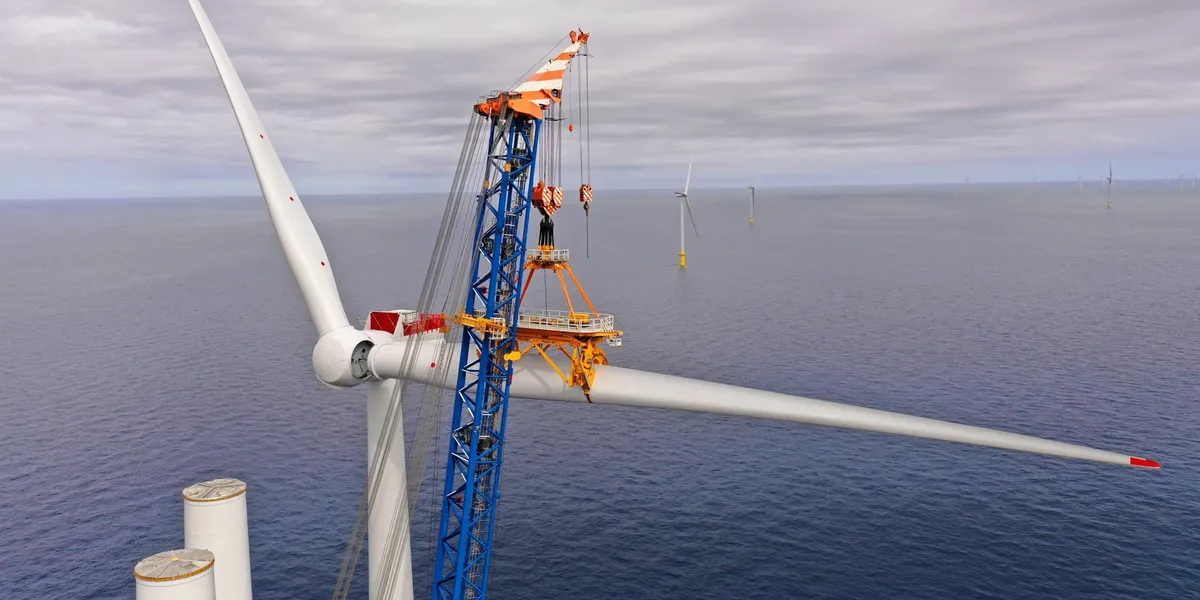
About 120 Taiwan-flagged construction and support vessels operate in the country, with the number continuing to grow, he said.However, Taiwan still does not have enough specialized vessels to assemble a complete offshore wind installation fleet, Tseng said.Developing 1.5 gigawatts (GW) to 2GW of capacity annually would require two to three such fleets, he said.CDWE was established in 2019 as a joint venture between CSBC Corp, Taiwan (台灣國際造船) and Belgium-based DEME Offshore BE NV to accelerate the transfer of marine engineering capabilities to Taiwan.The company then commissioned Green Jade, a US$318 million vessel equipped with a 4,000 tonne crane for installing foundations, turbines and offshore substations.CDWE has participated in eight Taiwanese wind projects and recently completed foundation and turbine installation work for the Hai Long 2 and 3 wind farms, Tseng said.After finishing part of that work ahead of schedule, the company used a two-month opening to install 22 jacket foundations for Taiwan Power Co's (台電) second offshore wind project, Tseng said, citing it as evidence of the importance of maintaining domestic engineering capacity.Last year, CDWE ranked fourth globally — excluding China — for fixed-bottom offshore wind installation workload and first for jacket foundation installation, Tseng said.The capabilities developed through offshore wind projects could also support subsea cables and pipelines, offshore substations, carbon capture and storage, and other marine infrastructure, he said."Autonomous and comprehensive marine engineering capabilities are most important to support Taiwan's continued development," Tseng said. "They can support development in areas ranging from the low-carbon and net zero transitions to AI [artificial intelligence] and marine industries.”Taiwan's offshore wind plan from this year through 2039 identifies an additional 15GW to 18GW of developable capacity, which would bring cumulative capacity to 24.7GW to 27.9GW by 2039.Continued project development would encourage further investment and enable Taiwan's marine engineering sector to support broader energy security and net zero goals, Tseng said.