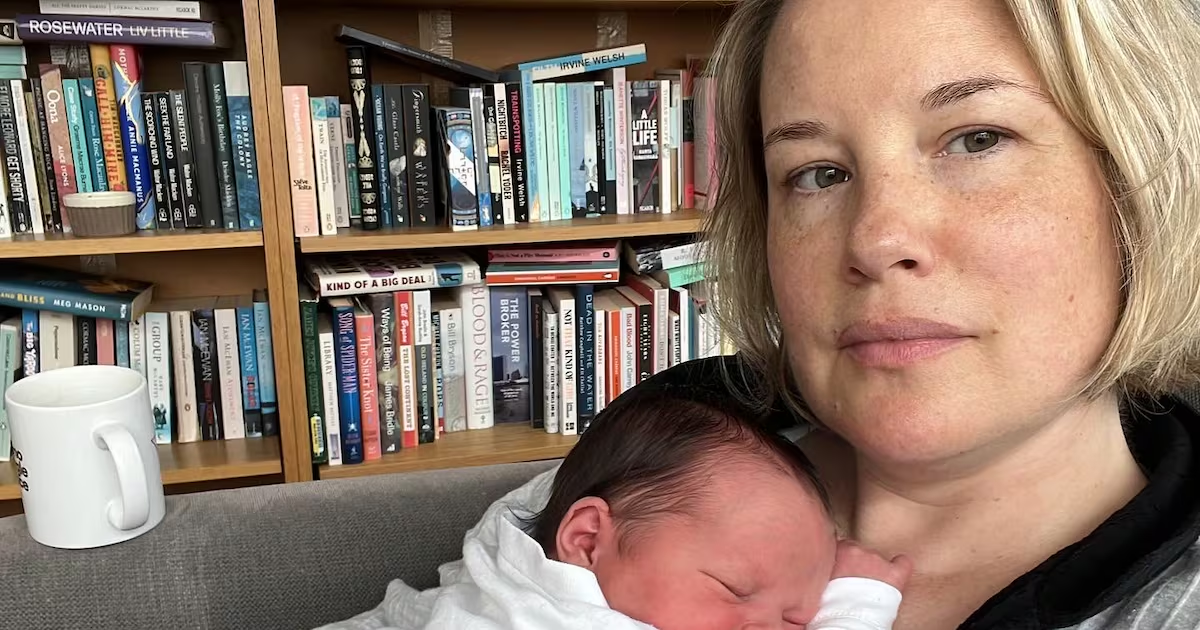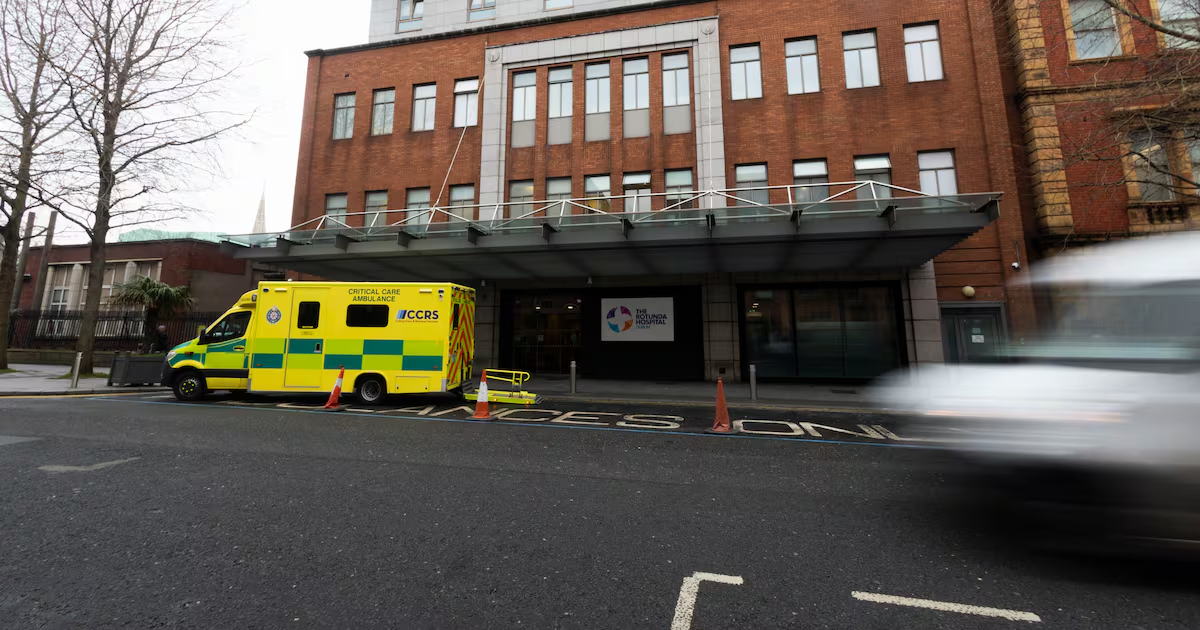
A number of women were shocked to discover earlier this year that they would be unable to obtain private healthcare at the Rotunda Hospital in the future. One, in a letter to The Irish Times, said women, particularly those with complex conditions, should not have care pulled from them at such vulnerable times in their lives. Others supported private healthcare because it increased patient choice.You have to be sympathetic to the feelings of stress these women were expressing.How did this situation happen? Under Sláintecare, the State strategy to move towards universal healthcare, private care will no longer be allowed in public hospitals. Clearly, this message has not been sufficiently communicated.In 2017, the Committee on the Future of Healthcare published the Sláintecare report. The report was intended to move Ireland from its current two-tier health system to a single-tier model where every citizen would have equal access to healthcare based on need and not on ability to pay. Ten years on, where is the health system at? There have been some important moves towards strengthening public care, such as the new public-only consultant contracts. However, waiting lists remain a big problem. The plan to reform healthcare in Ireland, named Sláintecare, aims to deliver on the actions outlined in the all-party Oireachtas committee report published last year. Video: Enda O'Dowd People continue to be treated on trolleys. The school dental screening programme is in serious trouble, with tens of thousands of children going without dental assessments. Some children are waiting more than a decade to see psychologists. The neurodiversity assessment system is overwhelmed, forcing some parents to pay thousands for assessments and services. Meanwhile, 2025 figures show just under half of the Irish population, about 2.5 million people, have private health insurance despite its rapidly increasing costs. In some parts of Dublin, building work is being carried out by private healthcare companies that are significantly expanding their locations. There are private health insurance billboards countrywide showing smiling children and their families. There are constant adverts for private health insurance on television, in the cinema, and on social media.There are very few, if any, adverts or billboards for Sláintecare. It is an absent presence in the vast majority of people’s lives; and this absence is important. Quite a lot of patients do not believe the public system is meaningfully there for them. There are no consistent messages to the public, like there were at the start of the National Health Service in the United Kingdom, that patients will be protected under Sláintecare from birth until death. Whereas if someone were to look at the advertisements for private health insurance, this is the message these companies are constantly hammering home – that children and their families will be protected, as long as they can pay.What can be seen, overall, is a public system talking quietly about universal healthcare, while at times being overwhelmed, frantically trying to reduce waiting lists however it can; and an ideologically, actually in places physically, expanding private health system. Sláintecare as an initiative has always been ideologically confused. The Health Service Executive website is clear in saying that “instead of the two-tier system Ireland has at the moment, we’ll have one universal health service”. This is why the Rotunda controversy happened. However, the initial Sláintecare report accepted the idea that when/if the Republic eventually develops universal healthcare, the State would still accept the presence of private health insurance, private patients and private hospitals, just not in public hospitals.Sláintecare seems to define universal healthcare as single-tiered access in public facilities, but at the same time, from its inception, was happy to coexist alongside privatised healthcare. Universal healthcare is meant to increase access and reduce inequity. Sláintecare seems to want to increase access to public settings, but as a policy, it is accepting of healthcare inequity more generally (because only those with money can pay for private healthcare). The 2017 Sláintecare report noted that it “recommends a model where private insurance will no longer confer faster access to healthcare in the public sector, but is limited to covering private care in private hospitals”. This shows a pretty high tolerance for healthcare inequity. Our health system is what sociologists call a “capitalist socialist system”. A certain proportion of the population are protected by the State and given socialised healthcare, free medical and some dental care. For instance, at least 1.4 million people have medical cards. Free-market privatisation is then unleashed upon the rest, who might have to pay thousands for a child’s dental work, thousands for health insurance, on top of GP costs, consultant fees and so on. It is quite possible in the State, 10 years into Sláintecare, for some people to experience catastrophic health expenses. One particularly financially vulnerable group in this system is probably the lower-middle class, as they have less State protection and cannot easily afford privatised care. However, given steep increases in the costs of privatised healthcare, and the number of people who feel that they have to depend on it, significant numbers across multiple class groups are likely now at financial risk.Sláintecare is meant to be moving us away from this financially crippling and inequitable system, but is it meaningfully happening when you take a step back and look at the entire health system? It seems not.The biggest fear for Sláintecare is that it is becoming what psychiatrist Robert Lifton called a thought-terminating cliche: brought up to make people feel that the State is moving towards universal healthcare, while suppressing conscious awareness that in many ways it seems to be moving inexorably in the opposite direction.Myles Balfe is a senior lecturer in medical sociology at UCC. He has a research interest in universal healthcare
Sláintecare is meant to move us towards universal healthcare, so why has this not happened?
Private health insurance firms are entrenched behind slick advertising, reminding people they will be safeguarded as long as they can pay
947 words~4 min read