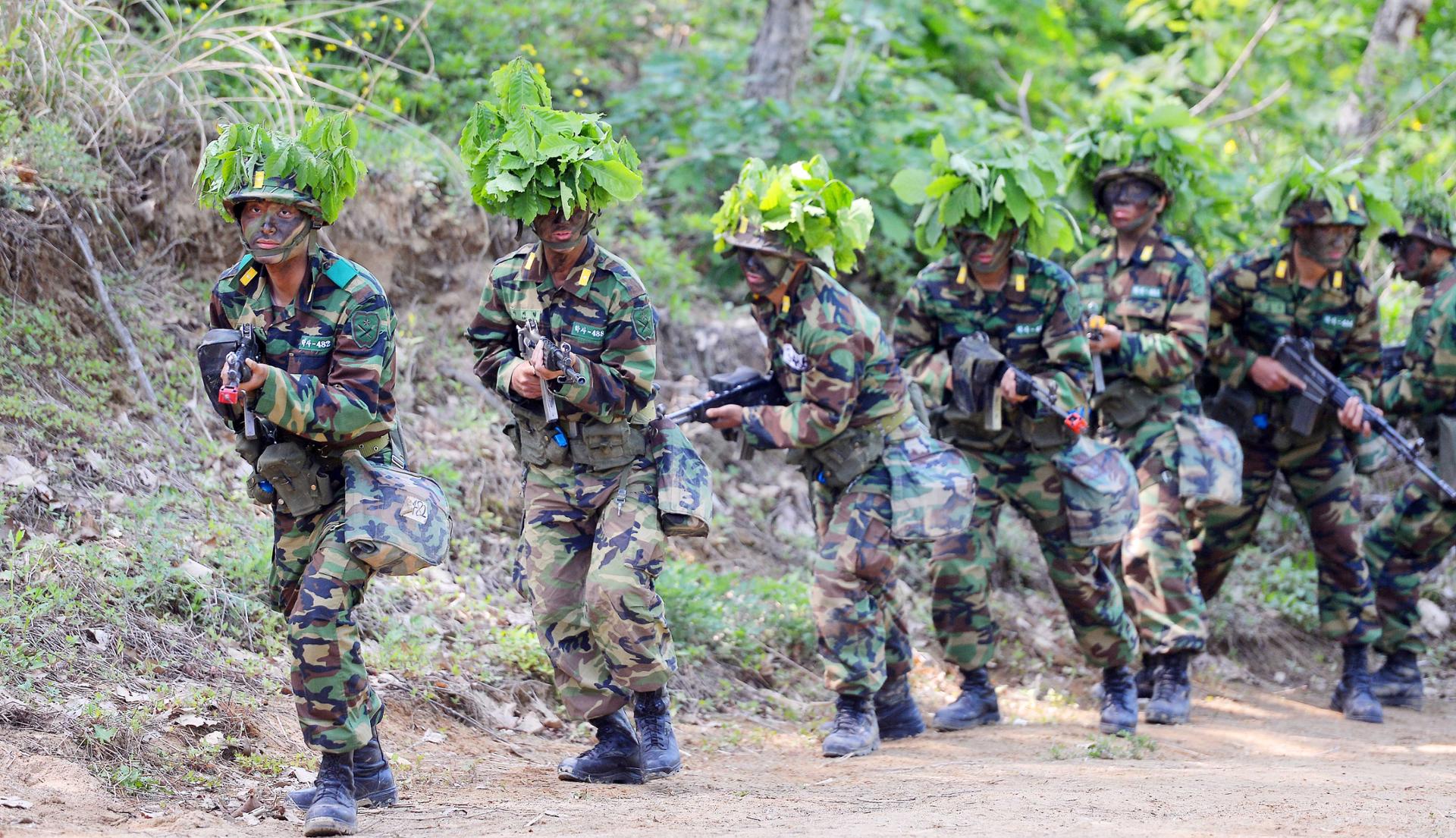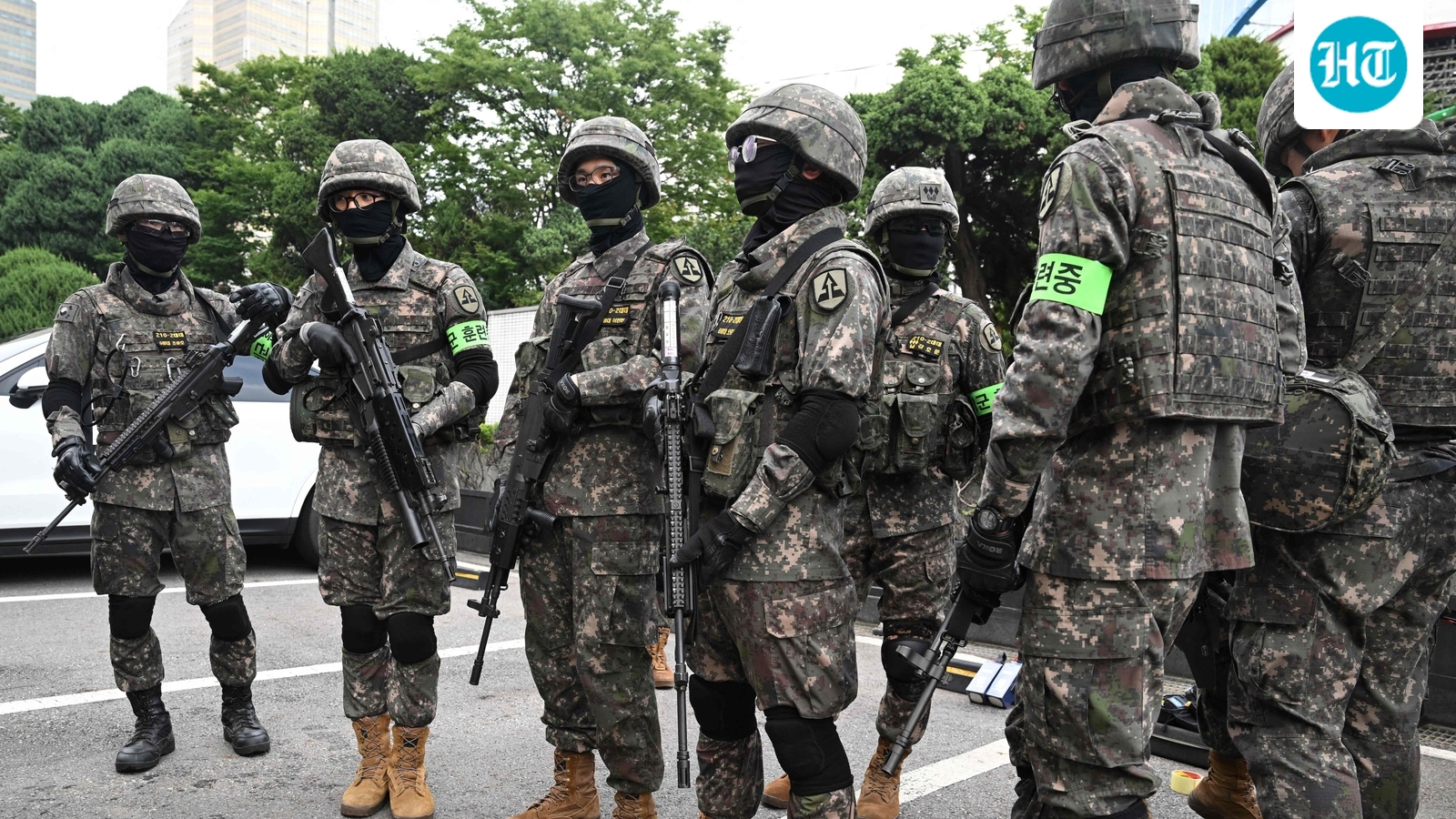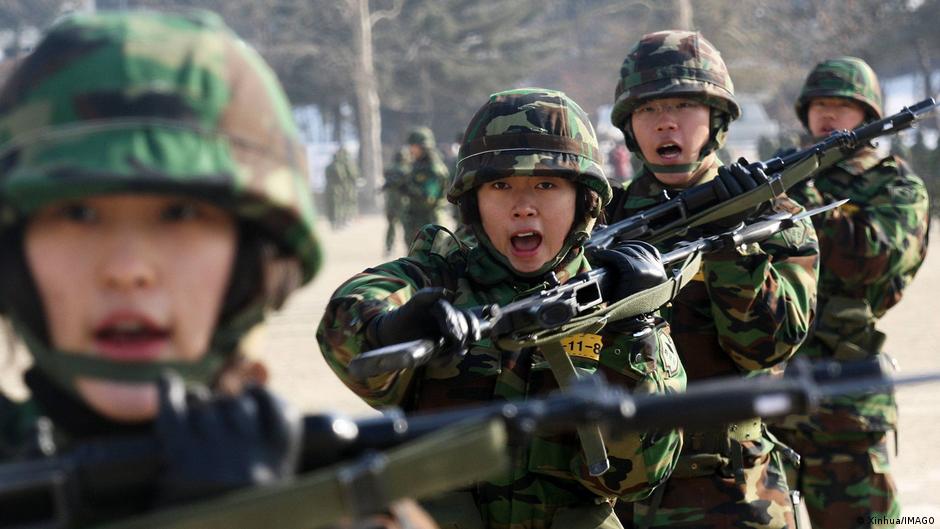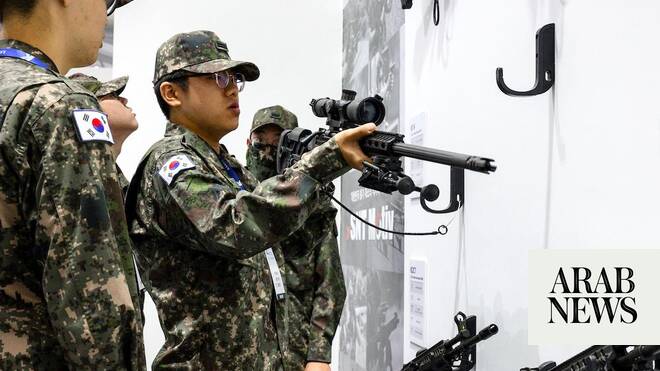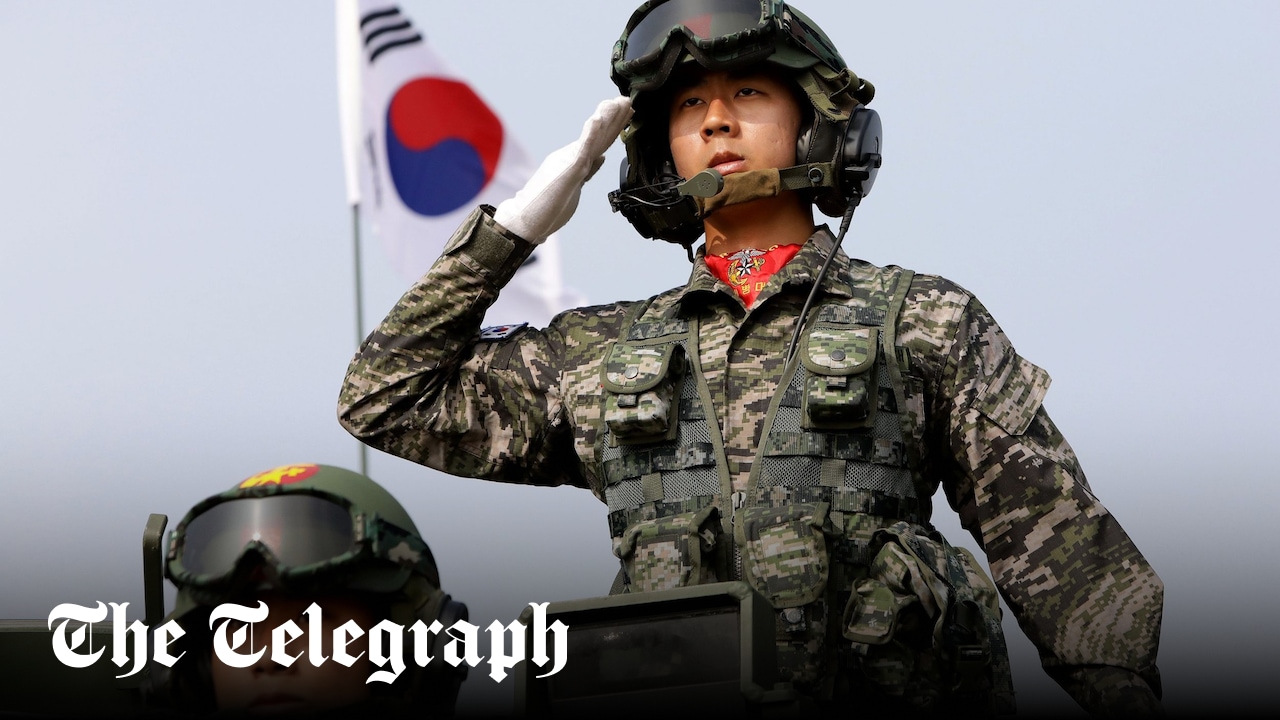
As low birth rates shrink military manpower, support grows for female conscription while views on selective enlistment remain mixed A female soldier of the South Korean Army (Getty Images Bank) Six in 10 South Koreans favor extending mandatory military service to women amid a growing debate over how to address a declining number of potential conscripts due to the low birth rate, a new survey showed Thursday.The nationwide survey of 1,006 adults by the Reform Institute, a policy research arm of the minor conservative Reform Party, found 59.6 percent in favor of the idea, compared with 34 percent against it, a difference of 25.6 percentage points.More than half of both men and women supported the proposal, at 64.8 percent and 54.5 percent, respectively.While all age groups showed majority support, men in their 20s and 30s showed the strongest approval of any respondent group at 71.7 percent.Calls to include women in mandatory military service have grown as the number of potential conscripts declines.According to the Defense Ministry, those eligible for enlistment fell from 332,000 in 2019 to 257,000 in 2022, with the number projected to drop to 228,000 in 2035 and around 120,000 in 2043.The inclusion of women in mandatory military service is gaining momentum worldwide amid growing security threats and military manpower shortages.Norway introduced conscription for both men and women in 2015, followed by Sweden in 2018. Denmark became the third European country to do so last year, expanding mandatory military service to women amid growing security threats, including from Russia.Selective enlistment New recruits salute during a military enlistment ceremony at the Korea Army Training Center in Nonsan, South Chungcheong Province, on Jan. 5. (Republic of Korea Army) The survey found mixed views on a selective enlistment system that the government plans to introduce next year as a possible response to declining military manpower, with 47.4 percent in favor and 41.9 percent opposed.The military reform plan that President Lee Jae Myung has promoted since his 2022 presidential campaign would allow individuals to choose between the standard 18 to 21 months of compulsory service and serving for four to five years as a noncommissioned officer in a technology focused role. Higher pay and other incentives would be offered to encourage recruits to take the longer option.However, respondents were less optimistic about whether the system would actually help address military staffing shortages. Some 49.9 percent said it would not help, 7.2 percentage points higher than the 42.7 percent who believed it would.Views on selective enlistment varied sharply by age.Among younger respondents, opposition outweighed support, at 55.3 percent to 35.8 percent for those aged 18 to 29 and 57.2 percent to 36.7 percent for those in their 30s.By contrast, a majority of those in their 40s, 50s and 60s supported the system, at 51.9 percent, 57.4 percent and 52.9 percent, respectively.When asked about the future of the military service system, 41.5 percent favored a combination of conscription and voluntary recruitment. Another 35.4 percent preferred keeping the current conscription system, while 10.6 percent favored replacing conscription entirely with voluntary service.
6 in 10 South Koreans back female conscription: poll
Six in 10 South Koreans favor extending mandatory military service to women amid a growing debate over how to address a declining number of potential conscripts
507 words~2 min read