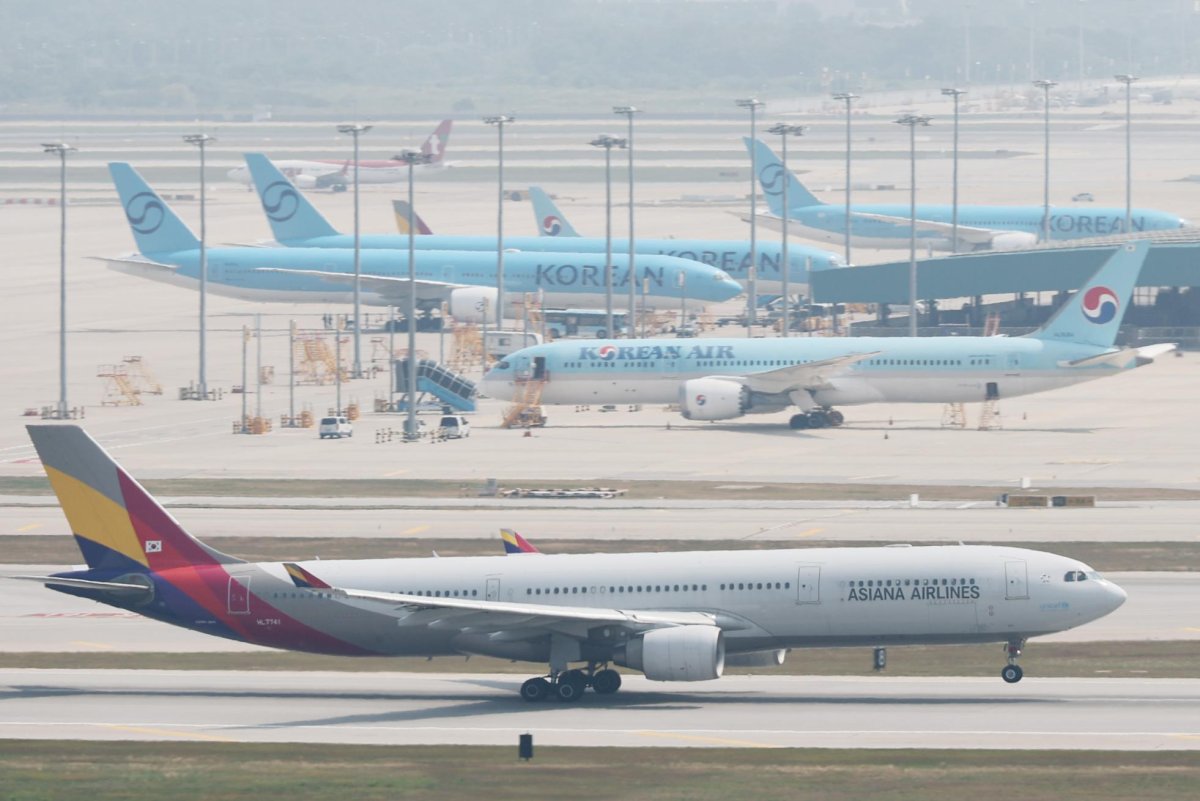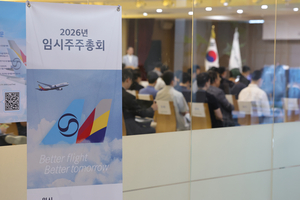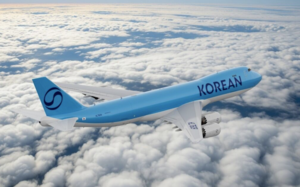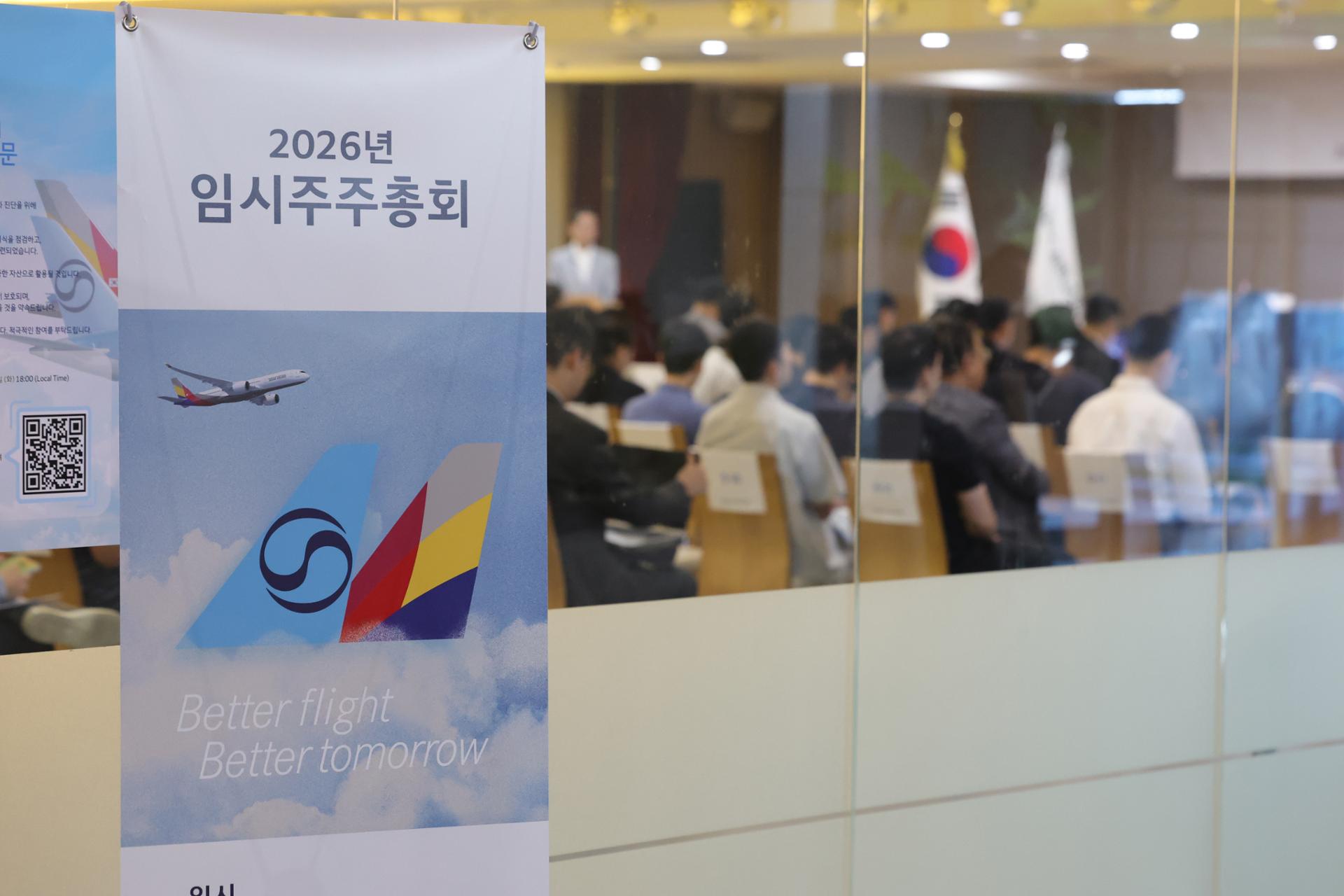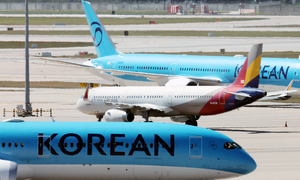
Korean Air and Asiana Airlines aircraft are parked at Incheon Airport in Incheon on Thursday. (Newsis) Unused frequent flyer miles at Korean Air and Asiana Airlines have surpassed 4 trillion won ($2.9 billion) for the first time, while a delayed antitrust approval for the two carriers' merger muddies the picture of when, or how, that liability gets unwound.According to each airline's half-year filing released Wednesday, Korean Air's deferred revenue from its mileage program stood at 3.12 trillion won at the end of June and Asiana's at 946.8 billion won.That marks the first time the combined figure has crossed 4 trillion won since Korea's airlines introduced mileage programs in 1984. Deferred mileage revenue represents the value of miles issued but not yet redeemed, carried on the books as a liability.While steady growth in passenger demand has fueled the buildup, some industry officials point to customers deliberately delaying mileage use in anticipation of a wider route network and more seat-upgrade opportunities once the merged airline launches, slated for Dec. 17."People will likely wait things out until the new program's terms are settled once the deal is finalized," one official said, predicting the outstanding balances would stay elevated for some time.Uncertainty still hangs over the final rules for the merged loyalty program.Under the integration plan Korean Air submitted to the Korea Fair Trade Commission, flight-earned miles would convert 1-to-1, while miles earned through airline partner programs would convert at a ratio of 0.82 Asiana miles to 1 Korean Air mile. Asiana members would retain access to their existing miles for 10 years.Korean Air resubmitted its plan in January after regulators ordered it to shore up bonus-ticket and seat-upgrade management, and talks continue with the commission over expanding that availability and minimizing miles that expire unused.In its July filing, Korean Air said that without FTC approval by the merger date, it may need to keep the two mileage systems running separately to avoid making them less favorable than they were at the end of 2019, the baseline year set when the commission conditionally approved the merger in 2022.Industry observers say the longer the FTC review drags on, the more pressure may build on both carriers to lock down bonus-ticket volumes, upgrade capacity and redemption options.
Korean Air-Asiana unused miles top W4tr amid regulatory delay
Unused frequent flyer miles at Korean Air and Asiana Airlines have surpassed 4 trillion won ($2.9 billion) for the first time, while a delayed antitrust approva
372 words~2 min read