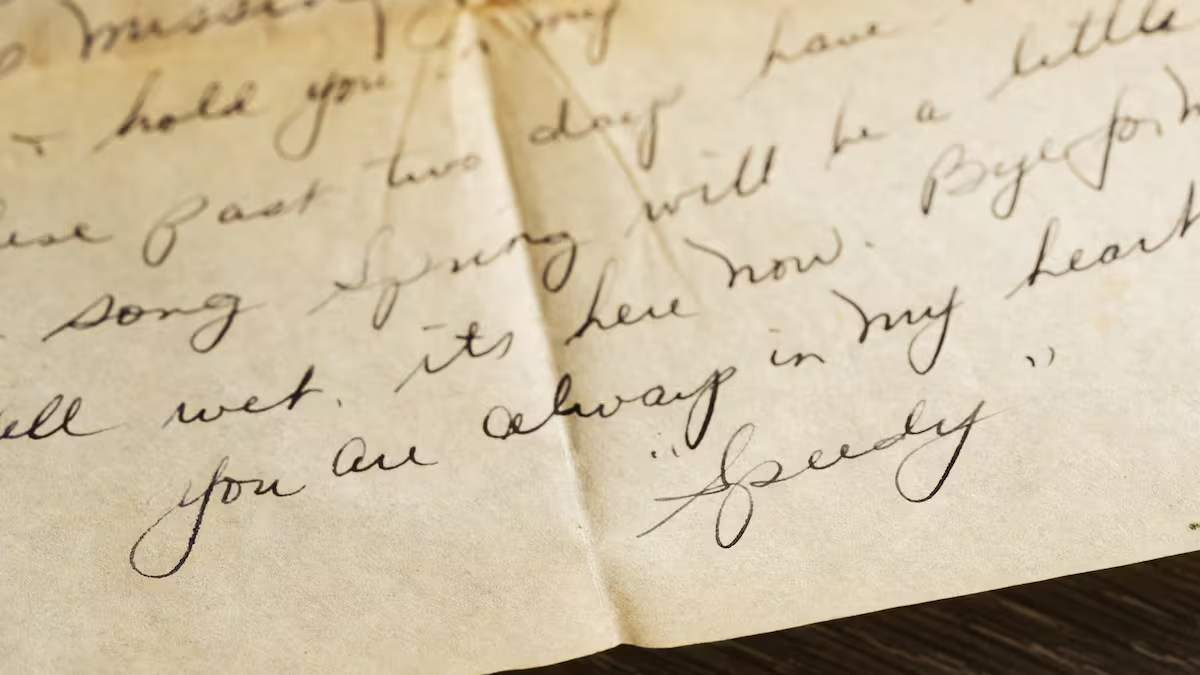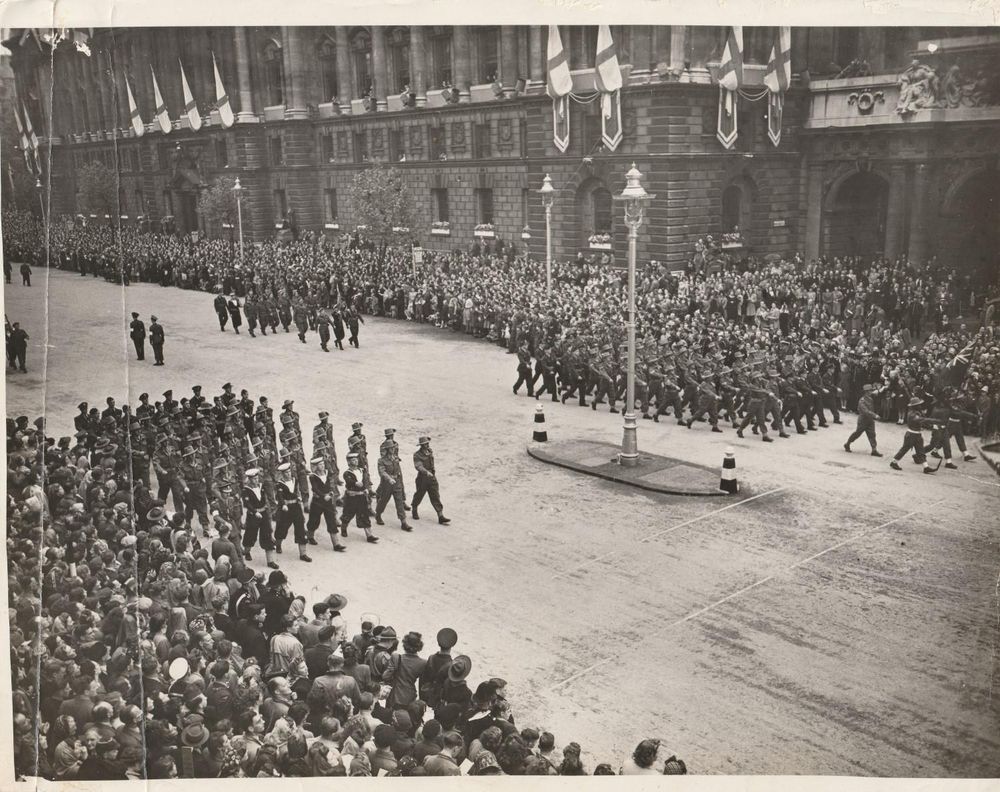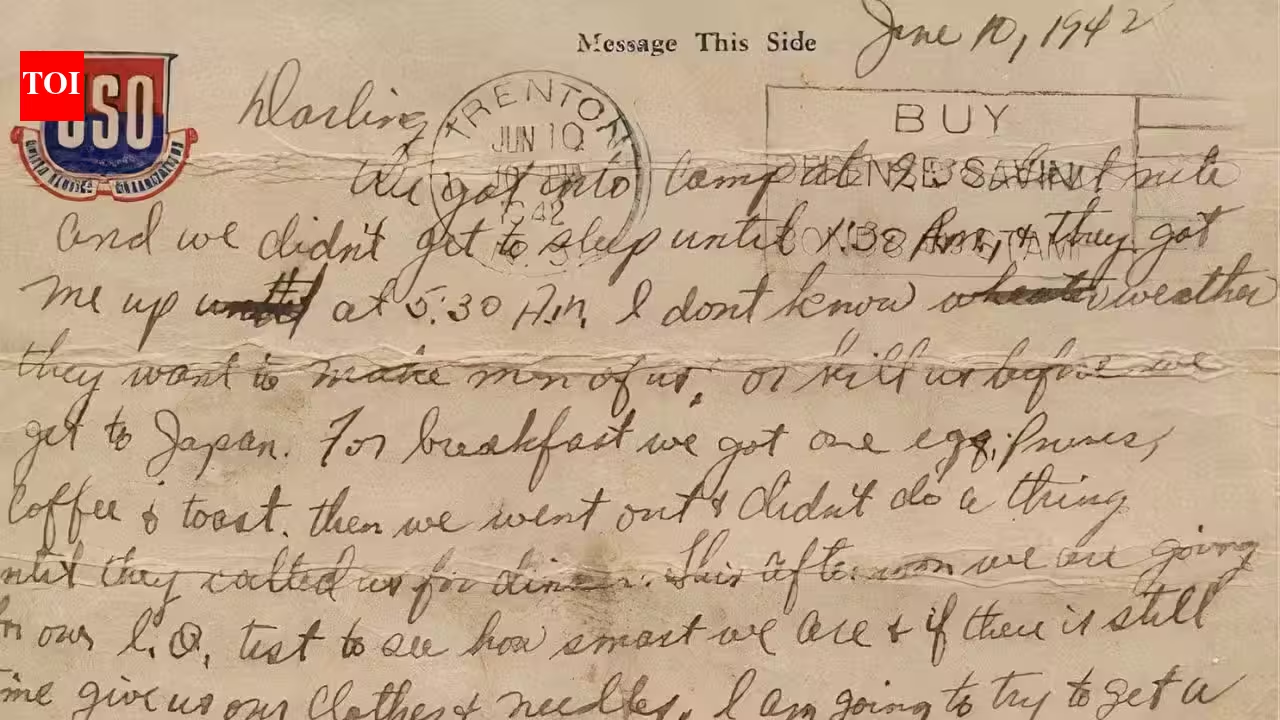
This image layers a handwritten letter from 'Speedy' over a D-Day landing image, reflecting the personal and historical threads in the USO archive. Image Credit: Ryan LaBee/USO archival material and a public domain D-Day imageIn 2022, a cardboard box containing more than 300 letters written by a US Army soldier during the Second World War arrived unexpectedly at a United Service Organisations (USO) office in New York. The letters belonged to Louis ‘Speedy’ Weber, a young soldier who spent years overseas writing to his wife, Frances, while she remained at home in the Bronx. For decades, the couple’s story had remained largely private, but the discovery gave historians an unusually intimate view of an ordinary serviceman’s wartime life. As Smithsonian magazine reported, the letters eventually reached USO headquarters in Virginia, where archivist and historian Michael Case became determined to learn who Speedy was and what happened to the couple after the war. His search led to relatives who could finally put a face and family story to the name and his letters again.Who was Speedy Weber who wrote 300 love letters to his wifeLouis Weber, better known as ‘Speedy,’ was just 23 when he entered the US Army in 1942. He had been married to Frances for only about a year when military service separated them. While he learned the routines of Army life, Frances remained in the Bronx, and letters became the couple’s main way of staying connected. As per Smithsonian magazine, Speedy wrote hundreds of letters during his years overseas. His correspondence came from places including Sicily, England, France, Belgium, Germany, Czechoslovakia and North Africa.The letters revealed a young man who was far more expressive than his ordinary circumstances might suggest. Smithsonian described his writing as ‘everyday elegant,’ noting that he used simple language while capturing the emotions of the moment. Speedy also had a playful side. He gave Frances a collection of affectionate nicknames, including ‘Dearest,’ ‘Legs,’ ‘Darling,’ ‘Knucklehead,’ ‘Shape’ and ‘Meatball.’ Many letters ended with the same warm message, ‘You are always in my heart.’A handwritten August 1942 letter from Louis Weber to his wife, Frances. Image Credit: USOWhat made the mysterious box of letters so uniqueThe USO receives many historical donations, but Speedy’s collection immediately stood apart. Michael Case was accustomed to seeing individual photographs, postcards, military pins and other small objects arriving at the organisation. More than 300 personal letters, however, offered something much more intimate. Case said reading the correspondence made him feel as though he was getting to know Speedy himself. The soldier was not a famous commander or public figure. He was simply a young man doing his job, missing his wife, making mistakes and trying to cope with a long separation. The mystery was that nobody knew who had donated the box. The letters eventually moved from the New York USO office to the organisation’s headquarters in Virginia. Researchers began trying to discover what had happened to Speedy and Frances after the war, but their initial efforts produced few answers.Speedy wrote this June 1942 postcard to his wife, Frances. Image Credit: USOHow did the letters reveal Speedy’s personalitySpeedy’s writing was often funny, affectionate and unexpectedly dramatic. In one 1942 letter, he joked that Frances could send herself to him by wrapping herself in a package marked ‘fragile.’ Yet the humour was often mixed with loneliness. In another letter, he looked ahead to the day when the war would end and imagined the couple taking a second honeymoon. He promised that it would be even better than their first. Then his mood changed. He wrote about how the couple were merely existing rather than truly living while they remained apart. He also asked Frances to remember the happiest times they had shared. The letters therefore became more than romantic messages. They recorded the emotional strain of wartime separation in the words of someone experiencing it himself.What did Speedy write about the war in those lettersThe correspondence also provided glimpses of major events in the Second World War. Speedy was in Europe around the time of D-Day and later described crossing the English Channel. In a June 1944 letter, he wrote about seeing ships stretching across the water and aircraft filling the sky. For him, it was a breathtaking sight that he said he would never forget. His letters also contained ordinary military frustrations. In early 1945, he told Frances that he had been reduced in rank from private first class to private. He joked that, whatever the reason, there was at least nowhere lower for him to go because private was the lowest rank. These small details helped historians see the war not only through major battles and official records, but through the everyday thoughts of an ordinary soldier.How were Speedy’s relatives finally foundThe search continued for years. In 2024, the USO worked with the Washington Post to investigate the mystery. Researchers established that Speedy and Frances had lived near each other in New York in 1940, but the investigation did not immediately produce anyone who knew them. The breakthrough came after amateur genealogist Matthew Brown began investigating the family. According to Smithsonian magazine, Brown searched and identified a possible relative named Arthur Serota. Serota, who lived in Los Angeles, knew nothing about the letters but knew Speedy well. He was Speedy’s nephew and remembered his uncle as a warm and generous man. Another relative, Karen Weber Figilis, also remembered Speedy and Frances from family gatherings. She had something particularly valuable, ‘two black-and-white photographs.’ One showed Speedy and Frances together, while another showed Speedy alone. For Case, the photographs finally put a face to the soldier whose words he had been reading.What happened to Speedy and Frances after the warThe letters showed only part of the couple’s life. After the war, Speedy returned home and worked as a truck driver, while Frances became a manager at the US Post Office. The couple never had children, but they remained together for the rest of their lives and eventually moved to Florida. Speedy died at 78 and Frances at 87, and they were buried together at a Jewish cemetery. Even after relatives were found, some questions remained. Only two of Frances’ letters survive in the collection, although Speedy’s writing suggests that she corresponded with him regularly. Nobody has established who carried the box of letters into the USO office in 2022. Case believes the collection may have been discovered while someone was clearing out a home, possibly after the owner’s death. Some letters were written on USO stationery, which may explain why someone chose to bring them to the organisation.Why do these letters matter todaySpeedy Weber never set out to become a historical figure. He was simply writing to his wife during an difficult period of his life. That is precisely what makes the collection so valuable. As Smithsonian magazine noted, personal letters can show what major historical events felt like for ordinary people. Speedy’s correspondence captures homesickness, humour, frustration, affection and uncertainty in a way that formal military records rarely can. The mysterious box therefore preserved more than 300 pieces of a private love story. It also preserved the voice of an everyday American soldier who happened to witness some of the biggest moments of the Second World War. More than eight decades later, Speedy’s words have found new readers, while the mystery of who delivered the letters remains unsolved.
In 1942, a US soldier wrote 300 love letters to his wife; 80 years later the mysterious box appeared at a USO office
In 2022, a cardboard box containing more than 300 letters written by a US Army soldier during the Second World War arrived unexpectedly at a United Service Organisations (USO) office in New York. The letters belonged to Louis ‘Speedy’ Weber, a young soldier who spent years overseas writing to his wife, Frances, while she remained at home in the Bronx.
1,228 words~6 min read