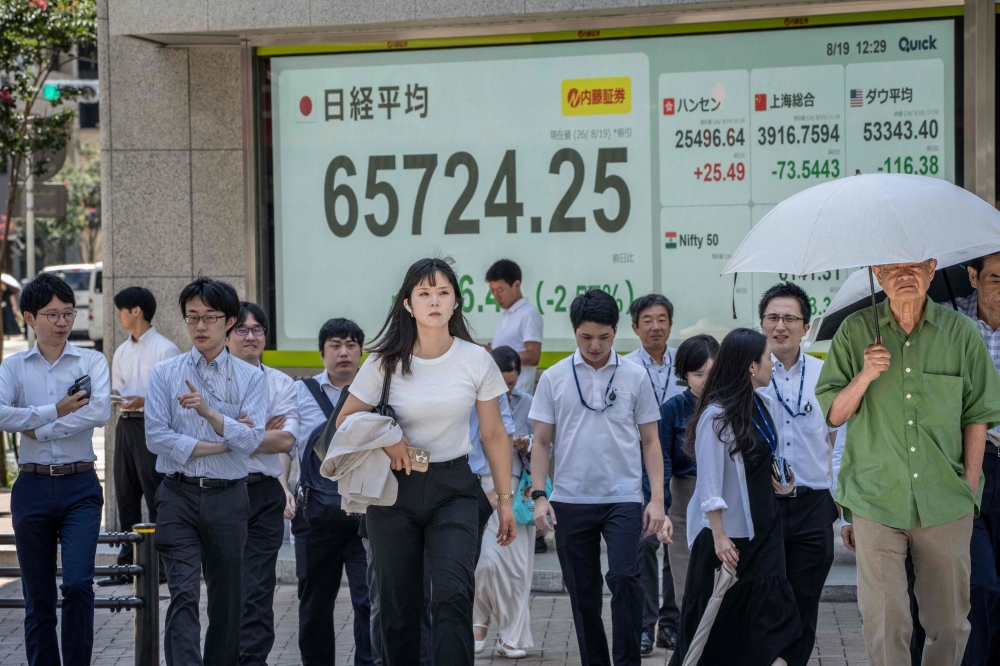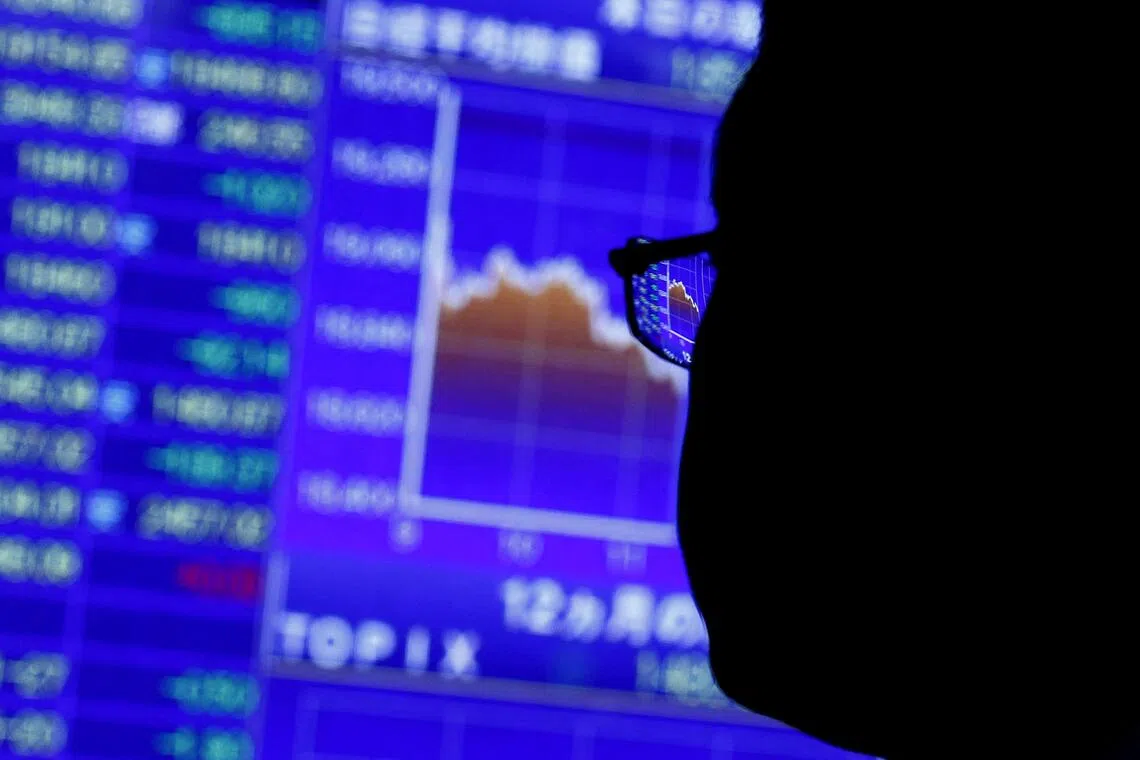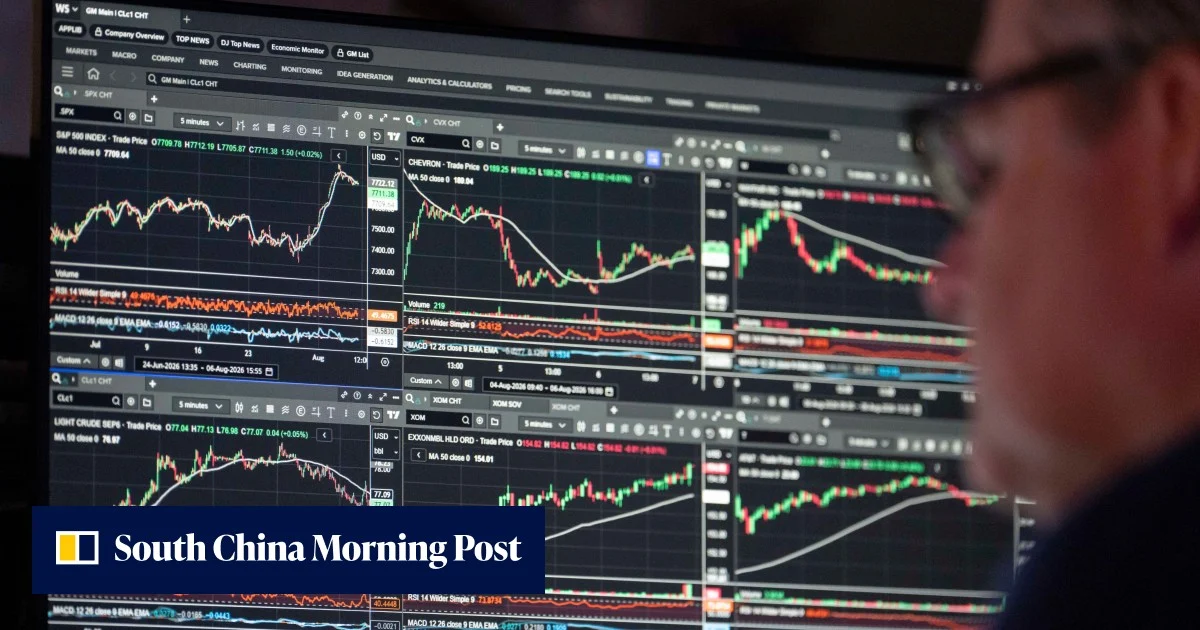
HONG KONG: Asian markets rallied on Thursday (Aug 20) after the US Treasury said it would "at least double" the amount of long-term bonds to push down borrowing costs, after they surged this week to near two-decade highs.The surprise move provided a much-needed shot in the arm for investors worried about a spike in 10- and 30-year yields caused by the prospect of inflation staying elevated, government borrowing and possible Federal Reserve interest rate hikes.Soon after the announcement, US equities reversed losses to end higher while the dollar tumbled against its peers as traders breathed a sigh of relief following a fresh bout of selling.Fears had been surging after the yield on a 30-year US Treasury on Tuesday hit its highest level since June 2007, before the global financial crisis.
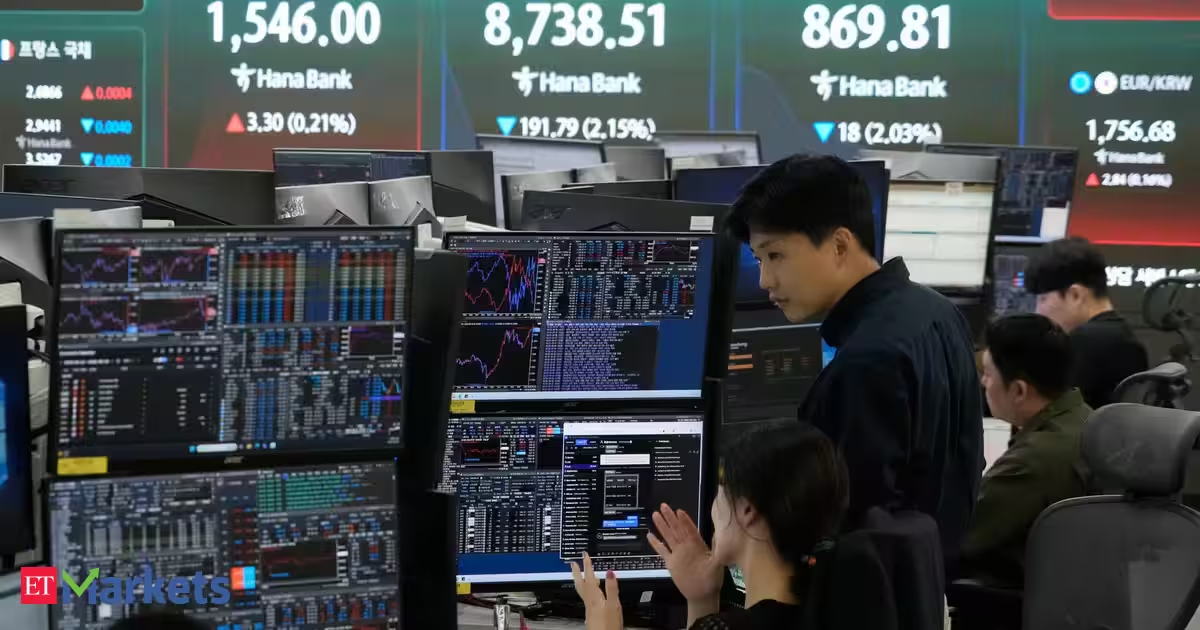
"This is probably more about the signal the administration wants to send to the market than the size of the operation - it's small potatoes vs the US$40 trillion US government debt," wrote Neil Wilson at Saxo Markets."I see it as a very strong sign that the Treasury has decided higher US yields are unacceptable, and that the recent blowout in the long end is undesirable."Clearly, Donald (Trump) is not happy yields have blown out."The positive mood boosted Asia, where tech firms - which rely on debt to pay for their huge AI investments - were pummelled Wednesday.Seoul led the charge higher, having been the focus of selling pressure the day before.The Kospi jumped more than six per cent at one point as chipmaker SK hynix rocketed more than 12 per cent, helped by Wednesday's announcement by the firm of a US$29 billion share buyback aimed at soothing recent worries. Samsung climbed almost nine per cent.Tech firms also helped Tokyo higher, while Hong Kong, Shanghai, Sydney, Wellington and Manila were also well up.The dollar stabilised after sinking against its peers, while gold jumped back above US$4,500 for the first time since early June."The key question now is whether the fall in yields can last. If oil prices remain elevated and concerns over US borrowing continue, pressure on the long end of the Treasury curve could return," said City Index's Fiona Cincotta.Crude prices have been rising for the past two weeks as hopes for a US-Iran deal to reopen the Strait of Hormuz fade - the deadline for an agreement came up this week.Washington's naval blockade on Iran's ports and Tehran's attacks on commercial ships continue, and Iran's armed forces warned Gulf countries against assisting the US military on Wednesday.While both sides recently said messages were being exchanged, Trump on Tuesday insisted talks were off, taunting Iran with a social media post depicting the strait as a "NEW US Territory".Meanwhile, minutes from the Fed's July meeting showed many policymakers believe interest rate hikes will be necessary if inflation does not decline.Three of the 12 voting members of the Federal Open Market Committee dissented from the majority decision to hold rates steady, instead calling for an increase.They noted economic activity had continued to expand at a "solid pace", but business investment was concentrated in the AI industry.Eyes are now on next week's annual meeting of central bankers, economists and finance chiefs at Jackson Hole, Wyoming, where investors will be hoping for some idea about Fed boss Kevin Warsh's thinking on rates.