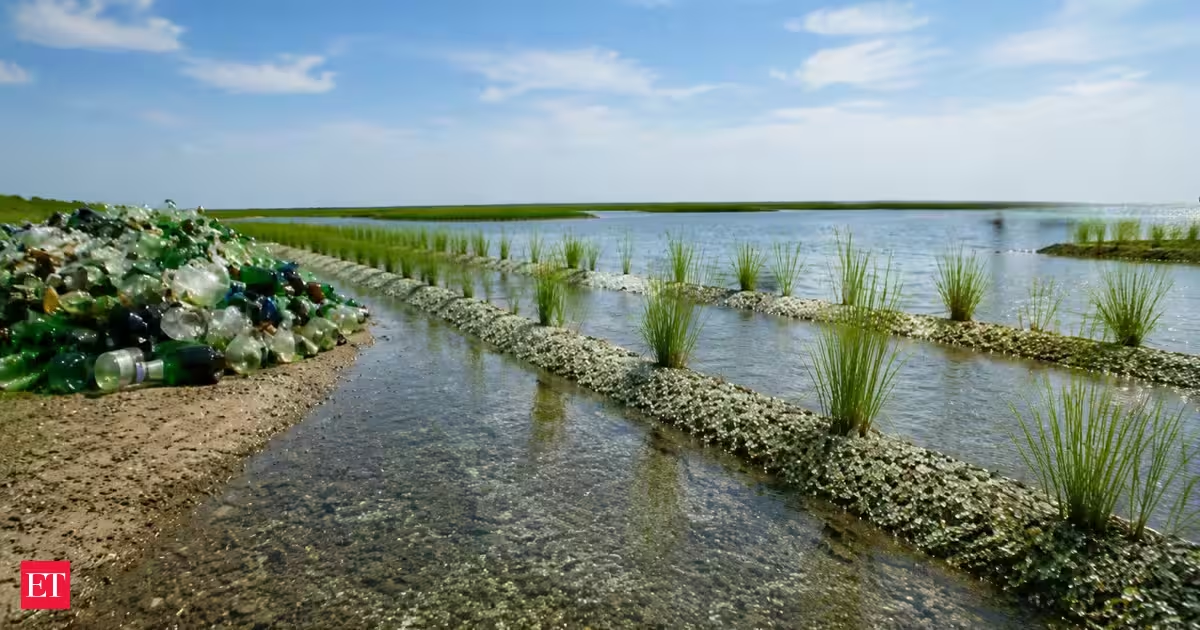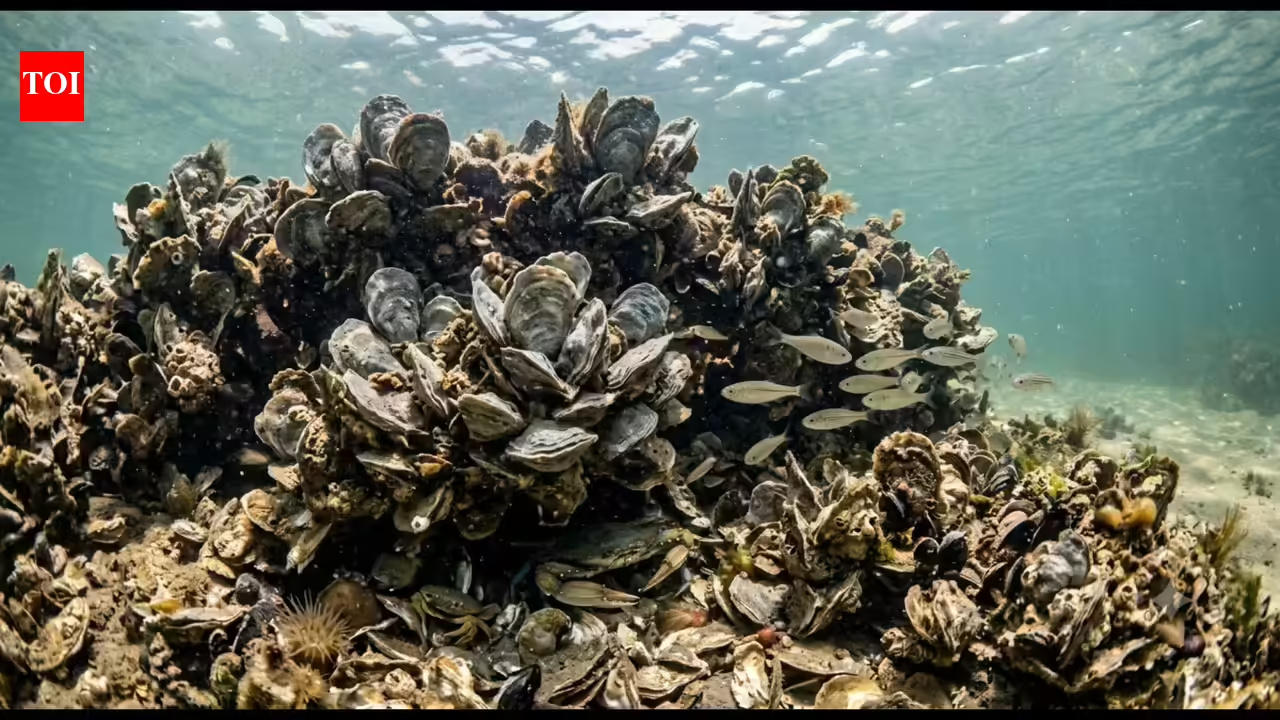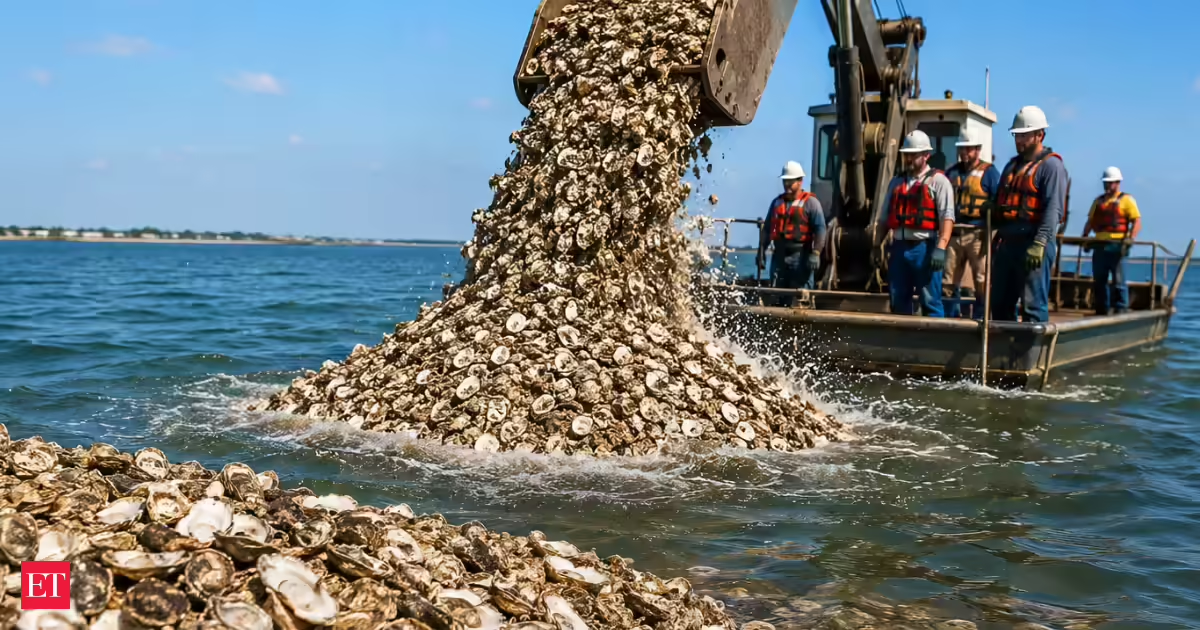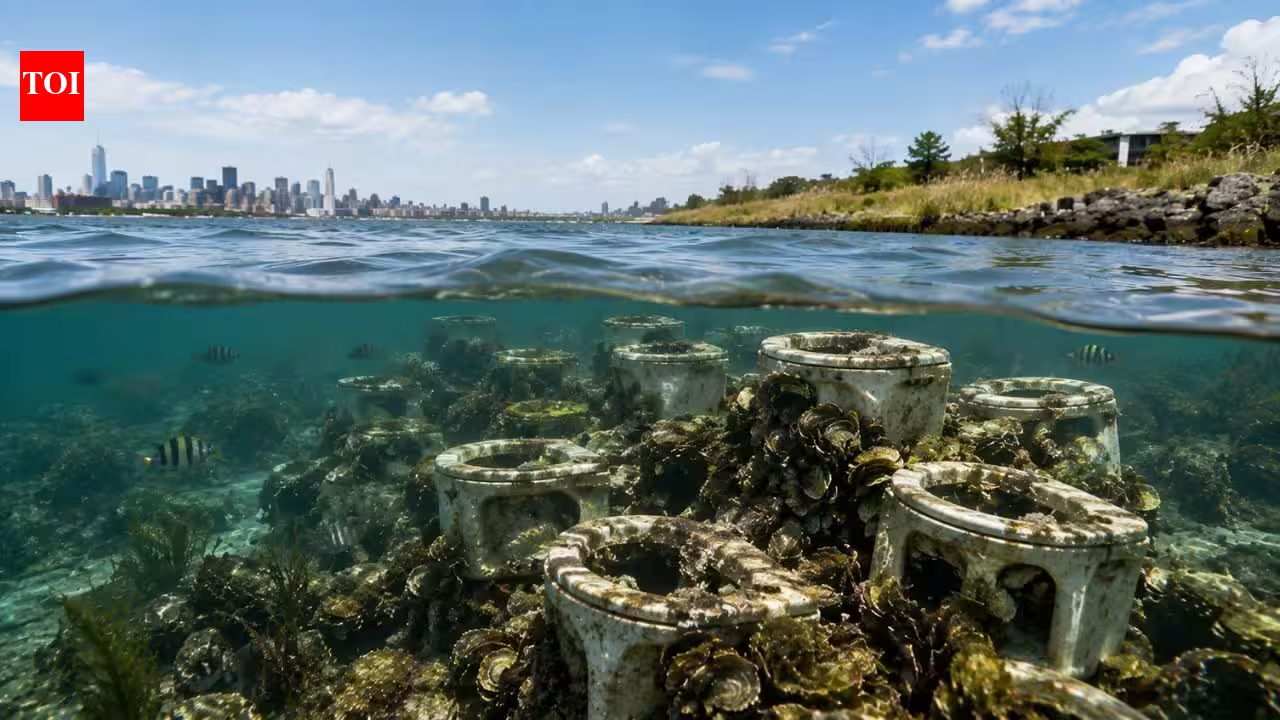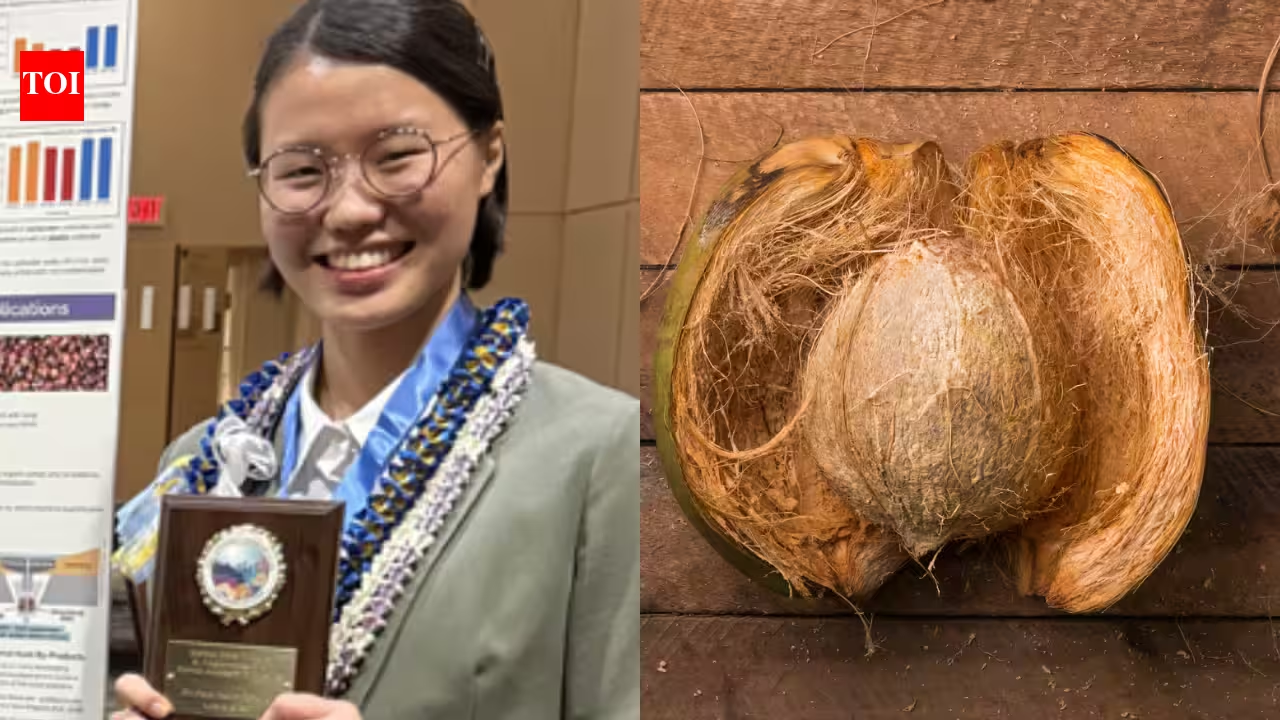
Representative Image of oyster larvae attaching to porous structures made from recycled glass in a coastal habitat (AI-generated image)Delaney Peterson, a student at Belleview High School in Ocala, Florida, spent three years developing a science project around a deceptively simple question: could discarded glass be transformed into a material suitable for rebuilding oyster habitat? Her project, titled Revolutionising Artificial Reefs: Recycled Foamed Glass Aggregates as a Sustainable Solution for Oyster Habitats, reached its third year in 2026 and earned third place in the Earth and Environmental Sciences category at the Regeneron International Science and Engineering Fair (ISEF), one of the world's largest science competitions for high school students. Peterson also received a special award from the Florida Institute of Technology that included a four-year full-tuition scholarship if she chooses to attend the university full-time. Her research focuses on recycled foamed glass aggregate, a lightweight, porous material made from processed glass, and investigates its potential for use in artificial reef structures. Rather than treating the work as a one-off science fair experiment, Peterson returned to the same research question over three consecutive years, developing the project through successive stages before taking it to the international level.Why recycled foamed glass could be useful for rebuilding oyster habitatFoamed glass aggregate is produced by processing recycled glass into a lightweight material with a porous internal structure. The material has applications in construction and other engineering projects because of properties such as its low weight and durability, while its porous structure gives it characteristics that differ from conventional solid materials. Those features could potentially be useful in oyster restoration because oyster larvae need hard surfaces on which to attach and grow. Artificial oyster reefs are commonly constructed using materials such as oyster shell, limestone and concrete, but researchers have also investigated engineered alternatives that could provide suitable surfaces while making use of waste materials. Peterson's project explores recycled foamed glass within that broader context, bringing together two environmental challenges: the need to divert discarded glass into useful applications and the need to create additional hard substrate for oyster habitat. The publicly available information on Peterson's specific project, however, does not provide enough technical detail to establish that her particular material has already been proven to outperform conventional reef substrates or successfully establish a functioning oyster reef, so those claims should not be made without further project documentation.What Delaney Peterson achieved at Regeneron ISEF 2026Peterson's project received recognition at multiple levels before reaching the international competition. According to Society for Science's official 2026 special awards announcement, she received the Florida Institute of Technology's special award and its four-year full-tuition scholarship. She also earned third place in the Earth and Environmental Sciences category in the ISEF Grand Awards, a substantially broader recognition of the project than the university-specific scholarship alone. Her research had previously advanced through the Big Springs Regional Science Fair, qualifying her to compete at ISEF alongside some of the strongest young researchers from around the world. The three-year development of the project is particularly notable because Peterson was not simply presenting a single experiment created for the 2026 competition; she had continued working on the same research problem across multiple years. That progression allowed her to take an initial idea about recycled materials and develop it into a project that ultimately received both an international category placement and a major university scholarship.Why recycled materials are attracting attention in oyster restorationOyster reefs are important coastal ecosystems because oysters filter water, provide habitat for other marine organisms and can help stabilise shorelines. Their decline in many coastal areas has encouraged restoration programmes to investigate materials that can provide the hard surfaces oysters need to establish new colonies. Peterson's project approaches that challenge from a circular-economy perspective: instead of treating discarded glass solely as waste, it investigates whether the material can be processed into something potentially useful for habitat restoration. Her award demonstrates that the project was judged highly at ISEF, but it does not by itself establish that the material is ready for deployment in real oyster reefs. The publicly accessible Society for Science information confirms the project's title, three-year development and awards, but does not provide the detailed methodology and experimental results needed to evaluate its real-world performance. Those limitations make it important to separate what has been demonstrated from what remains a research possibility. What is clear is that Peterson has spent three years pursuing an unconventional environmental engineering question and took it far enough to earn third place among ISEF's Earth and Environmental Sciences projects, while also receiving a four-year tuition scholarship an unusually strong result for a high-school research project that began with the idea of giving discarded glass a second life underwater.
Meet Delaney Peterson, the Florida student who spent three years turning recycled glass into artificial reefs designed to give oysters a new home
Delaney Peterson, a student at Belleview High School in Ocala, Florida, spent three years developing a science project around a deceptively simple question: could discarded glass be transformed into a material suitable for rebuilding oyster habitat? Her project, titled Revolutionising Artificial Reefs: Recycled Foamed Glass Aggregates as a Sustainable Solution for Oyster Habitats, reached its third year in 2026 and earned third place in the Earth and Environmental Sciences category at the Regeneron International Science and Engineering Fair (ISEF), one of the world's largest science competitions for high school students.
781 words~4 min read