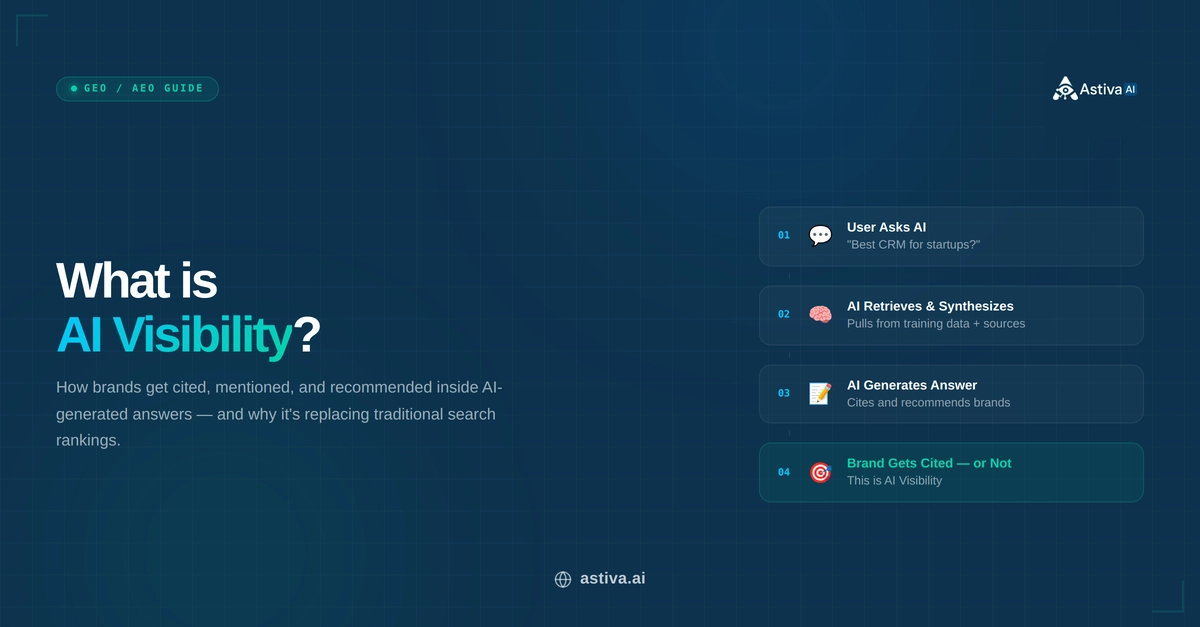
AI search changes what it means for a brand to be visible. A conventional ranking report can show where a page appears in search results, but it does not show whether an AI system recognizes the brand, draws on its content, or cites it in an answer. Scalevise's generative engine optimization (GEO) framework addresses that gap by treating AI visibility as a separate, repeatable measurement discipline alongside SEO.
The framework is designed for environments such as ChatGPT, Perplexity and Google AI Overviews, where answer selection depends on more than a familiar position in a results page. As set out in Scalevise's GEO guide to measuring and improving AI visibility, the objective is to assess the signals that make content understandable, attributable and usable by AI systems, then improve those signals through an ongoing workflow.
The central editorial point is simple: isolated AI answers are weak evidence. A single mention or omission can be shaped by the wording of a prompt, the engine being used, or the sources available at that moment. A useful measurement program instead runs a consistent prompt set, separates the kinds of visibility observed and looks for patterns over time.
What a repeatable AI visibility program should measure