Commentary
What decides how long wars can be fought is regenerative capacity, with Asia not yet paying for it, says an analyst.
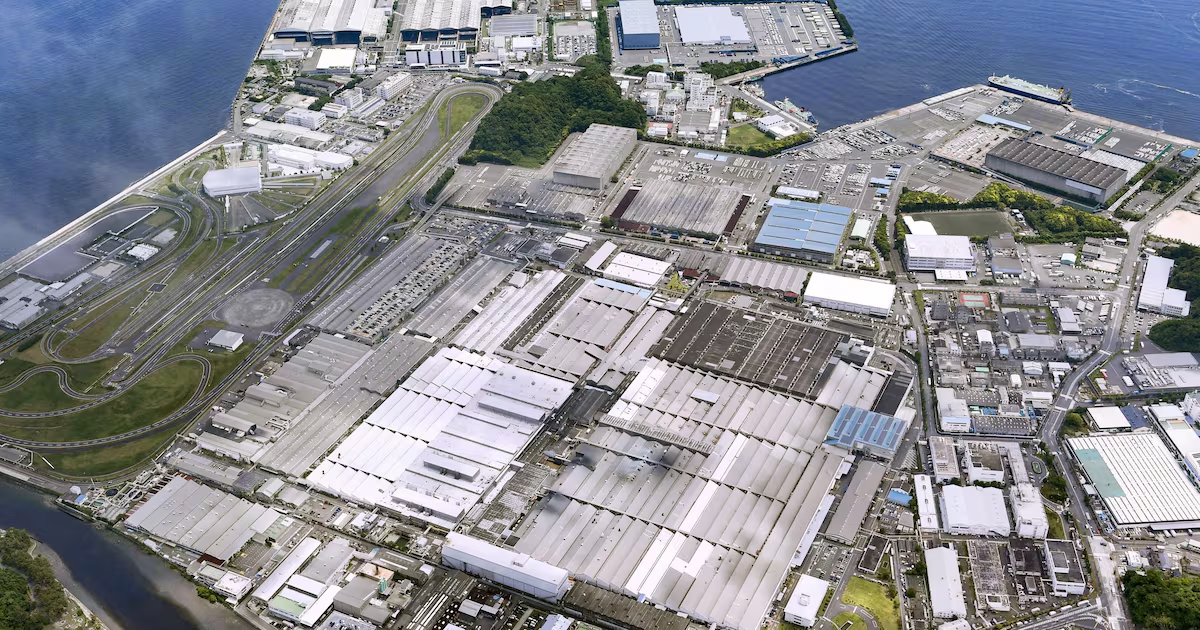
US defence technology firm Anduril Industries is in talks to acquire Nissan’s Oppama assembly plant near Tokyo to manufacture military drones. (Photo: REUTERS/Issei Kato)
20 Aug 2026 05:59AM
BEIJING: For six decades, Nissan’s Oppama plant south of Tokyo built cars - some 18 million, including the Leaf, the world’s first mass-market electric car.The plant is due to close in 2028. Its next life may be building military drones: Anduril, the US defence technology firm, is in talks to take over the site - next door to the Yokosuka naval base - and retrain its workers.Whether or not the deal closes, the talks put the sharpest question in Asian defence on a factory floor. The region’s militaries need more than weapons - they need ways of turning civilian factories into sustained military production.Money is not the constraint. Military spending in Asia and Oceania reached US$681 billion in 2025, according to figures from the Stockholm International Peace Research Institute, the fastest annual rise since 2009; Japan’s outlays grew 9.7 per cent, India’s 8.9 per cent. Yet governments still measure strength the old way - by fleets of aircraft, ships and missiles that can be counted, paraded and funded.