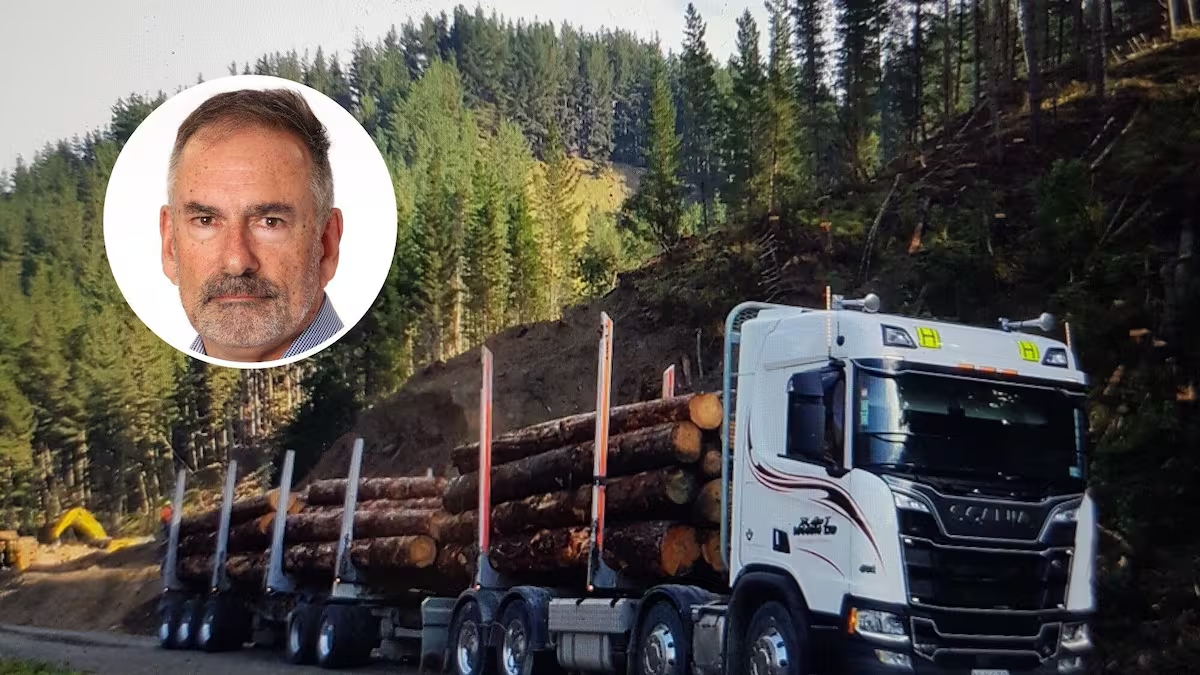
Freight operators are calling for a new government minister to lead the country's supply chains as part of their election calls.The National Road Carriers association (NRC) is urging political parties to appoint a Minister of Supply Chain to coordinate and streamline the sector.They said the sector was worth $59 billion a year, and was projected to grow by 55 percent over the next two decades."Roads sit with one minister, rail with KiwiRail, ports with councils, workforce with Immigration, and energy with another portfolio," NRC chief executive Justin Tighe-Umbers said.He said Australia, Singapore and the United Kingdom had stronger national freight governance arrangements than New Zealand, combining ministerial oversight, dedicated government freight capability, and formal industry-government coordination mechanisms.National Road Carriers association chief executive Justin Tighe-Umbers.Supplied / National Road Carriers"What they [Australia, Singapore and the UK] do is they have one accountable role within their cabinet or ministerial equivalent role," Tighe-Umbers said."New Zealand aligns none of them," he said.NRC's other election calls were for smarter infrastructure spending, faster adoption of international vehicle standards, stronger fuel security and support for low-emission trucks, tougher safety and licensing rules across the freight sector, and immigration settings that recognise truck driving as skilled work.The NRC said it "appreciated" the government's recent moves, such as launching the action plan for freight, and establishing the Freight Advisory Council."We call on the next government to build on this momentum," Tighe-Umbers said.On tougher safety and licensing rules, Tighe-Umbers said there were a "small but visible" number of trucking firms that were "cutting corners"."When there's an economic downturn, obviously maintaining cashflows for operators is very difficult," he said."There's a small portion [of operators] when this happens, that cut corners by doing things like not maintaining their vehicles, potentially not meeting compliance ... paying for their road user charges and those sorts of things."Tighe-Umbers said while it was "not widespread", it posed a safety risk.
Freight industry calls for 'Minister of Supply Chain' ahead of election
Freight operators are calling for a new government minister to lead the country's supply chains as part of their election calls.
313 words~1 min read