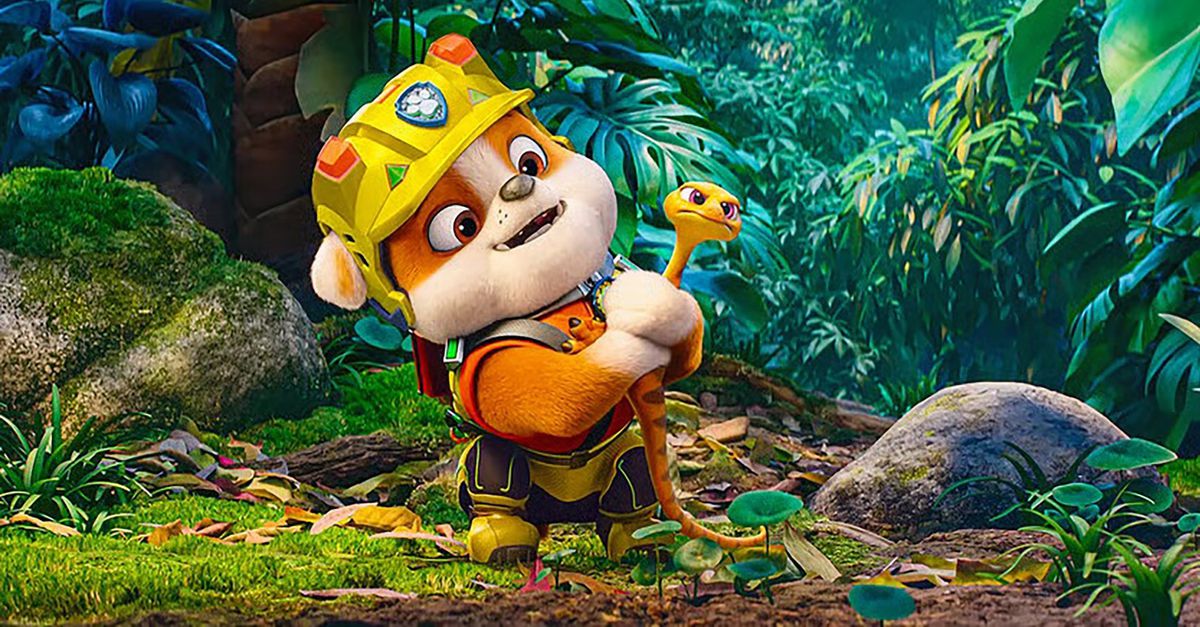
They may look like a pack of cutesy anthropomorphised dogs. „No job is too big,” vows their heartwarming motto, „no pup’s too small!” Don’t be fooled: some say the cartoon heroes of „Paw Patrol” are covert outriders for authoritarian capitalism. „Keep trying, everybody makes mistakes,” a winsome character urges in their latest outing, „Paw Patrol: the Dino Movie”. The haters have a slogan too: „Defund the Paw Patrol!”
If you haven’t had a pre-school child (or been one) since „Paw Patrol” first aired on TV in 2013, it may have passed you by. But it is a world-conquering juggernaut, spanning more than a dozen seasons, a toy empire and now three theatrical film releases. Critics—perhaps including parents aggrieved at enduring so much schlock—have avidly dissected its subliminal messages. Hearing about this is like coming late to the manosphere; both, you find, are amazingly popular and allegedly pernicious.
De redactie van NRC selecteert de beste artikelen uit The Economist voor een breder perspectief op internationale politiek en economie.
For the blissfully uninitiated: the show is set in idyllic but slightly creepy Adventure Bay, where children drive and puppies talk. Led by a lavishly quiffed ten-year-old boy, a group of heroic pups respond to mild emergencies, setting off down a fun slide at their HQ. It is utterly formulaic, with incessant catchphrases („Paw Patrol is on a roll!”) and appalling earworm music. „A children’s story which is enjoyed only by children”, wrote C.S. Lewis, „is a bad children’s story.” He would not have liked „Paw Patrol”.