In late June 2026, my org's GitHub Actions stopped at the billing cap. Every PR (pull request) CI (continuous integration; a system that runs tests automatically on each change) check FAILED in 2 seconds with an empty log. Around the same time, plugin release notifications stopped arriving in Slack. Not a single line of code was wrong. An external service had, one day, stopped my infrastructure over billing.
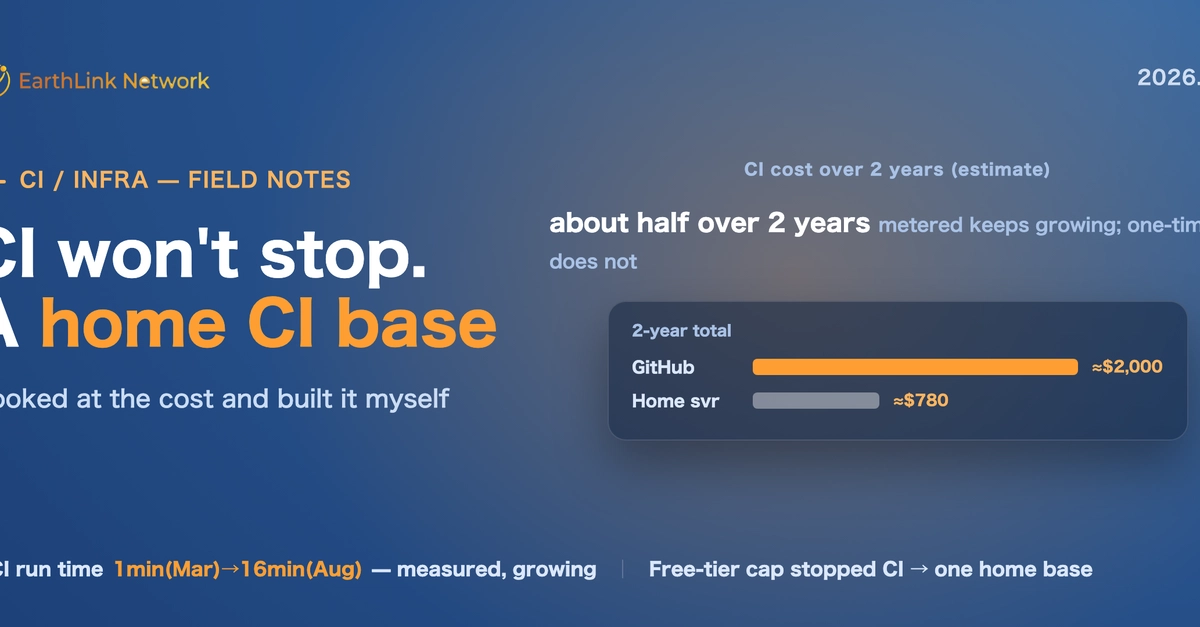
At the time I was running GitHub Actions on the free tier. But I hit the free-tier cap, CI was blocked, and to keep developing I had no choice but to start paying by usage (metered charges for anything beyond the free minutes). "Free" ended right there. From that point on, money was going out no matter what — that is the starting point. So the question was not "cut cost by testing less" but "which is the better deal: keep paying GitHub, or build my own base?" GitHub's cost is metered, so tests run on every commit and the monthly amount grows the more products and the more active the development gets. A home CI server (ci1/ci2 class, about ¥135,799), by contrast, is a one-time outlay plus electricity, and it does not grow no matter how much you use it. A cost that keeps growing versus a one-time cost that does not — that structural difference was the deciding factor. And the per-run time of CI grows as the code grows. Measured: one product's GitHub Actions run time grew from about 1 minute on average in March this year to about 16 minutes on average — with the longest over an hour — by August. Commits across the products I actively run come to roughly 2,400 a month. Keep paying for that volume and that growth on GitHub's metered pricing (Linux $0.008/min), and the over-the-free-tier portion alone lands around $150–200/month, swelling every month as tests get longer. A home CI server for about ¥135,799 overtakes that in under half a year, and is cheaper forever after (the commit counts and run times are measured; the monthly dollar figure is an estimate from the free tier and average minutes). On top of that, the security-scanning tools I wanted to add (DefectDojo and so on) also need somewhere to run. So the best move was to build a single infrastructure base at home and run tests, security scanning, and monitoring all there. This is the record of acting on that decision. Per the records at the time, this base's monorepo (a layout that bundles multiple repositories into one) grew from its first commit to 330 commits and 35 ADRs in about a month.