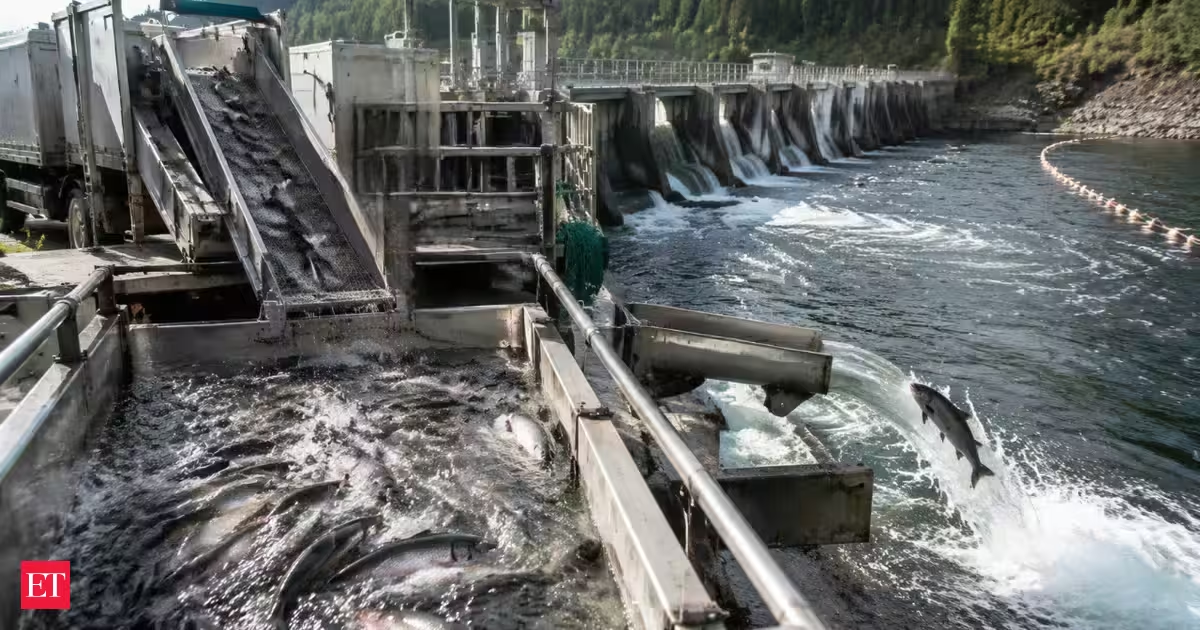
Salmon migration is one of nature’s most demanding journeys. Fish must navigate long stretches of river, reach suitable spawning habitat and eventually ensure that their offspring can make the return trip toward the ocean.For Chinook salmon in Washington’s Lewis River system, however, a hydroelectric dam has made that natural cycle impossible without human assistance. There is no fish ladder at Merwin Dam, so biologists use a trap-and-haul system to transport adult salmon around the barrier and release them upstream.But moving adults past the dam solves only part of the problem. The next generation must still find its way downstream.Merwin Dam is part of PacifiCorp’s Lewis River hydroelectric project on the North Fork of the Lewis River in southwestern Washington. Because migrating salmon cannot simply pass the dam to reach upstream spawning areas, state biologists developed a system for physically transporting them.Adult Chinook are captured and sorted into channels before being removed from the water. They are positioned in aerated tanker trucks and driven past another reservoir connected with Swift Dam. The fish are eventually released into cold mountain tributaries upstream, where they can spawn.The approach offers a practical solution to an otherwise impassable barrier. Without transportation around the dam, the salmon would be unable to reach the higher-elevation habitat required for spawning.The Salmon’s Journey Has Two StagesGetting adults upstream is only the initial part of the salmon life cycle.The eggs hatch after almost three to five months. About a year later, the young salmon become known as “smolts” and start their instinctive journey downstream toward the Pacific Ocean.That creates a second transportation challenge.The juvenile salmon cannot safely pass through the dam’s turbines. To prevent turbine strikes, a floating surface collector near Swift Dam uses pumps to create an artificial flow that directs juvenile Chinook toward collection nets.Once captured, the young fish are transferred for another truck journey toward the lower river.The Downstream Journey Is More DifficultUnlike adult salmon being deliberately captured and transported, young salmon must initially find the collection system.That difference turns out to be crucial.Juvenile salmon naturally use river currents as directional signals while moving toward the ocean. But reservoirs are much deeper and have slower, less predictable currents. As a result, young fish may struggle to find the artificial flow created by the surface collector.If a smolt fails to discover the intake current, it faces two poor alternatives: it can remain in the reservoir or possibly encounter the dam’s turbines.This makes downstream collection much less predictable than transporting adult salmon upstream.Researchers Identify the Main BottleneckBiologists tracked salmon through the various stages of the system to find whether the two-way transportation strategy was actually supporting the population.The tracking data isolated the exact leg of the program that determines its success, as per PacifiCorp.The results indicated that the upstream portion of the system performed relatively well. Tagged adult salmon transported by truck showed high survival rates, and most reached the upper river habitat and spawned.The major limitation appeared during the return journey.Young Salmon Struggle to Find the Artificial CurrentThe surface collector can safely hold juvenile fish once they enter it. The challenge is getting the smolts to the collector in the first place.A large proportion of juvenile salmon do not find the artificial current leading toward the collection system. This low downstream capture rate represents the primary limitation on the number of fish successfully completing the cycle.Computer models show that changing water movement in the collector intake could potentially improve the number of smolts that reach it.The finding shifts attention away from the adult transportation system and toward reservoir navigation by juvenile fish.A Human-Made Solution Requires Intervention at Both EndsThe Lewis River system demonstrates how dams can transform a natural migration into a carefully managed process.At the upstream end, people capture adult salmon and transport them by truck to spawning habitat. At the downstream end, mechanical equipment tries to recreate the directional cues that young salmon would normally receive from a flowing river.The entire system needs substantial financial resources and continuous human monitoring.Transporting adult fish is relatively predictable because the fish are physically captured. Juvenile collection is more challenging because the young salmon must navigate the reservoir before they can be transported.The Study Has Important LimitsThe tracking research offers evidence about reservoir navigation and survival in the bypass process, but it does not answer every question about the salmon’s future.Researchers did not test how truck handling or crowded transport tanks might influence the smolts’ longer-term survival in the ocean. They also did not analyze whether transportation impacts the young fish’s ability to adapt successfully to saltwater.That means successful collection at the dam does not really guarantee that the salmon will survive all the way through their marine life stage.Source: THE PULSEFAQs:Q1. Why do salmon need to be transported around the dam?The dam blocks adult salmon from naturally reaching upstream spawning habitat. A trap-and-haul system allows people to move the fish around the barrier.Q2. How are adult salmon transported?Adult salmon are captured, sorted and placed in aerated tanker trucks. They are then driven upstream and released into suitable mountain tributaries.
In 2012, PacifiCorp launched a trap-and-haul program to move adult salmon upstream past Merwin Dam. 14 years later, researchers found 2 stages in the system but 1 decisive bottleneck: young salmon failing to find the artificial current downstream
A trap-and-haul program on Washingtons Lewis River helps adult Chinook salmon bypass Merwin Dam by transporting them in trucks to upstream spawning habitat. But researchers tracking the salmon life cycle have identified a major weakness on the return journey. Juvenile salmon, or smolts, must travel downstream toward the Pacific Ocean, yet many struggle to locate the artificial current leading to a floating collection system near Swift Dam. Once captured, they can be transported safely downstream, but low capture rates remain the programs primary bottleneck.
840 words~4 min read