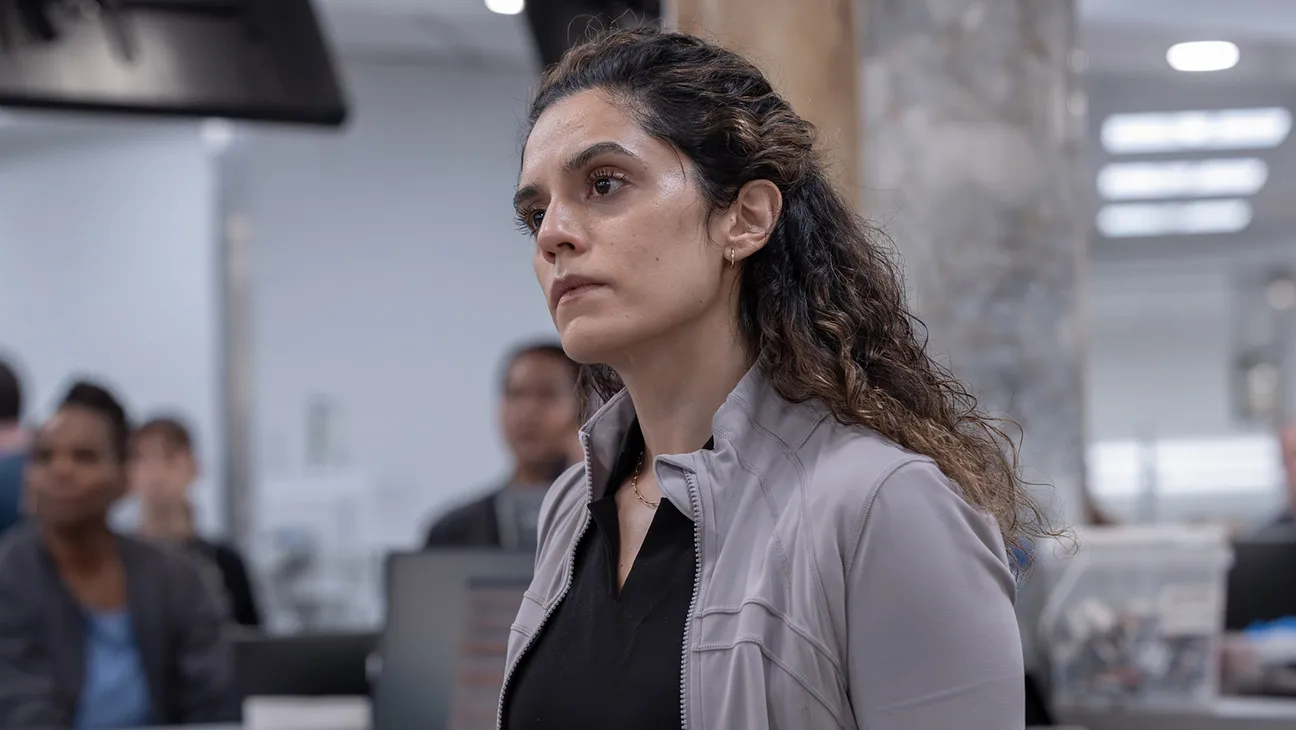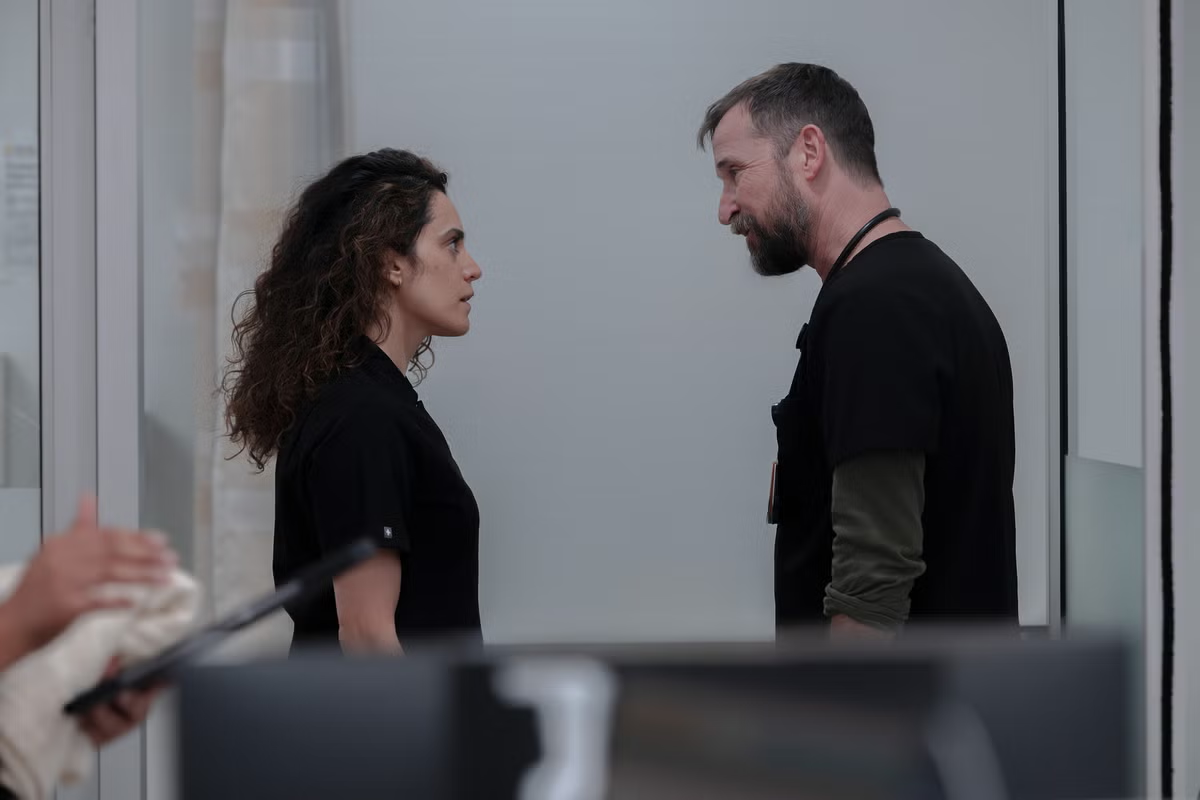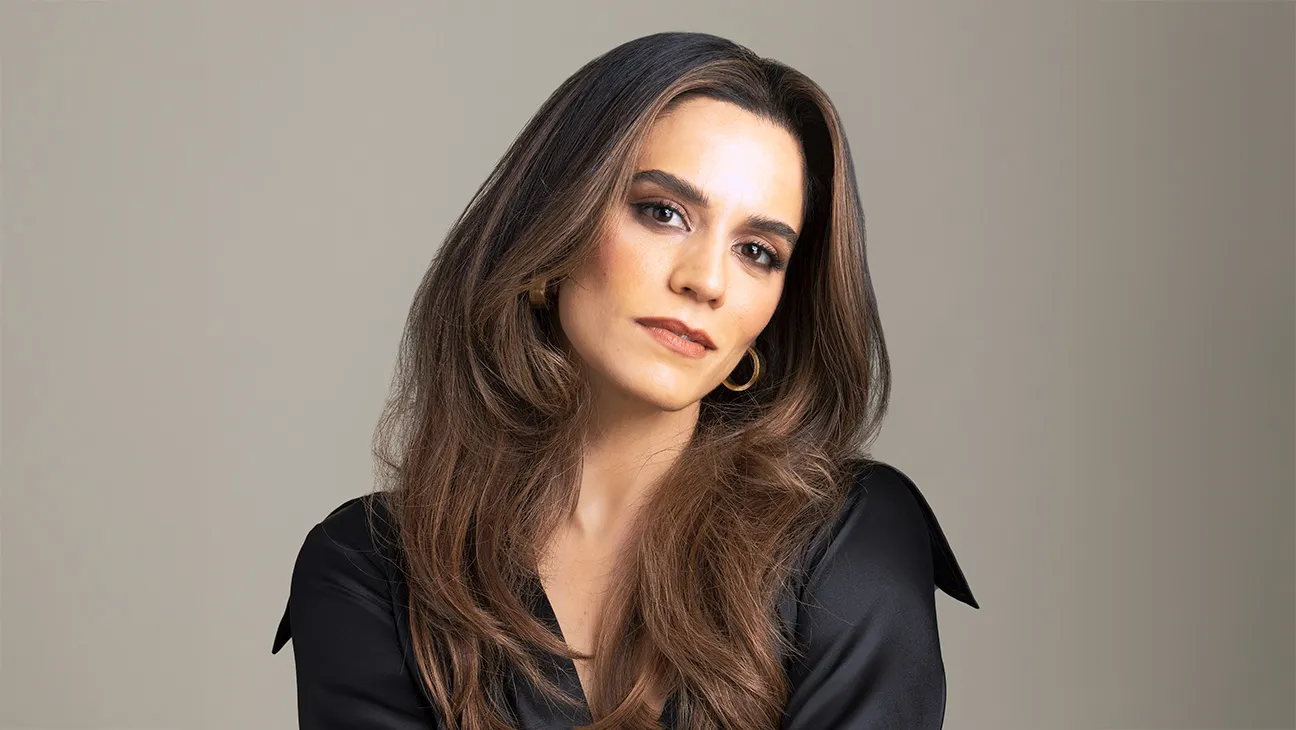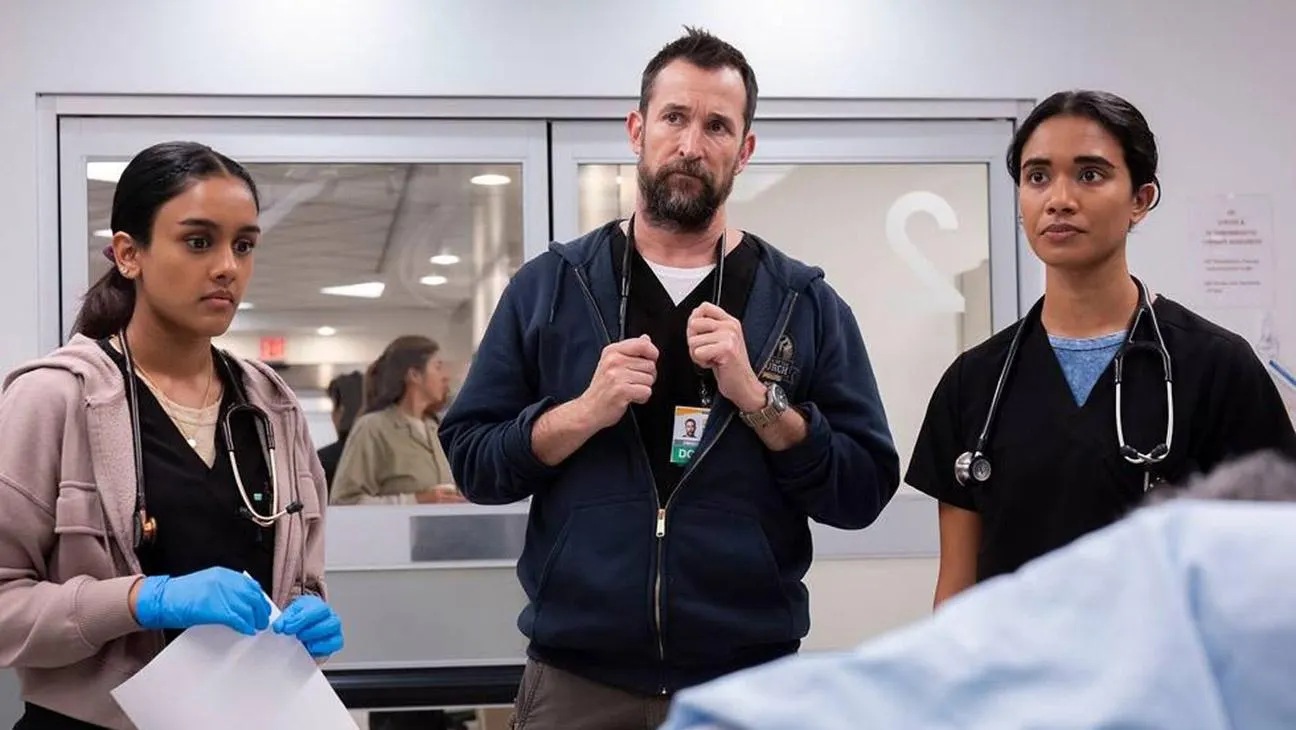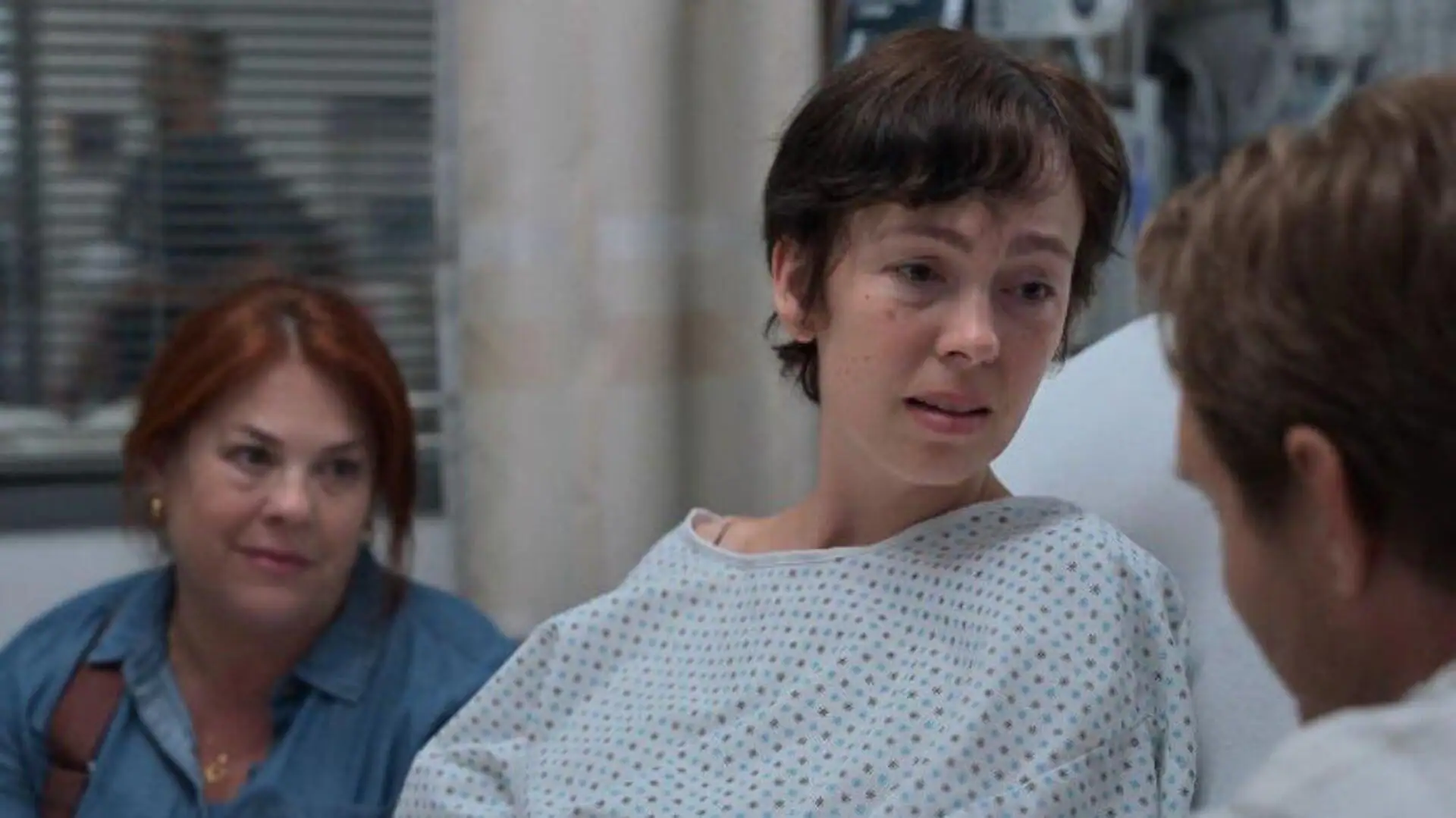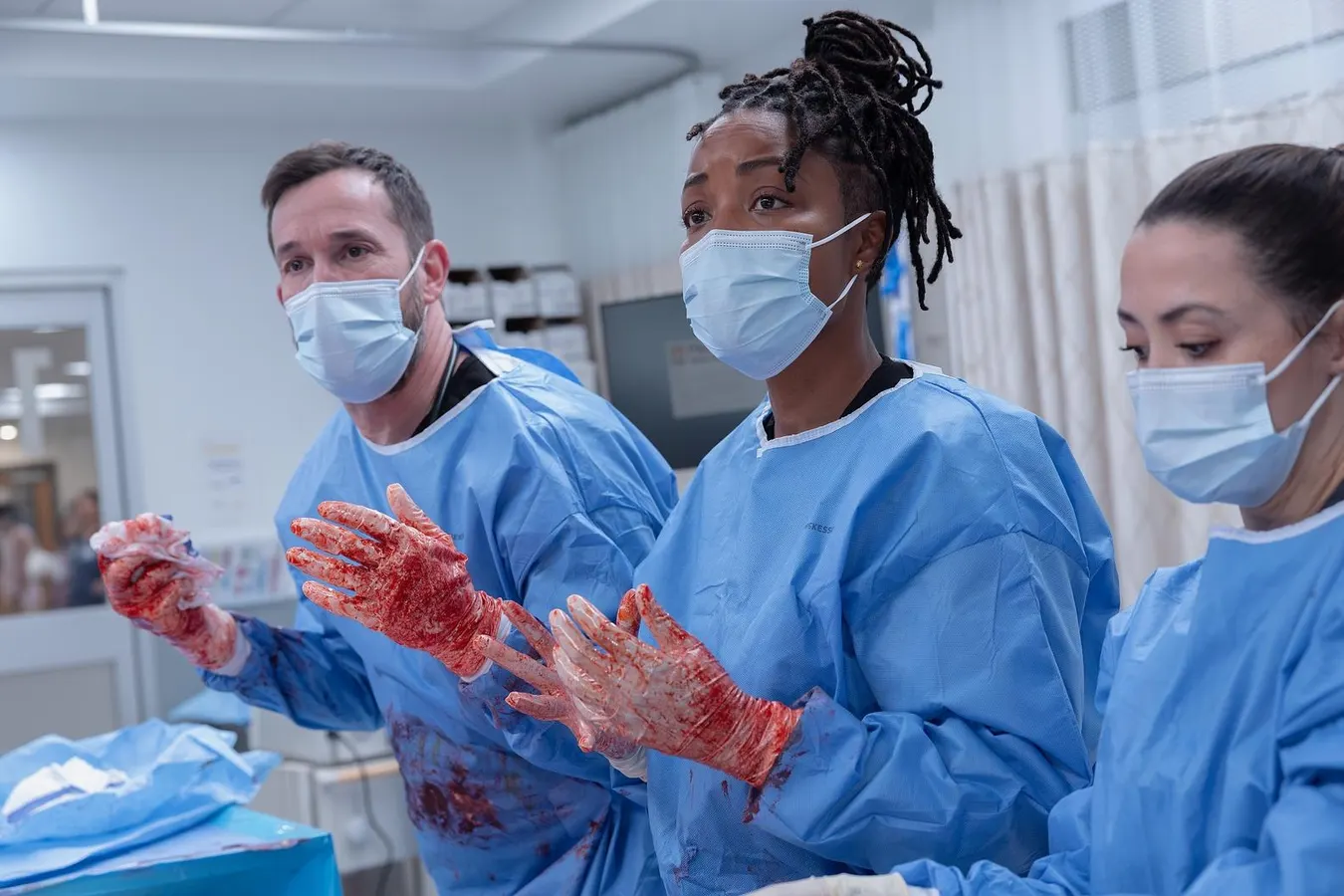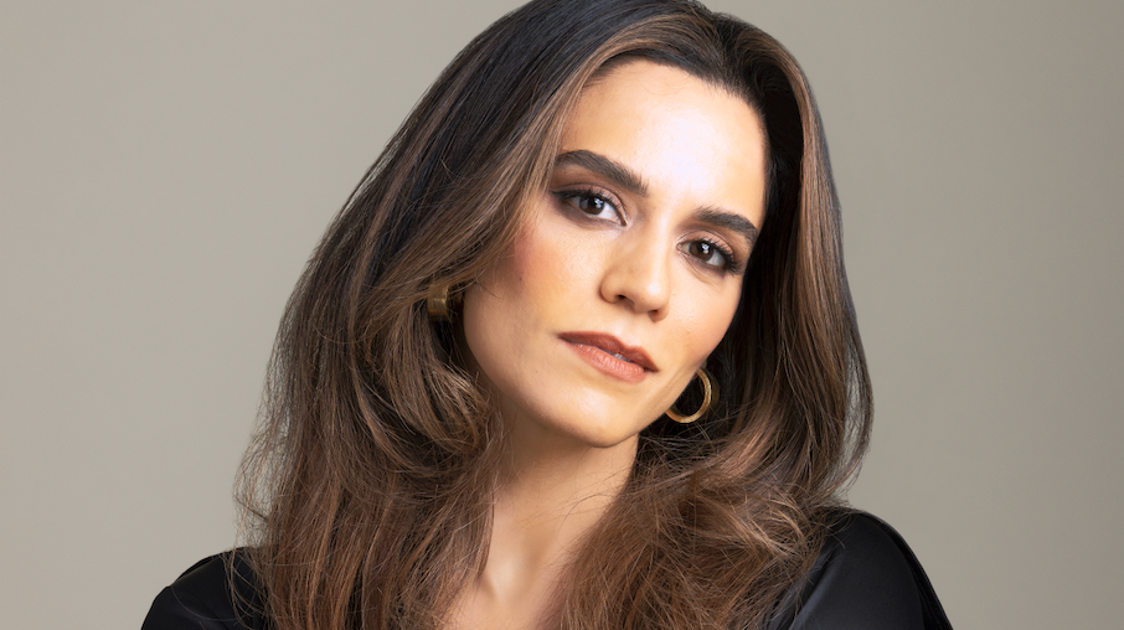
It still hasn’t quite sunk in for Sepideh Moafi that, for the first time in her years-long acting career, she’s officially an Emmy nominee.Even on that Wednesday in July, when the Academy of Television Arts & Sciences announced her as one of four stars from “The Pitt” up for Outstanding Supporting Actress in a Drama Series (alongside Katherine LaNasa, Taylor Dearden and Fiona Dourif), she struggled to believe it. In part, because she never actually heard her name called during the morning livestream.“It’s actually kind of funny because I was watching the livestream with my parents, and we didn’t realize that they were only doing a select number of categories,” Moafi recalled with a laugh. “You know when you’re watching something on YouTube, and you get a call, and it just pauses?” she asked me. “That kept happening because my team kept calling me, and I kept declining their calls. I would text them like, ‘You guys, I’m watching the broadcast. Hang on.’”Little did she know those calls were carrying big news.This year, Moafi earned her first-ever Emmy nomination for her role in “The Pitt,” making history as the first Iranian woman and woman from the Middle East to be recognized in her category. In Season 2, she plays Dr. Baran Al-Hashimi, a veteran attending physician who arrives on the Fourth of July, ready to take over for Dr. Michael “Robby” Robinavitch (Noah Wyle) as he prepares for a three-month sabbatical. “It was kind of surreal because I only joined the second season of a show once,” Moafi told HuffPost of being a new face in HBO Max’s Emmy-winning medical drama. “It wasn’t a massive hit like ‘The Pitt,’ so [joining the show] was overwhelming. But it was also exciting.”The 40-year-old actor experienced a similar mix of emotions when her team told her she was among this year’s Emmy nominees, in what she calls a “very anticlimactic climactic moment.”“Finally, I picked up [the phone], and they were screaming, and I was confused because I’m like, ‘They haven’t announced me. What are you talking about?’” Moafi remembered. “I was kind of arguing with them about it, and then they sent me a screenshot [of the nominee list]. They’re like, ‘No, they posted it online.’ So I felt a bit discombobulated. It was like this very anticlimactic climactic moment where I was like, ‘Wait, really? What?’ I was just confused. But once it started registering, I was just over the moon.”“I’m still over the moon,” she added, “and to be honest, it hasn’t quite registered. But I feel deeply grateful, and I felt so grateful being able to share that with my parents.”"The Pitt" star Sepideh Moafi earned her first-ever Emmy nomination this year for her role as the tenacious Dr. Baran Al-Hashimi.HBO MaxIn many ways, the nomination represents a true full-circle moment for Moafi, as she remembers the more difficult years of her career when she had to lean on her parents for support after nearly giving up on acting.“I remember there was this moment I was in Los Angeles. I had just gotten off of this week of like 13 auditions and callbacks,” she recalled on our Zoom call. “I flew out to LA, tested for something, hadn’t slept in gosh knows how long, and then, within a span of three days, I got into two car accidents.”“It was really wild, and I was so burnt out. I was not in a good place mentally,” Moafi continued. “I was really struggling, and my parents came out to be with me. I remember I was crying to my mom and saying, ‘I can’t do it anymore. I can’t do this.’ And she looked at me and said, ‘So don’t do it.’ I kind of yelled at her, like, ‘What do you mean?! I have to do this.’ And she said, ‘Good. Then find a way.’”Today, that memory is top of mind for Moafi as she reflects on everything it took to reach this “beautiful moment” in her life that allows her to “celebrate all the hard work of the past 25 years,” including the countless jobs she juggled just to pursue acting, from waitressing six days a week to working as a nanny and teacher of music, acting and fitness.“You can’t quite process or understand what a moment means until you get to the other side of it,” Moafi reflected. The more she meditates on her milestone, the more she’s reminded of a story Oprah Winfrey once shared about navigating a crisis of her own, during which she turned to her “mentor-mother-sister-friend” Maya Angelou for advice. The poet’s words of wisdom were something along the lines of: “Put yourself together and say thank you out loud right now. Say thank you because in this storm, God is giving you a rainbow, and you can’t see what’s on the other side of that.”“Maya Angelou, of course, said it much more eloquently and beautifully,” Moafi joked of her paraphrasing, “but the point is, you can’t see the beauty and the pain sometimes when you’re in the storm. It’s not until you’re out of the eye of the storm that you can see clearly and go, ‘That needed to happen for this to happen.’”“You can’t quite process or understand what a moment means until you get to the other side of it.”- Sepideh MoafiNaturally, that means the “Pitt” star is looking back on the obstacles she faced in a whole new light now, knowing they ultimately led her to some of her most meaningful work to date. That means more than any nomination ever could.“This is one of those moments where it’s not even about the Emmy,” she said. “It’s just an excuse to stop and reflect and just be grateful for the life that I’ve had the opportunity to live, and the passion that I’ve had the opportunity to pursue and continue to pursue.”“Obviously, the recognition means a lot,” Moafi added. “But it’s what it symbolizes as this moment, too; the tentpole in the overall of my life to stop and say, you know, your hard work is not for naught. Keep going. It’s just the beginning.”Moafi found it easy to connect with Dr. Al-Hashimi while portraying her in “The Pitt.” “With acting with any character, it’s about leaning into the ways that you have similarities, and learning more about the ways that you are different,” she said.HBO MaxEven though Moafi says she “couldn’t be more different” from her character in “The Pitt,” they had at least one thing in common when she arrived on the Warner Bros. lot last summer to start filming: For both of them, it was the first day on the job. Their individual experiences, however, are another story entirely.For Dr. Al-Hashimi, the cool-headed, straight-laced attending’s first shift at the Pittsburgh Trauma Medical Center doesn’t exactly get off to a great start. She spends much of the 15-hour day butting heads with Dr. Robby, who repeatedly brushes off her enthusiasm for AI-assisted medical tools and the new protocols she proposes to improve the overcrowded hospital’s operations. Meanwhile, she’s hiding a neurological condition from her colleagues that, unbeknownst to them, causes her to suffer two mini-seizures on the clock. Somehow, Al-Hashimi manages to keep her composure until, by the end of the day, she reaches her breaking point.On the other hand, Moafi, whose credits include roles in “The Deuce” and “The L Word: Generation Q,” had a much smoother introduction to “The Pitt” once she got past her initial nerves. She already knew the show well enough before she was cast, having binged the first season in its entirety.“I was a big fan of the show before joining, but I was nervous about it before I got to set,” the actor admitted. “Then, when I got there, I was like, oh, I can really embrace these parallel paths that both me and Dr. Al-Hashimi are walking.”Beyond being newcomers to the fictional emergency room, Moafi saw plenty of “overlapping realities” between herself and Dr. Al-Hashimi that she embraced right from the start. Much of that, she says, comes from her own belief that actors are able to find pieces of themselves in virtually any character they portray.“The thing that acting has revealed to me, just as a whole philosophically, is that we all have these qualities,” she explained. “These characters give us actors an excuse to delve into certain traits and qualities, but we all have them in us. So much of our character is designed by the way we were raised. Were you bullied? Were you encouraged? Did you come from money? Did you come from nothing? All of these things condition our character in a way, but we’re all this beautiful blank, open palette in the beginning.”Just looking at Dr. Al-Hashimi on paper, Moafi found tiny connections everywhere: her hyper-focus, attention to detail, precision, tenacity and passion for both people and her work. She also identified with her awareness that, as someone with different values than her peers — like using AI technology to help doctors with their charting — she may be “misunderstood” at times, but “that doesn’t stop her from pushing herself and everyone around her to bring their A game.”“I love this character. I’ve loved her from the beginning,” Moafi said, her voice full of admiration. “She’s fierce and in constant pursuit of finding creative ways to help in the long term, and to leave everything in better shape than when she arrived.”Dr. Al-Hashimi stands apart from many of the doctors in “The Pitt.” “She’s used to being an outsider, having to keep things close to the chest, working around people and within systems that don’t always favor her,” Moafi noted, acknowledging her character’s background, “and yet she still moves forward with such conviction, care, confidence and compassion.”With help from the “Pitt” writers, Moafi’s Iranian American background and advocacy work were woven into Dr. Al-Hashimi’s backstory.HBO MaxSpeaking of backstory, the parallels between her character’s life and Moafi’s own became even more pronounced as the latter worked with the “Pitt” writers to flesh out the nuances of the character she brought to life. Born in a refugee camp in Germany after her parents fled Iran following the Islamic Revolution, the Iranian American actor drew from her own childhood experiences and advocacy work as an ambassador with the International Rescue Committee to shape Dr. Al-Hashimi into who audiences get to know onscreen: a half-Iranian, half-Iraqi humanitarian doctor who spent part of her global medical career working in conflict zones. Those complex details, Moafi says, not only gave her character greater depth compared to some she’s played throughout her career, but also made her deeply empathetic in her work with patients and fellow staff. That’s something viewers see clearly in episodes like “12:00 P.M.,” when Dr. Al-Hashimi advocates for a malnourished prisoner to be admitted despite pushback from Dr. Robby, and “4:00 P.M.,” when she stands up for Dr. Samira Mohan (Supriya Ganesh) after Robby berates her for having a panic attack stemming from “personal baggage.”“All of her experiences and conditions have not hardened her; they have softened her,” Moafi said of her character.Dr. Al-Hashimi’s efforts to keep her seizure condition under wraps at the hospital added another compelling layer that intrigued Moafi. That secret unravels gradually throughout Season 2, but it’s not until the finale that the full truth is revealed. In a rare moment of vulnerability, Al-Hashimi tells Robby that the two times she spaced out in the ER that day were the result of a chronic seizure disorder she has lived with since contracting a “bad case” of viral meningitis at age 5. Hence, she moves through the world with a bit more empathy than others (especially her disgruntled counterpart).“Her own neurological condition has made her even more caring and understanding, and made her live in close proximity to her own mortality, having the experience of being both patient and doctor in these situations,” Moafi said. “I think that level of commitment to caring and opening, and no matter what life throws you, just continuing to love. As cheesy as it may sound, I found that similarity in her.”“The way that she makes space for other people and has this deep well of empathy, I think I struggled with that,” she continued. “I used to think my empathy was a curse when I was a kid, and it’s like, no, it’s your superpower. Like I said, her condition doesn’t compromise her care. It deepens it, and I think that represents everything in life. Whatever life hands you, it doesn’t compromise your strength. It makes you stronger. It deepens your well.”According to Moafi, playing Dr. Al-Hashimi in “The Pitt” helped her find “the confidence I needed.” “I remember thinking at the end of the audition process, even if this doesn't go my way, I have gained so much, and I feel so nourished at a soul level that whoever gets this, it's theirs,” she said. “But I have gained so much just from getting to live inside of her skin.”HBO MaxAlthough Moafi sees Dr. Al-Hashimi’s condition as something that has strengthened her compassion, the colleague her character confided in sees it quite differently. Their explosive Season 2 finale confrontation ends with Dr. Robby threatening to report her to the hospital, leaving Al-Hashimi in tears as she breaks down in her car after he makes clear that he has zero confidence in her as his replacement.That emotional moment is the last we see of her, but Moafi confirms her character will be back for the upcoming third season of “The Pitt,” which she’s currently filming. She won’t give away too much about the details of Dr. Al-Hashimi’s next shift: “I know what they were planning to do with her. But the way that it happens, who knows?” However, she does hint that the unresolved tension between her and Robby plays a part in the new season.“We certainly see how things have shifted right out the gate. We’re now filming the fourth episode of the season, and I have been pleased with the subtle ways in which we’ve been exploring this transition back,” Moafi shared at the time. “The way that it’s explored is really beautiful, I think, and so I’m excited for people to see how things have shifted, not just at the hospital, but in their dynamic.” Dr. Al-Hashimi isn’t the only woman Dr. Robby clashed with in “The Pitt.” Throughout the senior attending’s mental health spiral in Season 2, fans pointed to what they saw as a pattern of dismissive and, at times, aggressive behavior toward his female colleagues, including Dr. Mohan, student doctor Victoria Javadi (Shabana Azeez) and charge nurse Dana Evans (LaNasa). Those observations have prompted plenty of discussion online, some of which Moafi has seen, about what “The Pitt” may or may not be saying about how women are treated in the workplace.“I have read some things that I’m just like, ‘Oh, my God,’ and I’ve read some things that I’m like, ‘Yeah, I agree with that,’” the actor recalled. “But I love that it stirred this conversation. I like when people have strong points of view, even when I don’t agree with them. And I love hearing people’s arguments and them expressing themselves so fully. It changes maybe not my view or opinion, but it at least fleshes out my own opinion and makes me dig even deeper.”While she can’t speak to the writers’ intentions in that aspect, Moafi, like some of her fellow female castmates who have weighed in, views the dynamic of Robby’s perceived sexism as another example of “The Pitt” mirroring real life.“I think it’s incredibly relatable,” she said. “I personally don’t think Dr. Robby is a misogynist. I think the system is misogynistic, and he is functioning within the system that he has learned misogyny. It’s not going to register as problematic for him, this character, because it’s all he knows.”Moafi believes Robby’s infuriating behavior in the ER is a testament to Wyle’s convincing, Emmy-nominated performance in “The Pitt,” particularly “how much nuance and vulnerability he’s able to bring to this character, even when he’s acting less than admirable.”Still, the larger issue here lies in what Dr. Robby represents — which is ultimately a reflection of the system at the heart of the problem.“[He’s] somebody who’s under unimaginable pressure in such a pressure cooker and enduring unbelievable strain,” Moafi pointed out. “Another thing ‘The Pitt’ explores beautifully is who we are when we are functioning inside these systems under strain. The healthcare system is barely hanging on. It’s bursting at the seams. It is unraveling, and so what does it do to people? It pushes them to their limits.”“I think there’s a beautiful human exploration of who we are under pressure,” she added of the series’ storytelling. “It’s also like, when squeezed, what comes out? In the case of Dr. Robby, it’s something that has been normalized and learned in the field of medicine and in so many industries — Hollywood, for sure — of resorting to views that are less than compassionate, less than understanding, and not admirable. You just don’t treat other people in this way. Whether it’s [Dr.] Samira [Mohan] or Dr. Al-Hashimi. But again, what ‘The Pitt’ does so beautifully is explore it with nuance. It’s not about whether he’s a good guy or a bad guy, or whether she’s a good woman or a bad woman. This is just who we are, and so how do we deal with this?”Moafi hopes her role in “The Pitt” can help challenge Hollywood’s often “simplistic” approach to diversity.HBO MaxMoafi is excited for audiences to see how Season 3 picks up “in a beautiful way,” with some characters having “had time to metabolize what happened” in the wake of Robby’s mental breakdown and other conflicts.“Some things may be resolved,” she said of cliff-hanger storylines. “Some things may be unresolved. It feels very true to the way it is in life.” That’s part of the beauty of “The Pitt.” Stepping into Dr. Al-Hashimi’s shoes has felt, for Moafi, less like playing a fictional character at times and more like inhabiting a fully realized life. It’s a rare gift, one not every actor is afforded with each role they take on, and it’s part of what makes Al-Hashimi especially meaningful to her. For Moafi, this opportunity was never about fulfilling Hollywood’s version of “checkbox diversity.” She takes more pride in bringing audiences a nuanced, multicultural perspective that has too often been missing from our screens.“Hollywood has approached diversity in fairly simplistic ways,” Moafi noted. “But playing a woman coming from a people whose stories are often moved to the periphery of storytelling in the mainstream, being able to appear on screen as this woman who speaks Farsi, whose name is Dr. Al-Hashimi — which is an Arab name — who is so good at her job and carrying this condition, it’s so beautiful.”“Diversity isn’t about who appears on screen,” she added, “it’s about broadening the range of human experiences that we’re allowed to see. … These experiences just deepen the complexity of the character rather than reduce them to a single identity.”All Moafi hopes for now is that simply seeing Dr. Al-Hashimi exist in “The Pitt” will give viewers a deeper understanding of the women she’s known throughout her life. And perhaps, in turn, her presence can inspire a broader conversation about what true visibility really looks like.Reflecting on the role, Moafi is quick to point out that portraying Al-Hashimi isn’t about “being the representative of this identity.”“It’s about giving depth and breadth to what these identities mean and who we are, and actually how similar we are,” she said, adding perspective. “It doesn’t matter if you’re from Iraq or Iran or have a neurological condition. We’ve all dealt with shame. We’ve all dealt with discrimination. We’ve all dealt with pain. We’ve all dealt with who we are in public versus who we are in private. We all know what it’s like to sit in a car and just completely fall apart and sob.”“That’s the kind of stuff that makes me so happy to be able to embody a woman like this, and to be able to show the world that women from my region of the world, the SWANA [Southwest Asia and North Africa] region or the Middle East, have so much to offer,” she concluded with pride. “We have so much to say. We just want to be able to share our stories through the ones available to us, and through stories that hopefully we can write and create for ourselves too.” “The Pitt” is now streaming on HBO Max.
'The Pitt' Star Sepideh Moafi Has Thoughts About How Dr. Robby Treats Women
The breakout star went toe-to-toe with Noah Wyle as the tenacious Dr. Baran Al-Hashimi and snagged her first Emmy nomination. Now, she’s ready for what comes next.
3,443 words~16 min read