1 HOUR(s)
Fahim Chowdhury
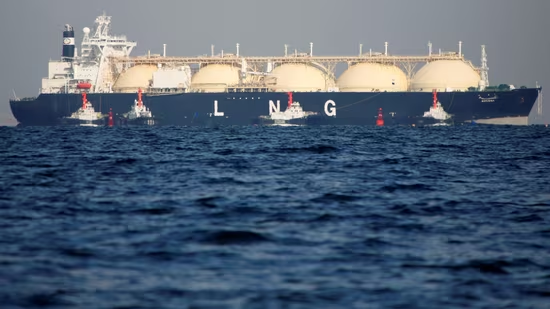
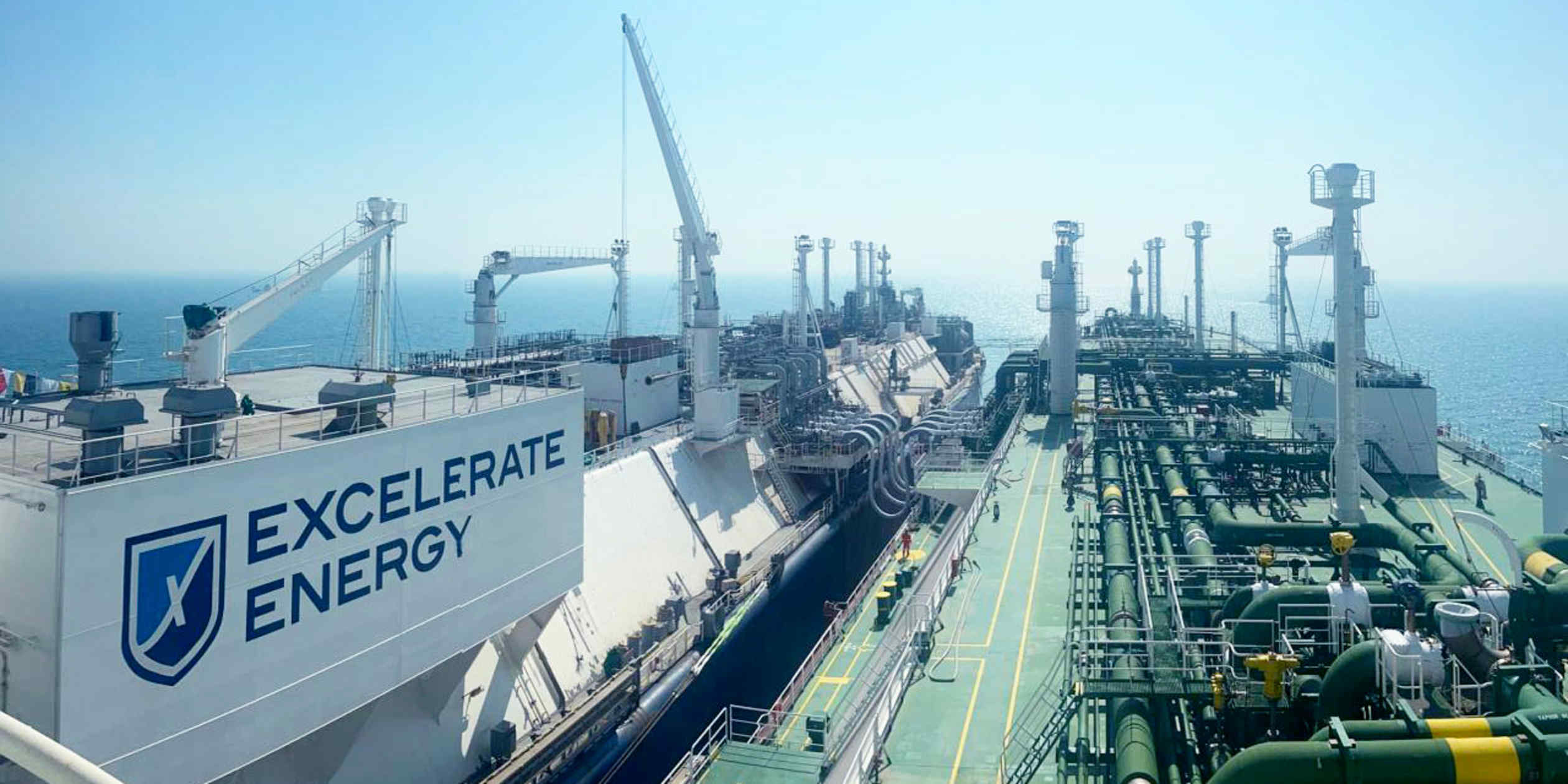
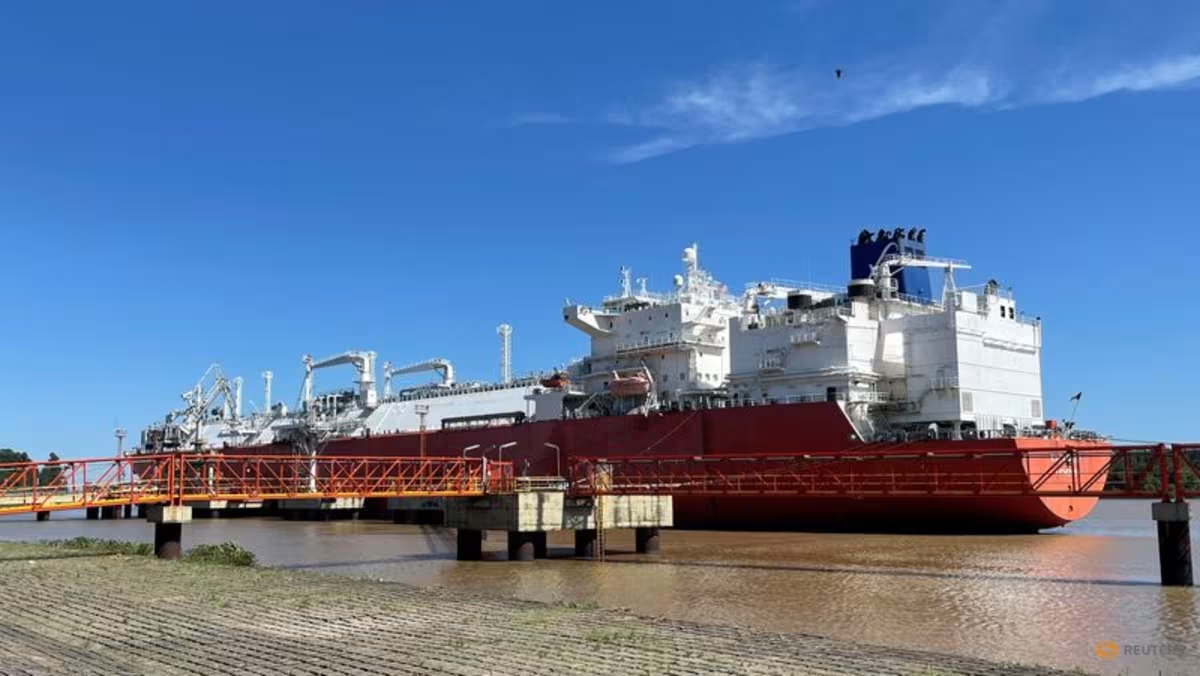
On July 21, a fire during a ship-to-ship transfer damaged the cabling on one boiler aboard a leased floating terminal off Moheshkhali. That fault removed 450 million cubic feet of gas per day from the grid. Within a fortnight, load shedding was averaging 3,000 megawatts, and CNG queues ran three rows deep.Commentary has rerun a familiar argument: too little exploration on one side, an unaffordable import bill on the other. Both points have merit, but neither explains why one boiler could do this much damage. It could, because Bangladesh’s entire imported-gas channel floats on two ships. Both were disconnected during Cyclone Mocha in 2023. Cyclone Remal damaged one in 2024, cutting capacity for nearly four months. The July fire is the third systemic outage in four years. The binding constraint is not the molecule; it is the infrastructure that lands it.The official response has been fast and floating. On July 28, the cabinet committee approved in principle a third FSRU at Kutubjom under a government-to-government arrangement, adding 600 million cubic feet per day, and, by expert estimates, for three to four years. A third ship, built by a Chinese contractor, adds capacity in the same fragile form, exposed to cyclones and single-vessel risk. Floating units were chosen to avoid capital spending. That saving has been repaid several times over in spot cargoes above $21 per million British thermal units and idled factories: the country has paid for a fixed terminal without owning one.The land-based terminal at Matarbari, discussed since 2014, would bring storage measured in days rather than hours, but the complex and pipeline are the better part of a decade away. The stronger candidate is the gravity-based structure: a concrete terminal resting on the seabed, LNG tanks built inside it, offering the resilience of a fixed terminal in less time. Italy has operated one fifteen kilometres offshore since 2009, supplying 14 percent of Italian gas, financed privately against a 25-year capacity contract. Starting now, a GBS could be delivering gas within this government term. Whether the Bay of Bengal seabed and cyclone loading suit it is a question for engineers. Whether it belongs in the Matarbari feasibility study is not.Pakistan built its first LNG terminal at Port Qasim for $125 million in 332 days, with debt from the IFC and the Asian Development Bank and a capacity fee from the state gas utility. Tolling is not exotic here; it is how both existing Moheshkhali terminals are already remunerated.I have arranged investor funding for concentrated gas assets in Europe and the Middle East, where offtake is contractual, and structures are clean. The same could be done for Bangladesh. The World Bank has committed $700 million to guarantee Petrobangla’s LNG import payments through letters of credit and short-term credit lines. That is procurement support, not construction finance. The same guarantee logic, already used for Bangladeshi power projects, can be pointed at terminal steel rather than cargo invoices.Petrobangla has already invited transaction advisers for the Matarbari land-based terminal; submissions closed on August 10. The structuring choice sits with the Energy and Mineral Resources Division, which could set terms for a project-financed, build-own-operate-transfer structure with take-or-pay tolling and multilateral credit enhancement, with a gravity-based option costed alongside the onshore design. A terminal financed that way costs the exchequer little. The past weeks have shown what the floating alternative costs.The writer is an investment banker and managing director at RetailBook. He has advised Aramco, ADNOC, OGDCL, Seplat and numerous other energy companies.