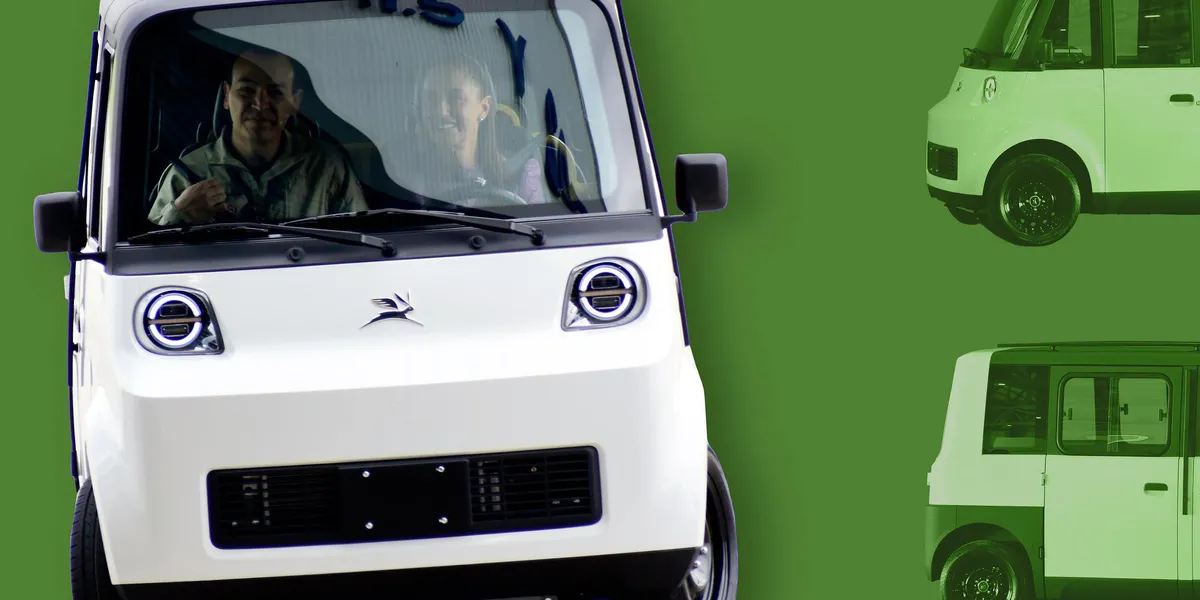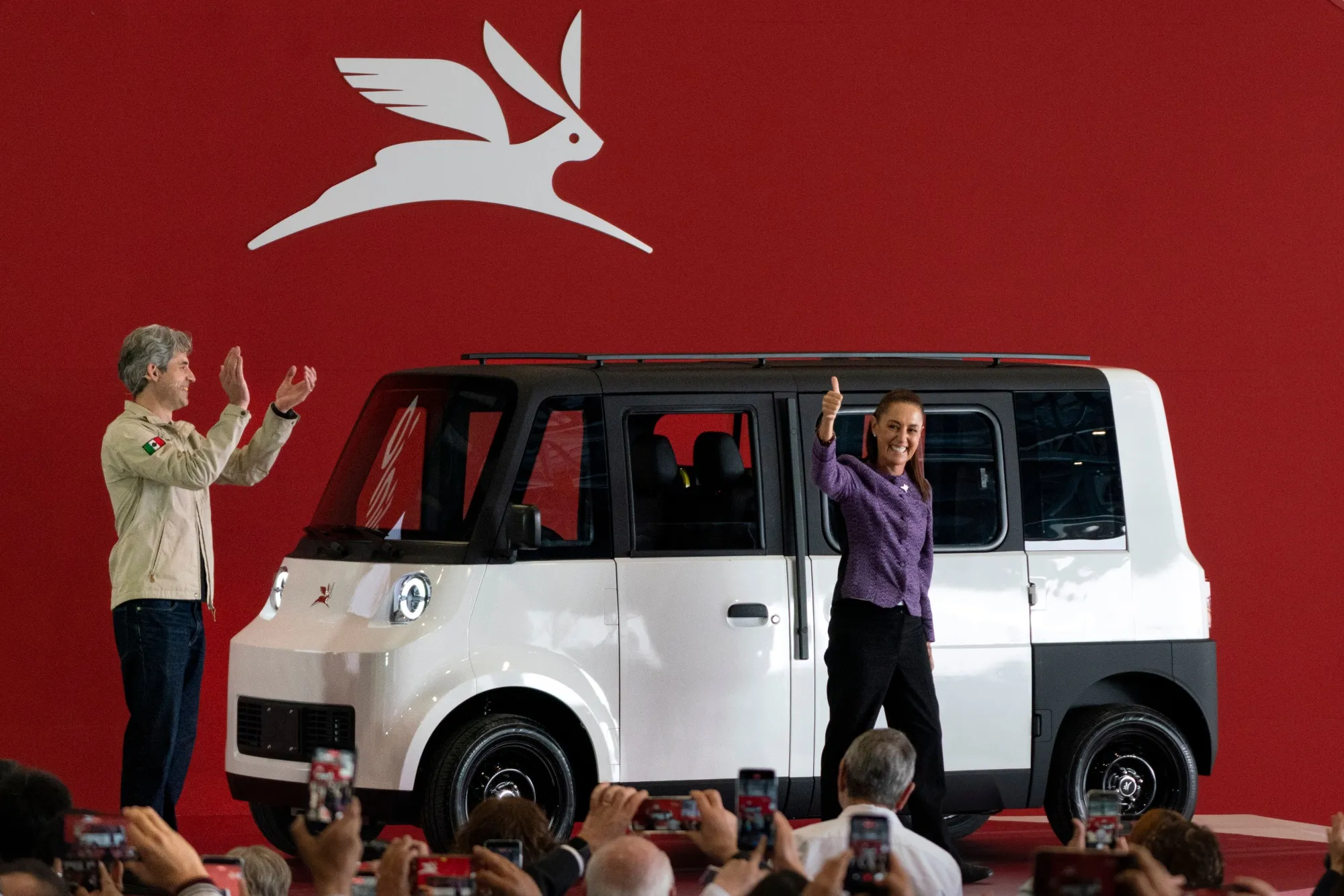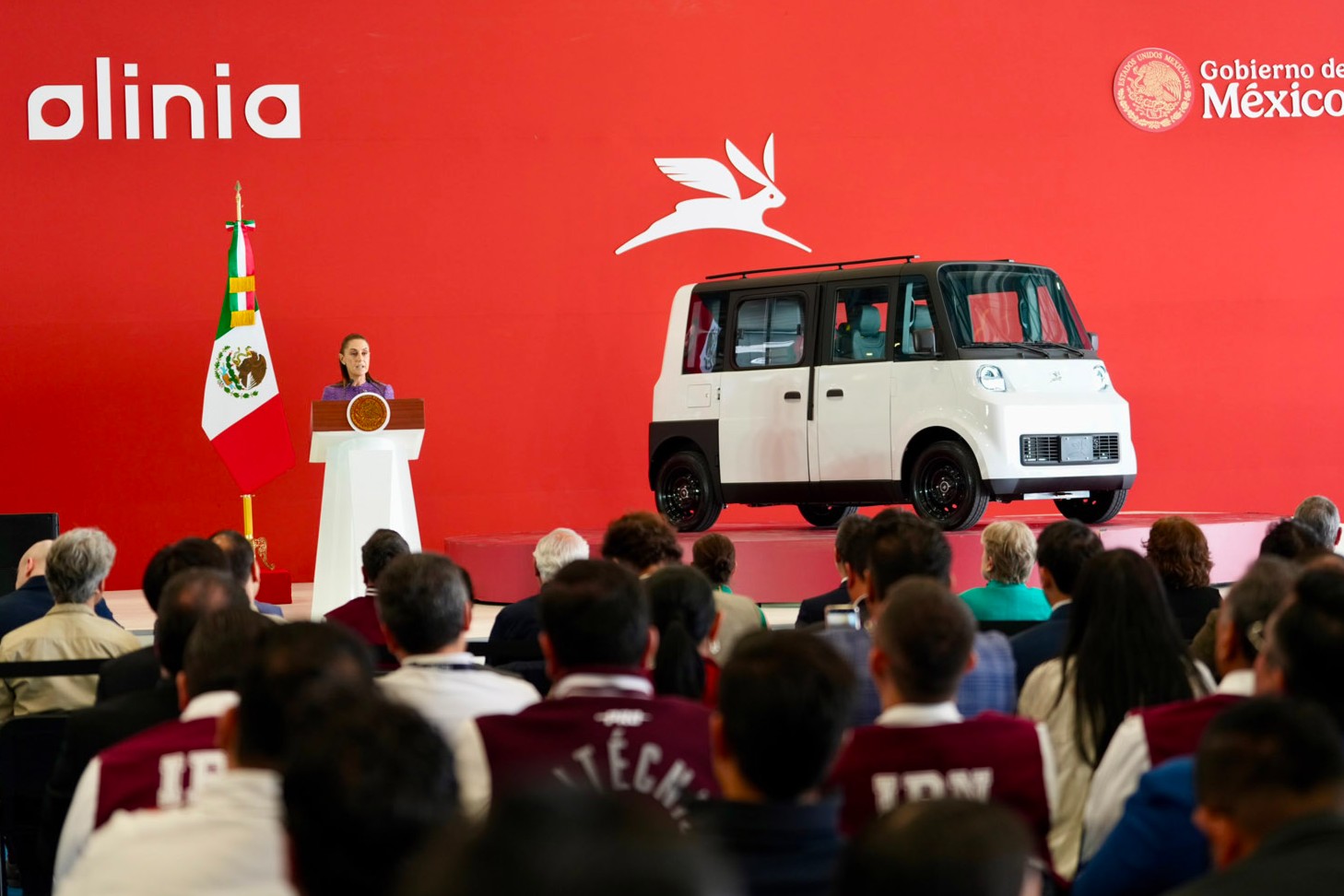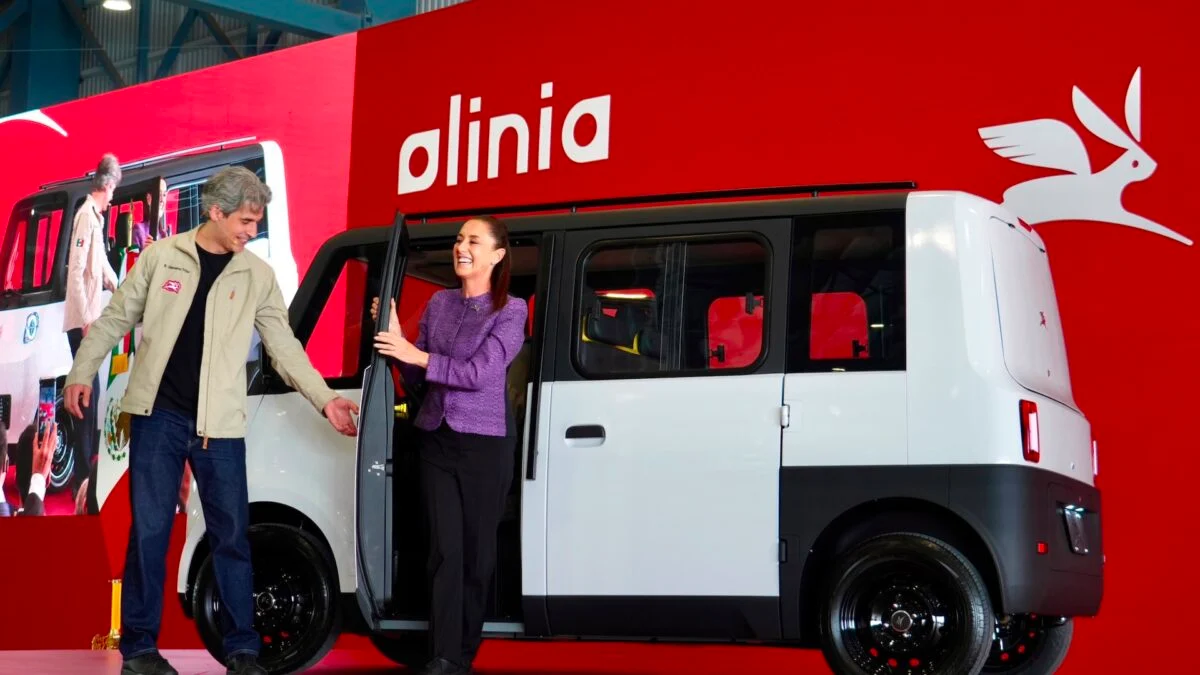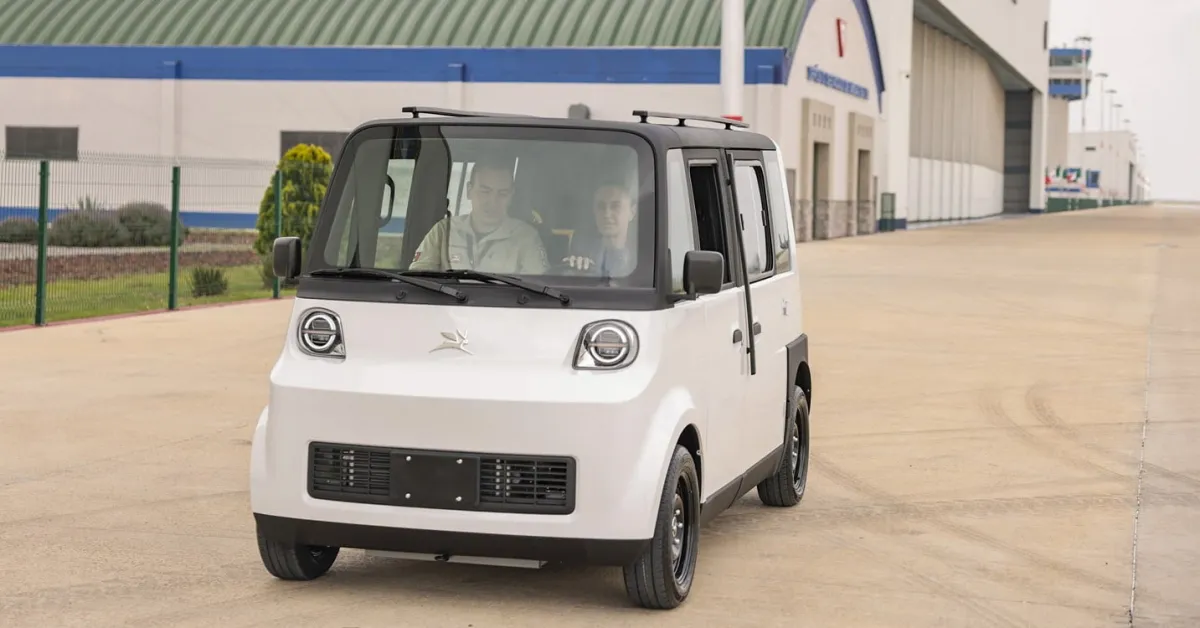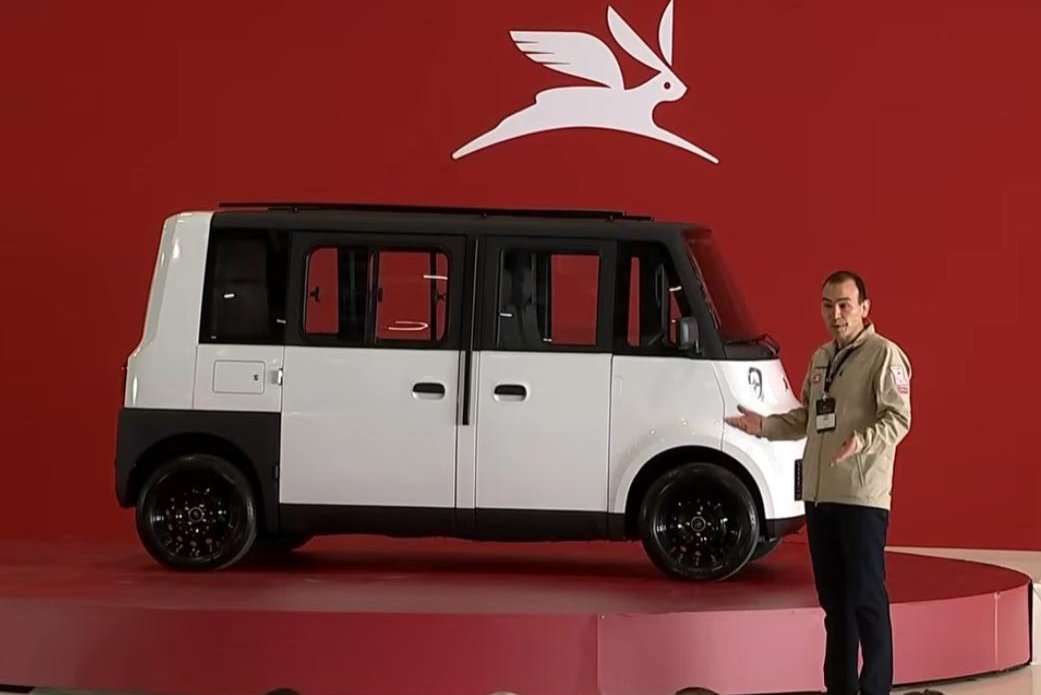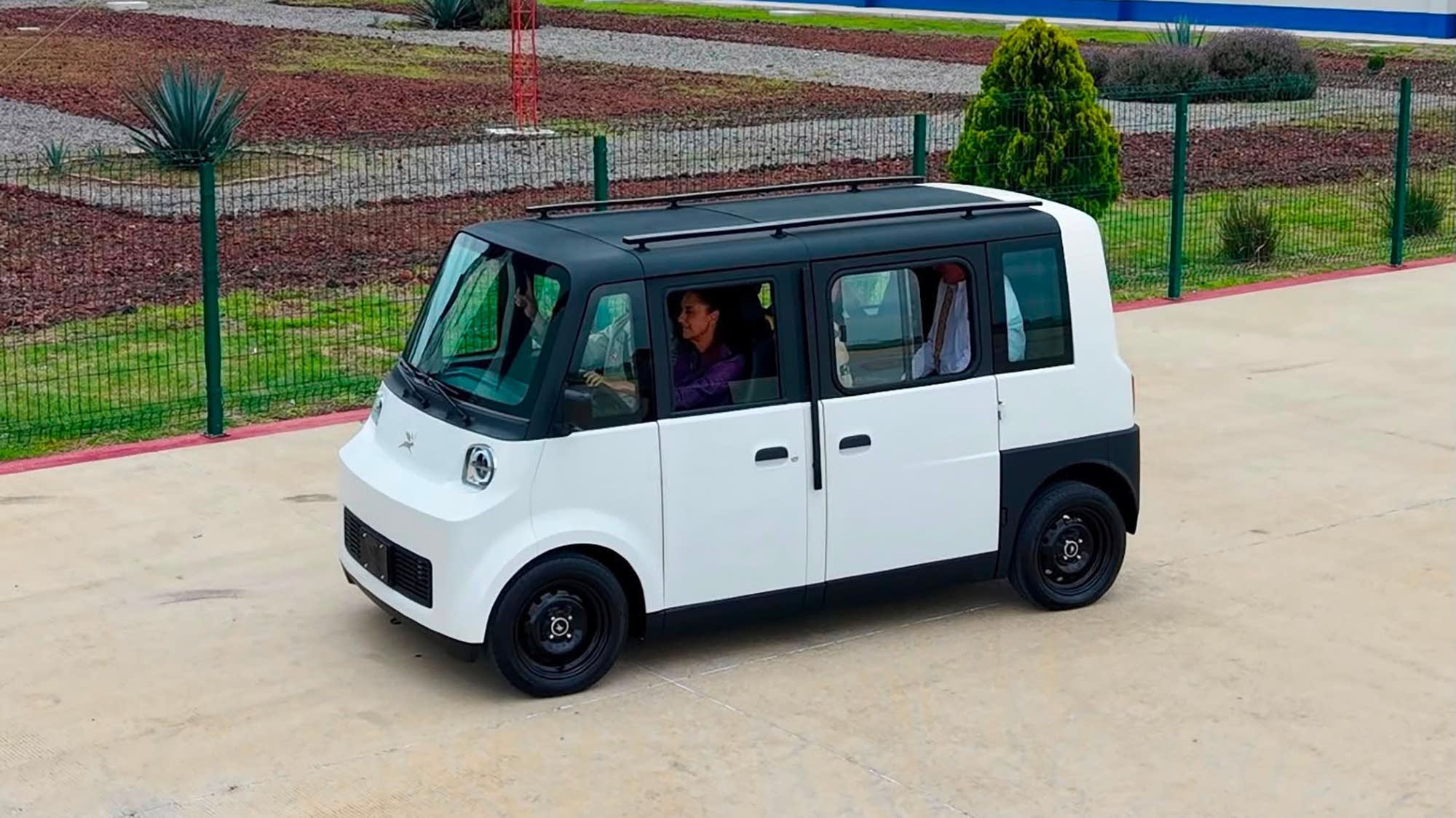
Mexico has long been known as a factory floor for the global auto industry, and this status has only grown in recent years. GM, Ford, and Toyota are among the automakers that have ramped up production in the country.But Mexico’s government is now trying to flip this script. It has launched its own line of mini-electric vehicles under the brand Olinia, which means “movement” in the indigenous Nahuatl language. And the vehicles are custom-made for Mexican roads and pocketbooks. Mexican President Claudia Sheinbaum and Roberto Capuano Tripp, the director of the Olinia project, take the vehicle for a test drive.The Government of MexicoMexican President Claudia Sheinbaum personally rolled out a prototype of the Olinia vehicle in June, driving it on stage at a military base in June. While its design is humble — basically a compact box on wheels — the ambition behind it is not. “Olinia is proof that Mexico can go beyond merely being a recipient of investment. It can generate knowledge, develop technology, and design solutions,” the country’s popular left-wing president said. The vehicle will cost the equivalent of just under $9,000 and will be chargeable through household outlets. It seats six, but with a max speed of about 30 miles an hour and a range of 90 miles per charge, it's geared for local driving, not road trips.“I think Olinia is an interesting project,” said Thomas Karig, a former executive with Volkswagen Mexico and consultant on the Mexican auto industry. “You're aiming for a low-cost, low-technology vehicle, which is usually not in the portfolio of the automotive industry. Not even the Chinese that are here in Mexico are trying to offer these kinds of cars.”Karig raises a sensitive topic: growing economic ties between Mexico and China. Recent reporting has revealed that much of the technology under the Olinia’s hood, so to speak, will come from China. This comes amid a wave of Chinese imports to Mexico in recent years, including popular electric vehicle brands like BYD. All of this has been a sore point for Mexico’s largest trading partner, the United States, which has been pressuring Mexico to clamp down on its trade with China. In a move widely seen as a response to U.S. pressure, Mexico hiked tariffs this year on a wide array of Chinese imports.Carlos Pinzón at his auto shop, La Casa del Volks, in Mexico City.Ted SieferBut to keep the price of Olinia low, Mexico may have no choice but to rely on existing Chinese technology. “The success of the project will depend, of course, on the price,” Karig noted. The Olinia, after all, aims to be a car of the people. And history shows that Mexicans may be uniquely drawn to this concept. “You know, Volkswagen means ‘the people's car’ in German. In Mexico and Brazil is where the car really was the people's car,” said Carlos Pinzón, the owner of the Casa del Volks garage in Mexico City. VW bugs are veritable icons in Mexico, where they are affectionately known as vochos and remain fixtures in many working-class neighborhoods. A vintage Vocho — VW Bug — outside La Casa del Volks in Mexico City. Ted SieferBut Pinzon is dubious that the time is right for the Olinia in Mexico — not least because EVs are difficult to fix. “People who live in this area ask me if I know where they can fix an electrical car, and I don't have an answer,” he said. Pinzon is not alone in his doubts about the Olinia. The internet has piled on with memes likening it to a toy car and something out of “The Simpsons.”The first real test of the Olinia’s viability will come next summer, when the government says the first vehicles will roll off the production line.
Mexico launches its own electric car to show it can do more than build for other countries
The Mexican government has launched its own line of electric vehicles, with technology from China under the hood.
627 words~3 min read