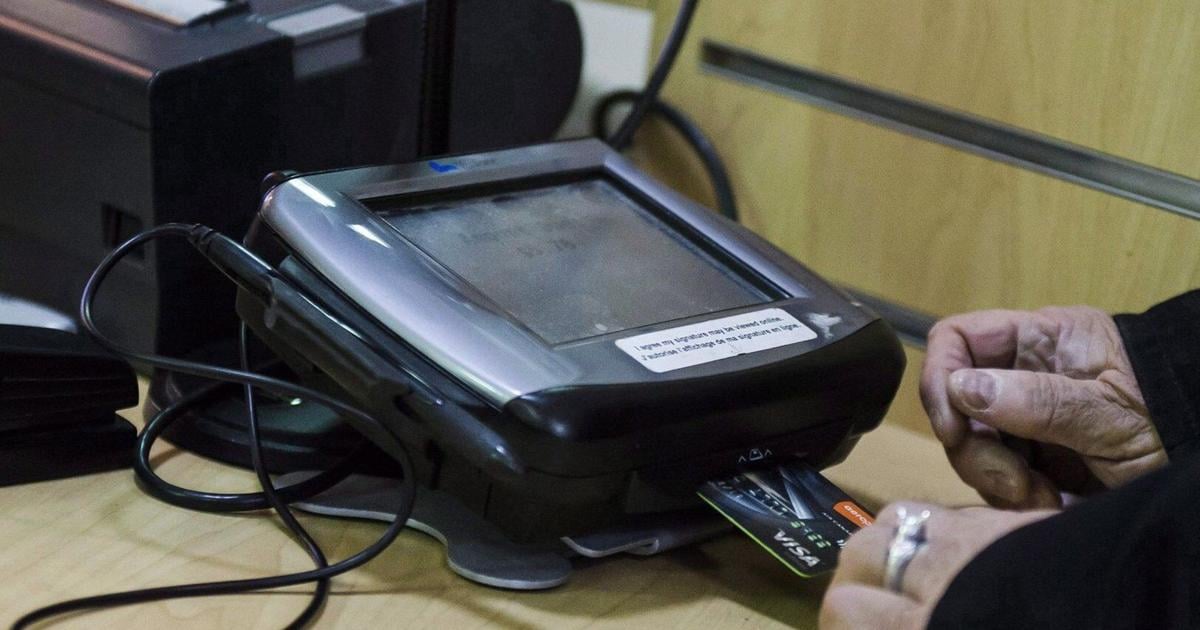
Skip to Content News Archives Economy Energy Oil & Gas Renewables Electric Vehicles Mining Commodities Agriculture Real Estate Mortgages Mortgage Rates Finance Banking Insurance Fintech Cryptocurrency Work Wealth Smart Money Wealth Management Investor Personal Finance Family Finance Retirement Taxes High Net Worth FP Comment Executive Women Puzzmo Newsletters Financial Times Business Essentials More Innovation Information Technology FP500 Podcasts Small Business Lives Told Tails Told Shopping Financial Post Store Obituaries Place a Notice Advertising Advertising With Us Advertising Solutions Postmedia Ad Manager Sponsorship Requests Classifieds Place a Classifieds ad Working Profile Settings My Subscriptions My Offers Newsletters Customer Service FAQ News Economy Energy Mining Real Estate Finance Work Wealth Investor FP Comment Executive Women Puzzmo Newsletters Financial Times Business Essentials HomeFintechNewsE-Commerce Solutions'Where do I go?' — Moneris sale sparking concerns over fees and transparencyMoneris dominates the small and mid-sized enterprise market, so any price increases are going to hurt those businessesCreated as a joint venture between RBC and BMO in 2000, Moneris now helps 325,000 businesses and sales locations accept payments, representing one in three transactions in Canada. Photo by Peter J. Thompson/PostmediaAfter relying on Moneris Solutions Corp. for 15 years, Toronto-based business owner Paul Bains started using a different payment processor to handle his credit and debit transactions in late 2025 primarily because he was offered a discount.Subscribe now to read the latest news in your city and across Canada.Exclusive articles from Barbara Shecter, Joe O'Connor, Gabriel Friedman, and others.Daily content from Financial Times, the world's leading global business publication.Unlimited online access to read articles from Financial Post, National Post and 15 news sites across Canada with one account.National Post ePaper, an electronic replica of the print edition to view on any device, share and comment on.Daily puzzles, including the New York Times Crossword.Subscribe now to read the latest news in your city and across Canada.Exclusive articles from Barbara Shecter, Joe O'Connor, Gabriel Friedman and others.Daily content from Financial Times, the world's leading global business publication.Unlimited online access to read articles from Financial Post, National Post and 15 news sites across Canada with one account.National Post ePaper, an electronic replica of the print edition to view on any device, share and comment on.Daily puzzles, including the New York Times Crossword.Create an account or sign in to continue with your reading experience.Access articles from across Canada with one account.Share your thoughts and join the conversation in the comments.Enjoy additional articles per month.Get email updates from your favourite authors.Create an account or sign in to continue with your reading experience.Access articles from across Canada with one accountShare your thoughts and join the conversation in the commentsEnjoy additional articles per monthGet email updates from your favourite authorsSign In or Create an AccountorBains, who has been in the printing business since 2005, decided to switch to a company based in the United States, which was a lot bigger than Canadian-owned Moneris. A few months in, however, he realized he had made the wrong decision.“It did not work out because they are really big and they didn’t care much about small businesses like mine,” he said. “Whenever there was an issue or a larger-than-usual transaction, they made my life so hard and demanded so much information. That was really surprising.”Breaking business news, incisive views, must-reads and market signals. Weekdays by 9 a.m.By signing up you consent to receive the above newsletter from Postmedia Network Inc.A welcome email is on its way. If you don't see it, please check your junk folder.The next issue of Posthaste will soon be in your inbox.We encountered an issue signing you up. Please try againFor example, Bains said during the FIFA World Cup, his company, which also accepts apparel-related printing projects, made more sales than usual, including a $50,000 transaction, the payment for which took two weeks to go through because he had to submit a series of documents to convince his payment processor it was not a scam. As a result, it was difficult for him to pay his vendors.“We don’t have that kind of capital lying around to wait for two to three weeks,” he said.Bains understands that suspicious transactions need to be checked, but he said payment processors need to understand that when it comes to small businesses, it’s tough to predict the value of transactions and that they may surge during specific periods.As a result of his troubles, Bains switched back to Moneris earlier this year. But the decision by Royal Bank of Canada and the Bank of Montreal to sell the company to San Francisco-based investment firm Francisco Partners Management LP for $2 billion has him once again worried that a big U.S.-based company won’t have time to address the issues of a small business and that fees might increase.“If they are paying $2 billion, their prime motive is going to be to make money,” he said. “But where do I go? We don’t have many options.”Moneris was created as a joint venture between RBC and BMO in 2000 and now helps 325,000 businesses and sales locations accept payments, representing one in three transactions in Canada.The sale of the company announced last week is expected to close early next year after getting the approval from regulators.The deal will allow Moneris to grow further because Francisco Partners has a track record for growing technology-based businesses, chief executive James Hick said in a statement last week, while Peter Christodoulo, a partner at Francisco, said the company sees a significant opportunity for long-term growth “while preserving the deeply Canadian identity.”But some analysts and business owners such as Bains are not convinced.Neil Desai, senior fellow at the Centre for International Governance Innovation and chief executive of fintech startup FinVentures Canada Inc., said buying an asset and then increasing prices is the “classic private-equity play” that Francisco will likely follow.He said Moneris has typically been a low-price, low-tech payment player and dominates the small and mid-sized enterprise market, so any price increases are going to hurt businesses.“Even a marginal price increase could make their businesses less competitive or even not profitable,” he said. “That practical risk is real when private equity from another country purchases such assets.”Desai also said switching to another payment processor won’t help much since they are already more expensive and the choices are limited compared to other advanced economies.But Todd Roberts, a senior partner at Deloitte Canada, said the market is highly competitive with a range of relatively similar choices.“I don’t think there is a story here around Moneris’s changing ownership leading to a negative outcome for Canadian businesses,” he said. “This is going to bring more innovation to better serve the needs of Canadian businesses. Francisco Partners has the interest and motivation to drive a highly successful business.”While the fee charged by payment processors is one issue, transparency is another.Payment-processing statements typically include fees charged by banks, card networks such as Visa and Mastercard, and the payment processor itself, said Rick Smith, founder of Fee Advocates, which helps small businesses by reading and analyzing the financial statements sent to them by payment processors and trying to negotiate better deals.He said credit card fees are largely non-negotiable, but a processor’s fee can often be negotiated. However, he said some U.S.-based payment processors make it difficult for businesses to distinguish between the various charges, making it harder to identify fee increases or negotiate better rates.Smith said Moneris has historically been more transparent than its four primary competitors in Canada and he worries that could change after the takeover.He also said some of his clients are worried that in the current geopolitical context, the sale of Canada’s only significant payment processor to a U.S.-based private-equity firm doesn’t flow with the Canadian government’s role of trying to reduce its economic reliance on the U.S.That’s something Bains agrees with.“We should be supporting more local than going to the U.S. because we’re trying to be self-dependent,” he said.The sale of Moneris has also raised concerns about what’s going to happen to the years of data that it has collected from Canadians regarding their spending patterns and whether that’s going to be dangerous in the hands of a foreign company.But Roberts said the deal has been structured to ensure that operations will run out of Canada and have to follow Canadian privacy and other laws.“The sovereignty angle is being dramatically overplayed,” he said. “RBC and BMO should actually be applauded for finding a partner that was going to be investing in a Canadian franchise.”Ebrahim Bagheri, a professor at the University of Toronto, however, said there needs to be clarity regarding what happens in case U.S. authorities require the soon-to-be U.S. company to hand over the data.“What is the jurisdiction under which they comply?” he said. “I hope there are clauses within the deal that make sure Canadian legal sovereignty is respected and that data remains in Canada, and also that data is dealt with based on Canadian law.”Despite all the concerns, Smith hopes that his assumptions are wrong.“Maybe (Francisco) are great people to deal with,” he said. “I don’t know anything about them; maybe I am just wrong.” Join the Conversation This website uses cookies to personalize your content (including ads), and allows us to analyze our traffic. Read more about cookies here. By continuing to use our site, you agree to our Terms of Use and Privacy Policy.
'Where do I go?' — Moneris sale sparking concerns over fees and transparency
The decision to sell Moneris Solutions Corp. to U.S.-based Francisco Partners Management LP has some small businesses worried. Read here now
TL;DRAI
RBC and BMO are selling Moneris (325k SMBs, one-third of Canadian payment transactions) to Francisco Partners for $2 billion. SMBs worry about fee hikes and support quality; Moneris dominance leaves limited competitive alternatives.
1,547 words~7 min read