Indonesia
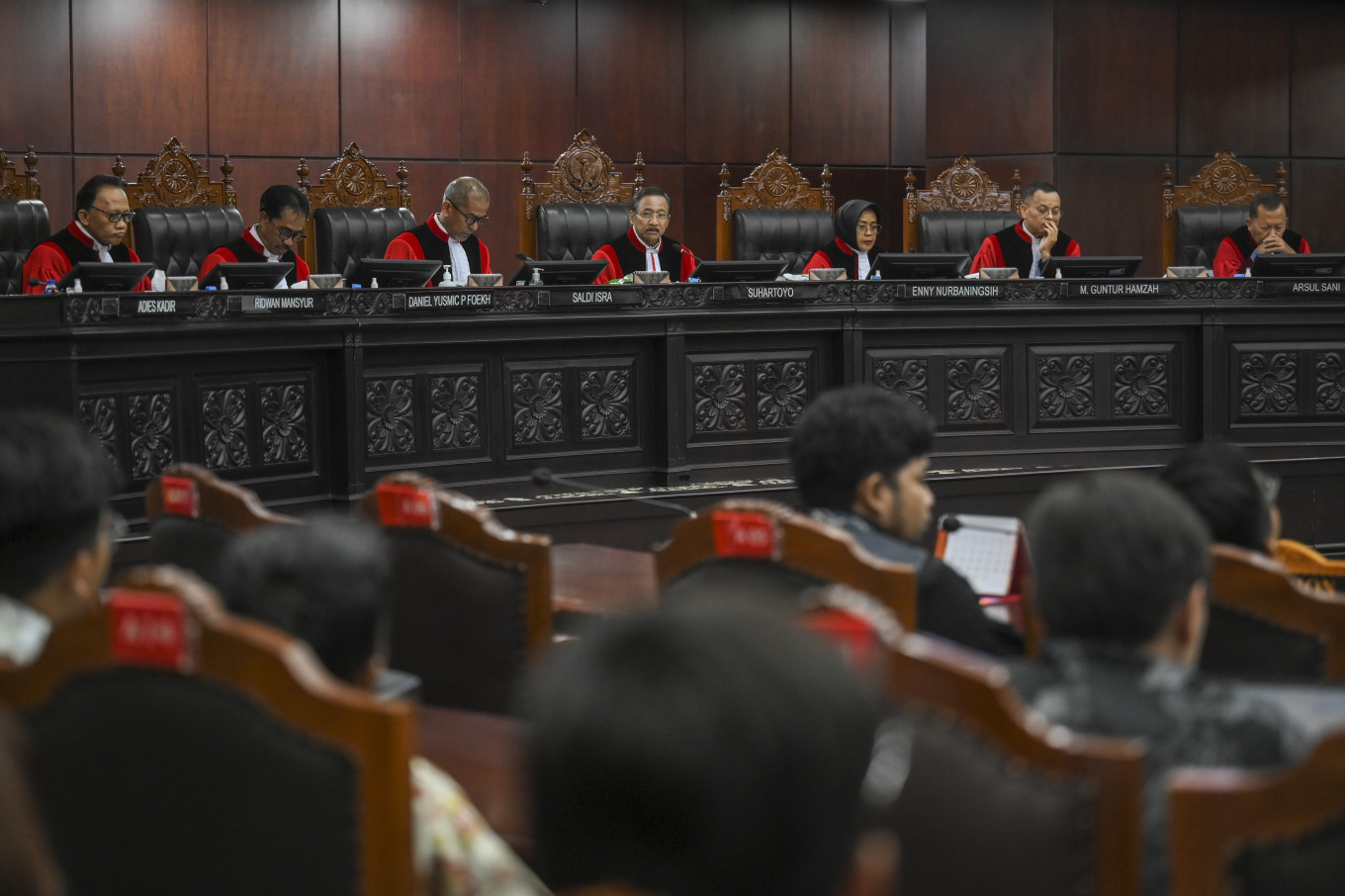
Constitutional Court Chief Justice Suhartoyo (center) presides over a hearing to read rulings on 20 judicial review petitions at the Constitutional Court building in Jakarta on July 30, 2026. (Antara/Hafidz Mubarak A)
The Constitutional Court’s recent ruling that alleged insults against the president or vice president can only be prosecuted upon their complaint has not quieted fears for free speech amid growing intimidation of critics.In a hearing on Wednesday, the nine-justice panel partially granted a petition challenging three articles of the new Criminal Code (KUHP), namely Articles 218, 219 and 220, which criminalize acts deemed to attack the honor or dignity of the president or vice president.
The petition, filed by 15 law students, sought to overturn the provisions and clarify who was eligible to file a complaint under them, arguing that the legal uncertainty could create a “chilling effect” on freedom of expression.
The Court acknowledged the ambiguity, ruling that alleged insults against the president or vice president could only be prosecuted based on a complaint filed by the person concerned. It effectively bars family members, supporters, sympathizers and other third parties from filing complaints on their behalf.