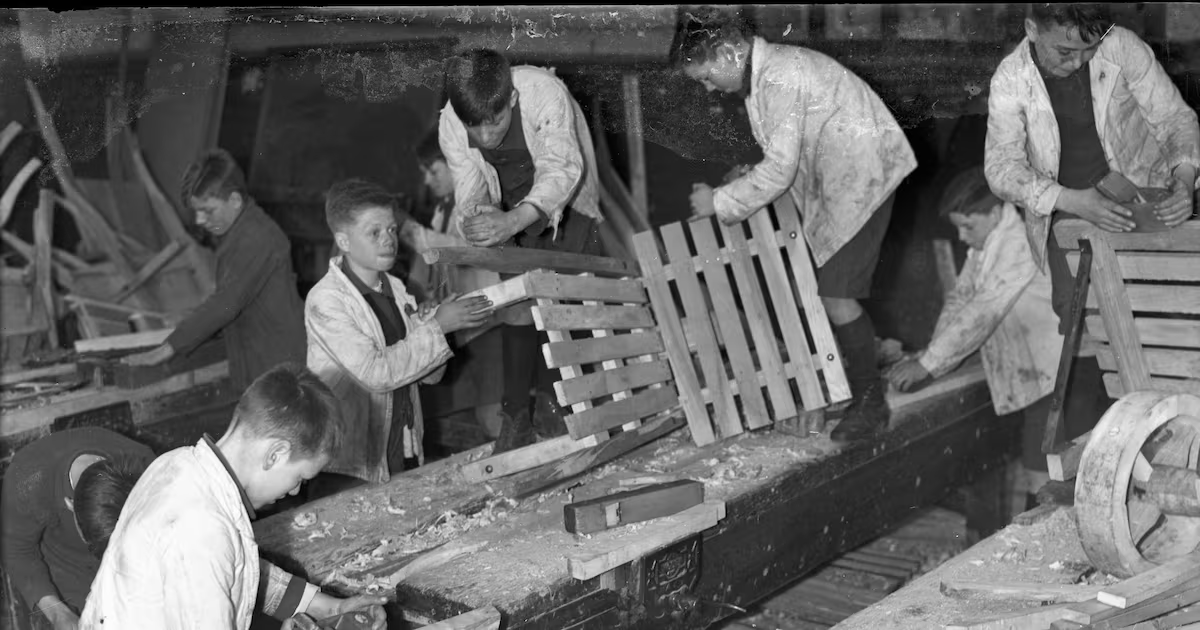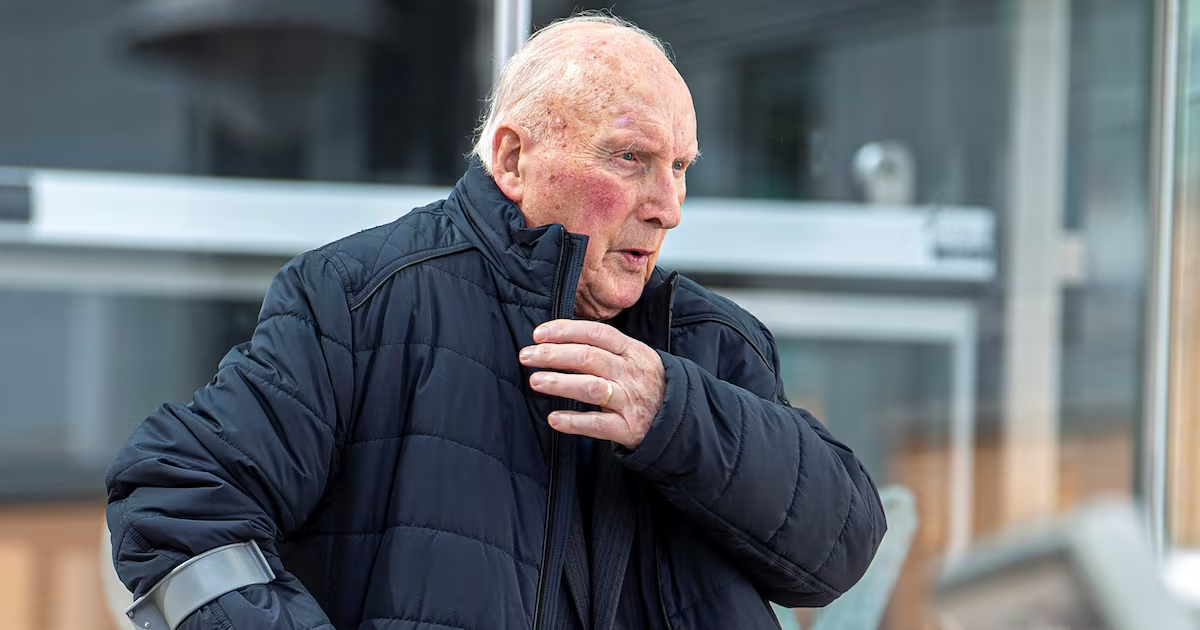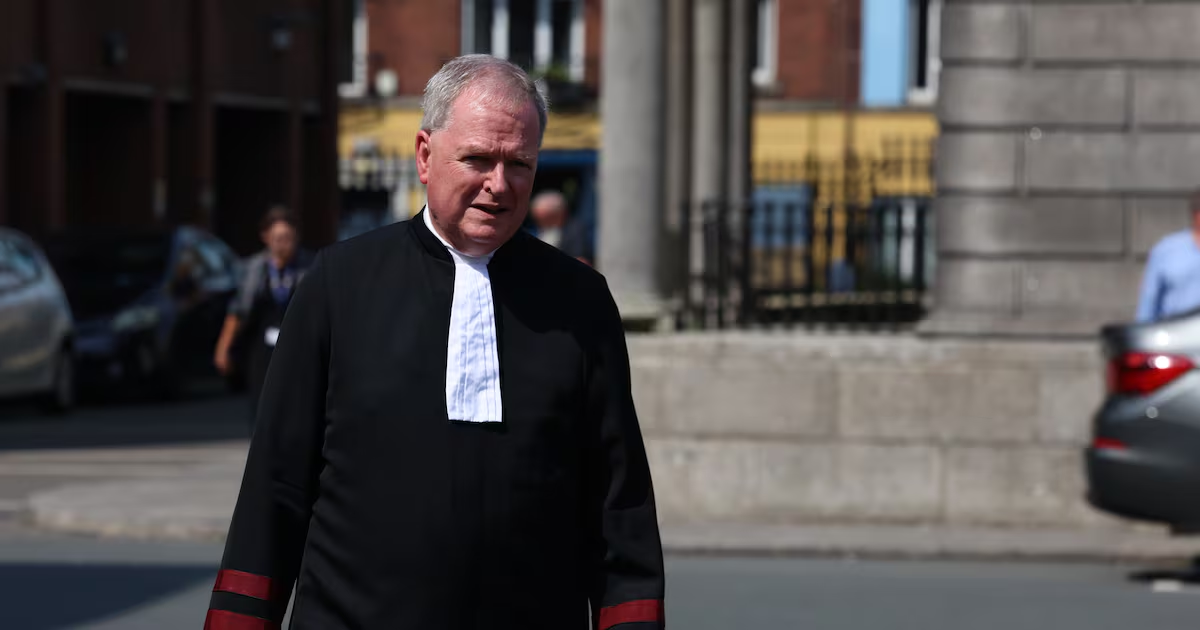
The Christian Brothers have been the focus of a considerable amount of media attention in the last couple of weeks concerning the issue of allegations of sexual abuse of minors by a number of their members. A High Court judge was very critical of them because they refused to give an individual name which would facilitate those who wished to take a legal case against them. She ordered that 341 former members of the order could be served with their summons by way of a newspaper advertisement, after the congregation told the court it did not have contact details for the men. Even those who had left the order many years since were named. I have been saddened by this whole affair; sad for the many people whose lives were damaged by various forms of abuse at the hands of certain Brothers. But sad also for the Brothers themselves, most of whom are now elderly, and who did not abuse anybody, but gave great service in their schools, opening up life opportunities for generations of young men by providing secondary education at minimum cost.In the pre-Vatican II era (and often post-Vatican II) formation of recruits to religious life largely left people with a negative self-image. I was one of them. I believe the formation given to their young men by the Christian Brothers had potential for particular disaster. They recruited boys as young as 14 into a fairly closed institution. Self-denial would be emphasised with little or no attention given to their development as adolescents. Sexuality was all about sin and negativity. In those years, during which I was young myself, the moral teaching of the Church was primitive. It was guilt inducing, and laced with the fear of a judgmental God and eternal punishment. Inevitably there was a great deal of repression and stunted emotional development. That is the general picture, but of course not all members of the Christian Brothers were emotionally stunted. Through other life experiences many were able to rise above the closed confined environment and develop into full human beings. But we know now that some didn’t, and emotional and sexual frustrations emerged in unnatural and very damaging ways. For this reason, while I abhor what some did to the young people in their charge, I am slow to stand in judgment over them. A lot of the blame must rest with church teaching and practice of the time, and also the culture of the society in which we all grew up.I think of what it must be like for the small number of men who are still in the Order now, to have all this ignominy poured on them. Do they all deserve to be painted with the same brush, and have their names in the paper in the context of child sexual abuse which inevitably and wrongly draws suspicion on them? People who have been hurt should be helped, as much as possible, to find healing and peace. But that does not necessarily come through outright judgment and condemnationI was not educated by the Brothers, but many of my generation were and got a great start in life. I would have liked to have some of those voices raised in recent days, reminding us that there is another side to the story of the Brothers and their presence in the Irish education system.My normal paper of choice is The Irish Times. But I notice, sadly, that in recent times some of its commentators have become almost stridently moralistic, which has the familiar ring for me of some of the bishops and clergy of old. This has been illustrated again in reporting and commenting on this recent case. Their leader, Br Gibson, whom I don’t know, is getting particular abuse. Many times since this story broke, commentators and letter writers fulminated about what they saw as his lack of Christianity and absence of moral values. The statement that he issued, which I thought made a great deal of sense, clarifying that he chose mediation rather than very expensive legal processes (which would benefit the legal profession far more than the abused), got, at most, cursory mention. The Christian Brothers are the easiest target for people on the moral high ground, a territory that appears to have a growing population. I know that people who have been hurt should be helped, as much as possible, to find healing and peace. But that does not necessarily come through outright judgment and condemnation. For peace to come and rest on a person, the judgment needs to be flavoured with compassion and forgiveness. I have learned that from my own experience of child sexual abuse.Fr Tony Flannery is a Redemptorist priest and writer. He is no longer involved in priestly ministry.
Fr Tony Flannery: Christian Brothers are an easy target but I am slow to stand in judgment
Rite & Reason: I think of what it must be like for the small number of men who are still in the Order now to have all this ignominy poured on them
793 words~4 min read