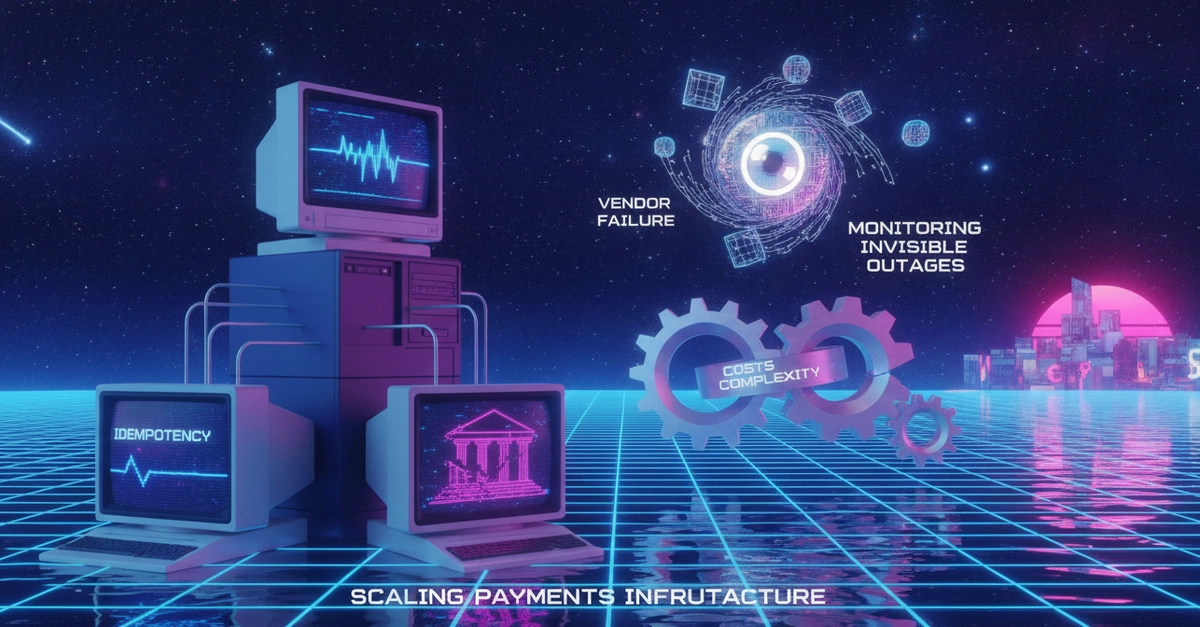
Most people only notice infrastructure when it breaks. A checkout button spins for too long, a video call freezes, a payment gets marked as pending, or a dashboard says everything is fine while the customer is already gone. From the outside, it looks like an app problem, but underneath it is usually a chain of smaller failures across networks, queues, databases, cloud services, identity systems, and old assumptions that nobody has looked at in years.
I first understood this on a project that looked simple on paper. A traditional operations company wanted to move more of its workflow online, not because they wanted to sound modern, but because their current process depended on people copying data between email, spreadsheets, phone calls, and one aging internal system that only two employees really understood. The hard part was not building a prettier web app. The hard part was making sure the online system could survive real work, real users, bad data, slow vendors, missing approvals, and the kind of edge cases that never appear in a demo.
That is where a lot of digital infrastructure projects go wrong. Teams focus on the visible layer first, then discover too late that the foundation cannot support the behavior they promised. Authentication is treated as a login screen instead of an identity model. Payments are treated as an API call instead of a state machine. Search is treated as a text box instead of an indexing problem. Reporting is treated as charts instead of data quality, ownership, and timing. When traditional infrastructure moves online, these details stop being internal inconvenience and become customer-facing risk.