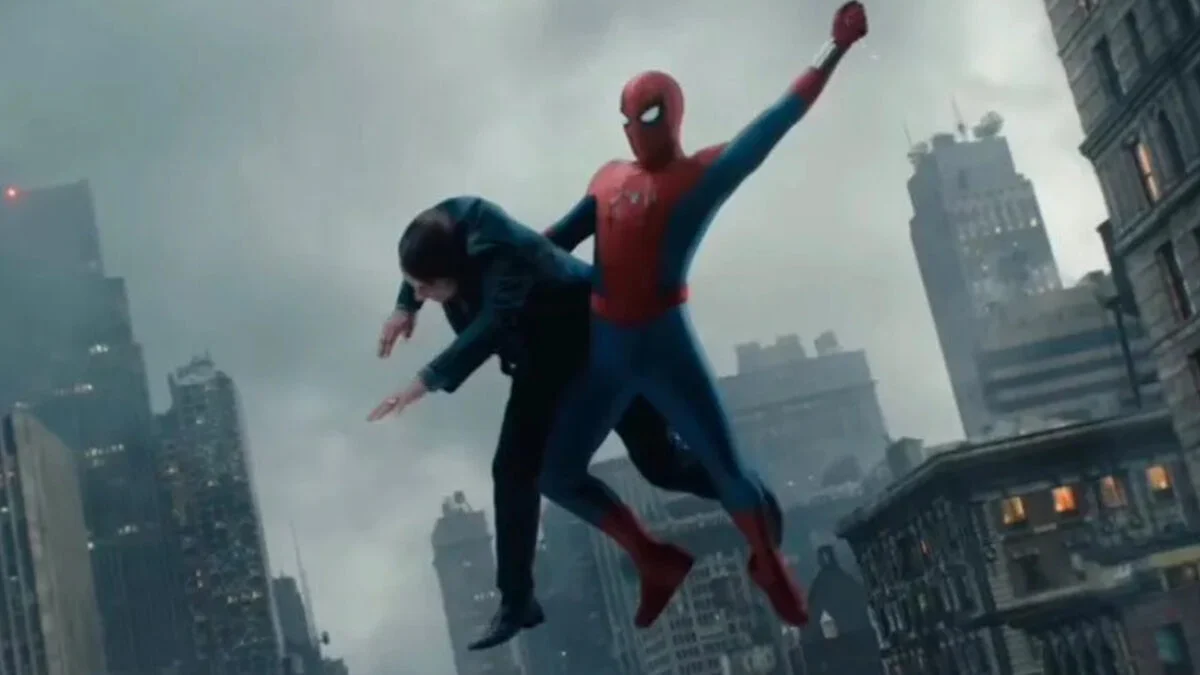
To call Spider-Man: Brand New Day a movie is to do a disservice to all other examples of filmed entertainment that bear the name. As traditionally understood, a movie purports to tell a story to an audience whose ideal state is one of relative ignorance. Preconceptions, assumptions, and advance knowledge in the viewing public are regarded as impediments to the capacity of the tale to surprise, startle, or transport.The writer-director Peter Bogdanovich (The Last Picture Show) used to tell me to assume the reader knows nothing, and although he was referring to writing, his exhortation applies to moviemaking, too. Whatever else can be said of the recent film version of The Odyssey, no one can claim that Christopher Nolan assumed that the viewer was overly familiar with Homer. For better or for worse (in his case, for worse), Nolan took it for granted that his audience was a blank slate. Even sequels and prequels — say, those in the Star Wars canon — ideally aspire to a degree of self-sufficiency in which the audience can discern the story and, properly bewitched, can proceed to seek out the other movies. You can see the second Indiana Jones movie first and not feel like an idiot.Alas, this compact between viewer and moviemaker is discarded in most contemporary comic book movies. I am hardly the first critic to observe that the big-screen adaptations of the DC and Marvel Comics canon demand constant consumption and unflagging attention from the viewer: missing but one entrant in a given series is a sin worse than falling asleep in French class. In French class, at least, the student will presumably still be able to say “Bonjour” and “Merci beaucoup,” if not carry on a conversation, but if someone watches, say, Avengers: Infinity War (2018) without seeing whatever preceded it, well, good luck.
'Spider-Man: Brand New Day' is a slog for the uninitiated
I am hardly the first critic to observe that missing but one entrant in a given comic book movie series is a sin worse than falling asleep in French class.
1,096 words~5 min read