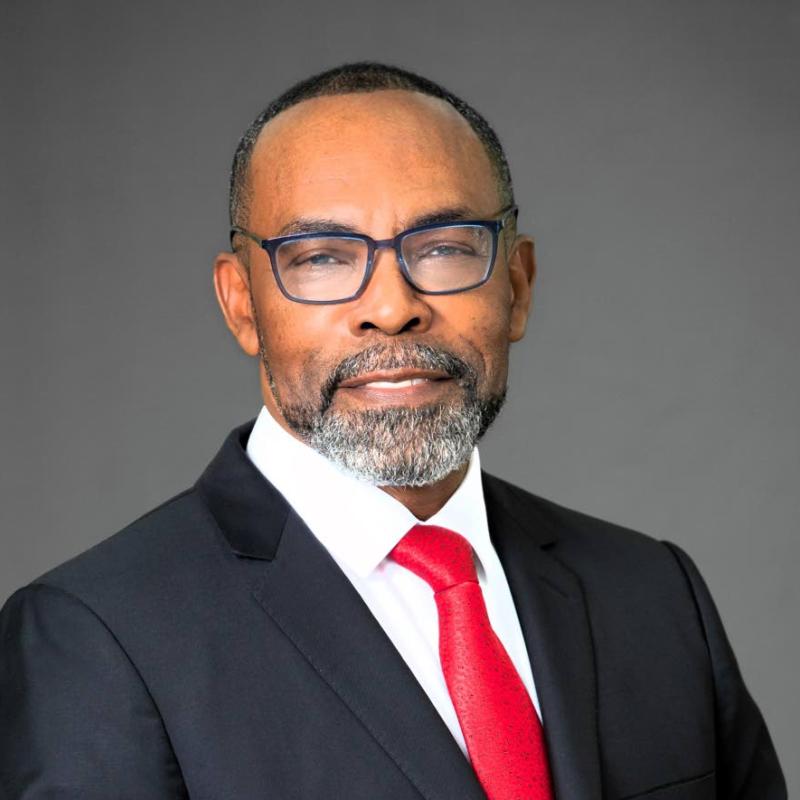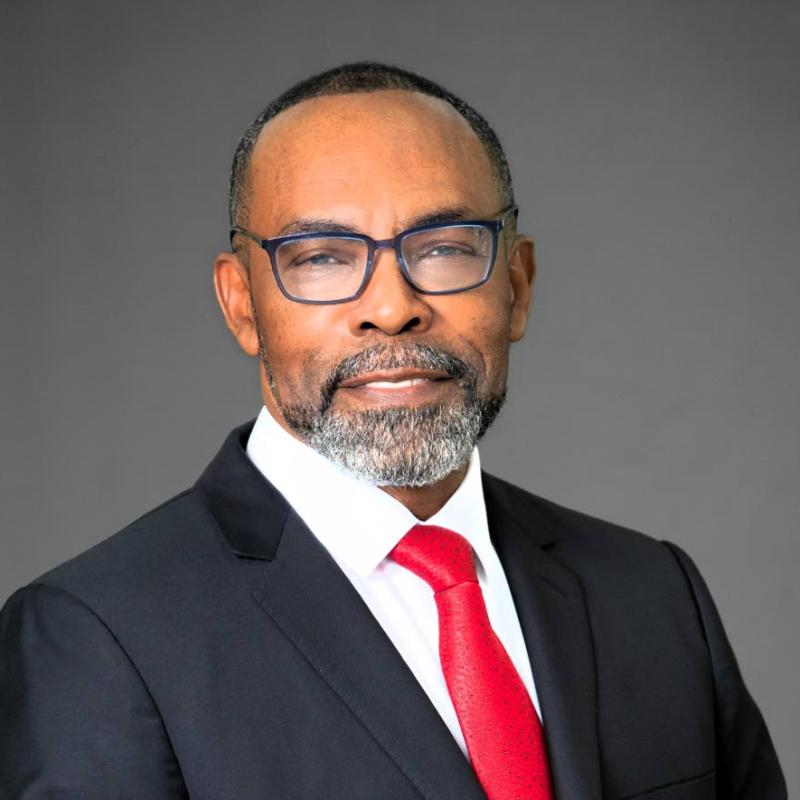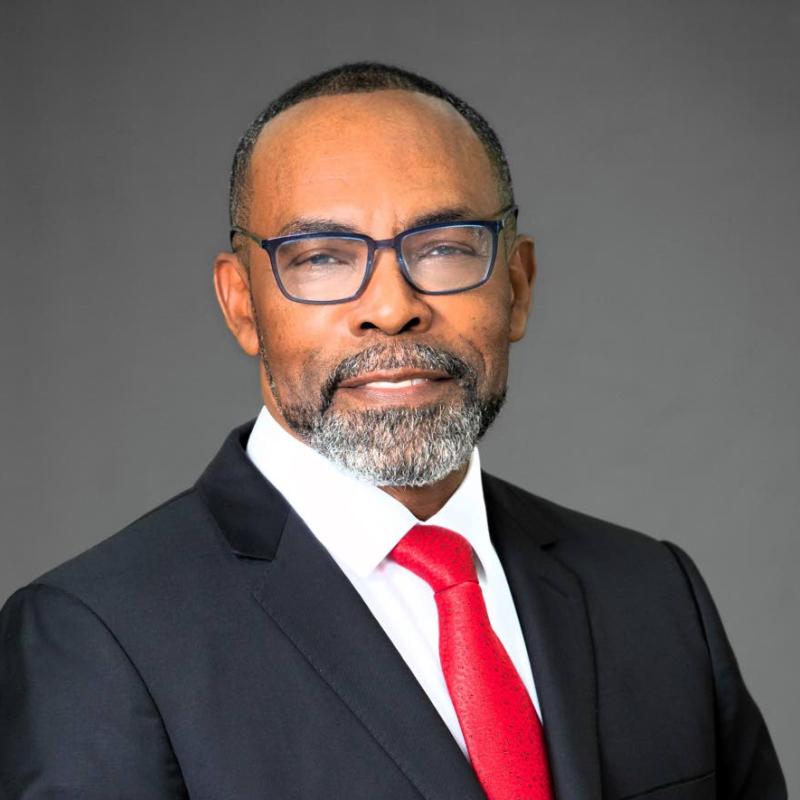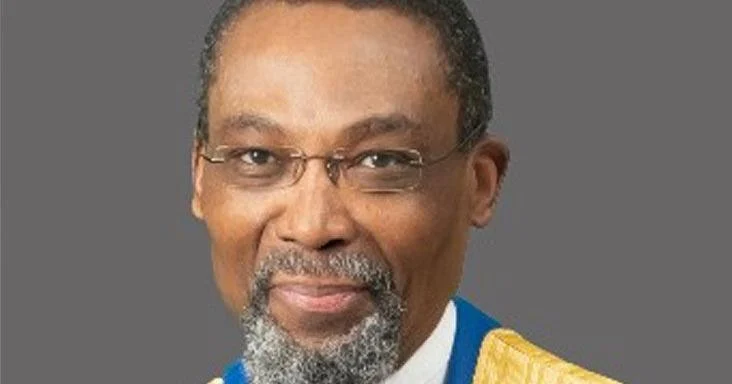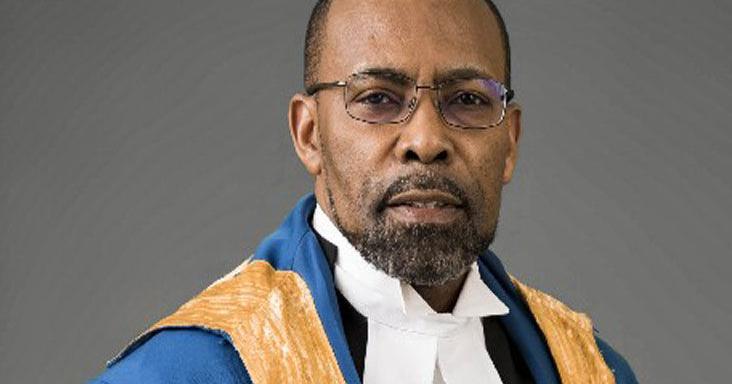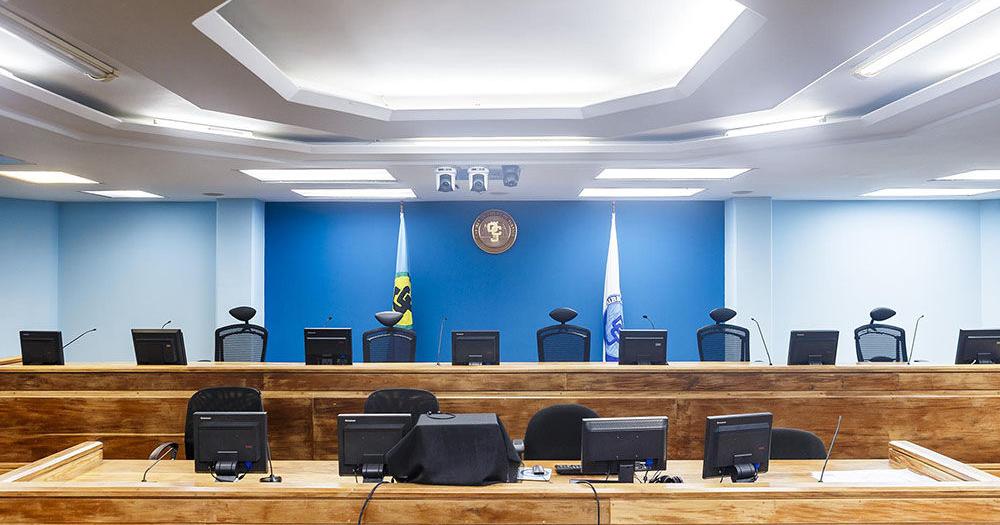
Caribbean Court of Justice (CCJ) president Justice Winston Anderson has denied allegations of panel fixing and attempts to influence the outcome of cases, while acknowledging that he may have handled the issue of judicial dress code “too strongly”.Justice Anderson broke his silence in a statement yesterday, six days after the Sunday Express broke the story of disagreements between judges and the CCJ president.
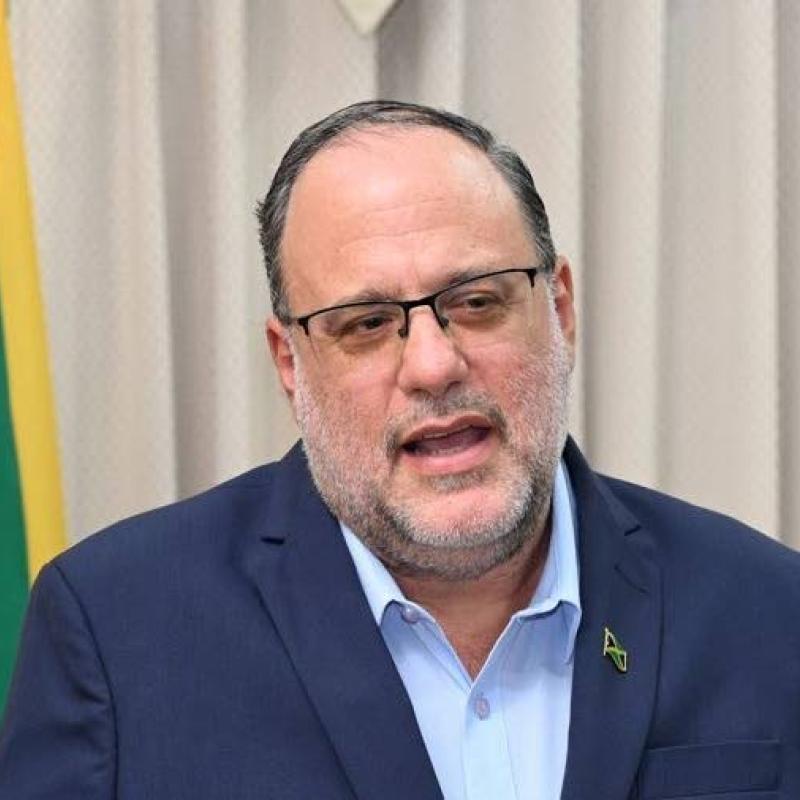
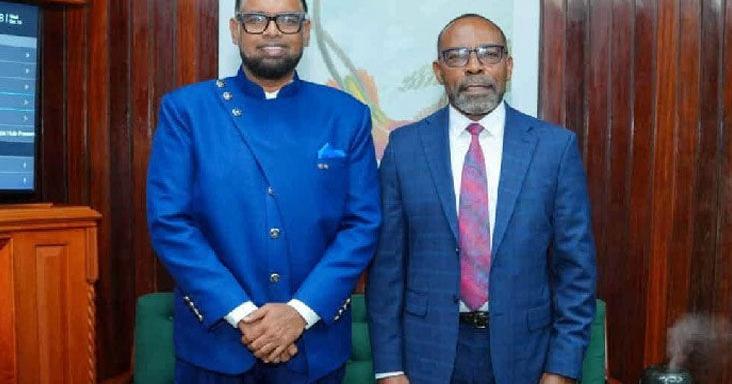
FLASHBACK: President of the Caribbean Court of Justice, Justice Winston Anderson, visits Guyana on October 14, 2025, at the invitation of President Irfaan Ali.
In an exchange of internal e-mails in June and July this year, several judges objected to the imposition of a dress code policy by Justice Anderson and accused him of governing the regional court in an “authoritarian” and “dictatorial” manner.The complaints ranged from the alleged unilateral imposition of a judicial dress code to allegations of “panel fixing” and attempts to influence the outcome of cases.Before addressing the allegations head-on in his statement, Justice Anderson expressed dissatisfaction over the leaking of e-mails between himself and fellow judges.“... I must address what I regard as the most troubling aspect of this entire episode. I condemn, in the strongest possible terms, the unauthorised disclosure and publication of confidential material relating to the internal deliberations and confidential correspondence of the Court. Such disclosures and their publication are wholly unacceptable and strike at one of the fundamental principles upon which every independent judiciary depends. It erodes trust in the sanctity of judicial deliberations and judicial collegiality. It erodes public trust and confidence in the third branch, and it does untold harm to the people we are sworn to serve and betrays the trust and confidence placed in us,” he said.ConsultationFirst addressing concerns that he had failed to adequately consult his fellow judges, Justice Anderson said he regarded consultation as an essential component of responsible judicial and institutional leadership and rejected allegations of being “dictatorial” and “authoritarian.”“I do not refuse requests from my Judges to discuss any matter affecting the Court. I have consistently encouraged engagement, visited the offices of colleague Judges and staff, and I remain available whenever issues arise requiring discussion,” he said.Dress codeJustice Anderson also sought to clear the air on the dress code issue, which triggered a flurry of e-mail exchanges between him and the other six CCJ judges.He stated that his decision to remove Justice Chile Eboe-Osuji from the D’Almada panel was not based on differing legal viewpoints, but rather on the dress code issue.“At the time of the removal from the interlocutory panel and replacement by another colleague, I made it abundantly clear in writing that the Judge’s removal from that particular panel was based solely upon the issue of judicial attire and that it had nothing whatsoever to do with the Judge’s opinions, participation in judicial conferences or deliberations, or the expression of judicial views,” he stated.Justice Anderson added, “Indeed, in the very same communication to which I have referred, I expressly reaffirmed the right of every Judge, including of that colleague, to express his or her views freely during conferences, deliberations and discussions concerning the work of the Court.”He added: “I understand and appreciate the view that I may have approached the matter of the handling of the issue of dress code too strongly. I did so because I regarded it as an institutional issue concerning the appearance, consistency and tone of the Court, rather than a question directed at any individual Judge.”Panel fixingJustice Anderson rejected allegations concerning panel fixing. However, as a measure to address the issue going forward, he said every judge of the Court would be required to sit on every panel.“The inferential leap required to elevate the issue of Bench attire to an allegation of panel fixing is irresponsible, intellectually dishonest, injudicious and quite simply, malevolent! Accordingly, I reject entirely the suggestion that panels of this Court have been constituted or altered to secure predetermined outcomes. Such allegations are unsupported by the facts, inconsistent with the Court’s long-established practices, and contrary to the principles upon which this Court has operated since its establishment. However, to put this matter to rest, going forward, every Judge of the Court will be required to sit on every panel, unless the Judge opts out for a legitimate reason and is excused,” he said.Influencingoutcome of casesAddressing the allegation that he had sought to influence the outcome of cases before the Court, Justice Anderson said, “those allegations are entirely unfounded and untrue. No Judge worthy of being on the CCJ Bench would ever allow himself or herself to be unduly influenced by any other Judge, including the President. It is worth noting that in Mohamed v Minister of Home Affairs, there was COMPLETE UNANIMITY among all seven judges as to the disposition of the appeal. The suggestion that judicial views were suppressed or that any Judge was directed to reach a particular conclusion is therefore wholly without foundation.”Meeting withGuyana PresidentJustice Anderson also sought to clarify his meeting with the President of Guyana and the Opposition Leader, saying it was related to the “prolonged” acting appointments of Guyana’s Chancellor and Chief Justice.Allegations had been made by opposition members in Guyana that Justice Anderson had attempted in some way to ensure that the “right persons” were chosen for the substantive posts. Dismissing the allegation, he stated, “Let me be clear. I have no personal interest or preference in who is appointed Chancellor or Chief Justice of Guyana. My concern has always and only been confined to the constitutional principle that the judiciary should be headed by substantively appointed office holders enjoying the full constitutional protections intended by the framers of the Constitution.”Justice Anderson said he visited Guyana in October 2025 and met separately with the Guyanese President and the Opposition Leader in the hope that an agreement would be reached on the substantive appointments.Looking back, he said he recognised “that another course would have been much better. It may have been better to have confined myself to public commentary on the constitutional importance of substantive judicial appointments, as did my predecessors. Throughout this matter, my only concern has been the preservation of judicial independence and the constitutional integrity of the Guyanese judiciary. Those considerations alone informed my actions and comments. They were not motivated by any political or other preference, personal interest, or any desire to intervene in the domestic affairs of Guyana beyond what I regarded as my responsibility as President of the final appellate court for that jurisdiction to ensure constitutional protection of the judiciary.”