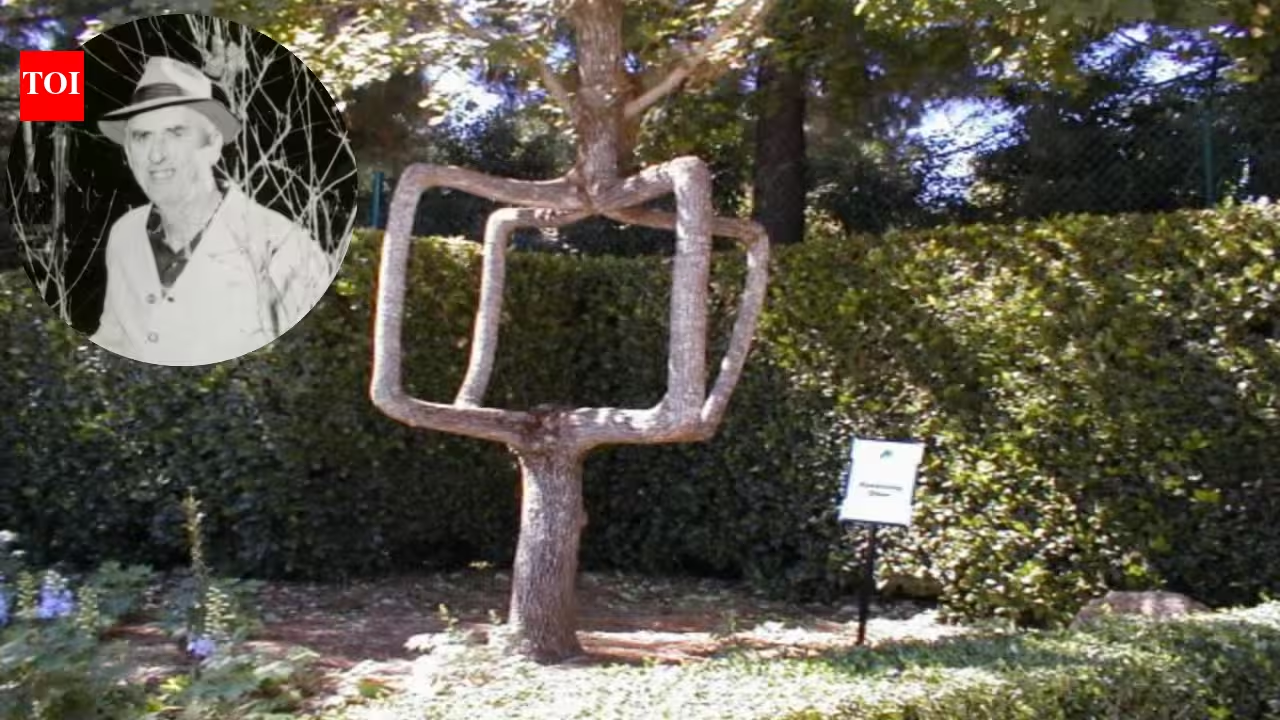
Axel Erlandson and one of his tree sculptures, featuring trunks shaped into geometric patterns. Credits – Avam.org, Wikimedia CommonsIn 1925, Swedish-American farmer Axel Erlandson began an unusual experiment on his farm in Hilmar, California, after becoming fascinated by the way trees could naturally grow together. Instead of leaving that process to chance, Erlandson began bending, guiding and grafting young trees into shapes that looked more like pieces of architecture than ordinary plants. One of his earliest creations was the Four-Legged Giant, formed from four American sycamores planted close together. According to Gilroy Gardens' history of the Circus Trees, the Four-Legged Giant was one of the unusual tree forms Erlandson began creating around 1925. What began as a family project soon became a lifelong experiment in turning living trees into unusual works of art.For decades, Erlandson kept experimenting, controlling the growth of trunks and branches through meticulous pruning, bending, sculpting, and grafting. He fashioned trees that resembled seats, baskets, ladders, arches, hearts, and geometric designs. Because the trees had to stay healthy while their growth was gradually redirected, the work required patience. Erlandson was known for keeping the finer details of his techniques to himself. He famously remarked that he just "spoke to them" when guests wondered how he got trees to adopt such strange shapes. The joke reflected years of careful observation and experimentation.A private experiment becomes the Tree CircusFor many years, Erlandson kept the trees as a private hobby. He sketched designs, planted young specimens and waited years for them to develop. As more unusual forms appeared, the collection began attracting attention from visitors and passersby. In the 1940s, Erlandson moved some of his trees to property near Scotts Valley, California, where he opened the Tree Circus around 1946. He promoted the attraction as a place to see the "World's Strangest Trees,” and motorists stopped to see the living sculptures.The collection eventually received wider publicity through Ripley's Believe It or Not! and Life magazine, helping make Erlandson's trees one of California's stranger roadside attractions. The Santa Cruz Museum of Art and History's account of Erlandson describes how he began shaping trees in 1925 and how many of his surviving creations are now preserved at Gilroy Gardens. Some designs were made by joining several trees, while others relied on bending and guiding the branches of a single tree. Unlike ordinary sculptures, these creations remained alive and continued to change after Erlandson had finished shaping them.Erlandson died in 1964, and the future of his collection quickly became uncertain. Without its creator maintaining the trees, the Tree Circus declined, and some specimens were neglected or lost. Preservationists and tree enthusiasts later worked to save what remained. Among them was Santa Cruz architect Mark Primack, who helped draw attention to the trees' historical and artistic value and pushed for their preservation.A living tree sculpture shaped into a geometric design at Gilroy Gardens in California. Credits - Wikimedia Commons Saving the surviving treesA major rescue came in 1985, when businessman Michael Bonfante helped move surviving trees to what became Gilroy Gardens Family Theme Park. Moving mature trees was difficult. The trees had to be dug out carefully, secured and moved alive before being replanted in their new home. By the time the surviving trees were rescued, many of Erlandson's original creations had already been lost. The remaining trees were relocated to Gilroy Gardens, where 25 Circus Trees survive today. Today, Gilroy Gardens preserves a group of the original circus trees, including the Four-Legged Giant and other unusual forms. The park says 25 circus trees remain alive, meaning some of Erlandson's creations have survived nearly a century after he began shaping them. Their survival is remarkable because they are not preserved objects. They are still living trees, continuing to grow and requiring care as they age.The collection is unusual because Erlandson combined art with biology. A sculpture normally stops changing when an artist finishes it, but a tree never does. Erlandson could guide the direction of growth, join trunks and create geometric forms, yet he could not completely control what happened afterwards. The surviving trees therefore represent both the farmer's original designs and the natural processes that have continued long after his death.The story began with a farmer noticing what trees could do and wondering whether he could encourage them to do more. One of his earliest experiments became a tribute to his daughter, while later creations turned the idea into a collection seen by generations of visitors. Their strange shapes are still recognisable, but the trees continue to grow beyond the forms Erlandson first envisioned. Erlandson did not carve his art from wood; he persuaded the trees themselves to become the artwork, and some of those trees are still alive nearly a century later.
In 1925, a California farmer bent trees into strange shapes for his daughter: some are still alive nearly 100 years later
In 1925, Swedish-American farmer Axel Erlandson began an unusual experiment on his farm in Hilmar, California, after becoming fascinated by the way trees could naturally grow together. Instead of leaving that process to chance, Erlandson began bending, guiding and grafting young trees into shapes that looked more like pieces of architecture than ordinary plants.
790 words~4 min read