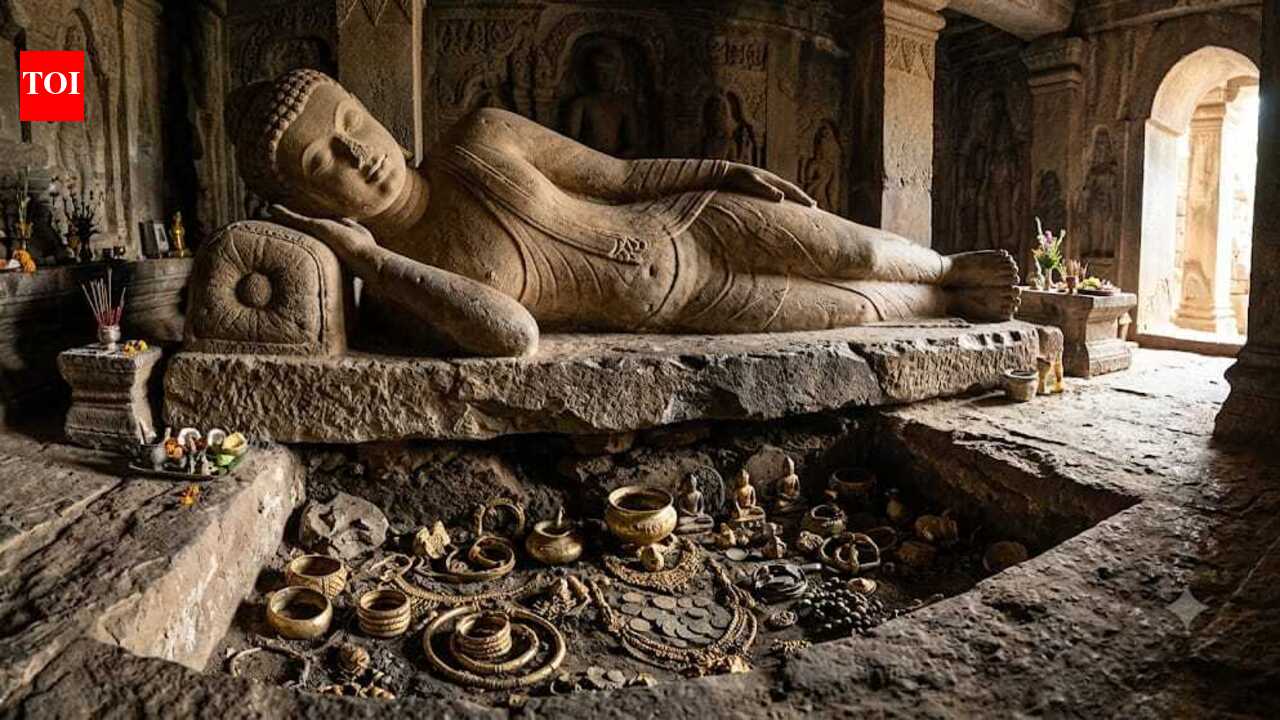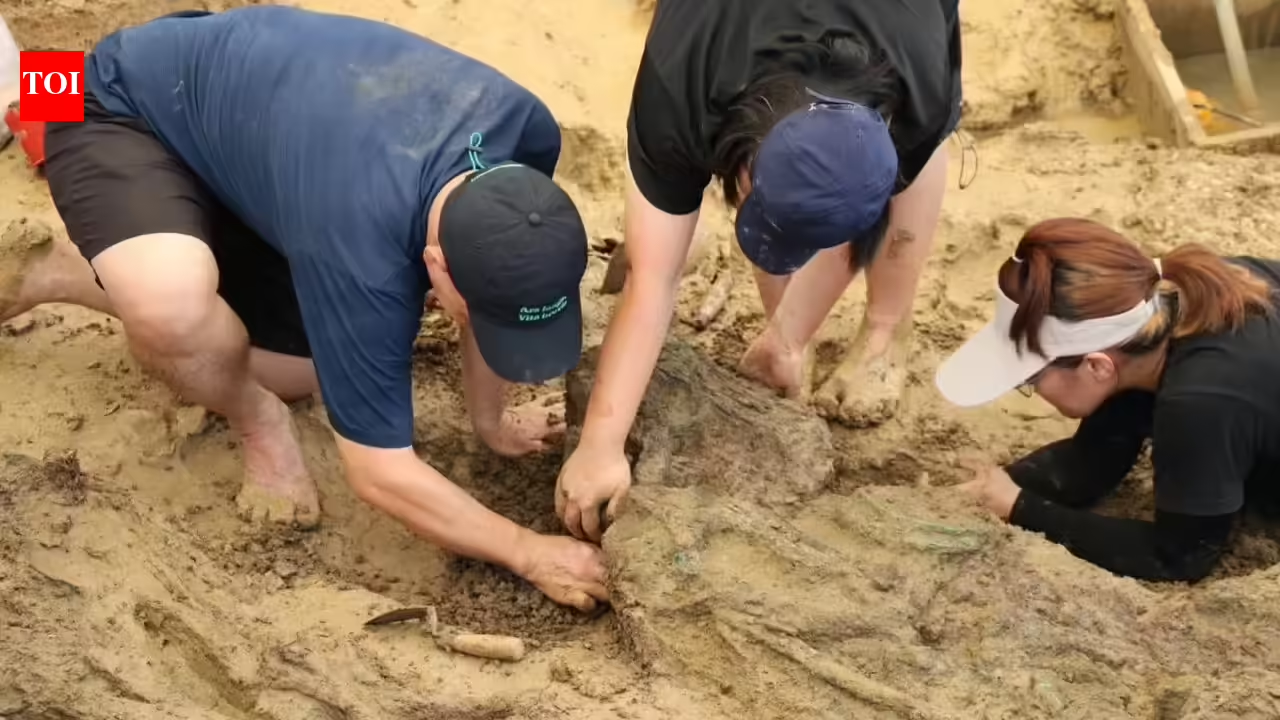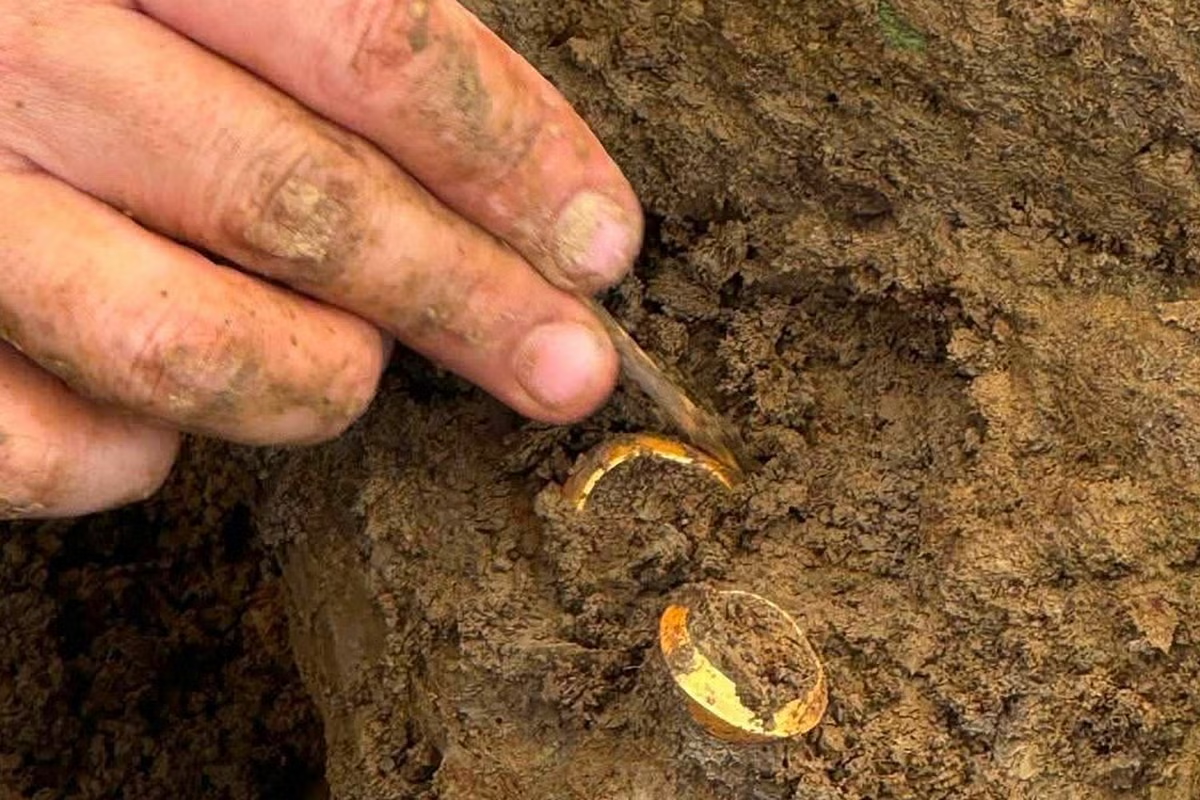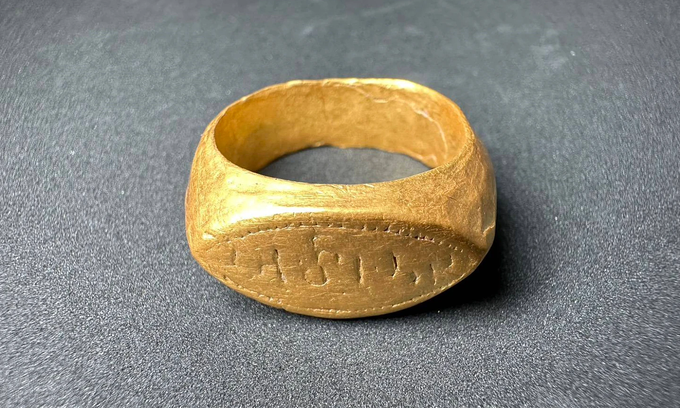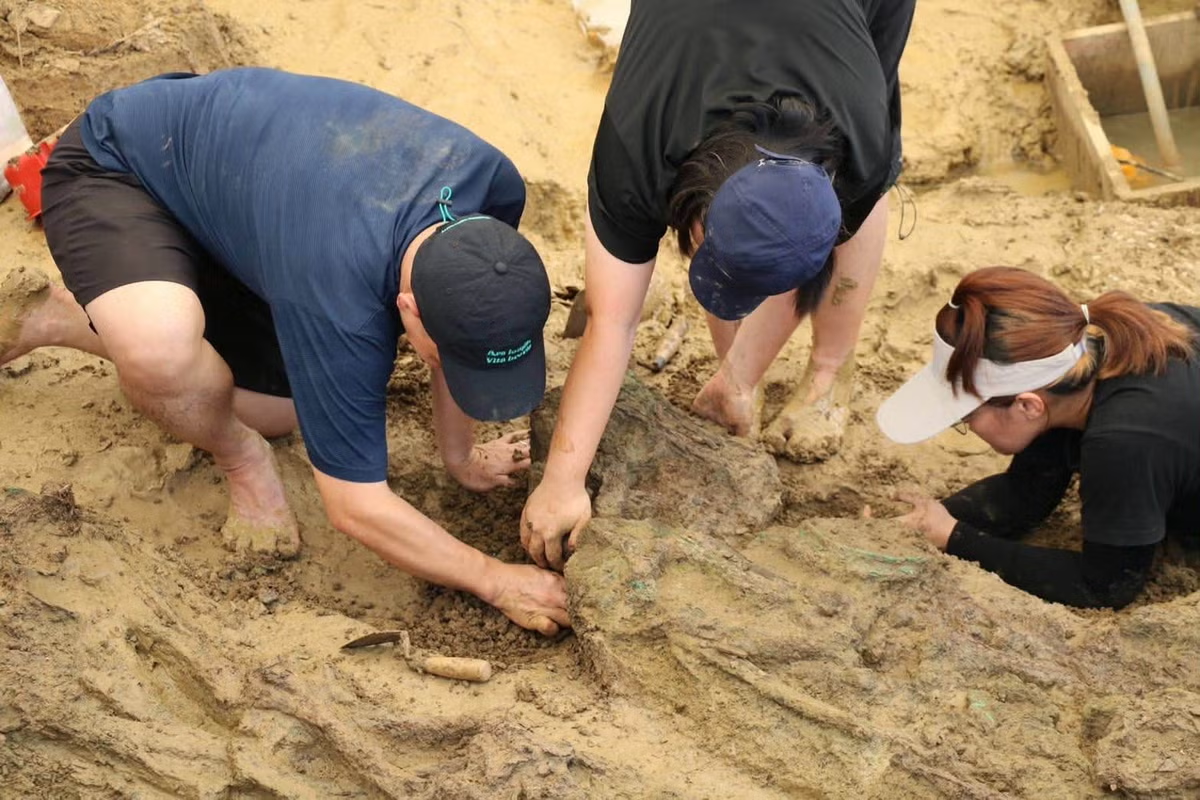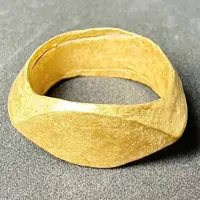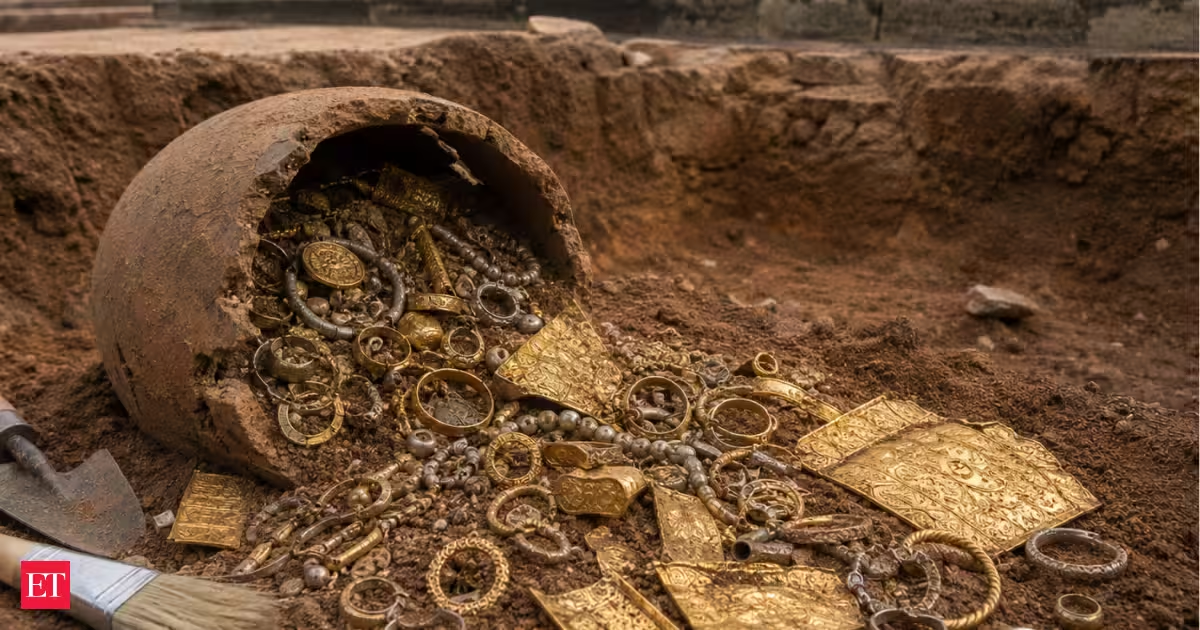
Workers just wanted to fix a soggy patch of ground beneath a 1,300-year-old statue. Instead, they found a buried fortune. A drainage repair project in rural Thailand led to an unexpected discovery. The work uncovered artifacts that had been buried since about the seventh century. The discovery was confirmed directly by Thailand's Fine Arts Department, the government body under the Ministry of Culture responsible for the country's monuments. Director-General Phanombutr Chantrachot said the discovery occurred on April 21, 2025, during restoration work at the reclining Buddha site. The site sits within Wat Thammachak Sema Ram, a temple complex in the Sung Noen district of Nakhon Ratchasima province.The department said the relics were found during a conservation project at Wat Thammachak Sema Ram, about 1.30 meters below ground, while workers were preparing to drain moisture from the site. Initial checks identified 33 metal ornaments in a damaged clay vessel made of bronze, silver and gold, including gold rings, silver earrings, and bronze hoop earrings that officials said resemble pieces from other Dvaravati-era archaeological sites.The statue behind the discovery: what makes the Phra Non so significantIn this case, the reclining Buddha is not just a local tourist attraction. Known as Phra Non, the reclining Buddha measures 43 feet (about 13 meters) long, according to Thailand's Fine Arts Department, and is widely regarded as Thailand's oldest reclining Buddha statue, though not its largest. Although a reclining Buddha in Bangkok is far larger, at about 150 feet (46 meters), the Phra Non statue is much older, by more than a thousand years.A gold Buddha plaque in repoussé, illustrating the raised-relief technique used in ancient Southeast Asian metalwork. Image Credit: Fine Arts Department, ThailandWhy a simple repair job turned into a discoveryThe workers were trying to solve a moisture problem in the soil that was damaging the sandstone of which the statue was made when they discovered the ceramic pot, buried about four feet underground. One detail immediately caught the researchers' attention. Two pairs of coiled bronze earrings found in the collection were remarkably similar to those previously discovered at the Phu Khao Thong archaeological site in Ranong province and at the Tha Chana site in Surat Thani province, according to the department's findings. Such stylistic similarities help archaeologists date the objects to the Dvaravati period, which lasted from the 6th to the 11th century.Beyond the jewelry, three additional items stood out even more. These were flat metal sheets made from gold and from a lead-tin alloy, shaped using repoussé work, a hammering technique that pushes a design outward from the back of a metal sheet so the image rises on the front. One rectangular gold plaque, measuring about 8 by 12.5 centimeters (roughly 3 by 5 inches) and in relatively complete condition, depicts a Buddha figure, according to the department's description of the find.What the Dvaravati period was and why it mattersFor readers unfamiliar with Dvaravati, it was not a single kingdom with its own capital and monarch. Instead, it was a collection of Mon Buddhist kingdoms that thrived in the central and eastern regions of what is now Thailand from around the sixth century AD to the eleventh century AD. This civilization left some of the earliest evidence of Buddhist worship in mainland Southeast Asia, including stone Buddha images, boundary stones called sema, and temple ruins.Preserved metalwork is rare in the archaeological record of Dvaravati settlements. Because bronze corrodes in humid soil while gold and silver survive well, a hoard combining all three metals is rare in the region.The 33 recovered artifacts were cataloged for archaeological study after the discovery. Image Credit: Fine Arts Department, ThailandWhy repoussé work is harder than it looksThe repoussé technique requires skill and precision, since there's no room for error once the metal is shaped. Creating a Buddha figure in repoussé on a small piece of gold is highly difficult. The piece suggests the maker had considerable skill and experience. It was likely made for ritual use, such as temple offerings or special ceremonies.Why the discovery of these objects is important to archaeologistsA handful of old rings buried in the soil would not, on their own, be especially notable to historians. The fact that all 33 pieces were found together near a structure with an estimated construction date is archaeologically significant. The find gives archaeologists new evidence about Dvaravati metalwork and may help refine the period's timeline.How this discovery compares to discoveries in the regionBuried offerings are not unusual in this region. Similar artifacts have been found at other Dvaravati-period sites in Thailand. The objects discovered include coins, small Buddha statues, and jewelry. The find's significance lies in the number of objects and their association with a monument from the same period. That makes the find especially significant for specialists studying the period.What will happen to the objects nowThe objects were handed over to the Fine Arts Department for cleaning, cataloging, and preservation. The department is also working on restoring the Phra Non site, where the objects were discovered. The objects are likely to be displayed in a museum after conservation and study, as has happened with other finds in the region.The find shows that important discoveries can emerge during routine restoration work, not only during planned excavations. It's a reminder of how much still lies beneath Thailand's historic sites, and it may help researchers better understand the artisans who created these objects.
In 2025, workers dug a drain beneath a reclining Buddha statue in Thailand, widely regarded as one of the country's oldest; they found 33 gold, silver, and bronze treasures hidden for 1,300 years
In a remarkable archaeological discovery, workers in Thailand uncovered 33 ancient gold, silver, and bronze items while repairing a drainage system beneath the Phra Non reclining Buddha statue. The artifacts, dating back to the Dvaravati period, offer new insights into the country's historical metalwork and Buddhist practices.
895 words~4 min read