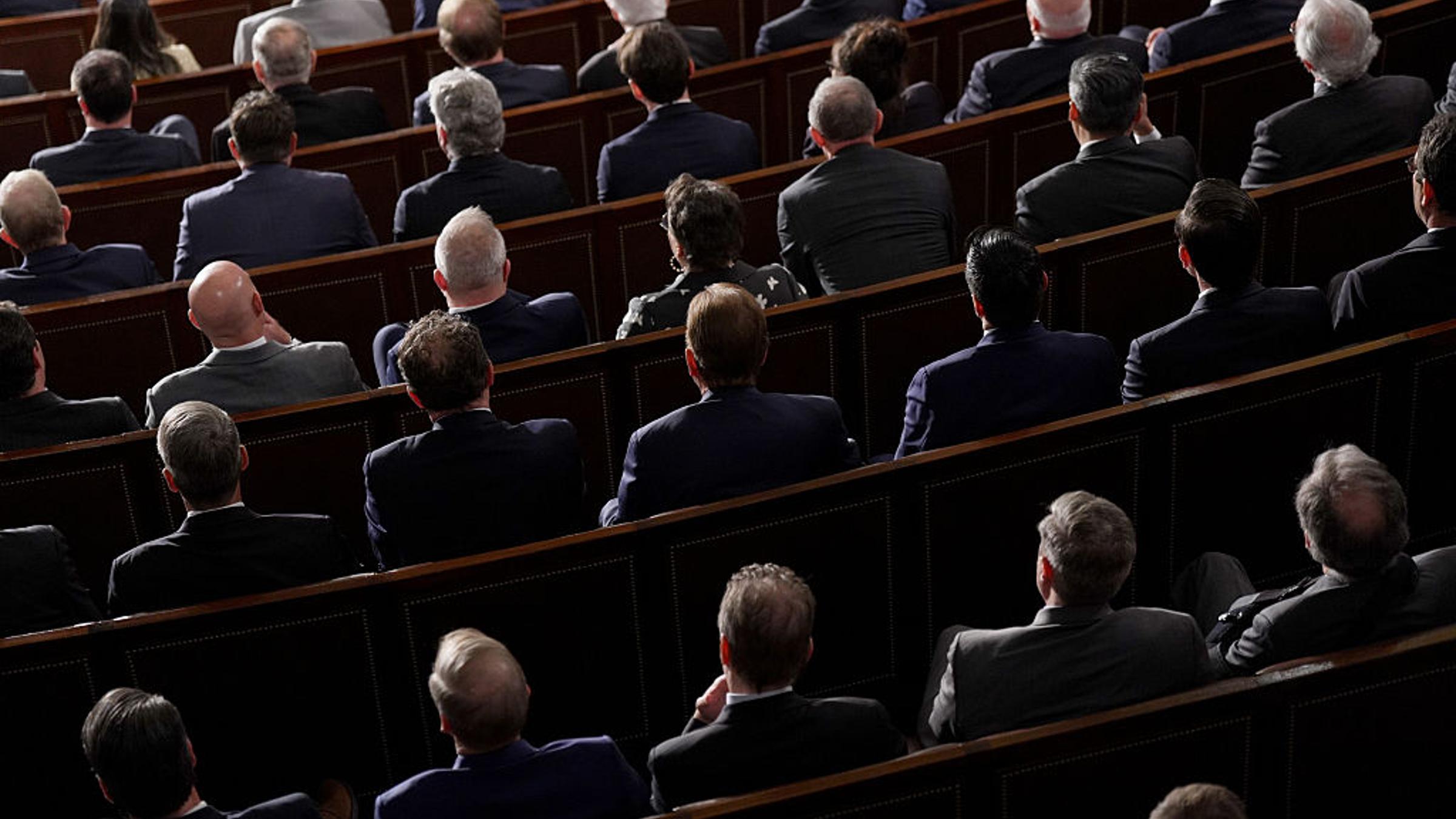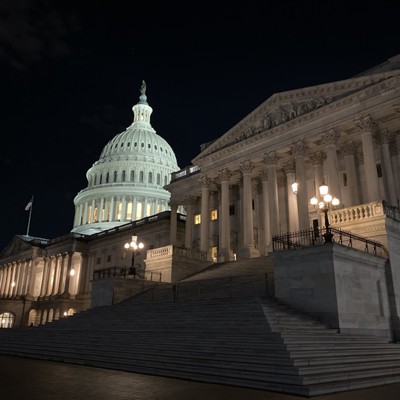
Capitol Hill is very balmy and very quiet. The thrum of legislators jawboning while a vote is being tallied has been replaced with a sepulchrous quiet.The Senate hung out its “Gone fishing” sign at the end of the first week of August. The House of Representatives closed the chamber and dashed to the airports in mid-July. America’s national legislature will not reopen until September.Many Americans, upon hearing this news, might well respond, “Good. The politicians can’t do any harm if they are away from the Capitol.” A mere 16% say they approve of the job Congress is doing, per a recent Gallup poll.
There is plenty to be dissatisfied about. Gas prices are high, as are the interest rates on 30-year mortgages and car loans. There has been a spate of scandals in the first six months of this year.The public perusing the news will read that Rep. Max Miller (R-OH) allegedly assaulted his wife and injured his toddler. (He emphatically denies the allegations.) John and Jane Q Public also will see reports detailing creepy behavior by Rep. Chuck Edwards (R-NC), Rep. Cory Mills (R-FL), and former legislators Tony Gonzales, a Texas Republican, and Eric Swalwell, a California Democrat. They will also learn that former Rep. Sheila Cherfilus-McCormick, a Florida Democrat who misused $5 million in federal funds and quit Congress to avoid being thrown out, is campaigning to rejoin the House.And Congress has not had an especially productive year. It has passed 25 substantive laws and a couple of resolutions to disapprove of regulations. It has not, however, made substantial progress toward enacting the 12 annual spending bills. One of the last things senators did before returning home to campaign was to vote for a continuing resolution, an explicit confession that they are not going to get their work done on time.“Funding the government is Congress’s most fundamental responsibility,” groused Taxpayers for Common Sense, a group that advocates fiscally responsible policymaking. “The Senate has yet to move a single appropriations bill out of committee. Neither chamber is close to completing all twelve bills before the fiscal year ends.”For all there is to lament about Congress, people should not succumb to “cynicism and despair,” writes Frances Lee, Princeton professor and the author of A Case for Congress (Oklahoma University Press). Congress might be struggling, but it is still performing its three basic purposes: representation, lawmaking, and overseeing the executive branch.Voters frequently complain that Congress is filled with lawyers and polarized elites who are out of touch with the average American. That is not a particularly accurate assessment, according to Professor Lee.Congress’s membership is not a perfect mirror of the diverse public, but it far better reflects the people than the executive and judicial branches. The federal judiciary is staffed with individuals with advanced degrees from mostly elite universities, and the president’s cabinet mostly comprises members of one party who are disproportionately drawn from major metropolitan areas and the upper echelon of society.Congress represents diverse local interests and the United States population broadly. Its 535 members mostly represent districts and states where they have spent much of their lives.Yes, it has its share of individuals with law degrees (32% of representatives and 47% of senators), which is unsurprising since Congress is a law-making institution. Mostly, though, Congress is made up of folks who are not lawyers: doctors, ministers, scientists, engineers, teachers, farmers, and restaurateurs, to name just several occupations. In terms of race, religion, gender, and class, Congress today is more representative of America than it ever has been. And, yes, like the United States itself, Congress has sleazebags and charlatans — sent there by voters.Politically, Professor Lee points out, Congress’s partisan split well reflects the partisan split among people. “In the 2024 election, for example, Kamala Harris won 48% of the national popular vote. That year, Democrats won 49% of House seats and 47% of Senate seats. In the 2020 elections, President Biden won 51% of the national popular vote; Democrats won 51% of House seats and 50% of Senate seats.” For all the gerrymandering, neither party is overrepresented in Congress. Like the American public, Congress has wild-eyed leftists, barking right-wingers, and people in-between. Congress is a venue where unconventional and unpopular public views can be expressed. During the COVID-19 pandemic, for example, it was legislators — not judges or agency administrators — who questioned the executive branch’s claims about the origins of the virus and the wisdom of school lockdowns. Legislators have given speeches about UFOs and other topics deemed fringe by elites.Although Washington gives the appearance of gridlock, Congress continues to make laws. “As gauged by sheer volume,” Professor Lee writes, “recent Congresses have passed just as much legislation as Congresses of the 1970s and 1980s.” Despite partisan polarization, the laws that get made usually are not passed on party lines. Thanks to the filibuster and the internal divisions within the two parties, they are enacted by coalitions and draw broad support from both parties. On average, a new law is passed by 78 senators (78% of the chamber) and 338 House members (77.7% of the chamber).Voters are not wrong in thinking that presidents whose party controls both the Senate and House are subjected to less rigorous oversight. Politics is a team sport. Nevertheless, no president can evade oversight entirely. Congress’s constitutional power over lawmaking and revenue-raising guarantees give legislators the power to nudge or curb the executive branch. For example, this magazine reported on the GOP-majority Congress resisting President Donald Trump’s effort to take control of the Library of Congress. House Republicans not only rebuffed the president, but they also passed a bill to thwart any future president from seizing the library.Individual legislators, Professor Lee explains, can express their criticism of a president and his administration on the floor of Congress or to the media or directly to voters. The airing of grievances is a key feature of a legislature and can provide feedback to a president and his appointees. Federal bureaucracies are prone to developing insular and technocratic cultures. Carping from Congress calls out the narrow groupthink in agencies that leads to taxpayers’ dollars being spent on things such as drag shows in Ecuador.IRAN THROWS WRENCH INTO HORMUZ DEAL WITH NEW LIST OF DEMANDS TO USNone of this is to deny that Congress has problems. Too many members forget their constitutional roles as lawmakers and behave like reality-television contestants or social media influencers. The gratuitous partisanship and toxic rhetoric turn off many people and sadly feed the extremist trolls amongst us.Yet Professor Lee is right: we should value Congress more than we do. “[W]e would be worse off without the Congress.” A government without a representative assembly is a tyranny. And in this polarized, contentious era we need a legislative branch that channels the clashing interests and perspectives and forces them to talk and bargain with one another before policy gets made that binds us all.Kevin R. Kosar (@kevinrkosar) is a senior fellow at the American Enterprise Institute and edits UnderstandingCongress.org.