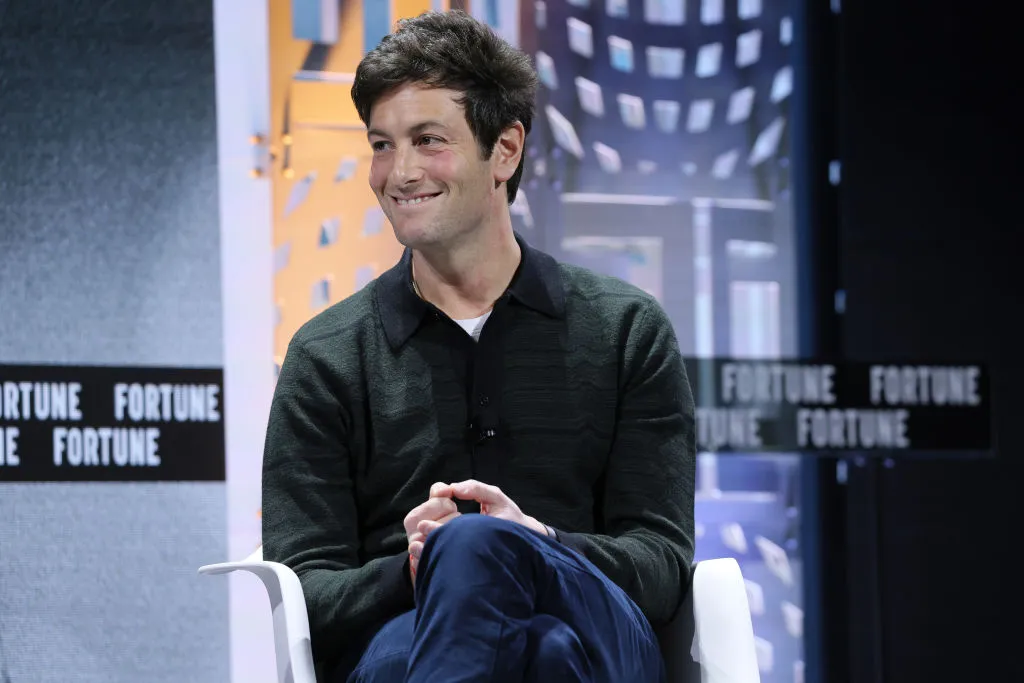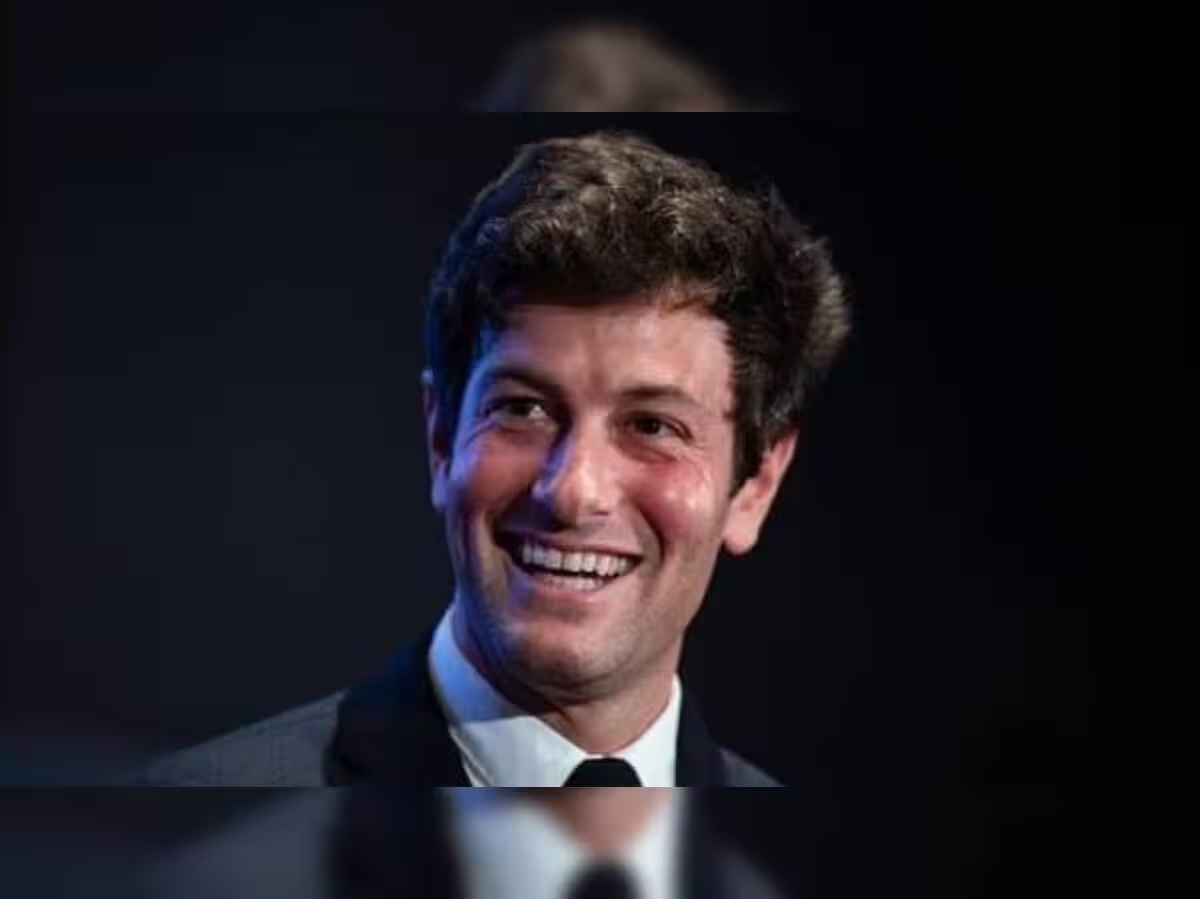
Thrive Capital’s 2022 early-stage venture capital fund, a $516 million investment vehicle that made early bets on OpenAI, SpaceX and Anduril Industries Inc., has grown to be worth more than $3.7 billion as of the end of June.That figure, which is net of fees and other charges, was included in a letter to limited partners sent by Thrive chief executive officer and founder Josh Kushner earlier this week.The letter highlights an investing strategy that Thrive pioneered in the venture capital industry: concentrating on a small subset of companies, rather than indexing an entire market. While many VC firms spread bets across dozens of companies, Thrive’s strategy is much more focused. About 90% of its 2022 fund was invested in its Top 15 positions, according to data tabulated last year and obtained by Bloomberg News.The surging value of Thrive’s funds underscores how the concentration strategy is playing out during the explosive growth of artificial intelligence technology and the companies that surround it.In the document, which is Kushner’s first formal letter to Thrive’s investors, he said that the firm is pursuing a minority investment from its original shareholder group and potentially new parties. The deal would sell a stake of Thrive in exchange for investor exposure to all of its entities: Thrive Capital, the firm’s venture practice; Thrive Holdings, an operation that brings AI to traditional services industries; and Thrive Eternal, a holding company that invests and supports iconic franchises.In 2023, Thrive sold a 3.3% stake in the firm for a $175 million investment. That deal was funded by a group of billionaires, including former Walt Disney Co. CEO Bob Iger, who now serves as an adviser to Thrive. India’s Mukesh Ambani, Brazil’s Jorge Paulo Lemann, France’s Xavier Niel and KKR & Co. co-founder Henry Kravis were also involved. Thrive’s new stake sale would be around the same size, according to the letter.A representative for New York-based Thrive didn’t respond to a request for comment.The letter, which offers a rare window into the secretive venture firm’s strategy and performance, comes in the wake of one of Thrive’s largest exits, Space Exploration Technologies Corp. The returns data doesn’t include gains that SpaceX’s June initial public offering would have for limited partners.Through Thrive’s investments in SpaceX and Cursor, which is getting acquired by the rocket company, the firm’s stake in the combined entity was worth north of $10 billion at the time of the IPO, Bloomberg News previously reported.The value of Thrive’s 2022 fund is five times as high as a year earlier. For ventures launched the same year, the top 5% of funds have approximately doubled the value of the capital that was initially invested, net of fees, according to the most recently available benchmarks. For context, Thrive’s 2022 fund has grown more than seven times in value.Many of Thrive’s recent funds, which are also its largest, have yet to distribute capital to investors — a process known as distributed paid-in capital. That is partly because many startups are staying private for longer and holding off on IPOs or acquisition sales. Thrive’s older funds have paid out more to investors. Its 2012 fund doled out 1.6 times its initial capital, placing it around the median of funds launched that year.Its 2016 fund, which has returned investors $2.50 for every dollar that was invested, is in the upper quartile of funds launched during that year, according to most recently available benchmarks. Investments in that vehicle include AI-powered developer company GitHub, which got acquired by Microsoft Corp. in 2018, as well as Kushner’s healthcare insurer Oscar Health Inc. and Latin American fintech company Nubank Holdings Ltd., both of which went public in 2021.Thrive’s 2026 growth fund, a $6.23 billion vehicle, is worth 1.6 times the amount that limited partners put in just a few months ago, net of fees. The fund has invested in a number of Thrive’s marquee portfolio companies, including OpenAI, defense tech startup Anduril, payments processor Stripe and AI-powered drug discovery company Isomorphic Labs, according to the letter.The firm’s 2022 growth-stage fund — which includes Wiz, a business sold to Alphabet Inc.’s Google earlier this year — has returned 0.3 times the initial money it invested. That places it above the top 5% of funds. Most venture funds take between 10 to 12 years to return capital.Thrive’s largest investment, OpenAI, is expected to generate a meaningful return. The firm was an early backer, investing in the startup through at least five separate funds going back to Thrive’s $408 million vehicle from 2018 and a fund that closed this year, a $6.23 billion instrument. Other notable IPO contenders within Thrive’s portfolio include Stripe and Anduril.In the letter, Kushner said that the firm has generated more than $1 billion in liquidity in the last 12 months and that he believes “there many be an opportunity for billions of dollars in additional liquidity in the coming quarters.”Kushner also warned that the excitement in the market could lead to weakened discipline across the ecosystem. “In moments of euphoria, investors tend to convince themselves that second- and third-tier assets are actually first-tier,” he said.He expects that the firm will “continue investing at our historical pace through the remainder of the year,” specifically focused on emerging technology, AI applications and infrastructure.The letter was sent to investors right before Kushner’s surprising deal with Iger to buy the Los Angeles Lakers basketball team for $12.5 billion. In an interview with Bloomberg News, Iger said that Thrive would be investing in the team. It is unclear how much capital Thrive will put in as part of the deal.Though the letter didn’t reference the acquisition effort directly, Kushner reminded limited partners that his new vehicle, Thrive Eternal, is for assets counter-positioned to the AI boom.“In a world of abundant intelligence, certain scarce human experiences may matter more,” he said.
Kushner’s Thrive Fund grows sevenfold to $3.7 billion on AI bets - The Economic Times
The letter highlights an investing strategy that Thrive pioneered in the venture capital industry: concentrating on a small subset of companies, rather than indexing an entire market. While many VC firms spread bets across dozens of companies, Thrive’s strategy is much more focused.
TL;DRAI
Thrive Capital's 2022 fund grew 7x to $3.7B by concentrating 90% of $516M in top-15 bets: OpenAI, SpaceX, Anduril. For tech leaders: concentrated strategy validates AI infrastructure as secular trend—Thrive's $6.23B 2026 fund already 1.6x signals consolidation around dominant platforms.
967 words~4 min read