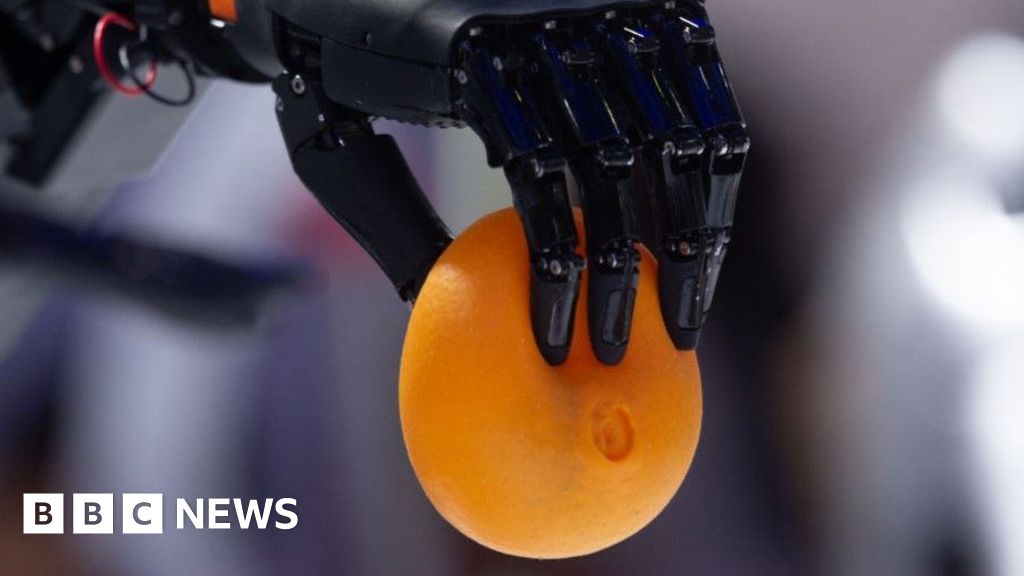
The human hand is a dexterous and versatile machine. Scientists have conventionally tried to replicate these traits in robots by copying the biological mechanics of the hand, resulting in complex and difficult-to-control structures. An alternative solution to these challenges was proposed in a new study published in Advanced Science: the BioflexBot, a novel robot that mimics and even exceeds core motions of the hand with a simple design.
Instead of creating a robotic hand with the intricate anatomy of a human hand, the researchers aimed to capture fundamental hand motions with a coiled spring, constraining shell and basic pneumatic system, using compressed air to control mechanical action. Optimized for precision and range of mobility, the BioflexBot can pinch, rotate, hook and grasp with just two pneumatic inputs.
Testing the robot's core motions
The researchers validated that the BioflexBot could replicate these foundational hand motions. To simulate pinching, the BioflexBot successfully manipulated an acupuncture needle and reliably transported liquid using a pipette, completing delicate tasks common in health care or laboratory settings. The BioflexBot rotated a bottle cap nearly four times as much as a human hand can. The researchers showed that the BioflexBot could hook objects such as a toolbox and goggles. Finally, they found that the BioflexBot could securely grasp objects of varying sizes, up to nearly 13 times larger than similar systems.