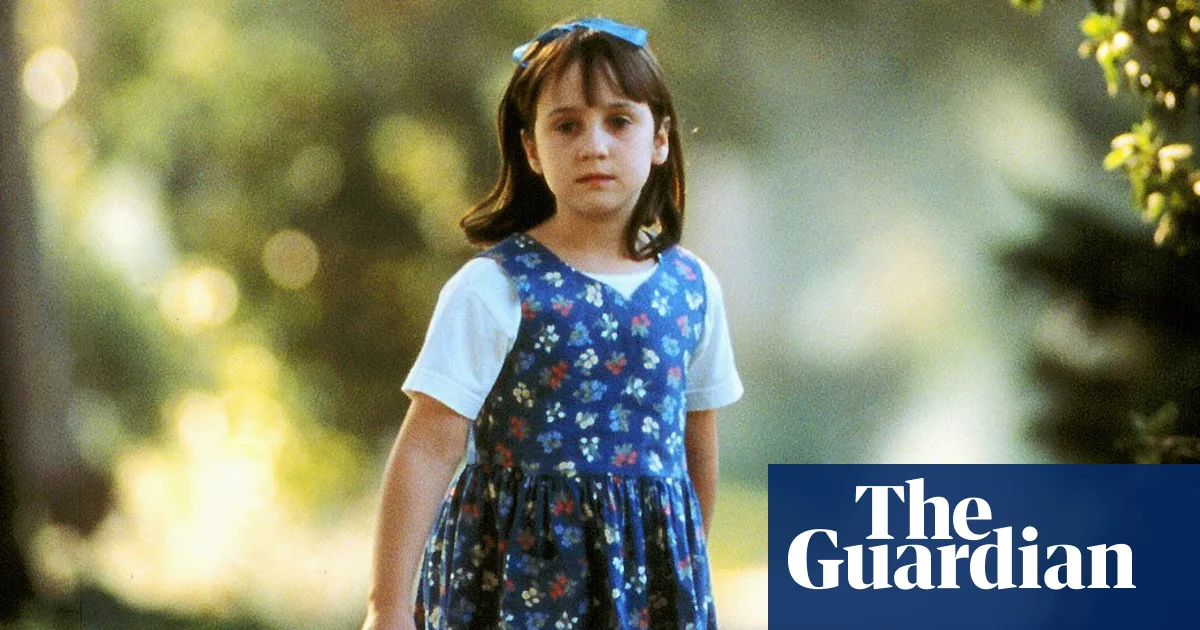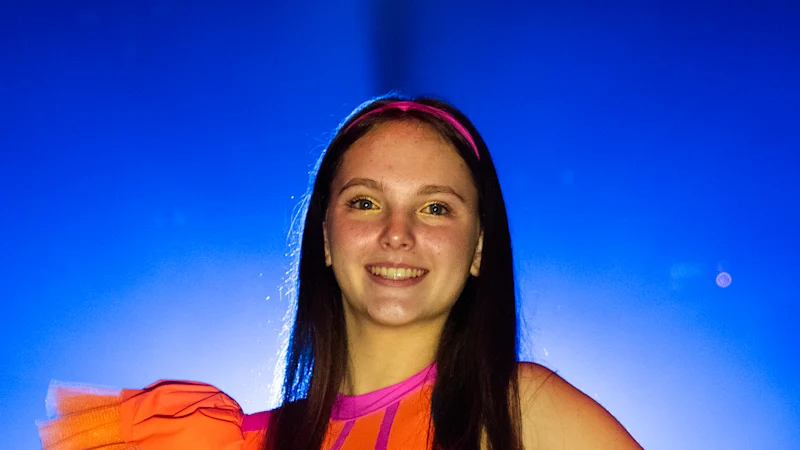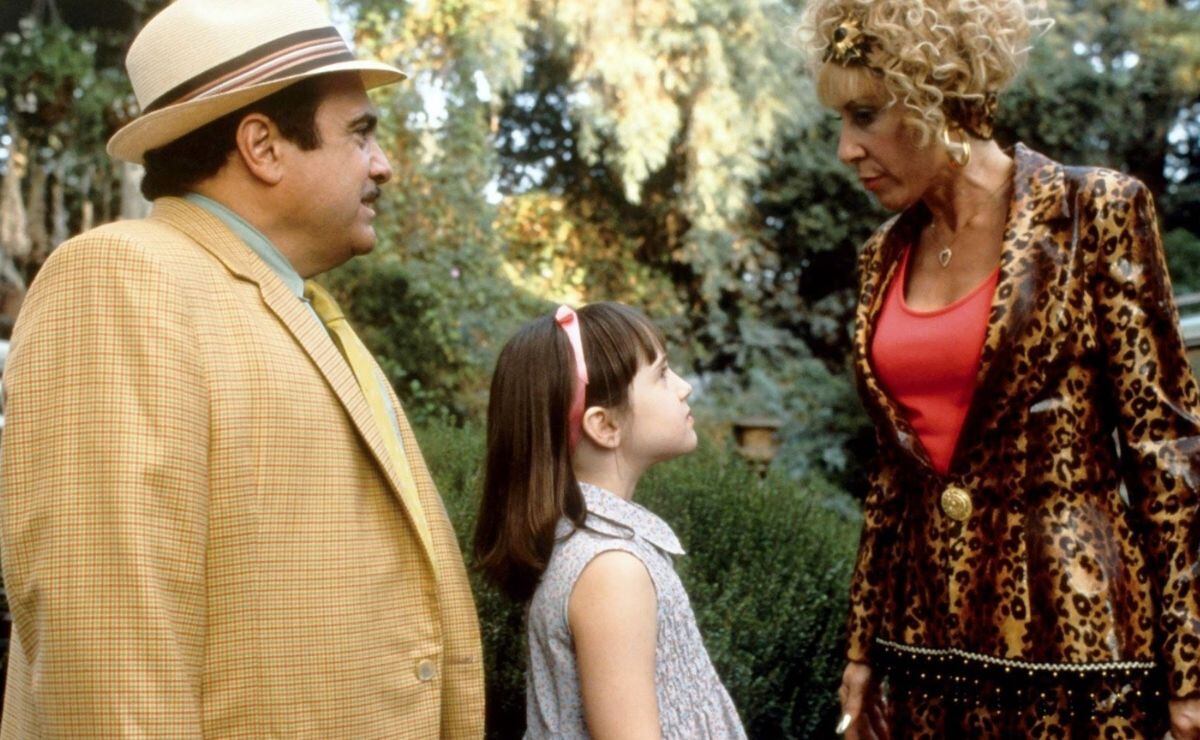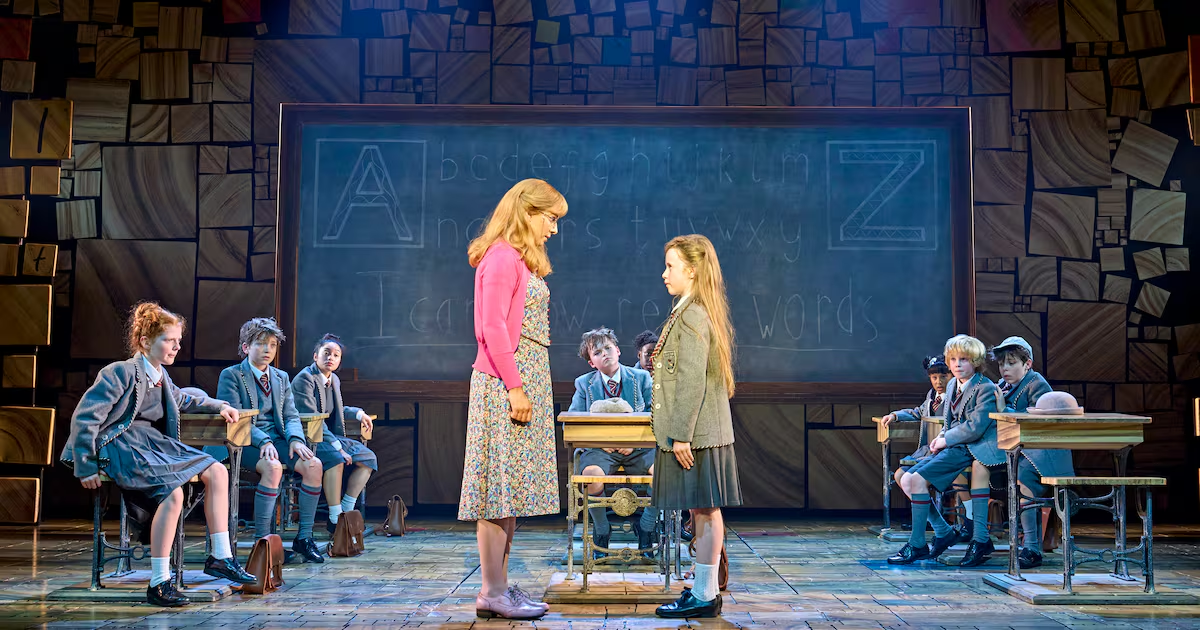
Like many a small girl growing up at the end of the 1980s, Roald Dahl’s Matilda was the defining book of my childhood. The happy-family fantasies of American classics like Little Women or Little House on the Prairie meant little to me, while the privileged boarding school settings of Enid Blyton seemed just as culturally remote. Dahl’s suburban story of a bookish child taking revenge on the beastly adults who seemed to thwart her at every turn resonated deeply with my own sense of outrage at the nonsensical hierarchy that left smart children, as I fancied myself, powerless in the face of stupid adults. When suffering the wrath of a raging adult, I would often imagine them with the face of Bob Hoskins, who played Matilda’s odious crook of a father in the 1996 film version, and who seemed to summarise the whole rotten injustice of the world as he towered over his daughter, finger wagging in her face: “I’m right and you’re wrong, I’m big and you’re small, and there’s nothing you can do about it.”Dennis Kelly was a teenager when Matilda was published, so when he was approached by the Royal Shakespeare Company in the late 2000s to adapt Dahl’s text into a musical, he had no sentimental reasons for taking the job. Kelly was in his mid-30s at that stage, and a successful writer for stage and screen, producing work at the Hampstead Theatre and the Old Vic, as well as on the BBC – where Pulling, the TV show he co-wrote with Sharon Horgan, had turned him into something of a celebrity, a voice for his generation. Pulling ran for two seasons and was a critical and commercial success for the youth-oriented arm of the BBC. “We were writing, not about lives we were observing,” Kelly remembers, “but the lives we were living. Sharon and I were really writing about our life, our friendship, through our 20s: what it was like to feel lost, and not know what you are doing, to be drinking too much and sleeping with the wrong people.”Given the raunchiness of Pulling, Kelly may have seemed like an odd match to adapt a well-known children’s book into a family-friendly musical, but he had form creating work for young audiences. Indeed, as an alumnus of London’s LOST youth theatre programme – where he and Horgan met – he had been commissioned by the National Theatre to write something for their annual youth theatre festival, and by the National Theatre of Scotland to create a stage work for young audiences. The two resulting plays – D.N.A and My Teacher’s a Troll – both explored bullying in an educational context, as Matilda does.For Kelly, however, the significance of these minor works in his personal history is different. As an early school-leaver, he credits youth theatre with kickstarting his creative life. “I probably wouldn’t have put it like this at the time,” he explains, “but I just wanted to keep playing, and I found that in doing youth theatre I was able to express myself in a way I hadn’t for years.” He joined, “thinking maybe I’d be an actor”, but he ended up writing instead – and writing has allowed him to inhabit a far greater variety of roles, whether that is prisoner philosophers, as in the brilliant BBC series Waiting for the Out, which was broadcast last year, or the plucky rebellious schoolgirl Matilda, who continues to play a larger-than-life role in his career almost 20 years after he first started working on it.Matilda the Musical, co-created by Kelly with director Matthew Warchus and songwriter Tim Minchin, is one of the great commercial stage successes of the 21st century. Commissioned by the Royal Shakespeare Company, it premiered in Stratford upon Avon in 2010 before transferring to the West End, where it has lived on the chocolate-box Victorian stage of the Cambridge Theatre ever since. Touring productions, meanwhile, have made their way across the globe, from Singapore to South Africa, including to Ireland, where the musical returns this September, just in time for the autumn term. Tessa Kadler as Miss Honey and the cast of Matilda The Musical. Photograph: Manuel Harlan Matilda The Musical Company. Photograph: Manuel Harlan Olivia Ironmonger as Matilda and Esther Niles as Mrs Phelps in Matilda The Musical. Photograph: Manuel Harlan Called on for the purposes of the press campaign again, Kelly admits he “stopped watching the show regularly some years ago – we worked on it solidly for three or four years” in the years leading up to and just after its premiere. “There was Stratford, and the West End. I was there in New York, sometimes just tinkering. But my job on it was really done back then.” From a production point of view, “like if there is a new tour, or a new cast, there can be quite a lot of maintenance work”, but as the writer, “my opinion is not actually helpful or useful any more. My job is just to stand back and let it do its own thing.” Yet Kelly found himself returning to the work recently for a different reason: to give his daughter, who has just turned seven, her first Matilda moment. “It was excruciating,” he says, “but thankfully she loved it.” His own response was more complicated, and he was genuinely surprised to see what the work revealed to him about who he was when it was created. “Looking back at Matilda,” he says, “it’s obviously not my story: it’s Roald Dahl’s. But I really do think that all art is autobiographical. Whether it’s Pulling or Waiting for the Out” – which was adapted from Andy West’s remarkable memoir, The Life Inside – “there are definitely bits of me in everything I’ve done. That’s probably what makes it good; that there is a kind of truth there.” The bits of himself he finds in Matilda now, he admits, were not what he was expecting. “When we were working on it, Tim had young kids and Matthew had young kids, and I didn’t, and the fact that [a child] is what I really wanted back then seems to scream at me now.” Watching the musical with his daughter, Kelly noted how the central story of Matilda’s journey “is all wrapped around this other story about a couple who wanted a child, and that was the bit I added to it. I don’t think I was aware of it at the time – that desperate longing for parenthood; I mean, it wasn’t going to happen. I wasn’t even in a relationship – but after 20 years I can see that that [subplot] was me telling my own truth. When you are writing, I think, what you are really doing is saying: ‘I feel like this. Does anyone else feel like this as well?’ And I guess that doesn’t change just because it’s a kids’ musical.”Madison Davis as Matilda in Matilda The Musical. Photograph: Manuel Harlan Sanna Kurihara as Matilda in Matilda The Musical. Photograph: Manuel Harlan Mollie Hutton as Matilda in Matilda The Musical. Photograph: Manuel Harlan Something that also hasn’t changed, throughout the various tours and international productions, is the way in which care of the child actors, who make up half of the cast, is embedded into every production of Matilda the Musical. As a child who would have given up her brand new front teeth to be a Matilda, if they had been casting the musical when I was young, I was keen to chat with some of the minor stars of the current touring production – who are spending their summer holidays trekking up and down the UK performing, and who will be skipping school in September when the production hits the Bord Gáis Energy Theatre. However, despite being centre stage, the kids are deliberately kept out of the spotlight by the producers.This safeguarding strategy has caused controversy over the years, not least when the show premiered on Broadway. To ensure proper working conditions for the underage performers, each production features four alternate actors in each of the leading child roles, and this was a challenge for Broadway culture. Broadway, as Kelly experienced it, is “a pretty starry place”. “They wanted us to have a star, but, like we always do, we had four Matildas. The press, for photo shoots etc, kept wanting us to say this is the one – this is the real Matilda – but we insisted they could have all of the Matildas or none of them. [ The Last Tape: Beckett foray into opera comes to Kilkenny in hybrid formOpens in new window ]“It is the most important thing to us that we protect them.” At the start of every rehearsal process, for example, the production team reminds the adult actors “that the Matildas and Bruces are children first. They are with us for six months or nine months, and the most important thing [when they are doing the show] is that they have a great time, because when they really love what they are doing, that joy comes across on the stage.”And that joy is perhaps the most remarkable thing about Matilda the Musical. Visiting the Cambridge Theatre for my fifth viewing of the show earlier this year, my own daughter – a bookish and defiant young girl; a mini-Matilda, like her mother was – accompanied me for the first time. ‘Joy’ was the first word we picked out from the lettered building blocks that framed the stage as we waited for the show to begin, and when it ended, we discussed how exuberant excellence was an alternatively appropriate expression that Matilda would surely approve of. Matilda the Musical is at the Bord Gáis Energy Theatre from September 15th-October 18th
Matilda the Musical’s Dennis Kelly: ‘The most important thing is that our child actors have a great time’
Kelly is the co-creator of one of this century’s commercial stage successes. So what happened when he brought his daughter to see the show?
1,626 words~7 min read