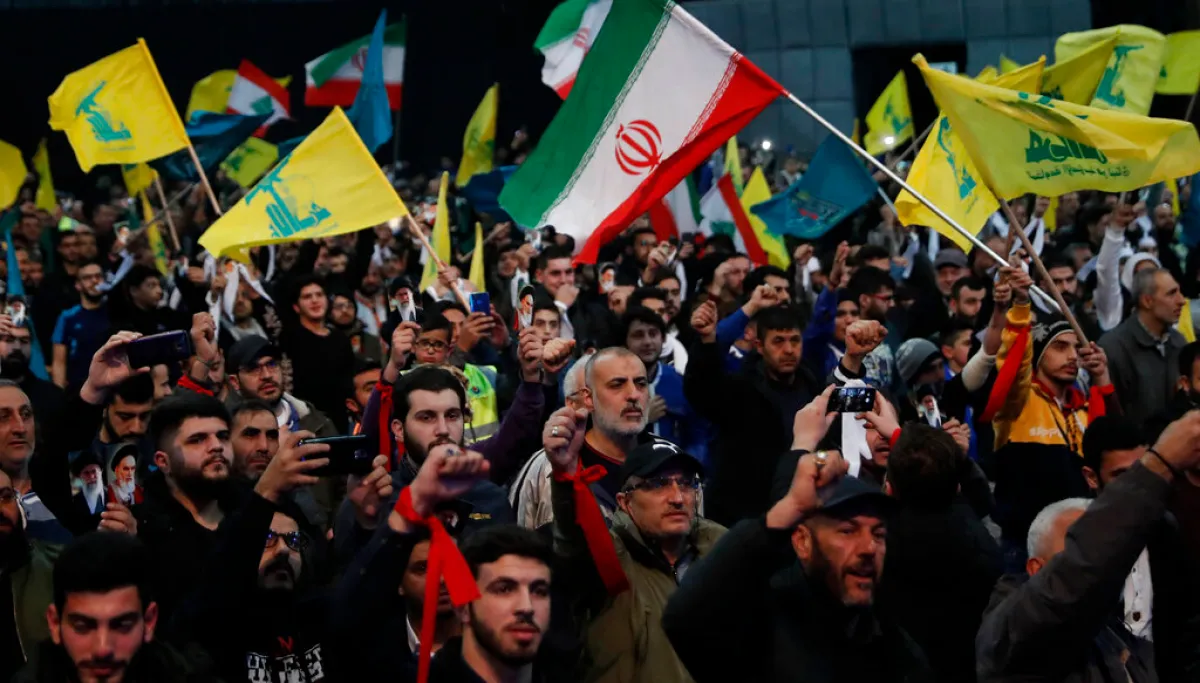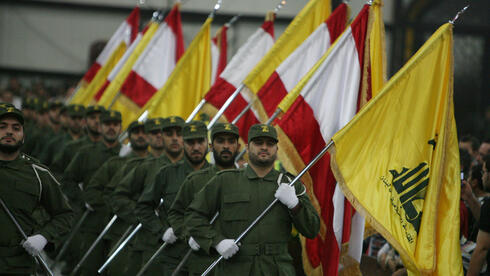
Analysis: Hezbollah’s power inside Lebanon’s Shiite community rests not only on violence but on a hierarchy of possible costs, from public smears and economic pressure to threats, surveillance and prosecution, encouraging self-censorship before organized opposition can emergeNoa Riven| Related TopicsOne of Hezbollah’s main sources of power within Lebanon’s Shiite community does not necessarily depend on the direct use of force. Instead, it rests on its ability to create a persistent awareness that criticism may carry a price. Those who criticize the organization do not always know what response they may face, but they understand that dissent can bring consequences: damage to public standing, professional exclusion, economic pressure, threats against relatives, surveillance, interrogation and, at times, violence.In this sense, Hezbollah operates what can be described as an “economy of fear” within its Shiite environment, in which the mere possibility of punishment is enough to narrow the space for action even when the threat is not carried out every time.(Photo: AFP)The mechanism often begins with delegitimization. Political criticism is portrayed not as legitimate internal disagreement, but as evidence of loyalty to foreign actors. The label “Shiites of the embassy,” which became widespread after the publication of WikiLeaks documents in 2011, is a clear example.It was initially directed at Shiite figures who had met with U.S. representatives, but was later broadened to include people whose criticism of Hezbollah alone was enough to place them outside the boundaries of accepted consensus. The result is an equation in which opposition to Hezbollah is framed as disloyalty to the Shiite community, to Lebanon or to the “resistance” itself.But the label is effective only because of the possibility that it may be translated into a tangible cost. Over the years, independent candidates, journalists, clerics and Shiite activists have described smear campaigns, threats, loss of employment, pressure on business owners and surveillance targeting both them and their families.In other cases, state institutions have also been used through summonses for questioning, arrests or accusations of collaboration with Israel. In such an environment, the distinction between partisan power and institutional power becomes blurred. A critic must take into account not only Hezbollah’s possible response, but also the broader political and social environment operating under its influence.Noa RivenThe impact extends far beyond those directly targeted. When one family is ostracized, one journalist is threatened or one candidate is attacked, others absorb the message as well. The strength of the deterrence system is therefore not measured only by the number of violent incidents, but by its ability to generate self-censorship and turn the decision to speak out into a calculation of cost versus benefit.The case of Lokman Slim illustrates the limits of that space. Slim did not merely criticize Hezbollah publicly. He worked to create an independent Shiite sphere outside the structures of Hezbollah and Amal and openly challenged Hezbollah’s monopoly over representation of the community. His murder in February 2021 took on significance far beyond the killing itself. For many Shiite critics, it demonstrated the possible price of attempting to transform scattered dissent into an organized alternative.This is how the economy of fear functions: not through the continuous and uniform application of force, but through a hierarchy of possible penalties and the knowledge that any of them may be activated.Its purpose is not only to silence existing voices, but to prevent political, religious and social centers of authority from emerging in the first place and competing with Hezbollah for the right to speak on behalf of Lebanon’s Shiite community.Dr. Noa Riven is a researcher specializing in Lebanon, Hezbollah and Shiite theology, a research fellow at the MECARC Institute and a lecturer at Ariel UniversityComments
The price of dissent: Hezbollah’s grip on Lebanon’s Shiites
Analysis: Hezbollah’s power inside Lebanon’s Shiite community rests not only on violence but on a hierarchy of possible costs, from public smears and economic pressure to threats, surveillance and prosecution, encouraging self-censorship before organized opposition can emerge
603 words~3 min read