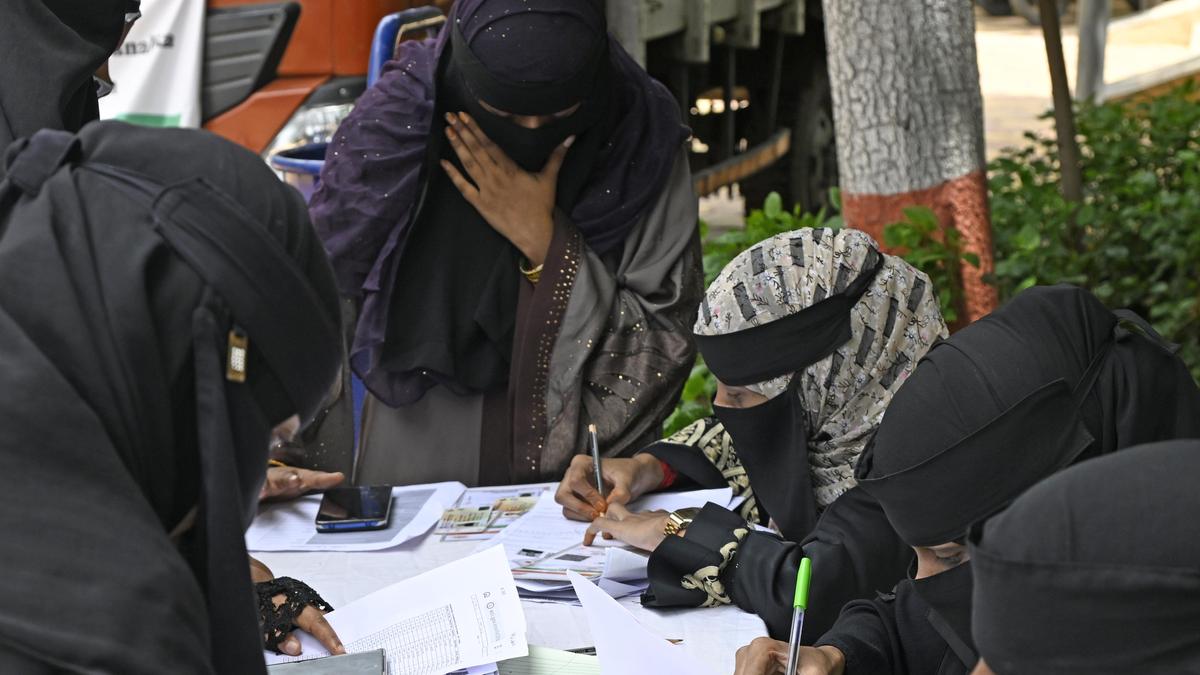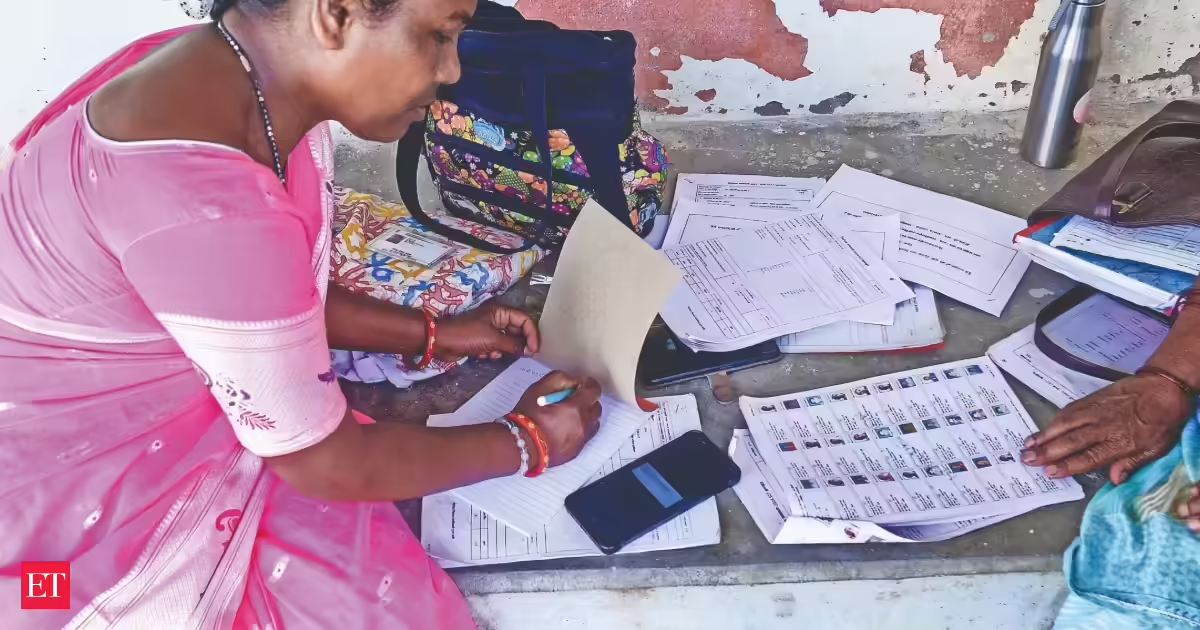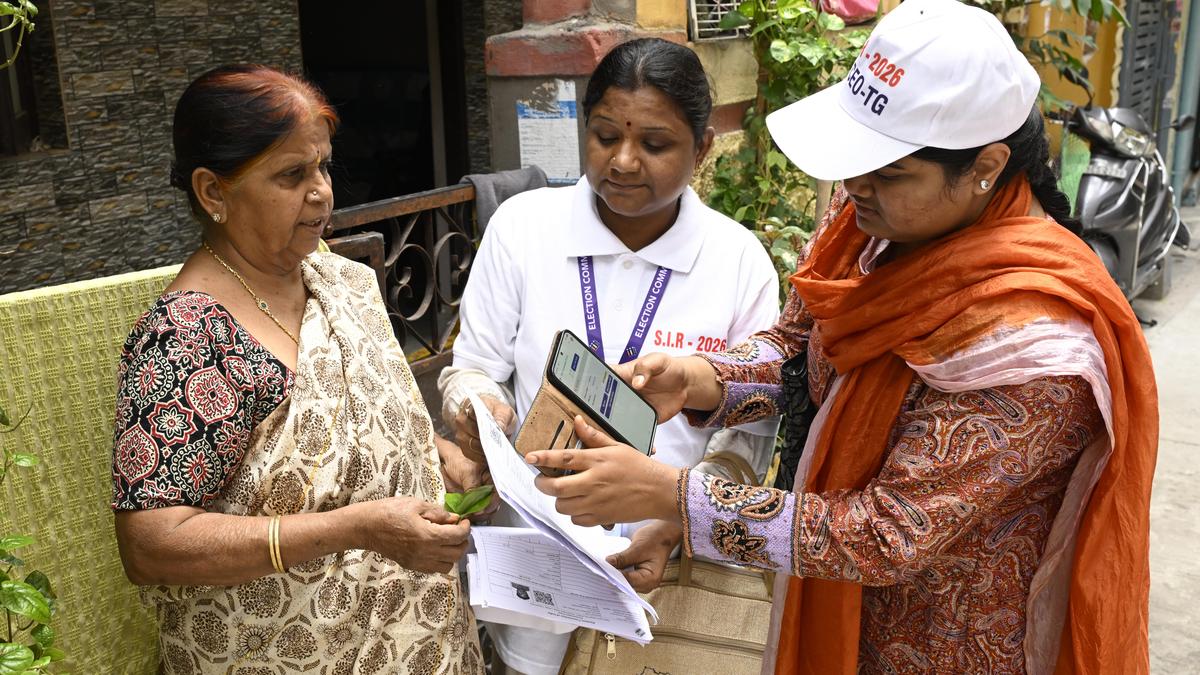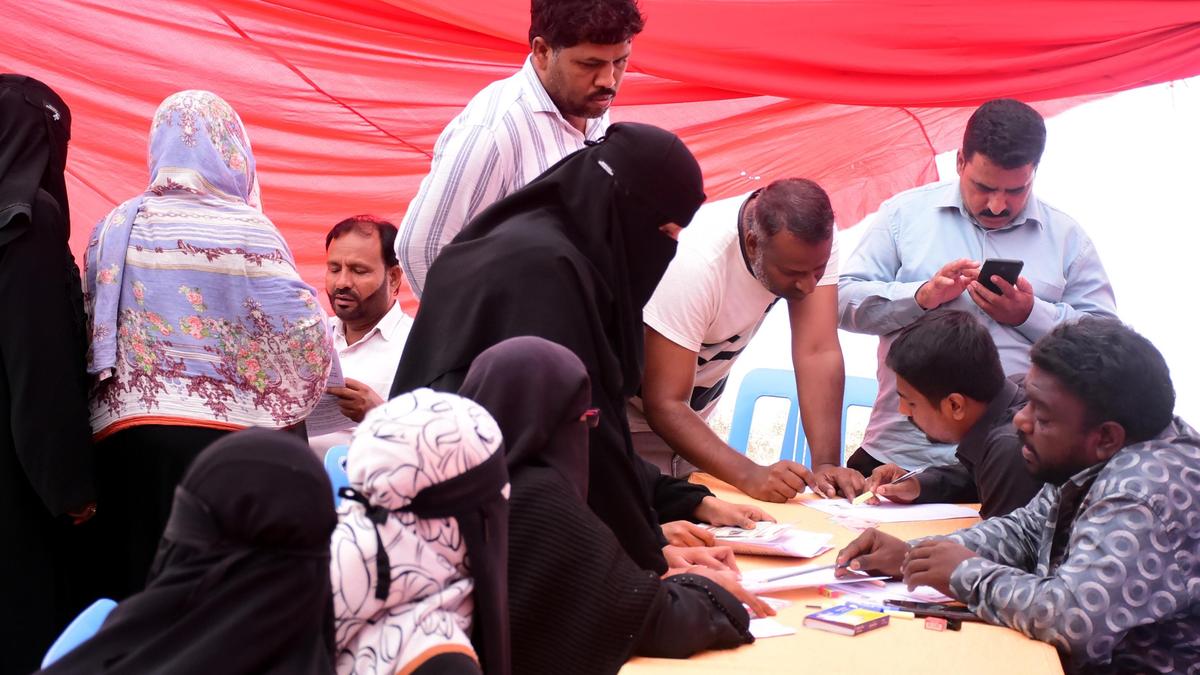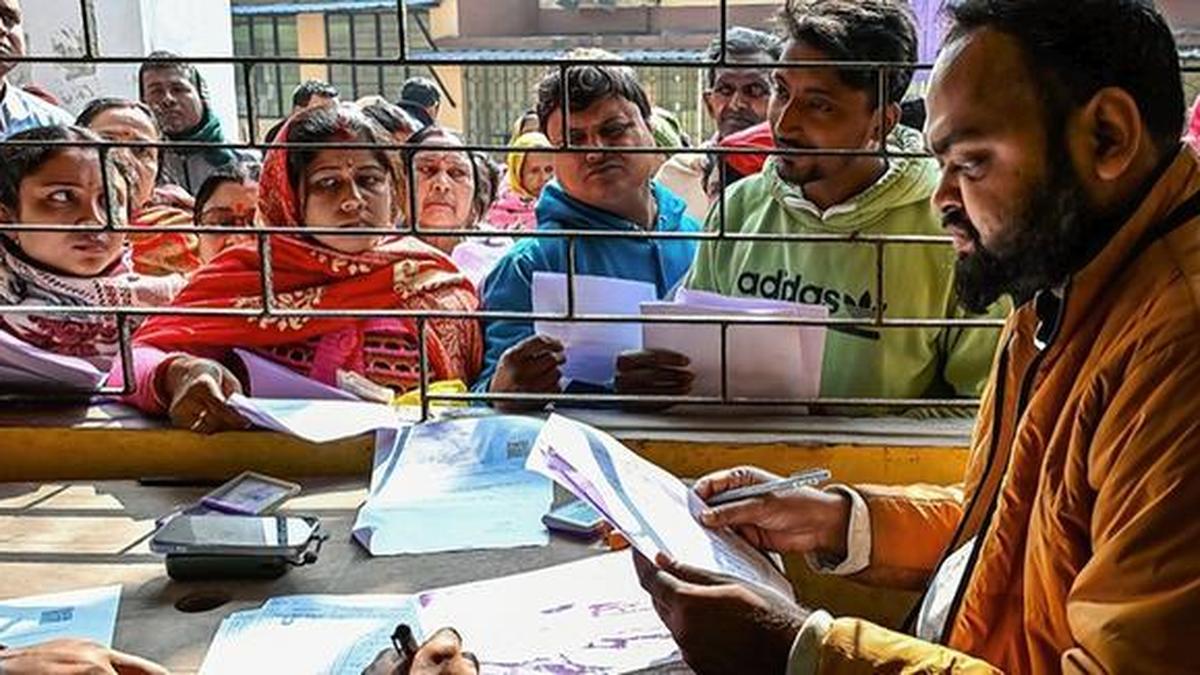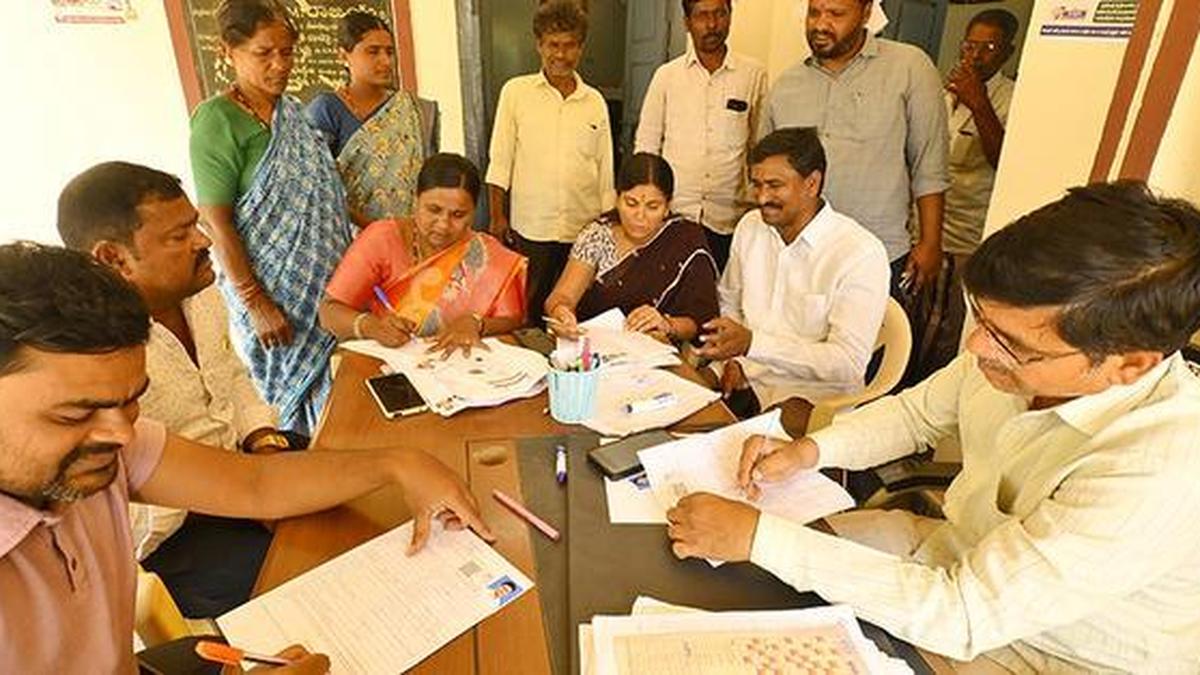
Booth Level Officers (BLO) verify voter details during the Special Intensive Revision (SIR) of electoral rolls at Aroor Village, Sadashivpet Mandal, Sangareddy District. File
| Photo Credit: Nagara Gopal
The promised three door-to-door visits, which did not happen as part of the Enumeration Phase in the Special Intensive Revision of Electoral Rolls, are set to cost dearly to the electoral officials in Telangana. With a large number of voters not filling in their details from the final electoral rolls of 2002 SIR as required in the Enumeration Forms, the work for the Electoral Registration Officers (EROs) has increased that much.Also read | 78.3% voters enrolled in Telangana SIR; draft rolls to be published on August 17After August 17, the date of publication of draft electoral rolls, the EROs will have to conduct hearings for verification of close to 94 lakh voters within two months’ time, which is next to impossible in practical terms.Of the 94 lakh, more than 32 lakh are those who did not fill in their details in the first section pertaining to their entries in the rolls of 2002 SIR, or of their parents’ details from 2002 in the second section. They have all been categorised as unmapped voters, officials informed.Also read | Over a fifth of the electors in Telangana might get deleted in SIRThe forms had three distinct sections: the first one for the electors’ details from 2002 SIR, the second for the relatives’ details for those who were minors in 2002, and the third one for the current details of the electors.Many voters, not knowing the format, entered the current details as available on the Electoral Photo Identity Cards in the first section, leaving out the Polling Station numbers and Part Numbers blank.Door-to-door visits by Booth Level Officers, which could have helped them understand the process, did not happen in many instances. BLOs in a large number of localities confined their roles to distributing the forms and collecting them back, sitting at a central location, instead of going from house to house.Electoral officials, before the start of the Enumeration Phase, repeatedly asserted that the BLOs must visit each household at least thrice during the phase, once for distribution, a second time to explain how to fill in, and one last time to collect the forms back. However, the targets given were impossible for the BLOs, which became evident at the start of the distribution. Eventually, the officials made it the electors’ duty to return the filled in forms, extending the Enumeration phase twice to make that happen.Of the total forms submitted at the end of the Enumeration Phase, a total of 61.4 lakh logical discrepancies/anomalies were reportedly discovered. When clubbed with the number of unmapped electors, nearly 94 lakh electors will have to be served notices to attend hearings before the EROs concerned, as per the directions from the Election Commission of India.The notice period would begin on August 17, 2026, and continue up to October 15, 2026, leaving the EROs exactly 60 days to issue notices and conduct hearings. Even if the notices are served within the first fortnight, it would leave 45 days for hearings. With 119 EROs endowed with quasi-judicial powers set to adjudicate over 94 lakh cases in this short window, they would get less than a minute’s time to verify each elector even if they worked 24 hours a day. In a reasonable eight-hour workday with/without weekends and holidays, each elector would get just about 16-28 seconds!Completion of the process with any reasonable time allocation, say 15 minutes per elector, will need seven to eight years’ time when done with utmost rigour.EROs will also have to settle claims and objections simultaneously, apart from accepting fresh applications by electors deleted from the rolls.With the number of anomalies/discrepancies uneven across constituencies, a few EROs will be more burdened than the rest, even with support from the Assistant EROs. Published - August 15, 2026 06:53 am IST