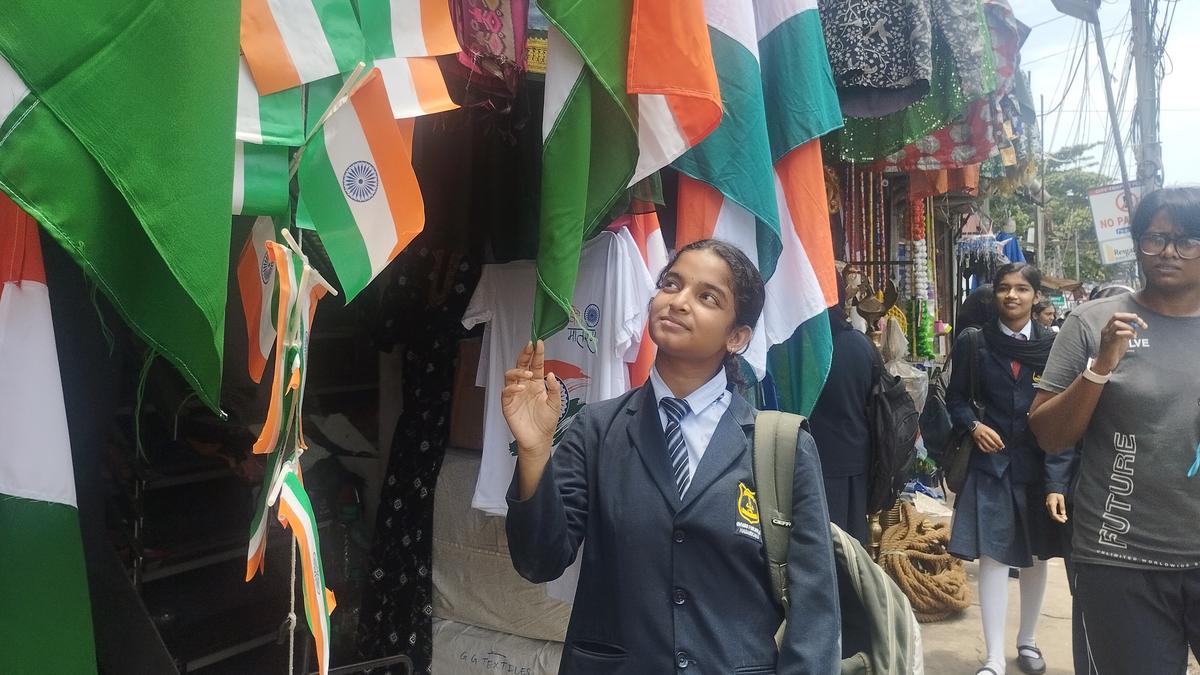
A student walks past a shop displaying national flags near the Nadakkavu Government Vocational Higher Secondary School for Girls in Kozhikode, Kerala, on Friday (August 14, 2026)
| Photo Credit: K. Ragesh
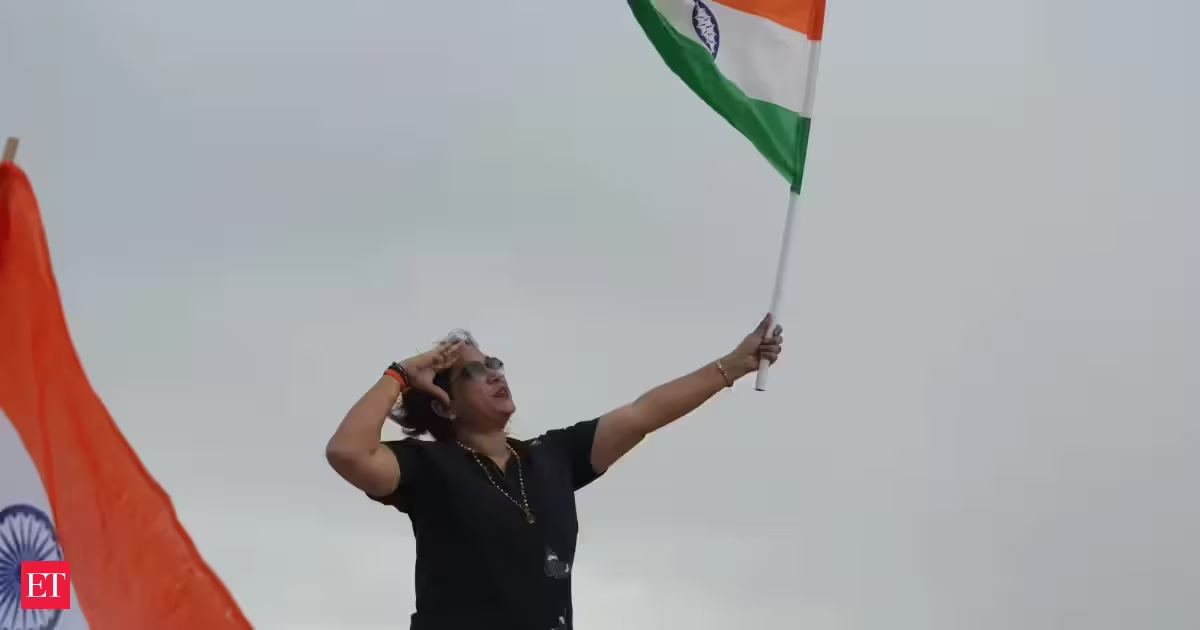
For Robin Thomas and his Gen Z peers, Independence Day extends far beyond commemorating August 15, 1947. It represents their search for personal freedom, identity, and individual dignity.“I believe freedom means having the right to question, disagree, and express my views without being silenced. Independence is not just about what we achieved in the past, but about protecting our freedom to speak and participate in society today,” says the 23-year-old postgraduate student from Kannur University.The GenZs view independence through everyday experiences, such as the freedom to express an opinion, the freedom to question, and the liberty to choose their own career and lifestyle. “The concept of freedom means having the right to question what is wrong and to raise my voice when basic rights are denied. The Jantar Mantar protest is a perfect example of how young people can use their voices to demand accountability,” says Swathi Subhash from Alappuzha, a supporter of the Cockroach Janta Party (CJP).She adds that a State can truly be called free only when the fundamental rights of its citizens are protected, and when there is transparency allowing people to express their opinions without fear.Unlike previous generations, many young people today see independence as starting with personal choice. “Independence for young people is not simply about living alone or earning money. It means having the freedom to make my own choices, express myself, choose my path, and take responsibility for my decisions, while balancing personal freedom with family expectations and social realities,” says Manisha, a 25-year-old from Kochi.Most youngsters want to protect their personal interests and happiness without unnecessary interference. They value developing their own choices, opinions, and decisions autonomously. “It can only be called freedom when a person is able to take a stance or make a decision without being influenced by others; true freedom is the non-denial of basic rights due to outside interference,” says Krishnapriya, an undergraduate student from Chengannur.Harikrishnan N, a 23-year-old Psychology student from Kannur, says: “Independence means having the ability to live, make decisions, and take responsibility for oneself without being dependent on anyone else.”Social equalityFor the Gen Z, independence is also tied to social equality. Issues regarding gender equality, discrimination, mental well-being, and individual rights have become central to conversations about freedom.“In my view, independence means living in a society where everyone gets the same respect and opportunities, regardless of their caste, gender, or religion. Everyone should be respected and treated equally,” says Anusree Prakash, a 23-year-old postgraduate student from Kottayam. She adds that women are gaining more opportunities in higher education and employment.“This is another dimension of freedom,” she says.(The writer is an intern with The Hindu) Published - August 15, 2026 06:00 am IST